
Imagine walking into your garage after a classic Melbourne north-westerly gale only to find your car coated in a thick layer of basalt dust and a pile of damp leaves huddled in the corner. It’s a common sight for many homeowners in the western suburbs, but it doesn’t have to be your reality. Effectively sealing roller doors is about more than just sticking a piece of foam to the ground; it’s a strategic defence against our city’s unpredictable elements.
We know how frustrating it is when your garage feels more like a wind tunnel than a secure part of your home, especially when spiders and rodents decide to make themselves at home in the gaps. You deserve a space that stays dry during a winter downpour and remains cool when the summer sun is beating down. This 2026 guide will show you how to transform your garage into a clean, well-insulated area by choosing a sealing system that actually lasts. We’ll explore the latest in EPDM rubber technology, brush seals, and why a professional fit is the key to keeping the draughts out for good.
Key Takeaways
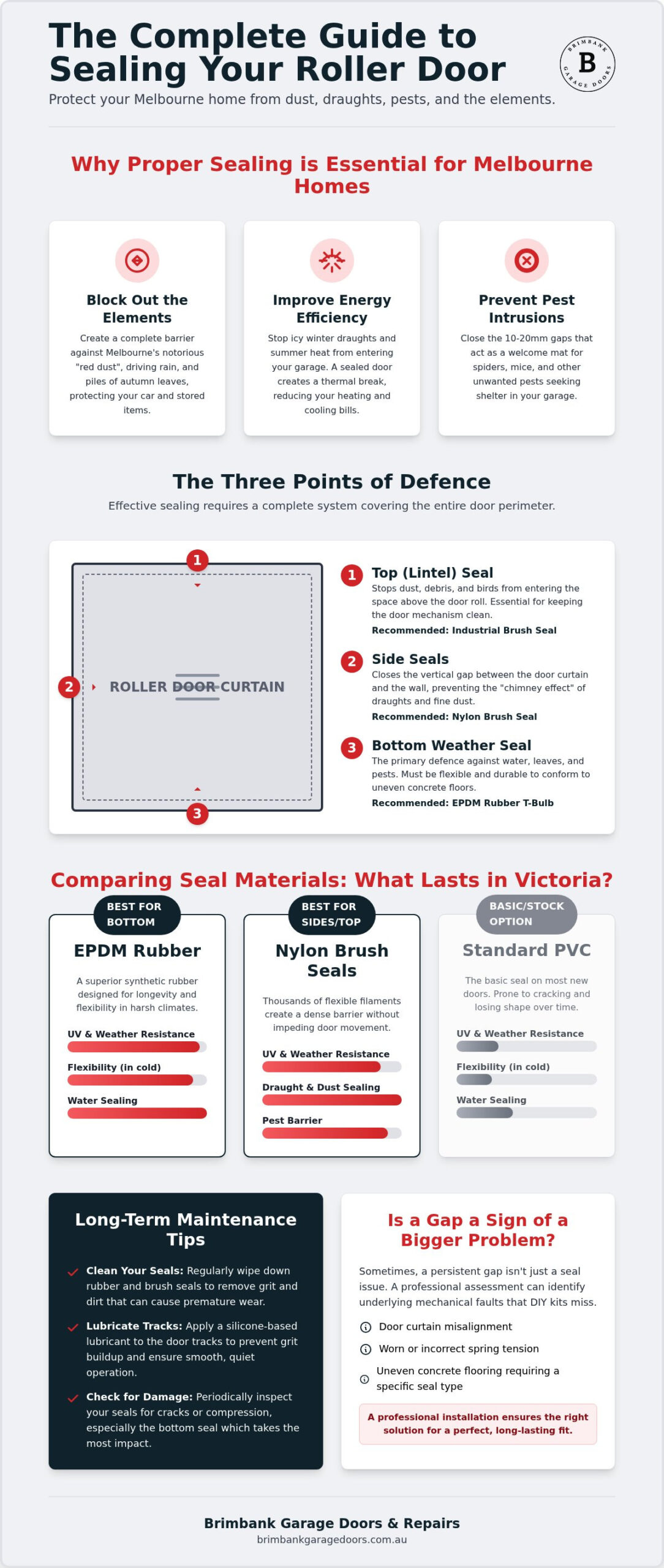
- Learn how a complete barrier blocks Melbourne’s notorious “red dust” and heavy storm rain from entering your garage and ruining stored items.
- Discover why sealing roller doors effectively requires a tailored three-point strategy covering the bottom, sides, and top of the door curtain.
- Compare the long-term durability of EPDM rubber and industrial brush seals to ensure your weatherproofing survives the harsh UV rays of a Victorian summer.
- Understand how to identify if a persistent gap is actually a sign of a mechanical alignment issue or a worn spring that requires professional repair.
- Get practical advice on maintaining your new seals and lubricating tracks to prevent grit buildup and keep your door operating quietly for years.
Why Sealing Roller Doors is Essential for Melbourne Homes
Melbourne’s weather is famously erratic. One minute you’re dealing with a 38-degree scorcher, the next you’re facing a lashing rainstorm. For homeowners in the western and northern suburbs, these shifts often mean a garage floor covered in fine basalt dust or a puddle of water soaking your storage boxes. Effectively sealing roller doors creates a robust first line of defence against these environmental pressures. It isn’t just about comfort; it’s about protecting the structural integrity of your garage and everything kept inside it.
In the west, the “red dust” blown in from the plains can infiltrate even the smallest gaps during a summer gale. This isn’t just a nuisance to sweep up. That fine grit can get into the moving parts of your door, leading to premature wear on your tracks and rollers. By treating sealing as a core part of your maintenance routine, you’re extending the life of the entire door system while keeping your workspace or gym pristine.
The Impact on Your Energy Bills
A gappy roller door acts like a giant open window. In winter, icy draughts from the street pull heat directly out of your home, especially if you have an internal door connecting the garage to your living area. High-quality weatherstripping creates a thermal break that helps maintain a stable internal temperature. By closing these gaps, you’re reducing the workload on your split system or central heating. This leads to more manageable energy bills and a significantly warmer hallway. It’s a simple change that makes a massive difference to your home’s thermal performance in 2026’s climate.
Pest and Debris Prevention
Nobody likes finding a redback spider or a family of mice nesting in their Christmas decorations. Standard roller doors often have a 10mm to 20mm gap at the bottom or sides, which is essentially a welcome mat for local pests seeking shelter from the rain. When you invest in sealing roller doors, you’re physically denying entry to these intruders. This is particularly vital in newer estates where construction nearby often displaces local wildlife into residential garages.
Beyond pests, a proper seal stops the autumn leaf litter from piling up in the corners. It also keeps your car or ute cleaner for longer. Instead of washing off that layer of suburban dust every Saturday morning, you can trust that your garage remains a clean, controlled environment. It turns a dusty storage shed back into a functional, secure part of your home.
The Three Points of Defence: Types of Roller Door Seals
Effective weatherproofing isn’t a one-and-done job. Think of your garage door like a thermal envelope. If you only seal the bottom, wind and dust will still whip through the sides or over the top. A complete system for sealing roller doors involves three distinct barriers:
- Bottom weather seals: The primary line of defence against water, leaves, and rodents.
- Side seals: Brushes or strips that close the gap between the moving curtain and your brickwork.
- Top (Lintel) seals: Barriers that stop dust and birds from entering the space above the door roll.
For homes with driveways that slope toward the house, a threshold seal is also worth considering. These are hard-wearing ramps bolted directly to the concrete floor. They act as a mini-dam, stopping heavy rain from surging under the door during a Melbourne flash flood.
Bottom Weather Strips and T-Bulbs
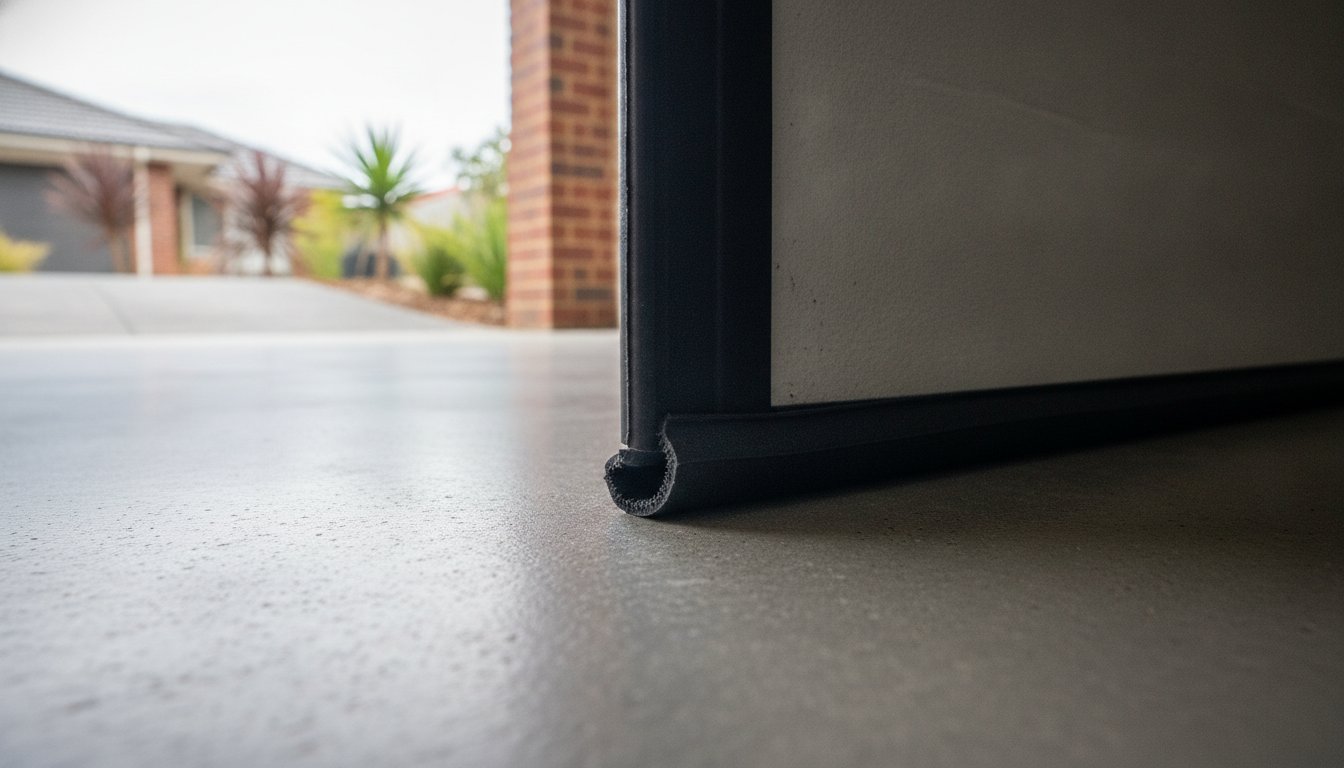
The bottom seal is your workhorse. It takes the full weight of the door every time it closes and bears the brunt of the Victorian sun. Most stock doors come with a basic PVC strip that eventually becomes brittle and cracks. When this happens, it loses its “memory” and stops springing back into shape, leaving gaps for mice to squeeze through. Choosing a high-quality EPDM rubber T-bulb is a smarter move for longevity. These stay flexible even in freezing winters and adapt much better to uneven garage floors. If you’re noticing light peeking through the bottom corners, it might be time to look at a professional roller door supply to get a seal that actually fits your specific track.
Side and Top Brush Seals
While the bottom seal stops water, side and top seals are your best defence against draughts and fine dust. Draught-proofing doors at the edges prevents the “chimney effect,” where cold air is sucked through the bottom and pulled up through the top of the roll. Brush seals are the gold standard here. They use thousands of tiny filaments to create a barrier that doesn’t interfere with the door’s movement.
When choosing brush materials, nylon is generally superior to polypropylene for Australian conditions. Nylon has a higher melting point and better UV resistance, meaning it won’t go fuzzy or disintegrate after two summers. Properly fitted side seals close the gap between the curtain and the brickwork, which is a common entry point for redback spiders. It’s a small technical detail that makes your garage feel like a sealed room rather than a drafty shed.
Comparing Seal Materials: Rubber vs. Brush vs. PVC
Choosing the right material for sealing roller doors depends largely on which element you’re fighting most. If your garage faces the afternoon sun in Melbourne’s west, UV resistance is your priority. If you’re on a sloping block in the northern suburbs, water deflection and durability under foot traffic become the goals. Each material has a specific role to play in a complete weatherproofing system.
- Rubber (EPDM): The gold standard for bottom seals. It is far superior to standard natural rubber because it resists the cracking and perishing caused by high UV levels.
- Brush Seals: These are unmatched for blocking fine dust and smoke. Because the bristles are flexible, they provide a tight seal against the curtain without putting extra strain on your automatic opener.
- PVC and Vinyl: These materials are incredibly tough and waterproof. They are usually found in floor-mounted threshold seals because they can be driven over thousands of times without losing their structural integrity.
Material selection should be based on your garage’s orientation. A south-facing door that cops the full force of winter rain needs heavy-duty PVC thresholds. A door facing the street might benefit more from nylon brushes to keep out road noise and exhaust fumes.
Durability in the Australian Climate
Melbourne’s sun is relentless. Cheap PVC or low-grade rubber will become brittle and start to crumble within just a few seasons. When selecting materials, look for UV-stabilised components that won’t shrink or warp when the temperature hits 40 degrees. For families living on the urban fringe or near bushland, fire-retardant brush seals are a vital safety consideration. These are designed to stop embers from blowing into the garage during a fire event, providing an extra layer of protection for your home and vehicles.
Performance Under Load
A seal is only effective if it keeps its shape over years of daily use. In the context of rubber seals, compression set refers to the permanent deformation of the material after being squeezed under the weight of the door for a long period. High-quality EPDM rubber has a low compression set, meaning it springs back to its original shape every time the door opens. This ensures a consistent, gap-free seal year after year.
It is also vital to ensure the material doesn’t add too much friction to the door’s travel. If side seals are too stiff, the motor has to work harder to overcome the resistance. This unnecessary strain can lead to burnt-out circuit boards or snapped garage door springs. A professional installer will always balance the seal’s tightness with the door’s mechanical limits to ensure everything runs quietly and efficiently.
DIY Seal Kits vs. Professional Installation
While hardware stores sell plenty of “off-the-shelf” kits, sealing roller doors effectively is rarely as simple as peel-and-stick. Many homeowners buy a kit only to find the seal doesn’t sit flush against their specific door profile. This is especially true for older homes in Melbourne’s northern suburbs, where brickwork has settled over time. Installing side seals on an uneven surface requires a level of precision that basic DIY kits just can’t provide. If the alignment is even slightly off, you’ll end up with a gap that still lets in the wind.
Before you reach for the adhesive, look closer at the gap. If your door is hanging lower on one side, a new seal is just a band-aid. A visible gap is often a symptom of a misaligned track or a tension issue with your garage door springs. Adding a thick seal to a crooked door won’t stop the draughts. Instead, it will just put more pressure on the motor as it tries to force the door closed against the extra resistance. Over time, this leads to burnt-out circuit boards and expensive motor replacements.
Common DIY Sealing Mistakes
The most frequent error we see is using cheap adhesives that can’t handle the Australian heat. On a 40-degree Melbourne day, the metal of your roller door can reach much higher temperatures, causing standard glues to liquefy and peel off. Another mistake is installing the seals too tightly against the curtain. This causes the door to “stutter” or reverse unexpectedly because the safety sensors detect the friction as an obstruction. It’s vital to perform a full garage door maintenance melbourne check before you attempt to install any new weatherstripping. You need to know the door is balanced and the tracks are clear before you add any new components to the system.
The Value of a Professional Service
A professional technician doesn’t just stick a piece of rubber to the floor. We look at the door as a complete mechanical system. We can identify if that gap at the bottom is caused by a concrete slab that has sunk or a door curtain that has shifted on its drum. We use industrial-grade components and custom-cut them to fit non-standard openings perfectly. This ensures your door remains balanced and the motor isn’t strained. If your door isn’t sitting right or you’re tired of the dust, we can provide expert garage door repairs to get your entrance back in top shape. A professional fit-out means a seal that actually lasts through many years of Melbourne’s erratic weather shifts.
Maintaining Your Sealed Roller Door for Longevity
Sealing roller doors is a significant step toward a cleaner, more efficient home, but the job doesn’t end at installation. Think of your new weatherstripping as a high-performance component that requires occasional attention to stay effective. In Melbourne’s erratic climate, seals are constantly expanding and contracting. Without a basic maintenance routine, grit and debris can compromise the very barrier you’ve worked to create. A well-maintained seal doesn’t just block the wind; it also helps your door operate more quietly by reducing vibration and metal-on-metal contact.
Routine Cleaning and Care
Grit is the primary enemy of any weatherstripping. Over time, fine basalt dust and road salt can settle into the fibres of brush seals or onto the surface of rubber T-bulbs. If left alone, this abrasive buildup acts like sandpaper, scratching your door’s paintwork and wearing down the seal itself. We recommend washing your brush seals with a soft-bristled brush and clean water every few months. This keeps the filaments flexible and prevents them from matting down.
For rubber and PVC components, stay away from petroleum-based cleaners, as these can cause the material to swell or become gummy. Instead, use a simple soap and water solution. If you need to lubricate your tracks, choose a high-quality silicone spray. Be careful not to get grease on the seals themselves, as it attracts dust and creates a messy sludge that’s difficult to remove. Finally, always check your floor thresholds for small stones or twigs. Even a tiny pebble can prevent the door from closing tightly, leaving a gap for draughts to enter.
Scheduling Professional Servicing
We recommend including a comprehensive seal inspection as part of your annual roller door repairs melbourne check-up. A professional technician can spot early signs of perishing or “compression set” that a homeowner might miss. We also check the motor’s limit settings, which is particularly vital if you’ve recently added a floor-mounted threshold. If the motor isn’t recalibrated to the new height, it will continue to push against the barrier, leading to gear wear or a burnt-out circuit board.
At Brimbank Garage Doors & Repairs, we’ve spent years helping homeowners in Melbourne’s West and northern suburbs protect their properties. We understand that a well-sealed door is a core part of your home’s security and comfort. By combining high-quality components with regular expert maintenance, you ensure that your garage remains dry, dust-free, and energy-efficient for many years to come. It’s about more than just a quick fix; it’s about the long-term health of your home.
Secure Your Home Against the Melbourne Elements
Protecting your garage from the unpredictable Victorian climate requires a strategic approach. We’ve explored how a complete weatherproofing system creates a barrier that blocks out debris, prevents pest infestations, and improves your home’s thermal performance. By choosing high-quality EPDM rubber and UV-stabilised brush seals, you ensure your garage remains a clean, functional space regardless of what the weather is doing outside. It turns a drafty storage area back into a secure, integrated part of your living space.
Remember that sealing roller doors is most effective when the door itself is perfectly aligned and maintained. A professional fit-out identifies underlying mechanical issues, like worn tracks or tension problems, that a simple DIY kit might overlook. This holistic view protects your motor from unnecessary strain and ensures your investment lasts for years. It’s the difference between a temporary patch and a long-term solution.
If you’re ready to stop the draughts and dust for good, our team is ready to help. We’re a specialist residential repairer with deep local knowledge of Melbourne’s western and northern suburbs. Book a professional service and seal with Brimbank Garage Doors & Repairs today to reclaim your garage. You’ll enjoy a quieter, cleaner, and more secure home starting from the very next storm.
Frequently Asked Questions
What is the best way to seal the bottom of a roller door?
The most effective method involves installing a heavy-duty EPDM rubber T-bulb seal into the bottom rail of your door. Unlike standard PVC strips that become brittle in the sun, EPDM remains flexible and creates a tight barrier against uneven concrete. For driveways that slope towards the garage, adding a floor-mounted threshold seal provides an extra layer of defence against surging rainwater during a typical Melbourne storm.
Can I seal my garage door myself?
You can certainly install basic weatherstripping yourself using off-the-shelf kits. However, many homeowners find that DIY seals don’t solve the problem because the gap is actually caused by a mechanical alignment issue. If your door isn’t perfectly level, a stick-on seal will eventually peel off or leave gaps. A professional service ensures the door is balanced and the seals are custom-cut for a precision fit that lasts.
Do garage door seals stop mice and rats?
High-quality seals are an excellent deterrent because they remove the 10mm to 20mm gaps that rodents use to enter your home. Rats and mice only need a tiny space to squeeze through, so a durable bottom rubber seal and tight side brushes are essential. Unlike foam tapes that pests can chew through, industrial-grade EPDM rubber and nylon brushes provide a physical barrier that is much harder for local wildlife to penetrate.
How long do rubber garage door seals usually last?
In our local climate, a high-quality EPDM rubber seal typically lasts between five and ten years before it needs replacing. Cheaper PVC alternatives often fail within two to three seasons because they can’t handle the intense UV exposure and temperature shifts. You’ll know it’s time for a replacement when the rubber feels stiff, shows visible cracks, or no longer springs back to its original shape after the door opens.
Why is there a gap at the top of my roller door?
A gap at the top, or lintel, is often a design feature to allow the door curtain to roll up without friction. Unfortunately, this space also allows dust and birds to enter. This creates a “chimney effect” where cold air is sucked through the garage and into your home. Installing a dedicated lintel brush seal is the best way to close this opening without interfering with the door’s mechanical operation or putting extra strain on your motor.
Will a threshold seal interfere with my automatic opener?
A threshold seal won’t interfere with your opener as long as the motor’s “close limit” settings are properly adjusted. Because the seal sits slightly higher than the floor, the motor needs to be told to stop a few millimetres earlier. If you don’t adjust these limits, the motor will keep pushing against the seal, which can lead to gear damage or snapped garage door springs over time. A professional installer always recalibrates these settings.
How do I know if I need a new seal or a door repair?
If the gap is consistent across the entire width of the door, you likely just need a new seal. However, if the door hangs lower on one side or feels heavy to lift manually, you probably need a door repair. Effectively sealing roller doors won’t fix a snapped cable or a lost-tension spring. We recommend a full maintenance check to ensure the tracks are aligned before you invest in any new weatherproofing components.
Are brush seals better than rubber seals for dust?
Brush seals are generally superior for blocking fine dust and smoke because the thousands of individual filaments create a dense, flexible barrier. While rubber is best for the bottom where water is the main concern, brushes are ideal for the sides and top. They allow the door to move smoothly while catching the fine “red dust” common in Melbourne’s western suburbs. Using a combination of both materials provides the most comprehensive protection.