
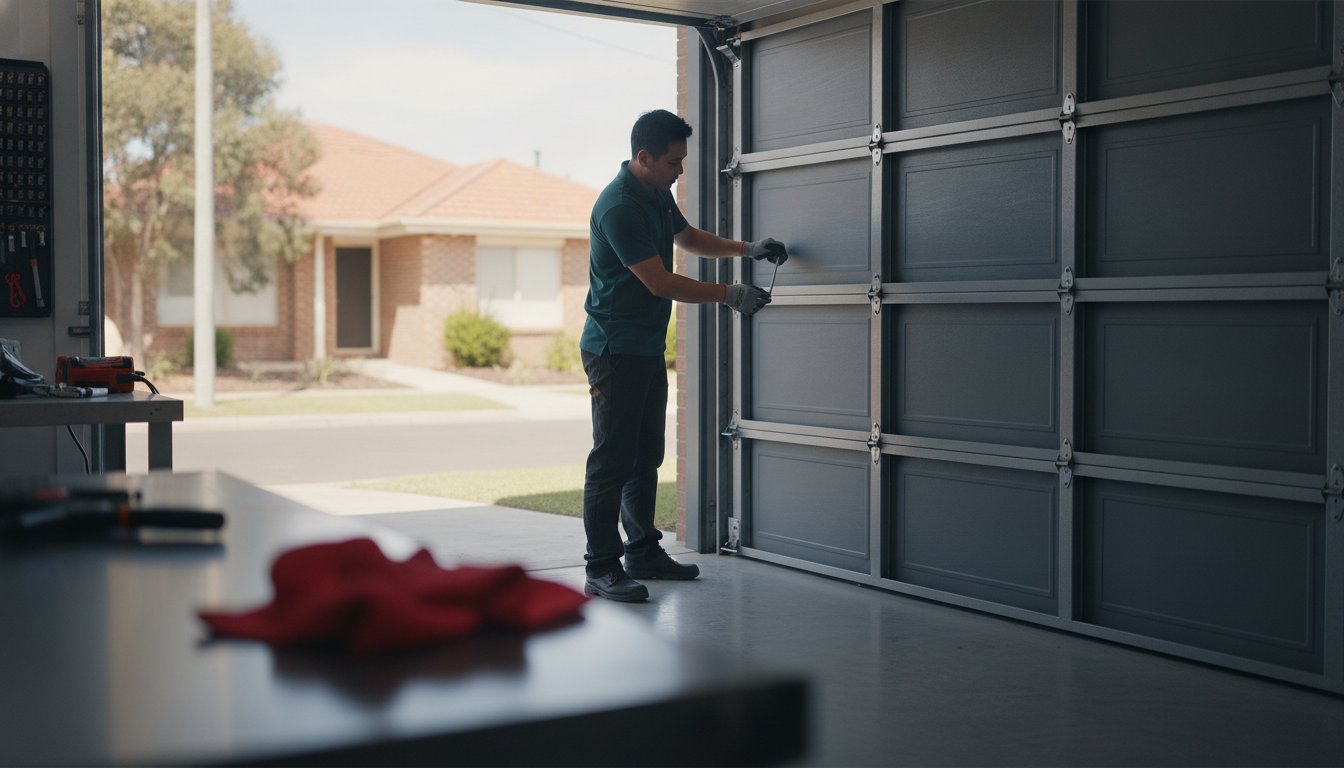
What if the largest moving part of your home is also the one you’re neglecting the most? Most Melbourne homeowners don’t give their garage door a second thought until it starts making a racket at 6:00 am or refuses to budge during a sudden Victorian downpour. It’s a stressful situation that often leads to genuine safety concerns about snapping springs or falling doors. Proper garage door maintenance Melbourne isn’t just another item for the weekend to-do list; it’s a vital safety-first ritual that ensures your home stays secure and your morning routine remains whisper-quiet.
You deserve the confidence that comes from a smooth-running system that won’t let you down when you’re already running late. We understand the confusion around which lubricants to use or how the local humidity causes track issues, so we’ve simplified the entire process for you. This 2026 checklist provides professional insights into protecting your investment and staying compliant with the latest AS/NZS safety standards. We will walk you through the essential checks for tracks, cables, and rollers, helping you avoid those hefty emergency repair bills while keeping your family safe.
Key Takeaways
- Understand how Melbourne’s unique temperature fluctuations affect metal components and why proactive checks are your best defence against sudden failure.
- Learn why silicone-based lubricants are the “secret sauce” for longevity and which common household sprays can actually cause long-term damage.
- Master the “Manual Balance Test” to ensure your motor isn’t overworking, helping you avoid a premature and costly replacement.
- Use our expert-led garage door maintenance Melbourne checklist to identify frayed cables and loose hardware before they become a safety risk.
- Identify the high-torque “Danger Zone” components that should never be a DIY project, keeping your home and family out of harm’s way.
Why Regular Garage Door Maintenance is Essential in Melbourne
Think of your garage door as the hardest-working entry point to your home. It’s easy to ignore until it stops working. Effective garage door maintenance melbourne is a proactive safety and performance check, designed to catch small issues before they become expensive headaches. It isn’t just about making sure the door opens; it’s about ensuring every mechanical part is operating within its safe limits. When you neglect these checks, you aren’t just risking a stuck car; you’re risking the structural integrity of your home’s largest moving object.
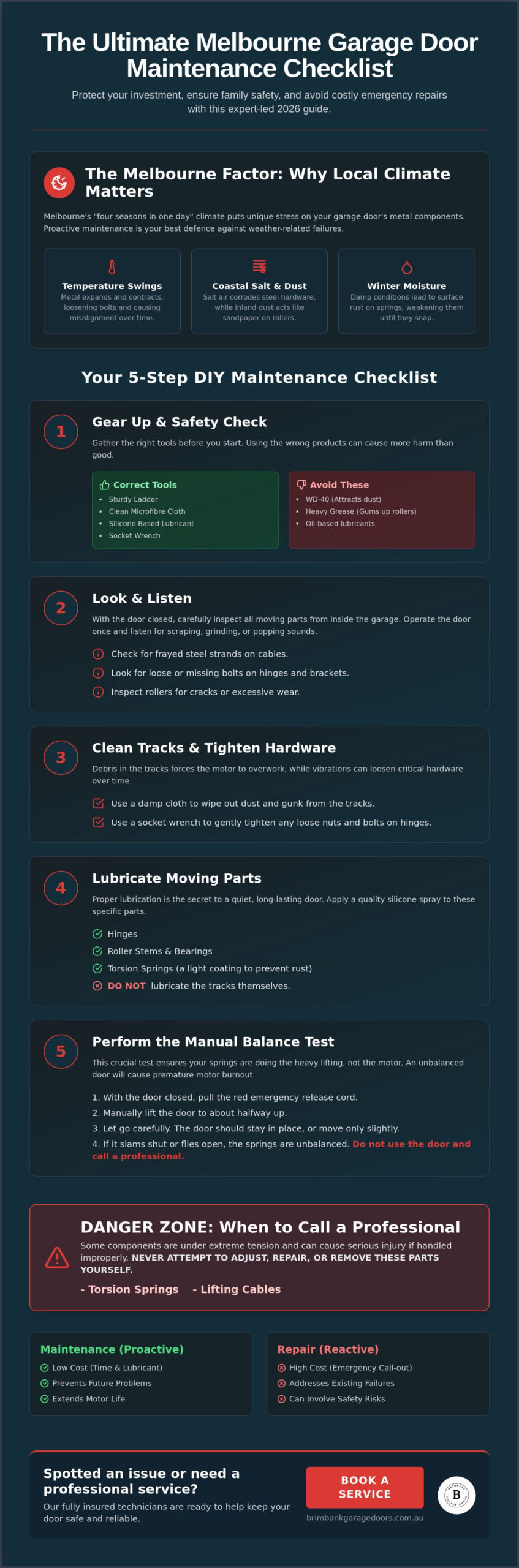
The Melbourne Factor is real. Our city is famous for its “four seasons in one day” weather, and while we might just grab a jacket, your garage door has to physically adapt. Metal components expand in the searing heat of a Victorian summer and contract during a frosty July morning. This constant movement puts immense stress on the springs, hinges, and tracks. Over time, bolts can rattle loose and tracks can shift out of alignment. Investing time in garage door maintenance melbourne ensures your system remains reliable throughout the year, regardless of the temperature swings.
Safety is the primary driver here. A standard residential door can weigh well over 100kg. If a spring snaps or a cable frays because of neglect, that weight becomes a significant hazard to children, pets, and your vehicles. Spending ten minutes on a DIY check is a small price to pay for peace of mind. From a financial perspective, the cost-benefit is clear. A simple visual inspection and some basic lubrication cost almost nothing, yet they can prevent an emergency repair bill that might run into hundreds of dollars. If you want to understand exactly what those repair costs look like, our detailed breakdown of garage door repair cost Melbourne homeowners are facing in 2026 will help you budget with confidence.
While structural maintenance like this is vital for your home’s longevity, upgrading your internal living areas is another great way to add value; if you’re looking for renovation inspiration, check out WDC Services.
The Impact of Melbourne’s Climate on Your Roller Door
Different suburbs face different environmental challenges. If you live near the coast, salt air is a constant corrosive threat to your steel cables and hardware. In the western plains, fine dust can build up in the tracks, acting like sandpaper on your nylon rollers. High-wind days in suburbs like Sunbury or Melton create a “sail effect” on large doors, which can pull the entire system out of its centre. Winter moisture is another culprit, leading to surface rust on unmaintained springs that eventually causes them to snap under tension.
Maintenance vs. Repair: Knowing the Difference
There is a clear distinction between these two tasks. Maintenance is the act of keeping the system running through cleaning, lubrication, and testing. Repair is what happens after a component has already failed. By following a regular garage door maintenance schedule, you can identify “pre-failure” signs. This might be a slightly frayed strand on a cable or a motor that is straining more than usual. For most Melbourne homes, we suggest a thorough check every 6 to 12 months to keep everything in peak condition and extend the life of your motor.
The Essential DIY Garage Door Maintenance Checklist
Conducting your own garage door maintenance melbourne doesn’t require a degree in mechanical engineering. It just requires a bit of patience and the right gear. Before you start, gather a sturdy ladder, a clean microfibre cloth, and a high-quality silicone-based lubricant. Avoid using heavy grease or WD-40, as these attract dust and can actually gum up the works over time. Being prepared ensures you can complete the job safely and efficiently without having to run back to the shed every five minutes.
Step one is always the visual inspection. While the door is closed, stand inside your garage and look closely at the cables, rollers, and hinges. You are searching for signs of wear, such as frayed steel strands on the lifting cables or loose bolts on the brackets. Adhering to CPSC garage door safety standards is about more than just compliance; it’s about protecting your household from a sudden mechanical failure. If you spot a cable that looks like an old piece of string, it’s time to stop and call for help.
Cleaning the tracks is your next priority. Use your damp cloth to wipe out the inside of the vertical and horizontal tracks. Over time, a thick “gunk” made of dust and old oil builds up, which forces your motor to work twice as hard to move the door. Clear this debris away to ensure a smooth path for the rollers. While you’re up there, check that all the hardware is tight. The constant vibration of the door moving up and down can slowly unscrew the hinges and brackets. A quick turn with a socket wrench can prevent a major misalignment later. If the hardware feels beyond a simple tighten, you might need professional garage door maintenance to reset the system correctly.
Monthly Visual Inspections and Cleaning
Don’t wait for a problem to arise before you look at your door. Every month, give the door curtain a quick wash with mild soapy water to prevent paint oxidation, especially in suburbs where dust is prevalent. To maintain the overall look of your home’s exterior, you can check out Deluxe FX Painting & Decorating. Clear any cobwebs or leaves from the tracks. When inspecting the “spring zone” at the top of the door, keep your hands away from the components. These springs are under extreme tension and are strictly for looking, not touching.
The Listen Test: What Your Door is Trying to Tell You
Your ears are often the first tools to detect trouble. A healthy door should move with a consistent, low-level motor hum. If you hear a straining sound, the motor is likely fighting against a heavy or unbalanced door. Sharp “popping” noises usually indicate a spring is binding or reaching the end of its life. Scraping or grinding sounds often mean the rollers are dragging rather than spinning, or the tracks have shifted out of alignment. Identifying these sounds early can save you from a total system breakdown.
Lubrication and Hardware: Maintaining a Quiet, Smooth Operation
Lubrication is the undisputed “secret sauce” for a long-lasting entry system. While most homeowners wait for a piercing screech before reaching for a spray can, proactive garage door maintenance melbourne involves lubricating moving parts before they show signs of distress. A well-lubricated door can easily reach a 15-year lifespan, whereas a dry, neglected one often requires a motor replacement much sooner. Friction is a mechanical thief; it steals years from your hardware and forces your opener to work harder than it was ever designed to.
We need to address the “No WD-40” rule immediately. It’s a common mistake to reach for the blue and yellow can, but traditional WD-40 is a degreaser and solvent, not a long-term lubricant. It might stop a squeak for an hour, but it actually strips away the essential oils your rollers and hinges need to survive. Over time, this leaves the metal vulnerable to the elements and can cause premature wear. For a truly professional result, you need to know how to lubricate a roller door using products designed for high-tension machinery.
Focus your efforts on the key friction points: the rollers, the hinges, and the pivot points of the springs. You don’t need to soak the entire door; a targeted application is much more effective. Apply a small amount of lubricant to the bearings inside the rollers and the moving joints of each hinge. This ensures that every part moves independently without dragging. If your garage door maintenance melbourne routine includes these specific points twice a year, you’ll notice a significant reduction in noise and a much smoother operation during those cold Victorian mornings.
Choosing the Right Lubricant for Australian Conditions
Melbourne’s climate demands specific products. We recommend using a high-quality silicone-based spray or a white lithium grease. These products are engineered to withstand our extreme temperature range without thinning out in summer or freezing up in winter. Avoid heavy, sticky greases that you might use on a car chassis. These substances act like a magnet for grit and debris. In Melbourne’s West, dust is the enemy of a clean track; always wipe before you lubricate. This simple habit prevents the formation of a “grinding paste” that can eat through metal tracks over time.
Checking and Tightening the Nuts and Bolts
Vibration is the silent enemy of mechanical stability. Every time that 100kg curtain rolls up or down, it sends micro-tremors through the hinges and brackets. Over hundreds of cycles, these vibrations naturally loosen the nuts and bolts holding your door together. Use a socket wrench to gently tighten the bolts on the hinges and the tracks where they meet the wall. However, you must exercise extreme caution. Never touch the bolts painted red or those specifically marked as high-tension areas. These hold the springs and bottom brackets under immense torque, and adjusting them without specialised tools can lead to serious injury.
Safety First: Testing Your Door’s Balance and Sensors
A garage door that isn’t balanced is a ticking time bomb for your motor. While the motor does the heavy lifting, it relies on the spring system to offset the door’s actual weight. When these springs lose tension or become too tight, the motor has to strain against 100kg of dead weight. This extra load leads to burnt-out circuit boards and stripped gears. Incorporating a balance check into your garage door maintenance melbourne routine is the most effective way to ensure your opener lasts for its full expected lifespan.
The Balance Test: Is Your Motor Working Too Hard?
Testing the balance is a straightforward process that you can do in under two minutes. Start with the door in the fully closed position and disengage the opener by pulling the manual release cord; this is usually the red rope hanging from the motor carriage. Once the door is in manual mode, lift it by hand to about waist height and let go carefully. You are looking for one of three outcomes:
- Success: The door stays in place or moves only a few centimetres. This means the springs are perfectly counterbalancing the weight.
- Failure (Heavy): The door crashes back down to the floor. This indicates the springs have lost tension and the motor is working too hard to lift it. If your door fails this test, understanding your options for garage door spring replacement western suburbs homeowners can access in 2026 is an important next step.
- Failure (Light): The door flies upward toward the ceiling. This means there is too much tension, which can be just as damaging to the system.
Testing the Auto-Reverse and Safety Sensors
Modern safety features are designed to protect your family and your car from being crushed. To test the auto-reverse mechanism, place a solid object like a piece of timber or a roll of paper towels flat on the ground in the centre of the door’s path. Close the door using the remote. As soon as the door strikes the object, it must immediately reverse and return to the open position. If it continues to push down, your opener’s force settings need urgent adjustment.
You should also inspect the “Photo-Eye” sensors located near the bottom of the tracks. These electronic beams detect anything in the doorway before contact is even made. Use a soft, dry cloth to wipe the lenses, as Melbourne dust or spider webs can cause “ghost” reversals where the door refuses to close for no apparent reason. Ensure the small LED lights on both sensors are glowing steadily; a flickering light usually means they have been bumped out of alignment. These safety tests should be performed every three months to keep your home secure. If your door fails the balance test or the auto-reverse doesn’t trigger, arrange a professional inspection to rectify the fault before it leads to an accident.
Knowing When to Hire a Professional Technician in Melbourne’s West
While the DIY steps we’ve covered will keep your door running smoothly, there’s a clear “Danger Zone” where homeowner maintenance must end. Garage doors rely on immense mechanical tension to operate. The springs and cables responsible for lifting that 100kg curtain are under enough torque to cause severe injury if they snap or are tampered with. Recognising the limit of your tools and expertise is a vital part of responsible garage door maintenance melbourne. If you encounter an issue involving the high-tension hardware, it’s time to step back and call a specialist.
Spring replacement is the most common task that people mistakenly try to tackle themselves. These components have a finite lifespan, usually measured in cycles. When a spring reaches the end of its life, it doesn’t just stop working; it can fail violently. Professional technicians use specialised winding bars and safety equipment to manage this tension safely. For residents in the western suburbs, a comprehensive roller door service ensures these critical parts are inspected with an expert eye, preventing a dangerous collapse before it happens. If you want to be fully prepared before calling a technician, our dedicated guide to garage door spring replacement western suburbs residents need in 2026 explains exactly what the process involves and how to identify failing components early. Before calling a technician, it also helps to understand the typical garage door repair cost Melbourne residents pay in 2026, so you can approach the conversation with realistic expectations and avoid being caught off guard by the final invoice.
Brimbank Garage Doors & Repairs is built on being a dependable neighbour for families in the West. We understand the specific wear and tear that occurs in areas like Sunbury, Keilor, and Caroline Springs, where wind and dust are constant factors. Our goal is to provide transparent, expert-led support so you never have to worry about the safety of your home’s largest moving part.
Signs of Frayed Cables and Worn-Out Springs
You can often spot trouble before it leads to a total breakdown. Look for “fatigue” in your springs, which often appears as visible gaps between the coils or a slight elongation of the metal. Cables are equally critical; if you see even a single silver strand sticking out or any signs of rusting near the bottom brackets, the cable is compromised. Another major red flag is “one-sided lifting”. If your door looks crooked as it opens or seems to catch on one side, one of your springs or cables is likely failing. This isn’t a minor tweak; it’s a signal that your door is no longer safe to operate.
The Professional Servicing Schedule
We recommend a professional service every 12 to 24 months for most residential doors. While your monthly garage door maintenance melbourne routine handles the surface-level care, a technician performs deep-system diagnostics. This includes re-tensioning the spring system, checking motor limit settings, and ensuring the auto-reverse functions meet current safety standards. A professional touch doesn’t just fix a noise; it preserves your home’s security and your family’s safety. If your door is struggling, making strange noises, or simply hasn’t been looked at by a pro in over two years, don’t leave it to chance. You can contact Brimbank Garage Doors & Repairs for honest, reliable advice and expert servicing tailored to the unique conditions of Melbourne’s West.
Keep Your Melbourne Home Safe and Quiet
Taking ownership of your home’s security starts with the small details. By integrating these simple checks into your routine, you’re doing more than just stopping a squeak; you’re protecting your family and your investment from the harsh Victorian elements. Proactive garage door maintenance melbourne is about catching the frayed cable or the dry roller before it leaves you stranded in your driveway on a Monday morning. You’ve now got the framework to keep your system running smoothly for years to come. For those also looking to refresh their home’s aesthetic, BC Interior Painting Pros demonstrates the impact that professional-grade interior work can have on a property’s overall appeal.
When the job moves into the “Danger Zone” or you simply want the peace of mind that comes from a professional eye, Matt at Brimbank Garage Doors & Repairs is here to help. As a specialist in high-quality spring replacements and roller door repairs, Matt has spent years serving homeowners across Sunbury, Keilor, and St Albans. He understands the unique challenges of Melbourne’s West and provides a reliable, expert-led service that neighbours can trust. Book a Professional Roller Door Service with Brimbank Garage Doors & Repairs Today. Let’s ensure your home remains safe, secure, and whisper-quiet.
Frequently Asked Questions
How often should I perform garage door maintenance in Melbourne?
Residential doors should be serviced every 6 to 12 months to ensure peak performance. In Melbourne, the fluctuating temperatures and coastal humidity can speed up wear on moving parts. Regular garage door maintenance melbourne prevents small issues like loose bolts from turning into motor failures. If you use your door more than four times a day, aim for a check-up every six months to keep the system running smoothly.
Can I use WD-40 to lubricate my garage door tracks?
Avoid using standard WD-40 on your tracks or rollers. While it’s a great solvent for cleaning, it’s a degreaser that actually strips away the essential lubrication your door needs. Instead, use a high-quality silicone-based or white lithium spray. These products are designed to stay on the hardware and provide long-lasting protection against friction without attracting excessive dust or grit that can gum up the tracks.
Why is my garage door making a loud grinding noise?
Grinding noises usually signal metal-on-metal contact caused by dry rollers or misaligned tracks. Over time, the vibration of the door can loosen hardware, causing the rollers to drag rather than spin. Check your tracks for debris or “gunk” buildup. If the noise persists after cleaning and lubricating, it may indicate that the door is out of square and requires a professional adjustment to prevent further damage to the motor.
Is it safe to replace my own garage door springs?
It is not safe to replace garage door springs as a DIY project. These components are under extreme tension and can cause serious injury if they snap or are released incorrectly. Professional technicians use specialised tools and winding bars to manage the torque safely. Always leave spring-related repairs to a qualified specialist who understands the high-risk nature of these high-tension systems and has the equipment to handle them safely.
What should I do if my garage door feels heavy to lift manually?
A heavy door is a clear sign of a balance issue, usually caused by tired or worn-out springs. If you perform a manual balance test and the door crashes down, the springs are no longer counterbalancing the weight. This puts massive strain on your automatic opener. Don’t continue using the motor in this state. You should contact a technician to re-tension or replace the springs immediately to avoid a total system failure.
Do I need to maintain my garage door if it’s automatic?
Automatic doors require just as much maintenance as manual ones. The motor is simply an opener; it isn’t designed to lift a heavy, unbalanced, or poorly lubricated door. Neglecting garage door maintenance melbourne for an automatic system will lead to stripped gears and burnt-out circuit boards. Keeping the tracks clean and the hardware lubricated ensures your motor doesn’t have to work harder than necessary, protecting your long-term investment.
How do I clean the safety sensors on my garage door?
Use a clean, soft, microfibre cloth to gently wipe the lenses of your safety photo-eye sensors. These are located near the floor on either side of the door. Avoid using harsh chemicals or wet cloths that could leave streaks or damage the electronics. Ensure the sensors are still pointed directly at each other. If the small LED indicator lights on the sensor housing are flickering, gently nudge them back into alignment.
What are the most common garage door issues in Melbourne’s western suburbs?
Homeowners in Melbourne’s West often deal with dust buildup in tracks and wind-related alignment issues. The open plains in suburbs like Sunbury and Caroline Springs mean high winds can put extra pressure on the door curtain, occasionally pulling it out of its tracks. Regular cleaning is essential to prevent the fine grit from acting like sandpaper on your rollers and causing premature mechanical wear on the entire opening system.