
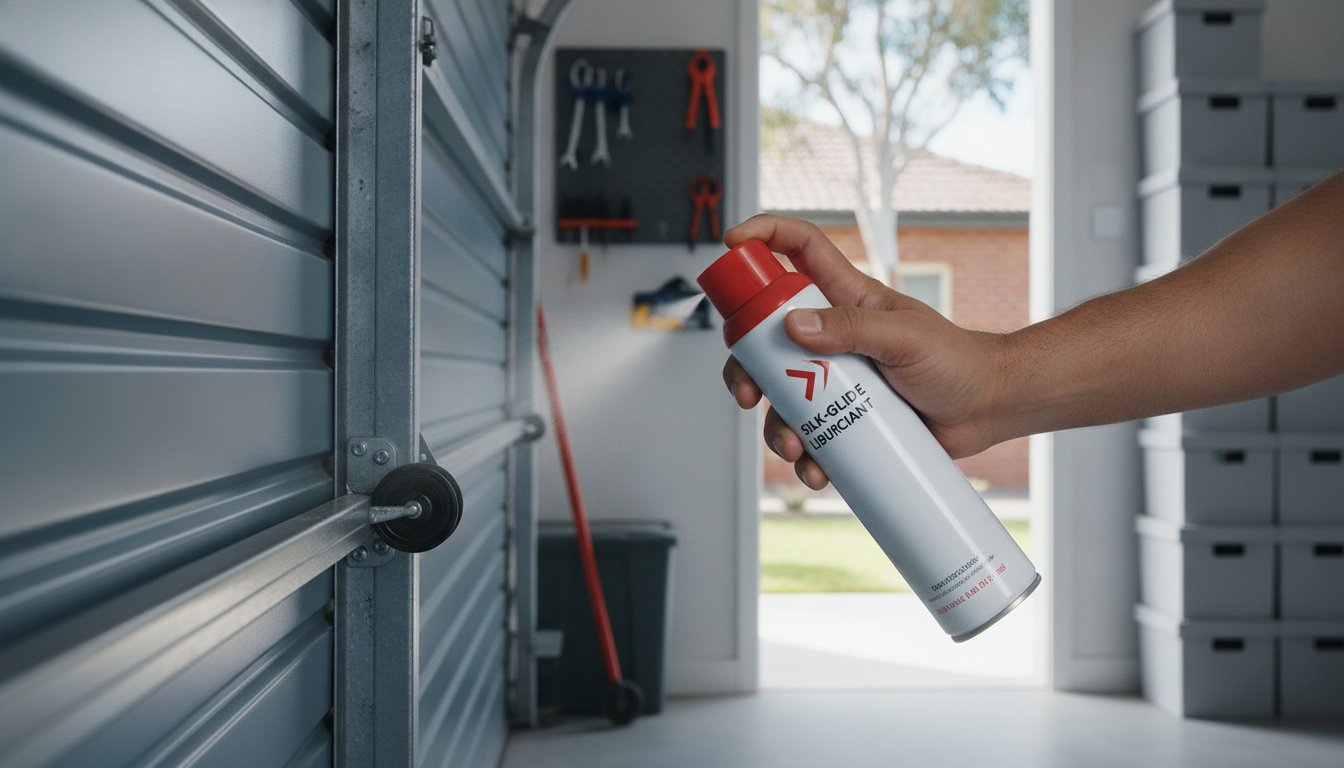

It is 6:00 AM on a quiet Melbourne morning and you press the remote, only for your garage door to let out a piercing screech that alerts the entire neighbourhood. It is a common frustration for many local homeowners, especially when the door starts feeling heavy or moving in jerky increments. If you have ever stood in the aisles of Bunnings feeling completely overwhelmed by the rows of different sprays, you aren’t alone. Knowing exactly how to lubricate a roller door is the simplest way to restore peace to your driveway and protect your home’s security.
We understand that you want a smooth, reliable door without the stress of unexpected breakdown costs. That is why we have put together this specialist maintenance guide to help you get the job done right the first time. You’ll learn the exact steps to quieten those screeching tracks and discover why the right non-stick lubricant is the secret to surviving Victoria’s unpredictable climate. We are going to cover everything from the essential cleaning phase to the specific products that prevent your rollers from seizing up, ensuring your door stays in top condition for years to come.
Key Takeaways
- Protect your automatic motor from the “Melbourne Screech” by reducing metal-on-metal friction caused by our extreme summer temperature shifts.
- Identify the correct high-grade silicone and lithium sprays to use while avoiding common degreasers that can actually strip away essential protection.
- Master the safe “top-down” method for how to lubricate a roller door to ensure smooth operation without risking your fingers or the motor’s electronics.
- Avoid the “Greasy Track” trap that leads to door slippage and jams by learning which specific components require oil and which must stay dry.
- Learn how to perform a simple balance test to recognise when a noisy door is a DIY fix or a sign that your springs require a professional service.
Why Regular Roller Door Lubrication is Essential for Melbourne Homes
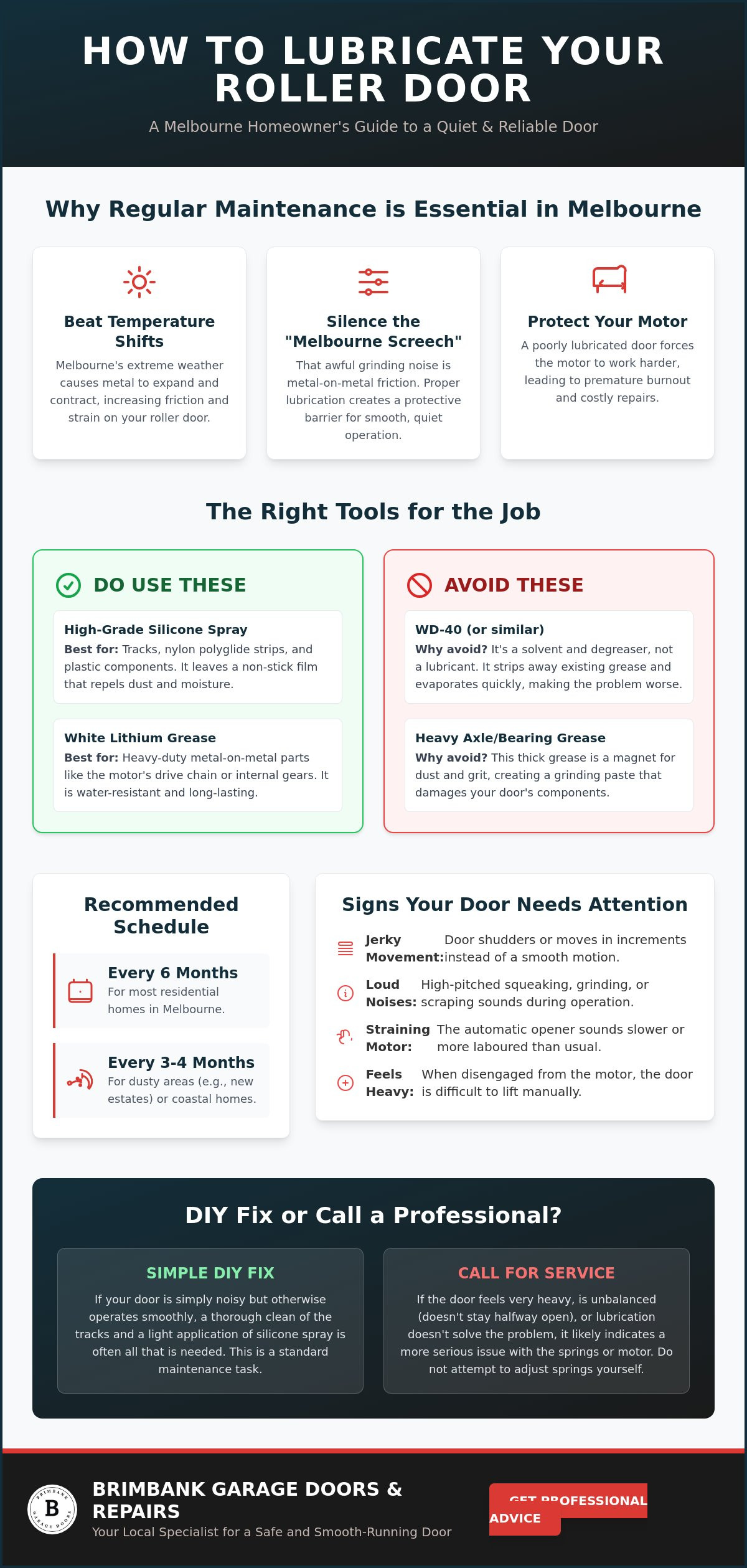
Melbourne’s weather is notoriously unpredictable. One day it is a scorching 40 degrees in the shade, and the next, we are hit with a damp, chilly morning. These rapid temperature shifts cause the metal in your garage door to expand and contract. This movement leads to the infamous “Melbourne Screech,” a high-pitched metal-on-metal friction sound that usually means your door is crying out for attention. Learning how to lubricate a roller door isn’t just about stopping a noise; it’s about protecting one of the largest moving parts in your home.
When a door lacks proper lubrication, the automatic motor has to work twice as hard to pull the weight. This extra strain significantly shortens the motor’s lifespan and can lead to expensive internal gear failures. For those living in coastal areas like St Kilda or Frankston, salt air adds another layer of risk by accelerating corrosion on the hardware. Regular maintenance acts as a shield, saving you hundreds of dollars in premature motor replacements or snapped springs. A smooth door is a safe door, and a quiet operation is the first sign that your system is healthy.
The Mechanics of a Quiet Roller Door
A quiet door relies on the interaction between the metal tracks and the nylon felt, often called polyglide, that runs along the edges of the door curtain. This felt is designed to reduce friction, but it cannot do the job alone when it becomes dry or clogged with grit. Friction is the primary enemy of your garage door springs. If the door isn’t sliding smoothly, the springs are forced to take up the slack, leading to metal fatigue. You should distinguish between a “noisy” door, which often just needs a clean and spray, and a “damaged” door where parts have actually begun to wear down or misalign.
How Often Should You Lubricate?
For most Melbourne residential homes, we recommend a 6-month rule for basic maintenance. However, your specific location in the city plays a huge role in this schedule. Homes in the western suburbs, such as Truganina or Point Cook, often deal with higher levels of dust and construction debris. This grit acts like sandpaper in your tracks, so you might need to clean and lubricate every three or four months. Look for these clear signs that your door is overdue for attention:
- The door moves in jerky increments rather than one smooth motion.
- The automatic motor sounds like it is straining or running slower than usual.
- Loud squeaking or grinding noises occur during the opening cycle.
- The door feels heavy when you try to lift it manually.
Knowing how to lubricate a roller door correctly ensures these minor issues don’t turn into major repair bills. It keeps your home secure and your morning routine peaceful.
Choosing the Right Lubricants: Silicone vs. Lithium Spray
Walk into any Bunnings and you’ll see a wall of aerosol cans that all claim to stop squeaks. Most homeowners instinctively reach for the classic blue and yellow can of WD-40. While it is a fantastic product for loosening rusted bolts, it is primarily a solvent and degreaser, not a long-term lubricant. It might quieten the noise for a day or two, but it quickly evaporates and can actually strip away what remains of the original factory grease. To master how to lubricate a roller door, you need products that stay put and repel the elements.
High-grade silicone spray is the gold standard for residential roller doors, particularly for the nylon polyglide and plastic components. It leaves a thin, clear film that provides excellent slip without becoming sticky. For heavy-duty metal-on-metal parts like the drive chain or screw on your opener, white lithium grease is the better choice. It is water-resistant and handles high pressure without being flung off the mechanism. Before applying any new product, ensure you have methylated spirits or turps and a clean microfibre cloth on hand to strip away old, contaminated residue.
The Problem with Heavy Grease
It is tempting to think that a thick layer of axle grease will provide the best protection, but the opposite is true. Heavy, tacky grease acts like a magnet for Melbourne’s fine dust and grit. This mixture eventually hardens into a thick grinding paste that eats away at your door’s components. In our experience, “more is not better.” A light, targeted application of the correct spray is far more effective than a heavy coating of the wrong one. If you find hardened, black sludge in your tracks, you must clean it off entirely before applying a fresh silicone-based lubricant.
Top Recommended Products in Australia
While professional technicians often use specialised industrial formulas, there are several reliable options available to the public. Brands like Selleys and 3-In-One offer high-quality silicone and lithium sprays that perform well in our local climate. If you are ever in doubt about which product suits your specific setup, a professional garage door maintenance service can ensure the right lubricants are applied safely to every moving part.
| Door Component | Recommended Product | Why It Works |
|---|---|---|
| Tracks and Polyglide | Silicone Spray | Stops sticking without attracting dust. |
| Opener Chain/Screw | White Lithium Grease | Handles heavy friction and stays in place. |
| Lock and Keyhole | Graphite Powder | Dry lubrication that won’t gum up the pins. |
| Hinges and Rollers | Silicone Spray | Provides a light, clean coating for smooth movement. |
Step-by-Step: How to Lubricate Your Garage Roller Door Safely
Before you start spraying any products, you must prioritise your safety. Garage doors are heavy, and the high-tension springs that counter-balance them carry enough force to cause serious injury if handled incorrectly. Start by disconnecting your automatic opener. Pull the manual release cord, which is usually the red handle, so you can operate the door by hand. This allows you to feel any sticking points or resistance that the motor might be masking. If the door feels exceptionally heavy or crashes down when released, stop immediately and contact a professional for garage door repairs, as your springs may be fatigued.
We recommend a “Top-Down” approach for maintenance. This method ensures that any excess cleaner or lubricant drips onto lower parts that still need attention, rather than ruining a section you have already finished. Always work with the door in the fully closed position first to access the springs and the top of the tracks safely. Once those areas are prepped, you can move the door manually to reach the internal components of the roll.
Cleaning the Guide Tracks Correctly
A common mistake Melbourne homeowners make is thinking the tracks need grease. In reality, the tracks should be as clean and dry as possible. Use a microfibre cloth dampened with methylated spirits to wipe out the internal “V” of the guide tracks. This removes the grey sludge of old grease, salt spray, and grit that builds up over time. Run your finger along the inside surface; it should feel smooth to the touch. A clean track allows the nylon polyglide to slide without resistance, which is far more important for a quiet door than adding more lubricant to a dirty surface.
Lubricating the Moving Parts
Once the tracks are spotless, you can begin the precision work of how to lubricate a roller door. Focus your attention on these specific areas:
- The Springs: Use a high-grade silicone spray to apply a light, even coat across the entire length of the torsion or extension springs. This prevents “chatter” as the coils rub against each other and stops surface rust from forming in damp weather.
- Bearings and Rollers: Target the centre of the rollers where the bearings are located. Use the plastic straw attachment on your spray can to get the lubricant deep into the mechanism.
- Hinges and Pivot Points: If your door has metal hinges, apply a small amount of white lithium grease to the pivot points to ensure they rotate freely without binding.
- The Lock: Don’t use oil in the keyway. Instead, use a puff of graphite powder to keep the pins moving smoothly without attracting the gunk that causes keys to stick.
After applying your lubricants, open and close the door manually several times. This helps distribute the products into the moving parts. Wipe away any drips immediately to prevent them from staining your driveway or the door curtain.
Common Lubrication Mistakes That Can Damage Your Door
Even the best intentions can lead to a costly repair bill if you apply the wrong technique or product. Many Melbourne homeowners assume that any moving part should be covered in thick grease to ensure it stays quiet. This is a dangerous misconception. In fact, using heavy automotive grease or, worse, household cooking oils, can cause your door to fail prematurely. Cooking oil eventually turns rancid and sticky, while heavy grease becomes a magnet for the fine grit common in Melbourne’s western suburbs. This creates a destructive paste that grinds away at your door’s finish and mechanical components.
Another frequent error is over-lubricating the automatic motor. While the internal gears need protection, spraying lubricant directly into the motor casing or onto the drive belts can cause electrical shorts or belt slippage. If the belt or chain starts to slip, the motor’s safety sensors may trigger incorrectly, causing the door to reverse or jam unexpectedly. Understanding the nuances of how to lubricate a roller door means knowing exactly where to stop. Lubrication is a supplement to smooth operation, not a “band-aid” fix for a door that has fundamentally lost its balance or has snapped internal springs.
Why Tracks Must Stay Dry
The most common mistake we see is oiling the guide tracks. Your roller door features a nylon braid or “polyglide” felt along its edges. This material is designed to slide against the metal track with minimal friction. When you apply oil or grease to the tracks, it soaks into this felt, causing it to swell, rot, or detach from the door curtain. Once the braid is compromised, the door will begin to “telescope” or move unevenly. The correct way to ensure a smooth glide is to keep those tracks spotless and dry, as we discussed in the cleaning phase. A clean, dry track allows the nylon to do its job without the need for liquid lubricants that only serve to trap abrasive dust.
Identifying “Fake” Fixes
It is vital to distinguish between a “dry” door and a door with serious mechanical fatigue. A high-pitched squeak is often just a cry for silicone spray, but a heavy grinding sound or a visible fraying of the side cables is a warning sign of imminent failure. Spraying more lubricant on a frayed cable won’t stop it from snapping. Similarly, never attempt to “tighten” the springs yourself while you are performing maintenance. These springs are under immense tension and require specialised tools for adjustment. If you’ve applied the correct products and the door still feels heavy or jerky, it’s a sign of a deeper mechanical issue that requires professional garage door repairs to ensure your home remains secure and your family stays safe. Knowing how to lubricate a roller door includes knowing when to put the spray can down and call in a specialist.
When DIY Isn’t Enough: Signs You Need a Professional Service
While mastering how to lubricate a roller door is a vital skill for every Melbourne homeowner, it is not a universal cure for all garage door woes. Mechanical parts have a finite lifespan. No amount of silicone spray will fix a snapped spring or a motor with stripped internal gears. Recognising the difference between a door that is simply “dry” and one that is structurally compromised is essential for your family’s safety and the long-term security of your home.
If you have followed the maintenance steps and the door still groans, jerks, or feels heavy, it is time to look closer at the hardware. A struggling motor has a distinct, low-pitched hum compared to the high-pitched screech of a dry track. You should also keep an eye out for visible signs of wear, such as frayed side cables that look like they have “hairs” sticking out, or gaps in the coils of your springs. These are clear indicators that the components are nearing the end of their service life and could fail unexpectedly. Booking a roller door service in Melbourne’s West at this stage can prevent a minor wear issue from escalating into a costly emergency repair.
The 10-Second Balance Test
The most effective way to check if your door requires professional attention is the balance test. Disconnect your automatic opener and lift the door manually to about waist height. Release it slowly. A well-maintained door should stay in place or move only slightly. If the door crashes to the floor or flies upward on its own, your spring tension is incorrect. Adjusting these springs is strictly a professional task; they are under extreme tension and can cause severe injury if they snap or unwind during a DIY attempt.
Professional Maintenance vs. DIY
A professional service call from Matt at Brimbank Garage Doors goes far beyond basic lubrication. While you can handle the cleaning and spraying, a technician performs a comprehensive safety audit that includes a range of technical checks. These ensure the longevity of your system and the safety of your household.
- Spring Tensioning: Calibrating the springs to ensure the door is perfectly balanced, which extends the life of your motor.
- Alignment Checks: Ensuring the tracks are perfectly vertical and the door curtain is level to prevent “telescoping.”
- Hardware Tightening: Securing every bolt and nut that may have vibrated loose over months of use.
- Safety Reverse Testing: Verifying that the motor’s sensors are working correctly to protect children and pets.
If your door is showing signs of fatigue, don’t risk a DIY repair on high-tension components. It is far safer and more cost-effective to book a professional roller door service in Melbourne’s West before a minor tension issue turns into a major emergency. Regular professional care combined with your new knowledge of how to lubricate a roller door will keep your garage operating quietly and safely for years.
Keep Your Garage Door Running Smoothly Year-Round
Maintaining your garage door doesn’t have to be a daunting task. By choosing high-grade silicone sprays and keeping your tracks clean and dry, you’ve already taken the most important steps to prevent the “Melbourne Screech.” Consistency is key; a quick ten-minute maintenance session every six months will protect your motor and save you from the stress of a sudden breakdown. Now that you know exactly how to lubricate a roller door, you can approach your home maintenance with confidence and clarity.
If your door still feels heavy or you’ve spotted signs of wear on those high-tension springs, it’s always better to play it safe. We are your local Melbourne specialists with years of experience in residential roller door spring replacements. Our team provides reliable service across Melbourne’s western and northern suburbs, prioritising your family’s safety and home security above all else.
Need a hand? Contact Brimbank Garage Doors for expert repairs and servicing in Melbourne’s West
Take care of your door today, and it will keep your home quiet and secure for years to come.
Frequently Asked Questions
What is the best lubricant for a garage roller door in Australia?
High-grade silicone spray is the most effective choice for Australian roller doors. It provides a clean, non-stick coating that won’t attract the fine dust common in many Victorian suburbs. For the heavier drive chains or screw drives on your automatic opener, use a white lithium grease. This combination ensures every part of your door system is protected against friction and our variable coastal climate.
Can I use WD-40 on my garage door tracks?
You should avoid using standard WD-40 on your garage door tracks. While it is excellent for loosening rusted bolts, it acts as a solvent and degreaser. It will strip away the factory lubrication and evaporate quickly, leaving your door more vulnerable to friction than before. Stick to a dedicated silicone spray to keep the movement smooth and quiet over the long term.
Why is my roller door making a loud screeching noise?
That piercing screech is usually caused by metal-on-metal friction or dry nylon felt rubbing against the steel guide tracks. Melbourne’s extreme summer heat causes the metal curtain to expand, which worsens any existing dry spots. Learning how to lubricate a roller door correctly will eliminate this noise by restoring the necessary “slip” between the moving curtain and the stationary tracks.
How often should I clean my garage door tracks?
We recommend cleaning your tracks at least every six months for most Melbourne homes. If you live in a high-wind area or a new estate in the western suburbs where construction dust is prevalent, you should increase this to every three months. Wiping out the tracks with methylated spirits ensures that grit doesn’t build up and act like sandpaper on your door’s components.
Is it safe to lubricate the garage door springs myself?
It is perfectly safe to apply a light coating of silicone spray to the surface of your springs to prevent rust and noise. However, you must never attempt to tighten or adjust the springs yourself. These parts are under immense tension and require specialised tools and training to handle safely. If the springs look gapped or the door feels heavy, call a professional for assistance.
What happens if I put grease in my garage door tracks?
Putting heavy grease in your tracks is a recipe for disaster. Grease is a magnet for dust, hair, and grit, which eventually turns into a thick, abrasive sludge. This “grinding paste” can rot the nylon braid on the edge of your door and cause the motor to burn out as it struggles to pull the door through the sticky mess. Always keep tracks clean and dry.
How do I know if my garage door springs need replacing or just oiling?
You can determine this by performing a simple balance test. If your door squeaks but stays in place when lifted halfway manually, it likely just needs a light application of lubricant. If the door crashes down or feels like a dead weight, the springs have lost their tension or reached their cycle limit. In these cases, oiling won’t help and a professional spring replacement is necessary for safety.
Does lubricating my garage door help the automatic opener last longer?
Regular maintenance significantly reduces the physical load on your automatic motor. When you understand how to lubricate a roller door, you ensure the motor doesn’t have to fight against friction or “jerky” movements. This prevents the internal plastic gears from stripping and keeps the motor running cool, which can add years to the lifespan of your expensive opener system.