
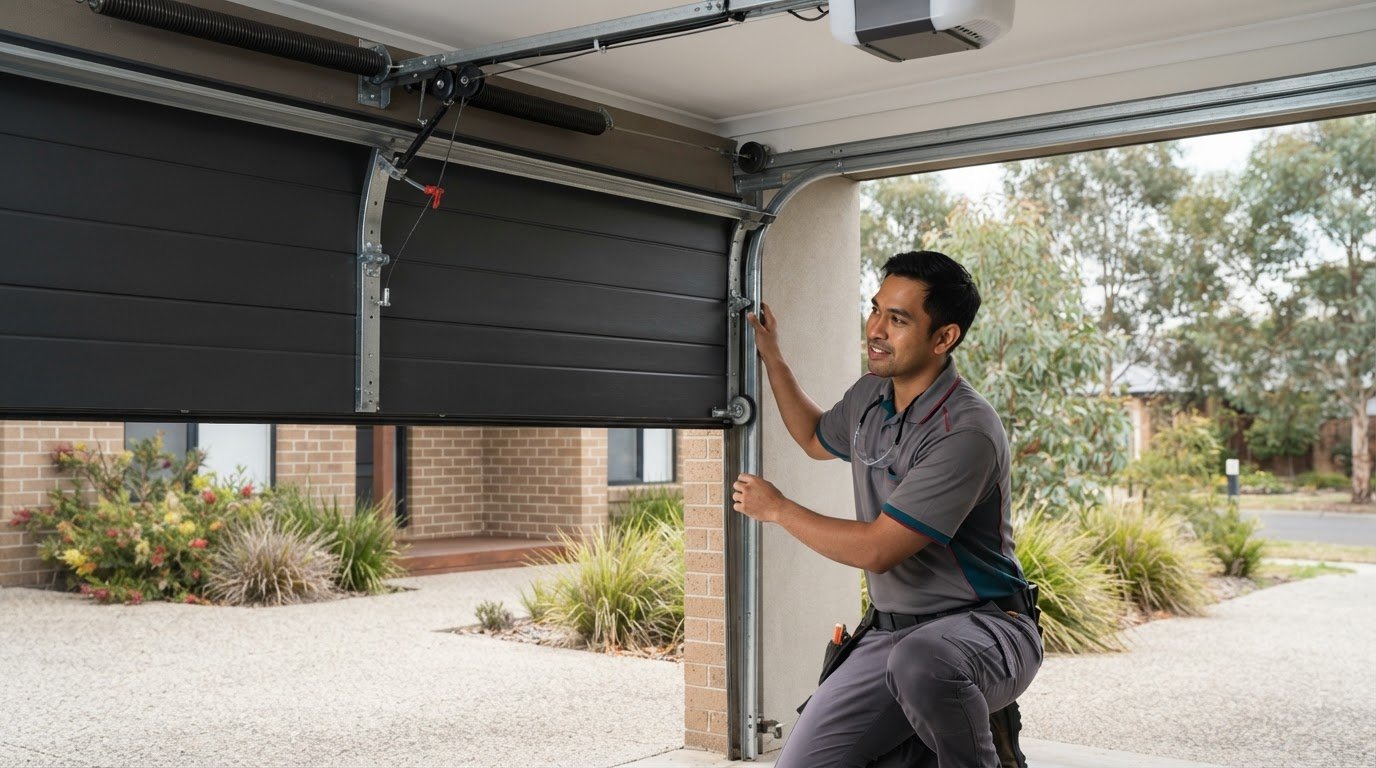
If your Steel-Line sectional door gets stuck, the safest first step is to stop trying to force it. Grinding noises, uneven movement or a door halted halfway can be unsettling, especially when a heavy panel is involved. If you’re fixing a steeline sectional door, start with simple visual checks and know when to leave the problem to a garage door professional.
You want a door that opens and closes smoothly without risking further damage or anyone’s safety. This guide covers common reasons a Steel-Line door may not close properly, from simple obstructions to issues with rollers, tracks or springs. You’ll learn what you can inspect safely, what to leave alone and when to arrange a repair in Melbourne’s western suburbs.
Key Takeaways
- Spot signs of misalignment, such as uneven panel gaps or scraping, before they lead to more wear.
- Understand how panels, tracks, rollers, hinges and springs work together to move a sectional door.
- Try basic checks, including inspecting the safety beams, when fixing a steeline sectional door.
- Look for early signs of spring wear or fraying cables, but don’t attempt hazardous repairs.
- Know when spring or cable problems need a professional garage door repair in Melbourne’s western suburbs.
Identifying Common Steel-Line Sectional Door Issues
A Steel-Line sectional door, also called a panel-lift door, is made of hinged horizontal panels that travel up vertical tracks and sit overhead when open. The panels need to move together smoothly, so a problem with one roller, hinge or section can affect the whole door. For an overview of the components of a garage door, see Wikipedia, then use the signs below to narrow down what may be happening with yours.
Look for changes in how the door sits and sounds. Uneven gaps between panels, one side lifting ahead of the other, scraping along a track or fresh scuff marks may point to misalignment or worn hardware. Rollers can become noisy, rough or visibly damaged, while hinges may look loose, distorted or worn around their pivot points. A new rattle is worth noticing, as it can be an early sign that something needs attention.
Does the door start closing, then reverse before it reaches the floor? This can happen if the safety beams detect an obstruction, are blocked or are out of alignment. If the opening is clear, the door may also have an issue with its travel or operating settings. Note when the reversal happens and whether the door moves smoothly beforehand. Avoid repeatedly cycling it if its movement is erratic.
Why Sectional Doors Struggle in Melbourne
Melbourne’s changing weather can make metal components expand or contract slightly, sometimes highlighting an existing tight spot or alignment issue. Strong winds across the western suburbs can put pressure on a closed door and expose looseness or wear in the track system. Ground movement can also leave the garage floor uneven, affecting how the bottom seal meets it. These factors don’t confirm a fault by themselves, but they’re useful clues when a door’s operation changes.
The Difference Between Sectional and Roller Doors
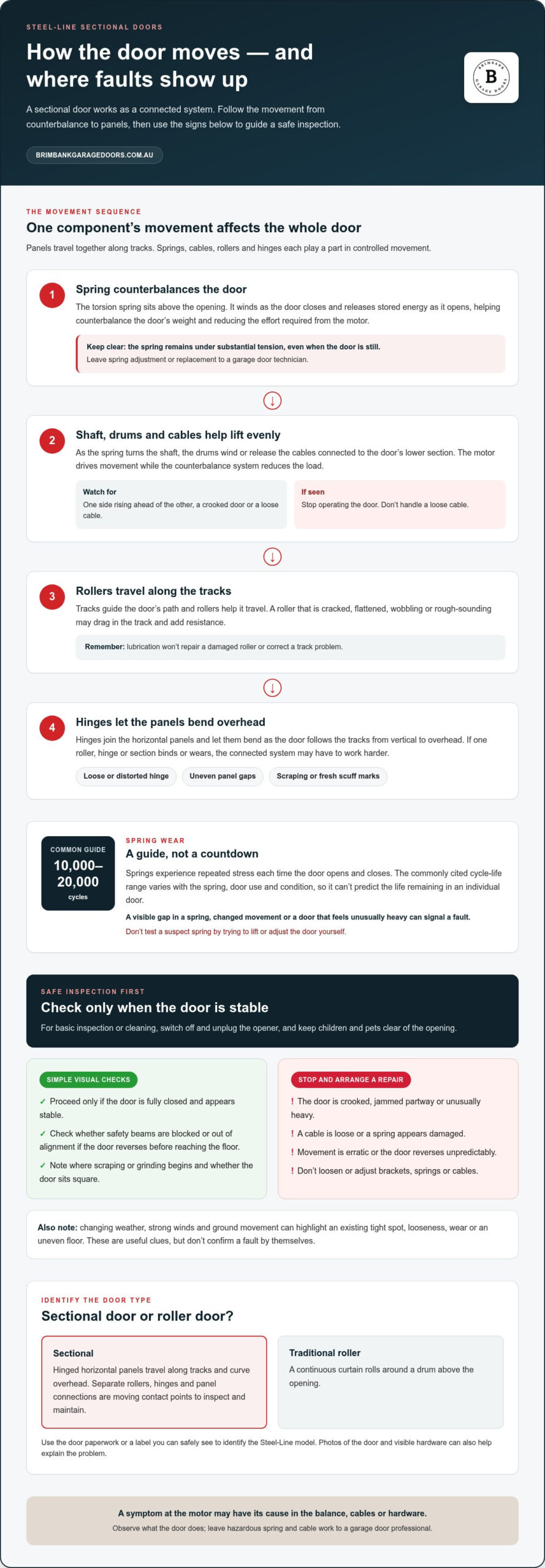
A sectional door travels in hinged panels along tracks and curves overhead. A traditional roller door uses a continuous curtain that rolls around a drum above the opening. Sectional doors have separate rollers, hinges and panel connections, which means there are more moving contact points to inspect and maintain. Identify your Steel-Line model using its paperwork or a label you can safely see. Photos of the door and visible hardware can also help explain the problem.
When fixing a steeline sectional door, distinguish a simple obstruction from a mechanical warning. Note whether the problem happens while opening or closing, whether the door sits square in the opening, and where scraping or grinding begins. Don’t force a door that’s crooked, jammed or reversing unpredictably. These observations can help a repairer identify the cause instead of treating only the symptom.
The Mechanics of a Steeline Sectional Door
A sectional door moves as a connected system, not as a single panel. The panels form the door curtain, while tracks guide its path and rollers help it travel. Hinges join the panels and let them bend as the door turns overhead. Springs counterbalance the door’s weight, making controlled movement possible. If one part binds or wears, the rest of the system may have to work harder.
Brackets secure hardware such as tracks and spring supports to the door structure and surrounding frame. Their position and condition matter because they help hold working components in place under load. Don’t loosen or adjust a bracket to solve a noise or alignment problem. The correct hardware and setup depend on the door, and changes can affect safe operation.
Understanding Torsion Springs
A torsion spring is a high-tension energy storage device that helps counterbalance a garage door. Mounted above the opening, it winds as the door closes and releases stored energy as the door opens. This reduces the effort required from the motor, but the spring remains under substantial tension even when the door is still. Keep clear of it, and leave adjustment or replacement to a garage door technician.
Springs have a finite cycle life because each opening and closing puts the metal through repeated stress. A commonly cited guide is around 10,000 to 20,000 cycles, but the actual life varies with the spring, door use and condition. That range isn’t a reliable countdown for an individual door. A change in movement, a visible gap in a spring or a door that feels unusually heavy can signal a fault. Don’t test a suspect spring by trying to lift or adjust the door yourself.
Cables, Drums and Rollers at Work
Cables connect the door’s lower section to drums on the shaft above. As the spring turns the shaft, the drums wind or release the cables, helping raise and lower the door evenly. The motor drives the movement, but the counterbalance system reduces the load. A damaged cable or uneven drum movement can make one side rise ahead of the other. Stop operating a door that looks crooked, and don’t handle a loose cable.
Where fitted, nylon rollers can help reduce running noise in a residential setting. Look for visible cracking, a flattened area on the wheel, wobbling or a rough sound as the door moves. A worn roller may drag in the track, increasing resistance and placing extra strain on the motor. Lubrication won’t repair a damaged roller or correct a track problem.
Understanding how the components interact makes fixing a steeline sectional door less of a guessing game. A symptom may show up at the motor, while the cause lies in the balance, cables or hardware. For a persistent fault, Brimbank Garage Doors & Repairs can assess the system and carry out sectional door repairs in Melbourne’s west.
Step-by-Step Troubleshooting for Minor Fixes
Start with safety. Switch off and unplug the opener before inspecting or cleaning the door, and keep children and pets clear of the opening. Don’t attempt these checks if the door is crooked, jammed partway, unusually heavy, or has a loose cable or damaged spring. Using the manual release can leave an unbalanced door unsupported, so stop and arrange a repair if you suspect a counterbalance fault.
Fixing a Steeline Sectional Door: The 4-Step DIY Check
Work through these checks only if the door is fully closed and appears stable. They’re for simple obstructions, not mechanical repairs.
- Check the photo-eye sensors. Clear objects from the beam’s path and gently wipe each sensor lens with a soft, dry cloth. Look for indicator lights and make sure the sensors face each other. Don’t adjust wiring or brackets.
- Clean the track curve. Use a damp cloth to remove loose grit from the accessible inside surface of the track, especially around the curve. Keep fingers clear of rollers and don’t bend or loosen the track.
- Consider the manual release carefully. Only if the door is closed, looks level and shows no sign of spring or cable damage, follow the manufacturer’s instructions to disengage the opener. Don’t force the door by hand. If it feels heavy, catches or moves unevenly, stop and leave it closed.
- Inspect the bottom seal. Remove leaves, grit or other debris from the seal and floor contact area. An obstruction here can prevent the door closing fully or trigger a reversal.
Once you’ve finished, clear the opening and restore power. Watch one operating cycle from a safe distance. If the door still reverses, grinds or moves unevenly, stop using it rather than repeating the test.
Lubrication: The Right Way vs. The Wrong Way
Tracks guide the rollers, so keep them clean rather than coating them in lubricant. Heavy grease can collect dust and grit, and WD-40 isn’t a substitute for garage-door lubricant. Follow Steel-Line’s care instructions for your model. Where lubrication is recommended, use a suitable silicone-based or lithium spray sparingly on the designated hinges and moving spring surface. Don’t spray the tracks, cables, sensors or motor.
Never touch, adjust or remove a spring. Wipe away excess lubricant so it doesn’t drip onto panels or the floor. Don’t tighten or remove hinge fasteners as a DIY fix; a damaged, distorted or loaded hinge needs professional attention. Knowing these limits makes fixing a steeline sectional door safer and helps prevent a minor issue from becoming a bigger repair.
Preventing Future Breakdowns with Regular Maintenance
Routine attention can catch changes before your door gets stuck or puts extra strain on the opener. Melbourne conditions matter: shifting temperatures can affect alignment, while wind-driven dust and debris can collect around tracks and seals. In coastal or industrial areas, rinse dirt and residue from the Colorbond finish with water and a soft cloth, then dry it. Avoid abrasive cleaners that can damage the coating and leave the surface more vulnerable to corrosion.
Pay attention to spring performance, but don’t try to adjust a spring yourself. A door that begins to feel heavy, moves unevenly or won’t stay in position may have lost balance as spring tension changes. A technician can perform a balance test safely and assess whether the spring needs attention. Frayed, kinked or slack cables are a serious warning sign. Don’t operate the door or touch the cable if you spot damage.
The Homeowner’s Monthly Checklist
Make a brief visual and listening check each month, keeping clear of moving parts. Listen for new clicks, pops or squeaks, and look for debris or damage from a safe position. Keep bikes, garden tools and stored items away from the tracks so nothing obstructs the door’s path. If you are balancing routine upkeep with larger domestic projects, property maintenance specialists such as Polkadot provide helpful guidance on planning project schedules and renovation timelines.
- Test the auto-reverse: Follow the Steel-Line manual for your model. If it directs you to use a 40mm timber block, place it flat in the centre of the door’s path and operate the door from the control. The door should reverse on contact. Keep people clear and never use your hands or feet to test it.
- Check the cables visually: Look from the ground for fraying, kinks or slack. Don’t reach towards them or attempt a repair.
- Notice changes: Record new sounds, uneven movement or repeated reversing. This pattern can help identify a developing fault.
Extending the Life of Your Motor
A correctly balanced door places less load on its opener. If the motor strains, sounds different or struggles to move the door, don’t assume the opener itself is the only cause. The door may be binding or out of balance. Check remote and wall-control batteries if operation becomes intermittent, and replace them according to the manufacturer’s instructions.
For most household doors, an annual professional service is a sensible maintenance interval. Steel-Line warranty requirements can vary, so use the documentation supplied with your particular door for model-specific servicing guidance. Regular servicing can identify wear in moving hardware before it turns into a larger repair. For practical garage door maintenance in Melbourne, review the recommended checks and keep a simple record of service dates.
Leave spring and cable work to a specialist, especially if a balance check reveals a heavy or uneven door. Brimbank Garage Doors & Repairs provides residential sectional door maintenance and repairs across Melbourne’s western suburbs.
When to Call a Professional for Steel-Line Repairs in Melbourne’s West
Some checks are suitable for a careful homeowner. Springs and lifting cables are different. Treat them as the red zone: don’t loosen, remove, wind or adjust them, even if the door is stuck and the repair looks straightforward. If a cable is frayed or a spring appears damaged, keep people clear and don’t operate the door. A heavy sectional door can shift suddenly when its counterbalance system fails.
A torsion spring stores force as it’s wound around a shaft above the opening. Adjusting it calls for the correct winding bars and a controlled technique, along with an understanding of how the spring and door are balanced. Improvised tools such as screwdrivers can slip under load. A technician can inspect the spring, drums, cables and door together, then make a repair that addresses the cause rather than masking the symptom.
The Danger of DIY Spring Replacement
Spring failure can cause serious injury or property damage. Don’t try to release spring tension or replace a broken spring yourself. If the door is raised, crooked or jammed, stay clear and leave it where it is rather than attempting to lower it by hand. For a safer overview of garage door spring replacement in Melbourne’s western suburbs, follow advice focused on professional spring work.
Why Choose Brimbank for Your Local Repair
Residential garage layouts and access differ from one home to another across Melbourne’s western suburbs. A repairer needs to assess the door, its hardware and the way it’s being used, rather than guess from a sound or a brief description. Brimbank Garage Doors & Repairs focuses on residential garage door repairs, installation and maintenance in Melbourne’s western and northern suburbs.
The assessment considers the door as a complete working system, not just the part that has failed. Brimbank Garage Doors & Repairs also supplies and fits residential garage roller doors and replacement springs, with repairs focused on reliable operation.
Arrange professional attention if the door is heavy, uneven, repeatedly reverses, makes a sudden loud bang, or has a damaged spring, loose cable or bent track. Share what the door does, when the fault began and whether it still moves. Don’t keep testing a door that behaves unpredictably. These details give the repairer a useful starting point for diagnosing the fault safely.
Fixing a steeline sectional door doesn’t mean every component needs replacing. A proper assessment can distinguish a worn part from a balance or alignment issue and help avoid a temporary patch that fails again. Brimbank Garage Doors & Repairs provides residential garage door repairs in Melbourne’s western suburbs, with practical advice and repairs focused on safe, consistent operation.
Get Your Garage Door Back to Reliable Operation
A garage door that works smoothly is easy to take for granted until it disrupts your day or raises concerns about safety at home. Act on changes early. If the fault is beyond a simple, safe check, avoid forcing the door and arrange an assessment before the issue develops further.
Fixing a steeline sectional door is about more than getting it moving again. The aim is dependable operation and a repair that addresses the cause, so you can use your garage with greater confidence. Clear, practical guidance can help you understand the issue and the work needed.
Brimbank Garage Doors & Repairs helps homeowners with residential Steel-Line door repairs and spring replacements across Melbourne’s western suburbs. Arrange a Steel-Line door repair with Brimbank Garage Doors & Repairs if your door is stuck, noisy or moving unevenly.
Frequently Asked Questions
Can I fix a snapped Steeline sectional door cable myself?
No. A snapped or loose cable is under load and can leave the door unstable, so don’t try to reconnect it, cut it or operate the opener. Keep people clear of the garage opening and leave the door where it is. A technician can inspect the cable, drums and related hardware to identify what failed. DIY attempts at fixing a steeline sectional door cable can make the door shift unexpectedly.
Why is my Steel-Line garage door making a loud banging noise?
A sudden loud bang can indicate a broken spring, but it may also come from another mechanical fault. Stop operating the door and keep clear, particularly if it now looks uneven or won’t move. Don’t try to confirm a spring problem by touching or adjusting the hardware. Note whether the noise happened while opening or closing, then share that detail when arranging a repair.
How much does it cost to fix a Steeline sectional door in Melbourne?
The cost depends on what has failed and whether the repair involves a minor adjustment, replacement hardware, a spring or more than one component. A door that’s stuck may have a simple obstruction, but the same symptom can come from a mechanical fault. For an accurate assessment, describe what the door does, any unusual noises and visible damage. Don’t keep operating it to gather more information if it’s unsafe.
How do I know if my sectional door springs need replacing?
A spring may need professional attention if you see a visible gap in its coil, hear a sudden bang, or notice the door has become unusually heavy or uneven. The opener may also struggle where it previously worked normally. Don’t touch the spring or attempt a balance test if you suspect damage. A garage door technician can assess the spring and counterbalance safely and determine whether replacement is needed.
My Steel-Line door opens but won’t close. What is the most common cause?
A blocked or misaligned safety beam is a common cause, as the opener may detect something in the closing path and stop or reverse. Check for an object between the sensors and gently clean their lenses. If the path is clear, note any sensor indicator lights and check whether the door closes using the wall control. Persistent reversing can have other causes, so don’t bypass the safety system.
Can I use any garage door motor with a Steeline sectional door?
No, don’t assume every motor will suit your door. Compatibility depends on the door’s size, weight, movement and the opener’s operating requirements. An unsuitable motor may not move the door correctly or operate its safety features as intended. Check the instructions for your Steel-Line model and have a garage door technician assess the setup before replacing an opener. Don’t alter the door or safety equipment to make a motor fit.
How often should I have my Steel-Line garage door serviced in Melbourne?
Arrange a professional service about once a year, and sooner if the door starts moving unevenly, develops new noises or is used heavily. A service can identify wear that isn’t obvious during a visual check, including changes in balance and hardware condition. Steel-Line warranty requirements may vary by model or component, so refer to your door documentation for any specific maintenance conditions that apply.
What is the manual release and how do I use it on a Steel-Line door?
The manual release disengages the opener so the door can be operated by hand, such as during a power outage. Follow the instructions for your specific model, and only release it if the door is fully closed and appears stable. Don’t use the release if a spring or cable may be damaged, as the door could become difficult to control. Keep clear and get professional help if it feels heavy or won’t move smoothly.