
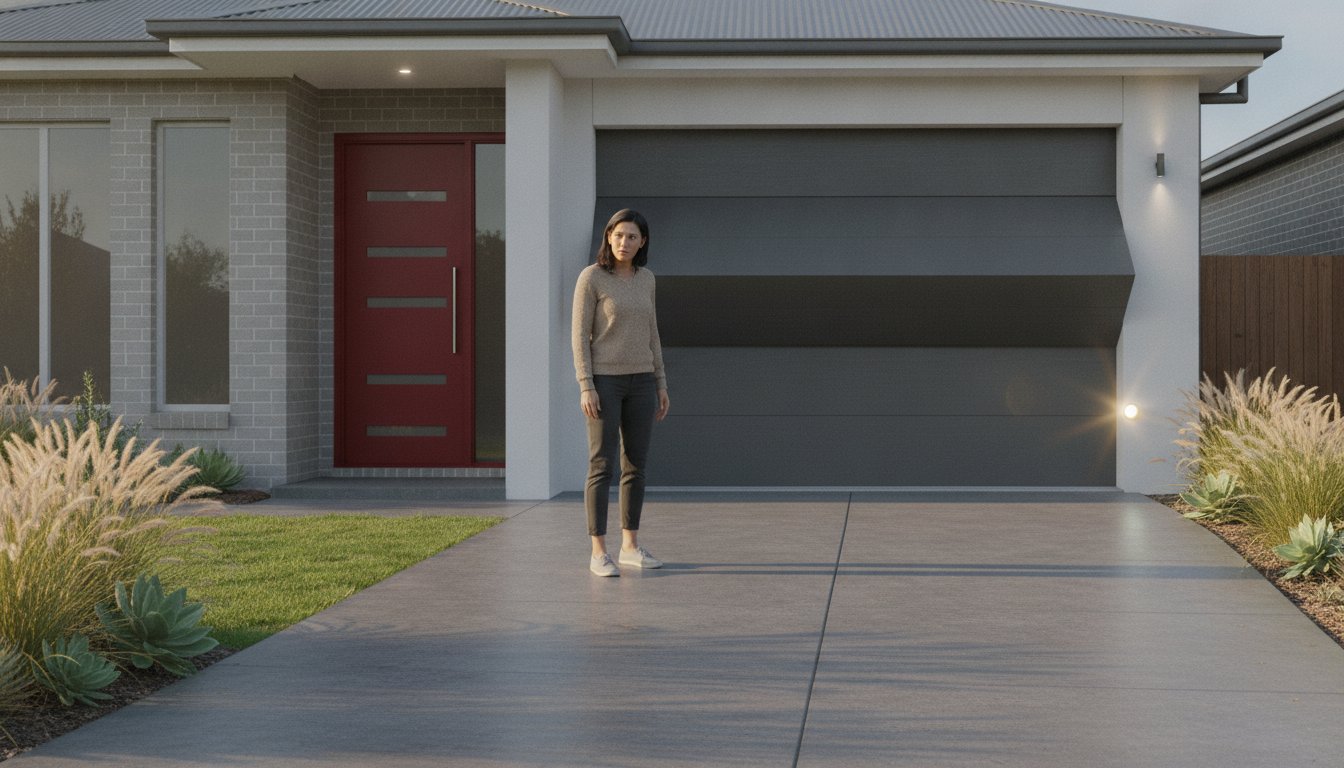
Imagine pulling into your driveway in Caroline Springs after a long day, only to watch your garage door hit the pavement and bounce straight back up. It is incredibly frustrating when your garage door closes and reopens immediately, especially when you just want to head inside and relax. This “bouncing” behaviour isn’t a random glitch; it’s actually a vital safety feature working exactly as intended, even if it’s receiving the wrong signals from its environment.
At Brimbank Garage Doors & Repairs, we understand the anxiety that comes with an insecure home and the worry that a loud, malfunctioning door might mean an expensive replacement. You shouldn’t have to choose between a secure garage and your peace of mind. In this guide, you’ll discover why your door won’t stay shut and how to safely troubleshoot the safety reverse system yourself. We will walk through five common fixes, from simple sensor realignments to identifying more serious issues like a broken spring, so you know exactly when it’s time to call in a local specialist to get your home secure again.
Key Takeaways
- Understand that a “bouncing” door is a safety mechanism triggered by resistance, designed to meet Australian safety standards.
- Identify common environmental triggers, such as afternoon sun glare or small debris, that cause your garage door closes and reopens immediately.
- Learn how to safely check your sensor alignment and travel limits before attempting more complex mechanical adjustments.
- Recognise the warning signs of worn springs or binding tracks that could be confusing your motor’s force sensors.
- Discover why local expertise in Melbourne’s West is essential for restoring home security without the stress of high-pressure sales.
Why Your Garage Door Closes and Reopens Immediately
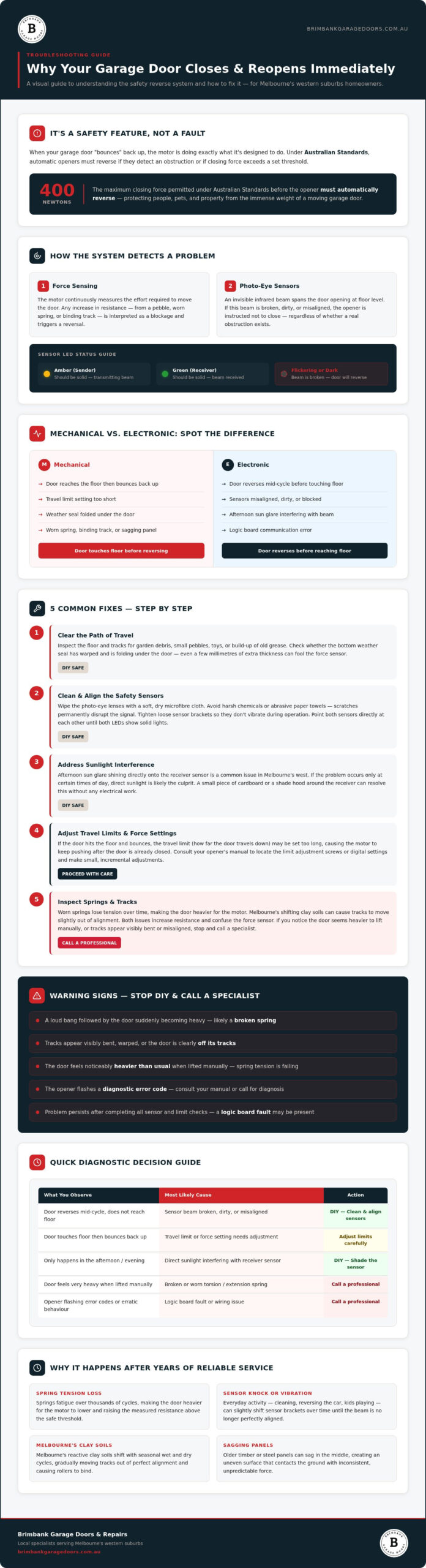
It is a common sight for many Melbourne homeowners: you press the remote, the door travels down, touches the ground, and then shoots back up. While it feels like a mechanical breakdown, it is actually a sign that the safety systems built into modern garage door operation are doing their job. Under Australian Standards, automatic openers must reverse if they detect an obstruction or if the closing force exceeds 400 Newtons. This prevents the door from crushing objects, pets, or people.
When your garage door closes and reopens immediately, it is responding to a perceived threat. The motor interprets even a small amount of resistance as an emergency, triggering the “safety reverse” cycle. This can happen suddenly after years of perfect operation because of minor shifts in the door’s alignment or wear on the internal components.
The Role of the Safety Reverse System
The motor is constantly measuring the amount of work it has to do to move the door. If the door becomes heavy or hits a small pebble, the motor senses an increase in resistance and interprets it as a physical blockage. Alongside this force sensing, photo-eye sensors create an invisible beam across the opening; if this beam is broken or the sensors are dirty, the door won’t stay shut. The safety reverse system is a mandatory protection feature designed to keep your family and pets safe from the immense weight of a moving garage door.
Mechanical vs. Electronic Triggers
Distinguishing between a physical blockage and an electronic glitch is the first step in troubleshooting. If your garage door closes and reopens immediately, watch the opener unit for flashing lights or listen for distinct “clicks” that indicate a diagnostic code.
- Physical “Bounce”: The door hits the floor too hard or encounters a track obstruction, causing a mechanical jolt that triggers the force sensor.
- Electronic Reversal: The safety beams are misaligned, dirty, or blocked by afternoon sun glare, sending a signal to the logic board that the path isn’t clear.
A communication error in the logic board can also cause the door to behave erratically. You can often tell the difference by checking if the door actually reaches the floor before reversing. If it stops and shoots back up halfway through the cycle, it is almost always an electronic sensor issue. If it hits the floor and then pops back up, you are likely looking at a mechanical travel limit problem.
It often seems strange when this issue crops up after years of reliable service. However, components like springs lose tension over time, making the door heavier for the motor to lower. Tracks can also shift slightly due to Melbourne’s shifting clay soils, or sensors can be bumped out of alignment during a routine clean. What was once a smooth path can become a struggle for the motor, leading to that frustrating sudden reversal.
Step 1: Checking for Obstructions and Sensor Alignment
Before you panic about repair costs, start with a simple walk-through. When your garage door closes and reopens immediately, the most frequent culprit is a physical blockage or a miscommunication between the safety sensors. These small components act as the “eyes” of your system. They are highly sensitive to changes in their environment, especially in the variable weather we experience across Melbourne’s western suburbs.
Clearing the Path of Travel
Begin by inspecting the floor and the tracks for any debris. It is common for garden waste, small pebbles, or children’s toys to blow into the garage and settle in the track’s path. Even a tiny stone can trigger the force sensor. Check the vertical tracks for any build-up of old grease and dirt that might cause the rollers to bind. A sagging door in the centre, often seen in older timber or steel panels, can also hit the ground with uneven force. This mechanical resistance is a core part of how garage door openers work to prevent injury. If the weather seal at the bottom has become loose or warped, it might fold under the door and create enough thickness to trick the motor into reversing.
Sensor Troubleshooting and Sunlight Interference
Next, look at the safety sensors located at the base of your tracks. Most systems use a pair of “photo-eyes”: one is the sender (usually with an amber LED) and the other is the receiver (usually green). Both lights should be solid. If they are flickering or dark, the beam is broken. Use a soft, dry microfibre cloth to gently wipe the lenses. Avoid using harsh chemicals or abrasive paper towels, as scratches on the delicate lens can permanently disrupt the signal. Ensure the brackets are tight; if they vibrate when the motor runs, the beam might momentarily disconnect.
It is a nuisance when a garage door closes and reopens immediately just because of a bit of glare, but it’s a common issue for homes in Sunbury and Caroline Springs. Melbourne homeowners often report that their door works perfectly in the morning but fails in the afternoon. This is frequently due to sunlight interference. When the sun hits the receiving sensor at a specific angle, it “blinds” the infrared signal. You can test this by temporarily shading the sensor with your hand or a piece of cardboard. If the door stays shut while shaded, you have found your culprit.
If you have cleared the path and checked the sensors but the door still won’t stay down, a professional garage door maintenance check can identify deeper alignment issues or motor wear that a visual inspection might miss.
Step 2: Adjusting Travel Limits and Force Settings
If you have cleared the tracks and cleaned the sensors but your garage door closes and reopens immediately, the issue likely lies within the motor’s internal logic. Every automatic opener has “Travel Limits”. These are the programmed start and stop points for the door’s cycle. Over time, these settings can drift or lose their accuracy. In Melbourne’s western suburbs, we often see this happen during extreme temperature shifts. When the mercury hits 40 degrees in Sunbury, the metal tracks can expand slightly; conversely, cold winter nights in Keilor cause contraction. These tiny changes are enough to make the door hit the pavement earlier than the motor expects, triggering a safety reversal.
Most Australian motors, such as those from Merlin or Gliderol, have specific adjustment points. On older units, you will find plastic turn-screws on the side or back of the motor head. Modern digital models typically use “Set”, “Limit”, or arrow buttons to program the cycle. Identifying these is the first step to reclaiming your home’s security.
Resetting the Door’s ‘Down’ Position
The motor reverses because it “thinks” the floor is an obstruction. This happens if the “Down” limit is set just a few millimetres too low. To fix this, you need to recalibrate the stopping point. We recommend using the “inch-up” technique. Adjust the limit so the door makes a firm but gentle seal with the floor. You want the bottom weather seal to touch the ground without the bottom rail buckling or the motor straining. If you see the door rail flex when it hits the floor, the limit is too low and will almost certainly cause the door to bounce back up.
Understanding Force Margin Adjustments
Force settings control how much electrical current the motor uses to overcome friction and the door’s weight. A heavy roller door requires a different force margin than a light sectional door. However, there is a significant danger in setting the “Close Force” too high to bypass a bouncing issue. If your garage door closes and reopens immediately and you try to “force” it shut by maxing out the settings, you are creating a serious safety hazard. A door with excessive force might not reverse when it hits a genuine obstruction, like a car, a pet, or a family member.
Pro-Tip: If you find that you have to increase the force settings significantly to get the door to stay shut, the problem isn’t the settings. It is a clear warning sign that the door is mechanically heavy. This usually points to a failing spring or tracks that have shifted out of alignment, requiring a professional inspection to ensure the system remains safe to operate.
When the Problem is Mechanical: Springs and Tracks
If you have checked the sensors and adjusted the digital limits but your garage door closes and reopens immediately, the issue is likely a physical struggle within the hardware. Your motor is designed to be a guide, not a weightlifter. When mechanical components fail, the motor detects the extra effort required to move the door and reverses as a safety precaution. This resistance is almost always caused by a door that has fallen out of balance.
The Pull-Cord Test is the safest way to diagnose this. With the door closed, pull the red emergency release cord to disengage the motor. Try to lift the door manually. A well-maintained door should feel light enough to lift with one hand and should stay in place when left halfway up. If it crashes down or feels like a lead weight, your springs are no longer providing the necessary tension to counter the door’s mass.
The Impact of Broken Garage Door Springs
Springs do the heavy lifting in every cycle. They are under immense tension to ensure the door remains neutral in weight. When a spring snaps or loses its elasticity, the motor suddenly has to pull the full weight of the steel panels. You can often spot a broken spring by looking for a visible gap in the coils above the door or noticing a “loose” appearance in the cable lines. Because these components are dangerous to handle without specialised tools, you should consult a specialist for garage door spring replacement western suburbs to restore the balance safely.
Track Alignment and Lubrication
Melbourne’s western suburbs, from Sunbury to Caroline Springs, are known for reactive clay soils. This ground movement can subtly shift your garage frame over time, pulling the tracks out of their original alignment. When tracks aren’t perfectly parallel, the rollers will “bind” or get stuck at specific points. This creates a spike in resistance that causes your garage door closes and reopens immediately. Look for signs of trouble like loose mounting bolts or visible bends in the steel rail.
Lubrication is another common pitfall for homeowners. Many people reach for WD-40, but this is a degreaser, not a long-term lubricant. It can actually strip away the necessary grease, leading to metal-on-metal grinding. Always use a high-quality silicone-based spray when performing roller door repairs melbourne to keep the system silent and smooth. Be extremely careful with track tensioners; adjusting these yourself can cause the door to fall out of the tracks entirely. If the door feels sticky or heavy after lubrication, contact our local team for a safety audit to prevent further damage to your motor.
Professional Garage Door Repairs in Melbourne’s West
An insecure home is a significant concern for any family. When your garage door closes and reopens immediately, it leaves your property vulnerable and your day disrupted. While the troubleshooting steps in the previous sections offer a path for DIY fixes, some mechanical or logic board issues require a technical eye to resolve safely. Brimbank Garage Doors & Repairs focuses on identifying these root causes accurately, ensuring your home is secure without the pressure of unnecessary replacements.
Investing in regular garage door maintenance melbourne is the most effective way to prevent these sudden malfunctions. A professional service visit goes beyond a quick fix; it ensures your rollers are balanced, your tracks are aligned, and your motor isn’t straining. This proactive care extends the life of your hardware and keeps your daily routine predictable and safe.
Serving Sunbury, Keilor, and Caroline Springs
Being a local specialist means we are never far away when you need help in Melbourne’s western suburbs. Matt personally handles every repair job across the region, ensuring a high standard of craftsmanship and direct accountability. We don’t use call centres or automated systems. Instead, you deal with a seasoned professional who arrives with a vehicle stocked with high-quality parts for common Australian brands, often resolving the issue during the first visit.
Booking Your Repair with Confidence
To help us provide the most efficient service, it helps to have your motor brand and door type ready when you get in touch. Whether you have a Gliderol roller door or a Merlin sectional unit, knowing these details allows us to prepare the right components for your specific system. We value straightforward communication and honest advice for every residential home. If your garage door closes and reopens immediately and you want to restore your home’s safety, contact Brimbank Garage Doors & Repairs to book a visit today.
Restoring Your Home Security and Peace of Mind
A garage door that refuses to stay shut is a significant stress for any homeowner. By now, you should have a clearer understanding of why your garage door closes and reopens immediately and whether the solution is a simple sensor adjustment or a more complex mechanical repair. Addressing these issues promptly is the only way to ensure your family remains protected and your property stays secure against the elements and intruders.
While DIY troubleshooting is a great starting point, the heavy-duty nature of springs and motor logic often requires a specialist’s touch to ensure long-term reliability. Matt at Brimbank Garage Doors & Repairs provides high-quality workmanship across Melbourne’s western and northern suburbs, focusing on durable residential repairs that stand the test of time. You don’t have to navigate these technical challenges alone or worry about high-pressure sales tactics.
Book a Reliable Repair with Brimbank Garage Doors & Repairs today to restore your home’s safety and get your door back to its best. We are ready to help you secure your home with the professional, local service you deserve.
Frequently Asked Questions
Why does my garage door go down then back up immediately?
This behaviour is almost always triggered by the safety reverse system. The motor detects resistance or a broken sensor beam and reverses to prevent a potential crush injury. Common culprits include small pebbles in the tracks, misaligned safety sensors, or travel limits that are set too low. It is a mandatory safety feature under Australian standards designed to protect your family and pets.
Can I bypass the garage door sensors to keep it closed?
You should never attempt to bypass or disable safety sensors. These components are vital for home security and personal safety. While some motors allow you to override the sensors by holding down the wall button, this is only a temporary solution for an emergency. Operating a door without active sensors violates safety regulations and risks damaging your motor or causing serious physical harm.
How do I know if my garage door sensors are misaligned?
Check the small LED lights on the sensor brackets located at the bottom of your tracks. In most systems, one light is green and the other is amber. Both lights must be solid and glowing steadily. If one light is flickering or completely dark, the sensors are either dirty or have been bumped out of alignment, which prevents the door from staying shut.
Is it safe to adjust garage door travel limits myself?
Adjusting the digital limits or turn-screws on your motor is generally safe for homeowners to attempt. You can usually find the instructions in your motor’s manual or on the unit’s housing. However, you must be precise; setting the “down” limit too low causes the door to hit the floor too hard, which often results in the door bouncing back up as a safety response.
Why does the garage door motor light flash when it reverses?
The flashing light is a diagnostic code designed to help you troubleshoot the fault. Different patterns or numbers of flashes indicate specific issues, such as a sensor blockage or a force limit error. Checking these codes is a fast way to understand why your garage door closes and reopens immediately, allowing you to provide accurate information when calling a local repair specialist.
How much does it cost to fix a garage door that keeps opening?
Repair costs in Melbourne vary depending on the root cause of the malfunction. A simple sensor realignment is a straightforward fix, while replacing a logic board or repairing a motor requires more extensive work and parts. Because every residential system is unique, it is best to have a local specialist assess the door to provide an accurate quote based on your specific motor brand and door type.
Will cold weather in Melbourne affect my garage door’s closing cycle?
Cold temperatures can cause metal components and tracks to contract, which increases the friction the motor must overcome. On frosty mornings in the western suburbs, this extra resistance often triggers the force sensors, causing the door to reverse mid-cycle. Keeping your tracks clean and using a high-quality silicone-based lubricant can help the door move smoothly despite the seasonal temperature shifts we experience across Victoria.
What should I do if my garage door spring has snapped?
If you notice a gap in your spring coils, stop using the door immediately and do not try to pull the release cord. Springs are under immense tension and are dangerous to handle without specialised tools and training. A snapped spring makes the door incredibly heavy, which can burn out your motor or cause the door to crash down unexpectedly. Contact a local professional to handle the replacement safely.