
Imagine it’s a crisp Melbourne morning in Sunbury, and you’re already running late for work. You press the remote button, hear a loud crack like a gunshot echoing through the garage, and watch your door sag dangerously to one side. It’s a high-stress moment that leads to a common dilemma regarding torsion vs extension springs melbourne homeowners often face: which one is actually the safer bet for a family home?
It’s natural to feel concerned about the safety of your kids or frustrated by technical jargon like “cycle life” that some repairers use to justify high costs. You just want a garage door that stays on its tracks and operates quietly without the constant fear of a sudden, expensive breakdown. We understand that your home’s security and your peace of mind are the top priorities.
This 2026 guide will clear the confusion by comparing these two spring systems directly. You’ll discover which hardware stands up best to Melbourne’s “four seasons in a day” climate and learn how to ensure your door remains reliable for years to come. We’ll break down the mechanical differences so you can make an informed choice for a safer, smoother home.
Key Takeaways
- Understand why your springs, not the motor, do the heavy lifting so you don’t cause unnecessary wear on your garage door opener.
- Compare torsion vs extension springs melbourne homeowners commonly encounter to see which system offers the safest and quietest operation for your family.
- Discover how Melbourne’s erratic weather and humidity in the western suburbs can lead to premature metal fatigue and rust.
- Use our visual checklist to identify your current setup and determine if your garage has the headroom required for a high-performance torsion upgrade.
- Learn why DIY spring replacement is a serious safety risk and how a professional local specialist ensures your door remains secure and balanced.
Understanding Garage Door Springs in Melbourne Homes
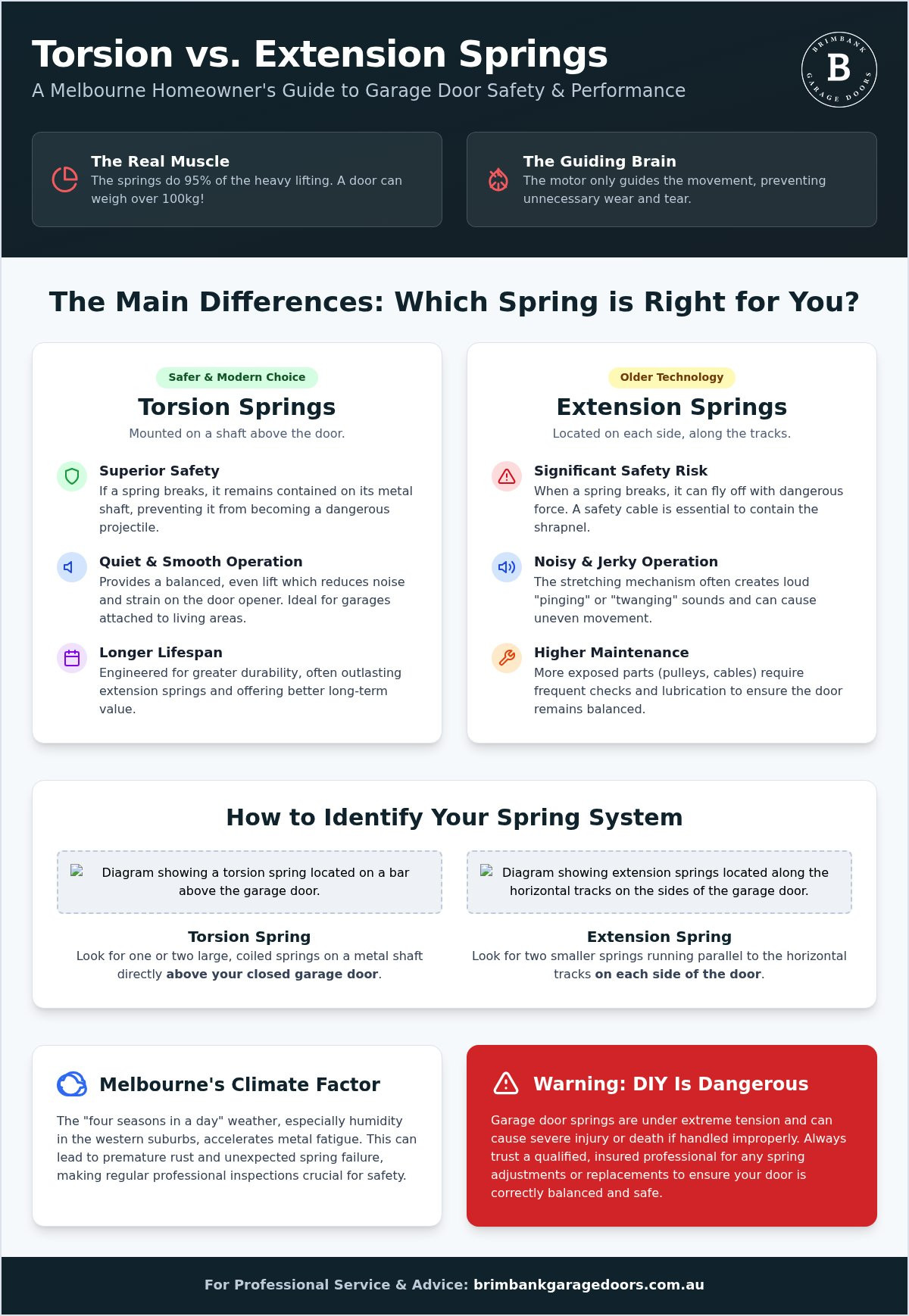
Most homeowners think the motor is the powerhouse behind their garage door. In reality, your opener is only the brain that guides the movement. The real muscle comes from the springs. These components are under immense tension to counterbalance the weight of a heavy steel door, which can often weigh over 100kg. Without properly functioning springs, your door would be impossible to lift manually and would quickly burn out an automatic motor.
In Melbourne’s western suburbs, from Sunbury to Caroline Springs, we see two primary setups. The choice between torsion vs extension springs melbourne residents make often depends on the age of the home and the available space in the garage. Every spring has a finite lifespan, typically around 10,000 cycles. One cycle represents one opening and closing action. For the average family, this means your springs will inevitably snap after 7 to 10 years of daily use.
What are Torsion Springs?
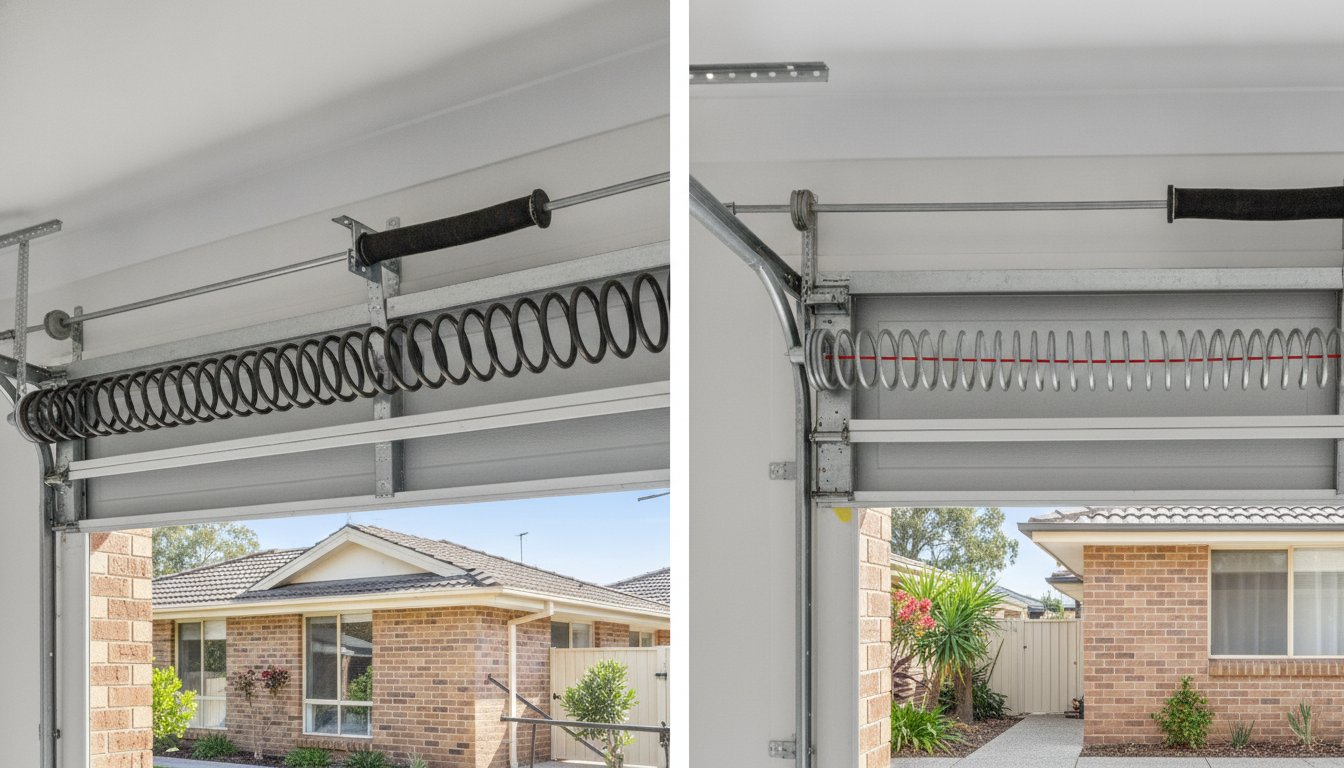
Torsion springs are mounted on a solid metal shaft located directly above the garage door opening. Instead of stretching, they work by twisting. As the door closes, cables attached to the bottom corners pull on drums, winding the spring and storing energy. When you open the door, that stored torque is released to assist the lift. Understanding how torsion springs work helps explain why they provide a much smoother, more balanced movement than older systems. They are rapidly becoming the standard for modern Melbourne builds because they are generally safer and last longer.
What are Extension Springs?
You’ll often find extension springs in older established areas like Essendon or Keilor. These springs are located along the horizontal tracks on either side of the door. They operate through a simple stretching mechanism; when the door is down, the springs are extended under high tension. While they were the go-to choice for decades due to lower costs, they can be jerky and often require more frequent maintenance to keep the door balanced. If one snaps, it can fly off with dangerous force unless a safety cable is installed to contain the broken metal.
Torsion Springs vs Extension Springs: The Main Differences
Choosing between torsion vs extension springs melbourne homeowners often find depends on their specific garage layout and long-term budget. While extension springs usually have a lower upfront cost, torsion springs generally offer better value over time. They tend to last longer and operate with far more reliability. One limiting factor is headroom. Some older Melbourne garages have very low ceilings; if there isn’t enough space above the door for a shaft, you might be restricted to an extension system. However, for most modern builds, the torsion setup is the preferred choice for superior balance.
Operational Performance and Noise
Torsion springs provide a much quieter experience. This is a massive benefit if your garage is attached to a bedroom or living area. Extension springs often produce a distinct “pinging” or “twanging” sound as they stretch and contract along the tracks. This noise isn’t just an annoyance; it’s a sign of the jerky, uneven tension inherent in the design. Torsion systems distribute the door’s weight more evenly across the entire width. This balance significantly reduces the strain on your automatic opener. Following industry best practices for spring tension ensures your door stays light to the touch, preventing your motor from burning out before its time.
Safety and Risk Factors
Safety is the area where these two systems differ most. When an extension spring snaps, it can become a dangerous projectile. Without a safety cable threaded through the centre to catch it, the broken metal can fly across the garage, potentially damaging your car or causing a serious injury. Torsion springs are inherently safer because they’re mounted on a solid metal shaft. If a torsion spring breaks, it stays contained on that shaft. It’ll make a loud noise, but it won’t fly through the air.
Australian safety standards for residential doors focus on controlled movement and fail-safes. If you’re concerned about the age of your hardware, a professional garage door maintenance service can identify worn components before they reach a breaking point. When weighing up torsion vs extension springs melbourne families should prioritise this containment factor for peace of mind.
Maintenance and Long-Term Value
Maintenance needs vary between the two. Extension springs have more moving parts, including extra pulleys and longer cables, which require regular lubrication and frequent checking for fraying. Torsion springs are more streamlined but require specialised tools for any tension adjustments. While the initial investment for a torsion setup is higher, the reduced frequency of repairs and the smoother operation make it the smarter choice for most local homes.
Durability, Longevity, and the Melbourne Climate
Melbourne’s notorious weather shifts aren’t just hard on your garden; they’re brutal on your garage hardware. Frequent temperature fluctuations cause the spring’s steel to expand and contract rapidly. This constant movement accelerates metal fatigue, which is why a spring that lasts a decade in a stable climate might snap much sooner here. When discussing torsion vs extension springs melbourne residents need to consider how these environmental stressors impact each system’s tension over time. Professional-grade steel is tempered specifically for the weight and size of your door, whereas mass-produced springs from hardware stores are often a “one-size-fits-most” solution that fails under the pressure of a heavy Australian steel door.
Corrosion Resistance in Local Conditions
Humidity levels in the western suburbs, particularly around Brimbank and St Albans, can lead to surface rust. You generally have two choices: galvanised or oil-tempered springs. Galvanised springs look cleaner and resist rust better in damp conditions, though they may require more frequent tensioning as they can slightly stretch. Oil-tempered springs are incredibly durable but can be prone to rust if not lubricated. Keep an eye out for orange staining or “pitting” on the metal. A quick spray of silicone-based lubricant every few months can significantly delay the onset of rust in our dusty Melbourne environments. If you spot significant corrosion, it’s a sign the metal is becoming brittle and could snap without warning.
Maximising Your Spring Lifecycle
The performance of your springs is directly tied to how well the rest of the door is performing. A door that’s out of alignment or has worn rollers forces the springs to work harder than they should, leading to an early break. This is why regular garage door maintenance in Melbourne is so critical for family homes. During a service, we check the balance to ensure the springs aren’t carrying an uneven load, which keeps the operation quiet and safe.
Most standard springs are rated for 10,000 cycles. Cycle life is the number of times a door opens and closes before the metal fatigues. If you’re using your garage as the main entry point for the house, you’re likely hitting 1,500 cycles a year. That means a standard spring is only built to last about seven years. For households with multiple cars or active kids, we often recommend high-cycle torsion springs that can handle 25,000 or even 50,000 cycles. Understanding the longevity of torsion vs extension springs melbourne wide is the first step toward a safer, more reliable home.
How to Tell Which Spring Your Door Needs
Before deciding on a repair or an upgrade, you need to know exactly what is currently supporting your door’s weight. Identifying your system is straightforward. If you see a thick metal rod mounted directly above the door opening with one or two tightly wound coils around it, you have a torsion system. If you see long, thin springs running parallel to the upper tracks on the left and right sides, your home uses extension springs. When comparing torsion vs extension springs melbourne residents often find that their older homes in Sunbury or Keilor still rely on the extension style, while newer builds almost exclusively use torsion hardware.
Measuring for a replacement is not a task for a weekend DIY project. Springs are calibrated to the gram based on the door’s height, weight, and track radius. A spring that is even a few millimetres too long or has the wrong wire gauge will leave the door dangerously unbalanced. This puts immense strain on the cables and the motor, leading to a much more expensive repair down the road. We always use specialised callipers to ensure the replacement matches the original engineering specifications exactly.
Signs of Imbalance and Wear
A loud bang is a clear sign of a snapped spring, but there are quieter warnings you should watch for. One of the most effective ways to check your door’s health is the “halfway test.” Disconnect your automatic opener and lift the door manually to about waist height. A well-balanced door should stay in place. If it crashes to the floor or shoots upward, your springs have lost their tension or were sized incorrectly. For torsion systems, look closely at the coils. If you see a visible gap in the metal or if the spring looks “stretched out,” it has already failed. A heavy-feeling door is another major red flag; if you can’t lift it easily with one hand, your springs are no longer doing their job.
The Conversion Process
Many homeowners choose to switch from extension to torsion systems during a repair to take advantage of the increased safety and smoother operation. This conversion involves installing a new shaft, drums, and cables. The main requirement for this upgrade is headroom. Most standard torsion systems need about 300mm of space above the door, though low-headroom kits are available for tighter garages. It’s best to consult a garage door technician in Melbourne West to see if your garage structure can support the mounting plates required for a torsion shaft.
If you’ve noticed your door is struggling to open or making unusual straining noises, don’t wait for the metal to snap. You can book a safety inspection with Matt today to ensure your family’s garage remains secure and functional.
Professional Spring Replacement in Melbourne’s Western Suburbs
Attempting a DIY garage door spring repair is one of the most dangerous tasks a homeowner can undertake. These components are under extreme tension; enough force to lift a 100kg steel door. If a spring snaps or a winding bar slips during an amateur installation, the result can be catastrophic. We’ve seen serious injuries and significant property damage caused by “have a go” repairs that went wrong. Professional replacement isn’t just about convenience. It is about ensuring the safety of your family and the structural integrity of your home.
At Brimbank Garage Doors & Repairs, we take a safety-first approach to every job. When you call us, you aren’t put through to a faceless corporate call centre. You speak directly with Matt, who brings years of hands-on expertise to every driveway in Melbourne’s west. We believe in transparent, straightforward communication. We’ll explain the condition of your hardware, provide a clear path forward, and ensure your door is perfectly balanced before we leave. This personal touch ensures accountability and pride in our workmanship that big corporations simply can’t match.
Service Areas: From Sunbury to Caroline Springs
We specialise in residential repairs across the northern and western suburbs. Our deep knowledge of local architectural styles and the specific door brands common in areas like Sunbury, Keilor, and Caroline Springs allows us to carry the right parts for a prompt response. Every suburb has its own environmental quirks. Whether it’s the wind loads in newer estates or the older hardware found in established streets, we understand the Melbourne market. Supporting a local business means you get a technician who actually knows your neighbourhood and cares about the long-term reliability of your garage door.
Book Your Spring Replacement Today
When one spring snaps, the other is usually only days away from failing. Because they were likely installed at the same time and have completed the same number of cycles, the metal fatigue will be identical. We always recommend replacing both springs at once. This ensures the door remains perfectly balanced and prevents you from paying for a second service call just a week later. Maintaining this balance is essential for the health of your automatic opener and the smooth operation of your door.
Getting your garage back in working order is simple. To get an accurate quote tailored to your specific door type and weight, Contact Brimbank Garage Doors today. We’ll help you navigate the choice between torsion vs extension springs melbourne weather demands, ensuring your home stays safe, quiet, and reliable for years to come.
Secure Your Home with the Right Garage Door Springs
Choosing between torsion vs extension springs melbourne homeowners often find comes down to a balance of safety, space, and long-term reliability. Torsion springs remain the gold standard for modern residential doors because they offer a smoother lift and stay safely contained if they ever break. While extension springs are a common sight in older Melbourne garages, upgrading to a torsion system provides the peace of mind that comes with superior engineering and fewer jerky movements.
Don’t wait for a loud bang to tell you that your hardware has reached its limit. Melbourne’s temperature shifts mean your springs work hard every single day, and professional maintenance is the only way to catch metal fatigue before it becomes a hazard. You can Get a Reliable Spring Replacement Quote from Matt Today for expert local service across Melbourne’s West. We focus on safety-focused residential repairs and offer direct communication with a qualified technician who understands your neighbourhood. Let’s make sure your garage door remains a dependable part of your home for years to come.
Frequently Asked Questions
Can I replace just one garage door spring if the other is fine?
You should always replace both springs at the same time. Because they were installed together, they have completed the same number of cycles and faced identical metal fatigue. If one has snapped, the other is likely on the verge of breaking too. Replacing them as a pair ensures your door remains perfectly balanced and saves you the hassle of a second service visit just a few weeks later.
How much does garage door spring replacement cost in Melbourne?
Market rates in Melbourne vary based on the spring type, wire gauge, and door weight. For a professional service, you should check with a local specialist to get an accurate quote for your specific residential setup. While some homeowners look for the cheapest option, investing in high-quality steel ensures your door remains reliable. Factors like door size and the number of springs required will influence the final cost of the repair.
How long do torsion springs typically last compared to extension springs?
Torsion springs generally offer a longer lifespan, often lasting between 10,000 and 20,000 cycles. In contrast, standard extension springs typically last around 5,000 to 10,000 cycles. When comparing torsion vs extension springs melbourne homeowners should consider that torsion systems provide more consistent tension over these years. This durability makes them a more cost-effective choice for families who use their garage as a primary entry point to the home.
Is it possible to convert my old extension springs to a torsion system?
Conversion is definitely possible and is a common request during major repairs. The process involves removing the old side-mounted hardware and installing a new torsion shaft, drums, and centre bracket above the door. You generally need about 300mm of headroom for a standard install, though low-headroom kits exist. It’s a smart upgrade that improves the balance and safety of older homes in suburbs like Essendon or Keilor.
What is that loud bang I heard coming from my garage?
That loud noise, often described as a gunshot or a heavy object falling, is usually the sound of a spring snapping under immense tension. When the metal fatigues and finally breaks, the energy is released instantly. If you hear this sound, stop using your door immediately. Attempting to operate the door with a broken spring can burn out your motor or cause the door to crash down unexpectedly, posing a serious safety risk.
Can I still open my garage door manually if the spring is broken?
You should avoid opening your door manually if a spring is broken. Without the counterbalance provided by the springs, a residential door can weigh over 100kg, making it incredibly heavy and difficult to control. Lifting it manually puts you at high risk of back injury or having the door fall on you. It is much safer to leave the door in its current position until a qualified technician can safely secure it.
Why are torsion springs considered safer for residential homes?
Safety is a major advantage of torsion systems because they are mounted on a solid metal shaft. If a torsion spring breaks, it stays coiled around that shaft rather than flying across the garage. Extension springs, if they lack safety cables, can become dangerous projectiles when they snap. For families in the western suburbs, the contained nature of torsion hardware provides an essential layer of protection for children, pets, and vehicles.
What maintenance should I perform on my springs to make them last longer?
Regular lubrication is the best way to extend the life of your hardware. Apply a silicone-based garage door lubricant to the coils every three to six months to reduce friction and prevent rust. Avoid using heavy grease, as it can attract dust and grit that wears down the metal. Keeping the tracks clean and checking the door’s balance twice a year will also help your springs reach their maximum cycle rating.