
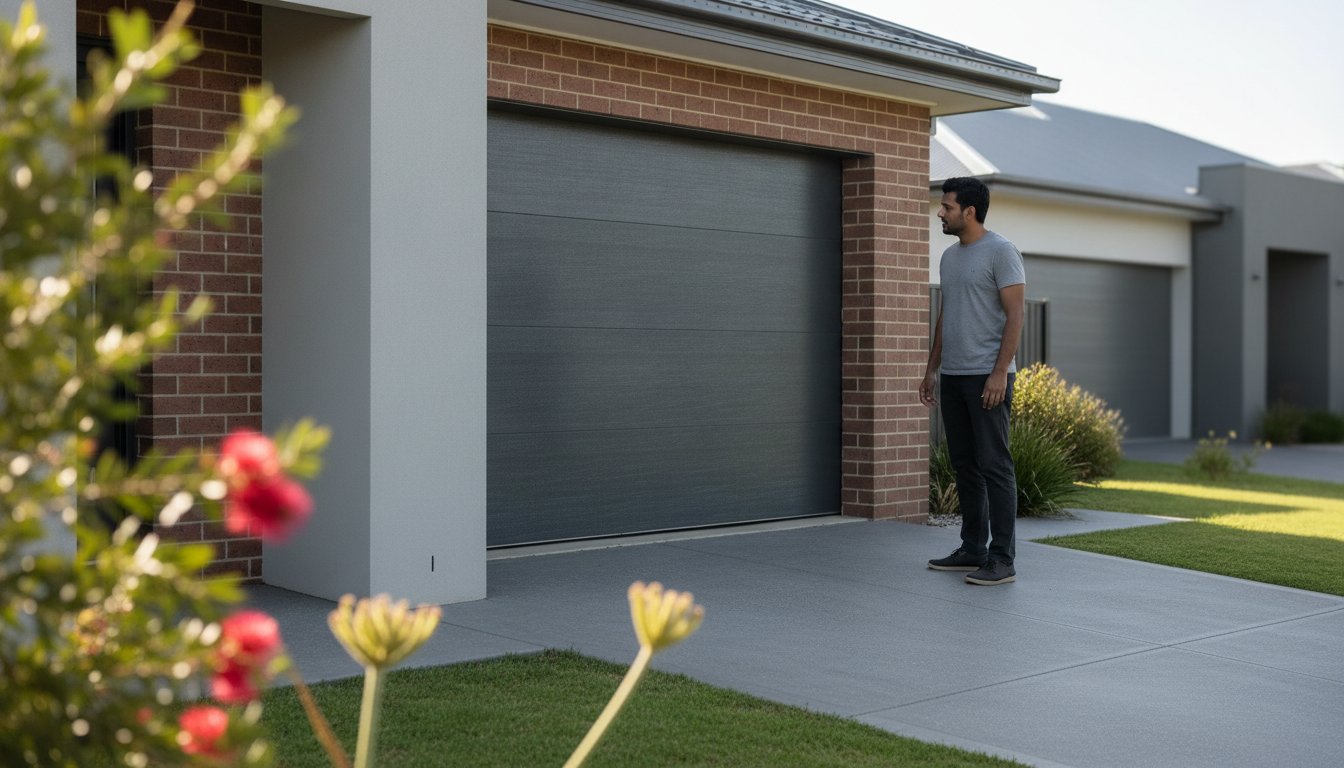
What if that stubborn gap at the bottom of your roller door is actually a safety feature trying to tell you something important? It’s a common sight across Melbourne’s northern suburbs; a homeowner clicking their remote in frustration while the door refuses to seal shut. When your garage door won’t close all the way melbourne weather and security concerns become immediate priorities. We understand the anxiety that hits when you can’t secure your home before the school run or a long day at work. You’re likely worried that the entire motor has given up the ghost, potentially costing you a small fortune in replacements.
The good news is that a sticking door often signals a minor obstruction or a sensor alignment issue rather than a total mechanical failure. You don’t always need a brand-new opener to get your home secure again. In this guide, you’ll discover the most common reasons your door is sticking and how to safely secure your Melbourne home today. We’ll provide honest advice from a local tradie’s perspective, covering everything from track debris to the critical role of high-quality replacement springs. You’ll gain a clear understanding of the fault and the steps needed to restore your peace of mind and get your daily routine back on track.
Key Takeaways
- Understand the common reasons why your garage door won’t close all the way melbourne and how to tell the difference between a simple sensor glitch and a major mechanical fault.
- Identify how Melbourne’s shifting weather and construction dust in the northern growth corridors can block your door’s tracks and interfere with your safety sensors.
- Learn the “3-strike rule” for safe DIY troubleshooting to avoid risking your home security or causing further damage to your opener’s motor.
- Discover why a door that reverses halfway is often a sign that your safety systems are working correctly to protect your family and pets.
- Gain a clear understanding of when it’s time to call a local specialist to handle high-tension components like garage door springs and cables safely.
Garage Door Won’t Close All the Way? Immediate Troubleshooting for Melbourne Homes
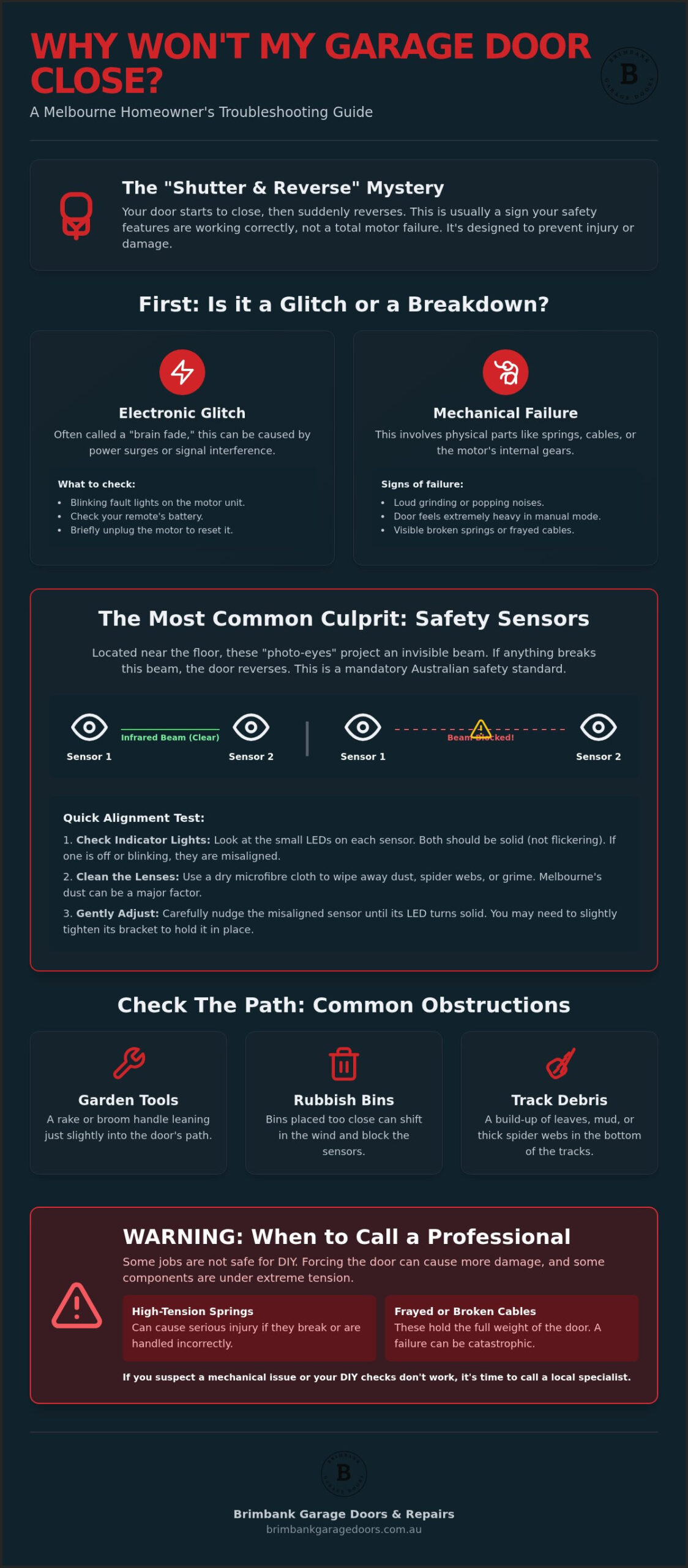
It is a scenario every local has faced: you are backing out of the driveway in Sunshine or Essendon, hit the remote, and watch as your door travels halfway down before suddenly popping back up. This “shutter and reverse” mystery is more than just a nuisance; it is a significant security risk. Leaving your garage open while you are at work or asleep exposes your vehicles, tools, and often the main entry point to your home. When your garage door won’t close all the way melbourne homeowners often fear the worst, assuming a costly motor replacement is the only fix. However, this behaviour is usually a sign that your modern garage door safety features are functioning correctly.
These systems are designed to detect obstructions and prevent the door from causing injury or damage. Before you call out a technician, there are several quick checks you can perform in under two minutes to see if the fix is simpler than you think. Understanding whether you are dealing with a minor electronic glitch or a genuine mechanical failure is the first step toward securing your home.
Is it a Glitch or a Breakdown?
Sometimes, your garage door opener experiences what we call a “brain fade.” This is a temporary electronic glitch often caused by a minor power surge or a signal interference. Check the motor unit on your ceiling; most reputable Australian brands use a system of blinking lights to communicate specific fault codes. If the light is flashing in a specific pattern, it is trying to tell you exactly what is wrong. If you need to test the door’s movement, you can pull the manual release cord, but do so with extreme caution. Never release the door while it is in the open position if you suspect a broken spring, as the weight could cause it to crash down instantly.
Clearing the Path: The Usual Suspects
It is surprising how often a “broken” door is actually just a victim of household clutter. Because the safety sensors sit just a few centimetres off the ground, even a small object can break the invisible beam. Common culprits include:
- Garden Tools: A broom or rake leaning slightly into the path of the track.
- Rubbish Bins: Bins placed too close to the opening that shift slightly in the Melbourne wind.
- Debris Build-up: Thick spider webs, dried mud, or even a build-up of leaves in the bottom curve of the tracks.
Whatever you do, avoid the temptation to force the door shut by standing on it or repeatedly hammering the remote button. If there is a genuine blockage or a mechanical timing issue, forcing the motor can strip the internal gears or fry the circuit board, turning a simple adjustment into a much more expensive repair job.
Checking Your Safety Sensors: The Most Common Culprit
If your door starts to descend then suddenly retreats to the ceiling, the most likely cause is a pair of sensors located just above your garage floor. These photo-eye safety sensors act as the “eyes” of your motor, projecting an invisible infrared beam across the opening. Their job is simple: if that beam is broken by a tricycle, a pet, or a stray leaf, the motor stops the door instantly. While these are vital for preventing accidents, they are also the most frequent reason a garage door won’t close all the way melbourne residents will encounter.
These sensors must comply with rigorous federal safety standards to ensure they reverse the door’s direction within milliseconds of detecting an obstruction. However, because they sit so close to the ground, they are prone to being bumped, covered in dust, or even blinded by the sun. When this happens, the motor’s logic board receives a signal that the path is blocked, even if you can see it is perfectly clear.
The Alignment Test: A Simple DIY Fix
Before assuming your motor has failed, look at the small LED indicator lights on the side of each sensor unit. In a healthy system, both lights should be solid and not flickering. If one is blinking or dark, the sensors are out of alignment. A photo-eye sensor is a mandatory safety requirement under Australian Standards for all automatic openers installed in the last two decades. To fix a minor misalignment, follow these steps:
- Clean the Lens: Use a dry microfibre cloth to wipe away Melbourne’s construction dust or spider webs from both lenses.
- Check the Brackets: Ensure the metal brackets haven’t been bent by a stray bin or lawnmower.
- Manual Realignment: Gently nudge the sensor until the LED light stops flickering and remains steady.
Sunlight Interference and Ghost Obstructions
Melbourne’s “four seasons in one day” weather can create a unique problem known as sunlight blinding. In western suburbs like Sunbury or Melton, the harsh afternoon sun can shine directly into the sensor lens, overpowering the infrared beam. The sensor essentially becomes “blinded” and assumes there is an object in the way. You can test this by shading the sensor with your hand while pressing the remote; if the door closes, you’ve found your ghost. A simple cardboard sunshade can often solve this temporarily, but a flickering light that persists in the shade usually points to a loose wire or internal fault. If your DIY efforts haven’t solved the issue, it might be time to organise reliable garage door maintenance to get your home secure again.
Mechanical Failures: Springs, Cables, and Travel Limits
When you have cleared the tracks and wiped the sensors but the problem persists, the issue is likely rooted in the door’s mechanical “muscles.” A door that stops halfway or hits the ground only to bounce back up is often struggling with its own weight. This is where the balance between the motor’s settings and the physical hardware becomes critical. If your garage door won’t close all the way melbourne weather or mechanical wear might have compromised the system’s ability to reach the floor securely.
The most common mechanical culprit is the “travel limit” setting. This is the digital map inside your opener that tells it exactly how far to travel before stopping. If this setting is knocked out of alignment, the motor may think the floor is higher than it actually is, causing it to strike the concrete and trigger a safety reverse. Alternatively, frayed or tangled cables can jam the drum, preventing the door from unrolling fully and leaving your home vulnerable.
The Danger Zone: Why Springs are Not a DIY Project
While it is tempting to tighten a loose cable or nudge a spring, these components are under extreme tension. Residential springs are designed to counterbalance doors weighing up to 100kg or more. If a spring snaps or a cable gives way during a DIY attempt, the results can be catastrophic. Between 2020 and 2021, over 3,000 Australians were hospitalised due to garage-related injuries, many of which involved high-tension parts. This is why garage door spring replacement requires specialist tools and professional training. Keep an eye out for visible gaps in the spring coils or a loud, sudden bang coming from the garage, as these are clear signs of a failure that needs immediate expert attention.
Travel Limit Adjustments and Motor Fatigue
Melbourne’s frequent power surges can occasionally cause a motor’s logic board to experience a “factory reset,” wiping your custom travel limits. If your motor is humming but the door isn’t moving, it is likely straining against a mechanical bind. Continuing to press the remote in this state is a recipe for disaster. You risk burning out the motor’s internal plastic gears or overheating the circuit board. If the door feels heavy or jerky, the motor is working overtime to compensate for a lack of lubrication or a failing spring, which will eventually lead to a total breakdown if left unaddressed.
Local Melbourne Factors: Why Your Roller Door is Acting Up
Melbourne’s unique geography and rapid development play a massive role in how your roller door behaves. If your garage door won’t close all the way melbourne homeowners should look beyond the motor and consider the environment. In the western and northern growth corridors, construction dust is a constant battle. This fine grit settles into the guide tracks, mixing with existing lubricants to create a thick, abrasive paste. Over time, this sludge increases friction, causing the motor to sense a “blockage” and reverse the door prematurely.
Temperature shifts also play a significant part. Melbourne is famous for its wild weather swings; metal expands in the heat of a 38-degree afternoon and contracts during a frosty winter morning. This expansion can cause a tightly fitted door to bind within its tracks. Similarly, in open, wind-swept suburbs like Caroline Springs, high gusts can exert enough lateral pressure on a large roller door to slightly bow it. This temporary deformation is often enough to trigger the auto-reverse safety mechanism, leaving your home unsecured until the wind dies down or the door is professionally realigned.
Suburban Specifics: From St Albans to Keilor
The specific challenges you face often depend on your postcode. In industrial-adjacent areas like St Albans, heavy particulate matter can settle on your hardware, leading to premature wear on rollers and bearings. Down in Keilor, the abundance of Eucalyptus trees means oily leaves and debris frequently find their way into the track’s bottom curve. Investing in regular garage door maintenance in Melbourne is significantly cheaper than a major repair. A quick check after a heavy storm can reveal if debris has been blown into the mechanism, preventing a small obstruction from becoming a motor-straining failure.
The ‘Brimbank’ Difference: Local Knowledge
Choosing a local specialist means working with someone who understands the specific door brands and installation styles common in Melbourne’s West. We don’t just look at the mechanical fault; we look at the environmental context of your property. Whether it is shielding sensors from the Sunbury sun or cleaning out grit from a new estate in Melton, we ensure your door is “Melbourne-proofed” against the elements. We take pride in supporting our neighbours with honest, practical solutions that prioritise your family’s safety. If your door is struggling with the local conditions, contact Brimbank Garage Doors today for a reliable, expert assessment.
When to Call a Professional Garage Door Technician in Melbourne’s West
Persistence is a great trait, but when it comes to high-tension garage hardware, there is a fine line between a successful DIY fix and a dangerous mistake. We recommend following the “3-strike rule.” If you have cleared the tracks of Melbourne grit, realigned the safety sensors, and checked the power supply, but the garage door won’t close all the way melbourne homeowners should step back and call in a specialist. Continuing to tinker with a door that is jerking or reversing can lead to snapped cables or a burnt-out motor board, turning a minor adjustment into a major expense.
When you book a professional roller door repair in Melbourne, you aren’t just paying for a quick fix. A thorough service involves a comprehensive health check of the entire system. This includes testing the spring tension, lubricating the internal bearings, and ensuring the motor’s force settings are calibrated to Australian safety standards. A professional eye can spot the early signs of metal fatigue in a spring or a fraying cable long before it fails and leaves your car trapped or your home vulnerable.
Choosing a Reliable Local Specialist
The Melbourne repair market is often flooded with large companies that use subcontractors or push expensive “smart” automation upgrades you might not actually need. At Brimbank Garage Doors, you deal directly with the owner-operator, Matt. This direct accessibility ensures total accountability and honest, straightforward advice. We pride ourselves on transparent pricing; if a sensor just needs a proper alignment, we won’t tell you that you need a brand-new motor. Supporting a local specialist who knows the specific conditions of the western suburbs means you get a solution tailored to your home’s unique needs, not a one-size-fits-all sales pitch.
Next Steps: Booking Your Repair
To help your technician arrive prepared, take a moment to note the specific symptoms. Does the motor make a straining hum? Is there a specific point in the track where the door always stops? Providing these details helps us bring the right parts for your specific door brand. Before we arrive, clearing a small workspace around the motor and the tracks will allow for a faster, more efficient service. Don’t leave your home and family’s security at risk with a door that won’t seal. For a reliable, expert fix that restores your peace of mind, contact Brimbank Garage Doors & Repairs today.
Restore Your Home’s Security and Peace of Mind
Dealing with a garage door that refuses to seal doesn’t have to be a source of ongoing stress. Most issues stem from simple sensor misalignments or the unique environmental grit found across our western and northern growth corridors. However, when the problem moves into the realm of high-tension springs or complex mechanical timing, stepping back for your own safety is the smartest move you can make. When your garage door won’t close all the way melbourne weather and wear are usually the culprits, but they don’t have to lead to a total motor replacement.
Matt at Brimbank Garage Doors is your specialist in Melbourne’s western suburbs, offering no-nonsense, honest residential repairs that prioritise your family’s safety. As an expert spring replacement specialist, he ensures your door operates smoothly without the high-pressure sales tactics of larger corporations. Secure your home today with a professional garage door repair from Matt at Brimbank Garage Doors. You’ve done the right thing by investigating the cause; now let a local expert finish the job so you can get back to your daily routine with a garage that stays shut.
Frequently Asked Questions
Is it safe to force my garage door closed if it won’t shut?
It’s never a good idea to force your door shut by hand or by repeatedly hammering the remote button. Doing so can easily strip the internal plastic gears of your motor or bend the tracks, turning a simple adjustment into a major repair. If your garage door won’t close all the way melbourne homes are often left vulnerable, but forcing it can also cause the cables to jump the drum, which creates a significant safety hazard for anyone nearby.
How much does it usually cost to fix a garage door that won’t close in Melbourne?
The cost to fix a door that won’t close varies depending on whether you need a simple sensor realignment or a full mechanical repair. While industry averages for general repairs in Melbourne often start around $150, the final amount depends on parts like springs or cables. We focus on providing honest, transparent advice without hidden fees, ensuring you only pay for the work actually required to get your residential roller door functioning safely again.
Can I replace a broken garage door spring myself?
You should never attempt to replace a garage door spring yourself. These components hold extreme tension and are responsible for balancing doors that weigh over 100kg. In Australia, thousands of people are hospitalised each year due to garage-related injuries, many involving high-tension parts. A professional technician uses specialised winding bars and safety equipment to manage this tension. Attempting a DIY fix without the correct training and tools puts your personal safety at serious risk.
Why does my garage door open back up as soon as it hits the floor?
When a door hits the ground and immediately reverses, it’s usually because the motor’s “travel limits” are set too far. The opener thinks the floor is an obstruction because it’s trying to push the door further than the concrete allows. This triggers the mandatory auto-reverse safety feature. Adjusting these limits or the motor’s force settings usually solves the problem. If your garage door won’t close all the way melbourne specialists can recalibrate these settings to ensure a perfect seal.
How do I know if my garage door sensors are misaligned?
Check the small LED lights on the sensor units located near the bottom of your tracks. If one light is flickering or completely dark, the sensors are likely misaligned or dirty. Melbourne’s construction dust and spider webs frequently block the lenses. You can try wiping them with a dry microfibre cloth and gently nudging the brackets until both lights stay solid. If the lights remain off after cleaning, you may have a wiring fault or a failed sensor.
What should I do if my garage door motor is making a clicking sound but not moving?
A clicking sound often indicates that the motor’s logic board is receiving a signal but the mechanical drive is jammed or the motor capacitor has failed. It could also mean the travel limits have been lost due to a power surge. Stop pressing the remote immediately to avoid burning out the circuit board. This is a clear sign that a professional needs to inspect the internal gears and electrical components to identify the specific fault before further damage occurs.
Does Melbourne weather really affect how my garage door operates?
Melbourne’s climate has a direct impact on garage door hardware. Metal components expand in the summer heat and contract during cold winter mornings, which can lead to sticking or binding in the tracks. Additionally, high winds in open suburbs like Caroline Springs or Melton can bow the door enough to trigger safety sensors. Regular lubrication and maintenance help the system handle these shifts, but extreme weather often exposes underlying issues like worn rollers or fatigued springs.
How often should I have my residential roller door serviced?
We recommend having your residential roller door serviced every 12 months to maintain its longevity and safety. A yearly check-up allows a technician to lubricate moving parts, test the spring tension, and ensure the auto-reverse mechanism meets current Australian standards. Regular maintenance is far more cost-effective than waiting for a total breakdown. It ensures that small issues, like a slightly frayed cable or a loose bracket, are caught before they become expensive and dangerous failures.