
That screeching sound your garage door makes every morning isn’t just a nuisance; it’s a warning that your home’s largest moving part is on the verge of a costly failure. Most homeowners in Melbourne’s western suburbs ignore their roller door until it refuses to budge or, worse, comes crashing down. It’s stressful to wonder if today is the day your car gets trapped inside or if you’re using a lubricant that’s actually doing more harm than good. You shouldn’t have to guess when it comes to family safety and home security. This professional-grade roller door maintenance checklist is designed to give you total peace of mind by showing you exactly how to keep your system running quietly and reliably throughout 2026.
We’ve put this guide together to help you understand what’s safe to handle yourself and what requires an expert’s touch under the latest Victorian safety standards. You’ll learn how to perform essential safety audits, identify the right products for local conditions, and recognise the early warning signs of spring fatigue. By following these structured steps, you’ll ensure a smooth-running door while avoiding the massive expense of a full replacement. Let’s get your garage back to being the quiet, dependable entrance your home deserves.
Key Takeaways
- Understand why a proactive safety mindset is essential for protecting your family and avoiding expensive structural repairs in 2026.
- Follow our comprehensive 10-point roller door maintenance checklist to identify early signs of wear and keep your guide tracks clear of debris.
- Discover the “golden rule” of lubrication and why using heavy grease or standard WD-40 can actually compromise your door’s smooth operation.
- Learn how to perform critical balance tests and manual release checks to ensure your door stays safe and functional during a power outage.
- Identify the “Danger Zone” components like springs and cables that require a professional specialist to handle safely.
Why Regular Roller Door Maintenance is Essential in 2026
Most homeowners think of their garage door as a simple sheet of metal that goes up and down. In reality, a roller shutter or residential roller door is a complex mechanical system under immense tension. Maintenance isn’t just a weekend chore; it’s a proactive routine designed to ensure the mechanical integrity of every moving part. By staying on top of a roller door maintenance checklist, you’re essentially performing a safety audit on the largest moving object in your home. It’s about catching small issues before they turn into structural failures.
Safety is the primary driver for regular upkeep. A standard residential roller door can weigh well over 100kg, and it relies on high-tension springs to do the heavy lifting. If those springs fail or the tracks become misaligned, the door can become a significant hazard to your family and vehicles. We’ve seen doors drop without warning because a simple frayed cable was ignored for months. Taking twenty minutes to inspect your door today provides the peace of mind that your home remains secure and your family stays safe.
The financial logic is just as compelling. It’s a simple case of “pay a little now or a lot later.” A basic DIY inspection costs nothing but your time, yet it can prevent a $500 repair bill for a burnt-out motor. When tracks are dirty or parts aren’t lubricated, the motor has to work twice as hard to move the door. This extra strain leads to premature failure. Regular maintenance extends the life of both the motor and the curtain, ensuring you get the full twenty-year lifespan out of your investment rather than needing a full replacement after only a decade.
The Melbourne Factor: Weather and Your Door
Melbourne’s climate presents unique challenges for garage doors. Our famous temperature swings cause metal components to expand and contract rapidly, which can lead to track misalignment or noisy operation. If you live in the developing western suburbs, construction dust and wind-blown grit are constant issues. This grit acts like sandpaper inside your tracks, grinding down the nylon felt and making the door harder to lift. For those closer to the bay in Altona or Williamstown, salt air can accelerate corrosion on any exposed steel. A localised approach to maintenance helps combat these specific environmental stressors.
Recommended Maintenance Frequency
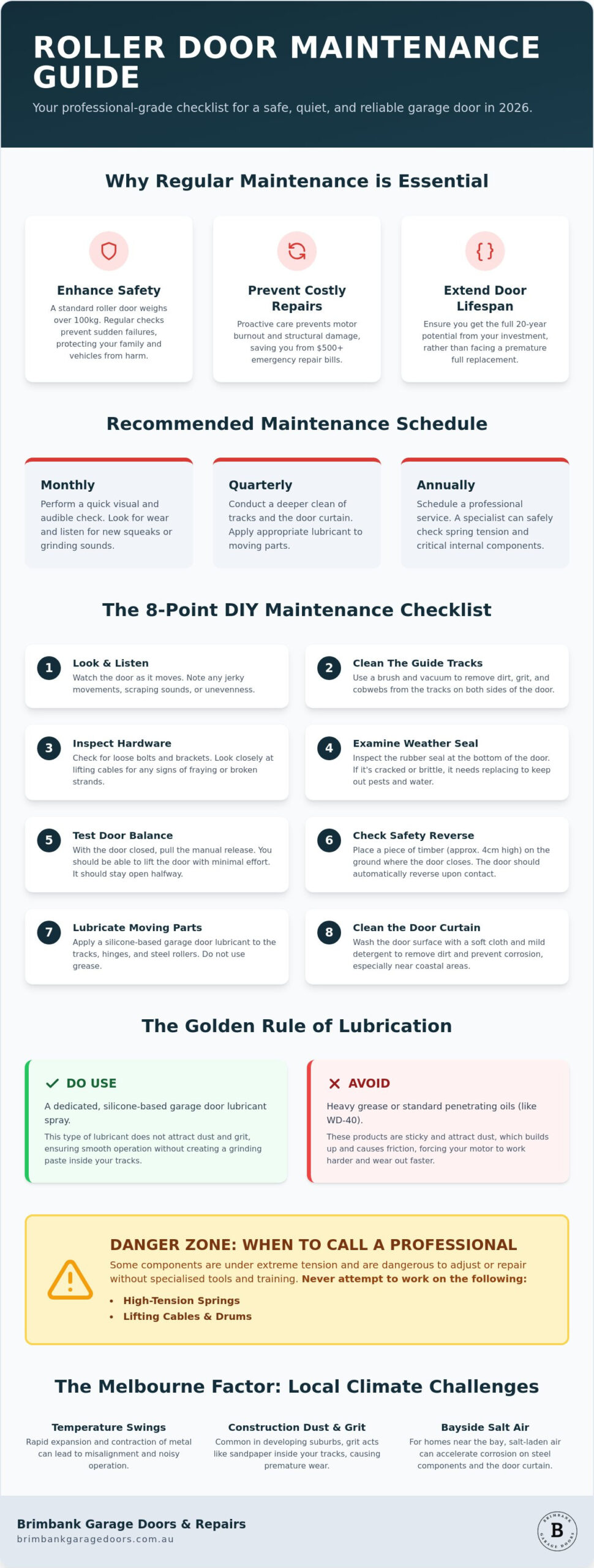
Consistency is key to a smooth-running door. For high-use family garages, we recommend a quick visual check once a month. Listen for new squeaks and look for any visible wear on the edges of the curtain. Every quarter, you should dedicate time to a deeper clean and a proper lubrication routine. Finally, an annual professional service is vital. A specialist can check the spring tension and internal components that aren’t safe for DIY, ensuring your roller door maintenance checklist is complete and your door remains in peak condition for years to come.
The 10-Point DIY Roller Door Maintenance Checklist
Taking care of your garage door doesn’t require a degree in engineering, but it does require a systematic approach. To help you stay on top of things, we’ve developed a professional-grade roller door maintenance checklist that any homeowner can follow safely. By dedicating just a small amount of time each month, you can identify potential hazards before they become expensive emergencies. It’s all about being proactive and understanding what to look for when your door is in motion.
Start with a simple visual scan while the door is closed. Look for any dents in the curtain or misalignments in the tracks that might cause the door to track unevenly. Performing these monthly safety checks allows you to catch minor issues before they escalate into mechanical failures. Next, focus on the lifting cables and fasteners. Check for frayed strands on the cables; if you see even a single broken wire, the cable is compromised and needs immediate attention. Look for loose bolts near the mounting brackets, as these can work their way out over time due to the constant vibration of the motor. Finally, inspect the weather seal at the bottom of the door. If it’s cracked or brittle, it won’t keep out the rain or local pests during Melbourne’s wild winter storms.
Cleaning and Surface Care
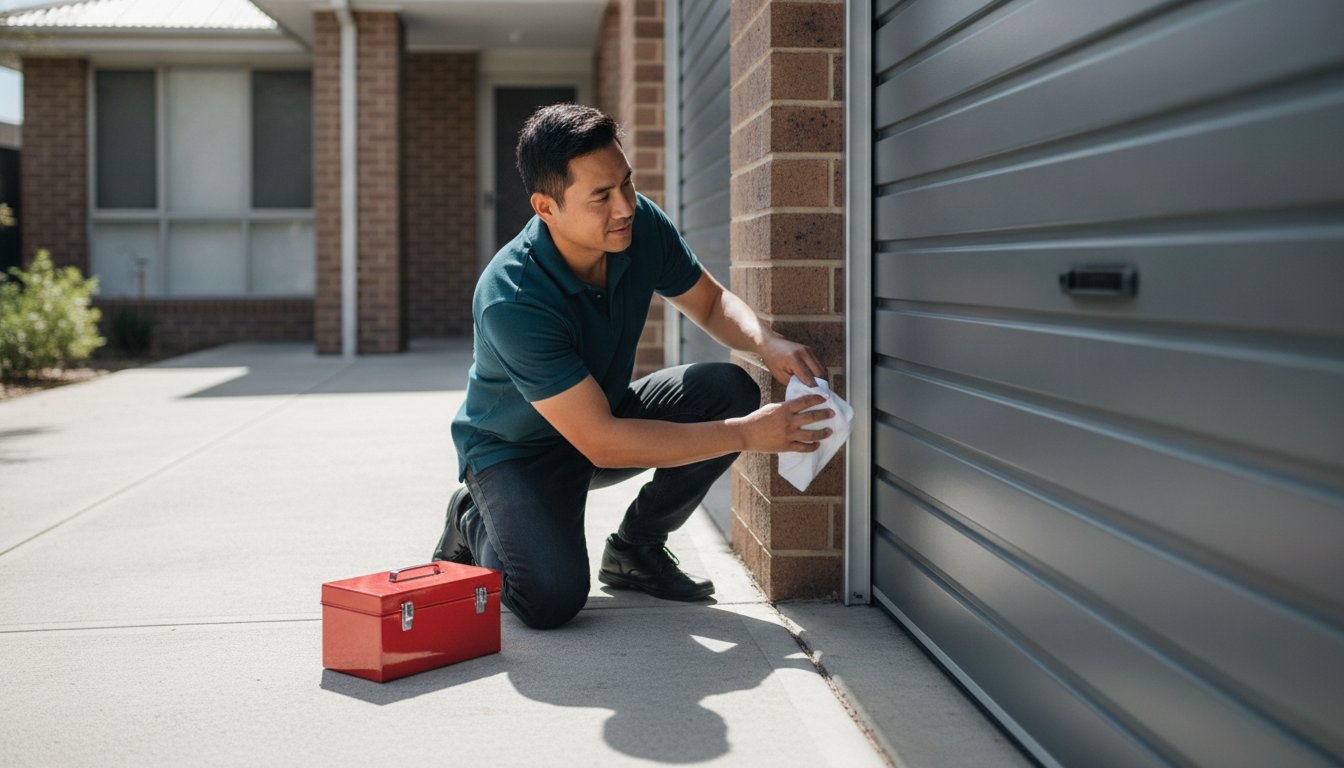
In Melbourne’s western suburbs, wind-blown grit and construction dust often settle inside the guide tracks. This buildup creates friction that forces your motor to work harder, leading to premature wear. Use a stiff brush or a vacuum to clear out any dry debris from the internal tracks. When it comes to the door itself, washing your Colorbond® curtain is essential for preventing corrosion. Use a soft cloth and warm, soapy water to wipe down the surface. Avoid abrasive sponges or harsh chemicals that can scratch the finish and expose the metal underneath. If you notice significant damage or a door that won’t sit level during cleaning, you might need a professional garage door repair to restore its integrity.
Hardware and Fastener Audit
Daily operation creates constant vibration that can slowly loosen the hardware holding your door together. Spend five minutes checking the nuts and bolts on the tracks and mounting brackets to ensure everything is secure. Pay close attention to the brackets that fix the tracks to the wall, as any movement here can cause the door to jam. While you want everything snug, remember that over-tightening hardware can strip threads or cause components to bind, which is just as damaging as leaving them loose. A firm, hand-tight check with a spanner is usually all that’s required to keep the system stable.
Lubrication: Keeping the Operation Silent and Smooth
A noisy garage door is more than just an annoyance; it’s often the first sign of mechanical friction. While it’s tempting to spray everything that moves, the most critical part of any roller door maintenance checklist is knowing exactly what products to use and where to apply them. Using the wrong substance won’t just fail to fix the noise; it can actually attract the grit and dust common in Melbourne’s north and west, leading to a sticky mess that grinds down your hardware over time.
The golden rule of garage door care is to avoid heavy grease and standard WD-40. Standard WD-40 is primarily a degreaser and solvent, meaning it evaporates quickly and leaves the metal unprotected. Heavy grease, on the other hand, is a magnet for debris. Instead, opt for a high-quality silicone-based spray or a specialised garage door lubricant. These products provide a dry, slick film that repels dust while ensuring a silent operation. Following a professional DASMA maintenance checklist helps you focus on the specific areas that require attention, such as the internal springs and hinges, without over-applying product.
How to Lubricate Your Roller Door
Before you start spraying, wipe the internal guide tracks with a clean, dry cloth to remove any leftover residue from your cleaning session. Once the tracks are clear, apply your silicone spray lightly to the internal springs. Be careful not to drench them; a light coating is all that’s required to prevent binding. After application, operate the door manually or with the motor three or four times. This movement distributes the lubricant evenly across the coils and ensures every moving part is reached. Remember, a “less is more” approach prevents messy drips on your driveway and keeps the motor housing clean.
Troubleshooting Noisy Operation
It’s important to distinguish between a “dry” squeak and a “mechanical” grind. A squeak usually indicates that components are rubbing together and simply need a fresh coat of lubricant. However, a heavy grinding sound often points to worn bearings or a misaligned track. If your door continues to struggle or makes alarming noises after you’ve completed your roller door maintenance checklist, lubrication won’t solve the underlying issue. In these cases, continuing to operate the door can cause permanent damage to the motor. For complex mechanical issues, seeking roller door repairs Melbourne homeowners rely on is the safest way to protect your investment.
Critical Safety and Balance Testing
While a quiet door is a sign of good lubrication, a safe door is a sign of proper mechanical balance. This phase of your roller door maintenance checklist is where you verify that the heavy-duty components are performing as they should. It’s about ensuring that the system is safe for your family to be around and that you won’t be left stranded during a power outage. These tests are straightforward, but they require your full attention to detail to ensure nothing is overlooked.
Your first priority is testing the manual release mechanism. In the event of a blackout or a motor failure, you must be able to operate the door by hand. Pull the manual release cord (usually red) and attempt to lift and lower the door. It should move smoothly without excessive force. If the cord is brittle or the mechanism feels jammed, you’re at risk of being trapped inside or outside your garage when you least expect it. Once you’ve confirmed it works, re-engage the motor and prepare for the more technical balance check.
The 50% Balance Test
The balance test is the most revealing part of any DIY inspection. With the door in manual mode, lift it halfway up and carefully let go. A well-maintained door should stay in position or move only a few centimetres. If the door crashes down toward the floor, your springs have lost their tension and are forcing the motor to do all the work. Conversely, if it flies upward, the tension is too high. Both situations are dangerous. Unlike cleaning tracks, you should never attempt to adjust garage door springs yourself. These components are under extreme tension and can cause significant injury if they snap or are mishandled by an untrained person.
Safety Sensor and Reverse Checks
Modern safety standards require your door to be a “thinking” machine. To test the auto-reverse mechanism, place a 40mm thick wooden block on the ground in the centre of the doorway. Close the door using the remote. As soon as the door strikes the block, it must stop and reverse back to the open position. If it continues to apply pressure or stalls, your force sensitivity settings are incorrect and the door could potentially crush an object or a pet. If your system includes “photo-eye” infrared sensors, ensure they are aligned and the lenses are free from the dust and cobwebs common in Melbourne’s western suburbs. A failed safety test is a serious matter that requires immediate attention. If your door doesn’t pass these fundamental checks, it’s time to arrange a professional garage door maintenance visit to ensure your home remains a safe environment.
When to Put the Tools Down: Professional vs. DIY
While following a roller door maintenance checklist empowers you to handle basics like cleaning and lubrication, knowing where your expertise ends is vital for your safety. Some components are simply too dangerous for a weekend DIY project. The “Danger Zone” includes anything under extreme tension, specifically the springs, cables, and bottom brackets. These parts store enough kinetic energy to cause severe injury or property damage if they let go unexpectedly. It’s not just about having the right spanner; it’s about understanding the physics of a 100kg door under load. If you feel any resistance or uncertainty, it’s always better to step back and call a specialist.
Completing your own roller door maintenance checklist is a great first step, but it’s no substitute for a professional’s eye. We’ve seen many cases where a homeowner tried to “tighten” a failing spring, only to have it snap and cause a much larger repair bill. By handling the cleaning and surface care yourself, you keep the door in good shape, but leaving the high-tension work to the pros ensures your home remains a safe environment for your family and vehicles.
Red Flags for Immediate Professional Repair
If you see visible gaps in the coils of your springs, it’s a sign they’ve reached the end of their lifecycle and could snap at any moment. Similarly, “bird-caged” or frayed steel cables are a disaster waiting to happen. If your door hangs crookedly or exhibits jerky movement that persists even after you’ve cleaned the tracks as described in earlier sections, there’s likely an underlying mechanical issue that lubrication can’t hide. These aren’t minor tweaks; they’re urgent signals that the mechanical integrity of the door is compromised. Don’t wait for the door to get stuck halfway; these red flags require immediate attention from a qualified technician.
Booking Your Annual Service
A professional garage door maintenance Melbourne service goes far beyond what a visual inspection can reveal. A technician like Matt from Brimbank Garage Doors & Repairs uses specialised tools to measure spring tension accurately and check for internal motor wear that isn’t visible to the naked eye. We perform a certified safety audit that ensures your door complies with the latest 2026 standards, giving you total confidence in your home’s security. This annual check-up catches the microscopic cracks in plastic gears or the slight motor timing drifts that lead to total system failure if left ignored.
Relying on a local specialist means you’re dealing with someone who understands the specific environmental challenges of Melbourne’s west and north. We take pride in our straightforward, honest approach, focusing on reliable workmanship rather than high-pressure sales. We’ve built our reputation on being the dependable neighbour who also happens to be a technical expert. If your DIY checks have raised any concerns, or if it’s simply time for your yearly check-up, don’t take risks with your home security. Contact Brimbank Garage Doors & Repairs today to ensure your roller door remains a quiet, safe, and dependable part of your home.
Secure Your Home’s Entrance for the Year Ahead
Taking care of your garage door is a straightforward way to protect your home and your budget. By staying consistent with your roller door maintenance checklist, you’re doing more than just stopping squeaks; you’re ensuring your garage remains a safe, reliable entry point for your family. As we’ve explored, while cleaning and lubrication are perfect DIY tasks, the heavy-duty components like springs and cables require a specialist’s touch to avoid serious injury. Catching a small alignment issue today prevents a total mechanical failure tomorrow.
Matt at Brimbank Garage Doors & Repairs is your local specialist for residential repairs and installations across Melbourne’s West and North. We provide reliable, honest service with no hidden fees, focusing on the quality workmanship your home deserves. If your DIY checks have revealed a red flag or if your door is due for its annual safety audit, Book a Professional Roller Door Service with Matt Today. It’s the easiest way to gain total peace of mind and keep your door running smoothly for years to come. Your home security is our priority, and we’re always here to help with a calm, expert approach.
Frequently Asked Questions
Can I use WD-40 on my garage roller door tracks?
No, you should avoid using standard WD-40 on your tracks or rollers. Standard WD-40 is a solvent and degreaser rather than a long-term lubricant; it evaporates quickly and leaves the metal components unprotected. It also acts as a magnet for the dust and grit common in Melbourne’s western suburbs, creating a sticky paste that grinds down your hardware. Stick to a high-quality silicone-based spray as part of your roller door maintenance checklist to ensure a dry, slick finish.
How often should I realistically perform garage door maintenance?
You should perform a quick visual inspection once a month to check for frayed cables or track obstructions. A more thorough session involving cleaning the tracks and lubricating the internal springs should happen every three months. Finally, booking a professional service once a year is essential. This annual specialist check ensures that the high-tension components and motor settings remain safe and compliant with Victorian building standards.
My garage door is making a loud banging noise; is that normal?
Loud banging or popping noises are never normal and usually indicate a significant mechanical fault. This sound often occurs when the coils of a fatigued spring are “binding” and then suddenly releasing, or when the door curtain is catching on a misaligned track. If you hear these sounds, stop using the door immediately. Continuing to operate a door that bangs puts immense pressure on the motor and can lead to a dangerous structural failure.
Is it safe for me to tighten the garage door springs myself?
No, it is extremely dangerous to attempt any adjustment to garage door springs yourself. These springs are under enough tension to cause life-threatening injuries if they snap or if a tool slips during the process. While you can handle cleaning and lubrication, spring tensioning requires specialised winding bars and technical expertise. Always leave the “Danger Zone” components to a professional who understands how to manage the mechanical load safely.
What should I do if my garage door fails the balance test?
If your door fails the balance test by crashing to the floor or flying upward when in manual mode, you must stop using the automatic opener. An unbalanced door forces the motor to lift far more weight than it was designed for, which will quickly strip the internal gears. Disconnect the motor and contact a specialist to recalibrate the spring tension. This is a common part of a roller door maintenance checklist that requires professional tools to rectify.
Why does my roller door struggle to open in cold Melbourne winters?
Cold weather causes metal components to contract and can make old, incorrect lubricants become thick and “gummy.” This creates extra friction that triggers the motor’s safety sensors, causing the door to stop or reverse. You can prevent this by ensuring your tracks are free of old grease and by using a temperature-stable silicone lubricant. If the struggle persists, it may be a sign that your motor’s force sensitivity needs a professional adjustment.
How long do residential garage door springs usually last?
Residential springs typically last between 10,000 and 15,000 cycles, which usually translates to roughly 7 to 12 years for a typical family garage. While a well-maintained roller door curtain can last up to 25 years, the springs are the hardest-working part of the system and will naturally lose their “bounce” over time. Regular inspections help you spot the visible gaps in the coils that signal a spring is nearing the end of its life.
Does regular maintenance help keep the garage door warranty valid?
Yes, performing regular maintenance is often a mandatory requirement for keeping your manufacturer’s warranty valid. Most major Australian brands specify that the door must be professionally serviced at least once every 12 months to maintain coverage on the motor and structural components. Keeping a record of your own DIY checks and professional service receipts ensures you stay protected if a component fails prematurely due to a manufacturing fault.