
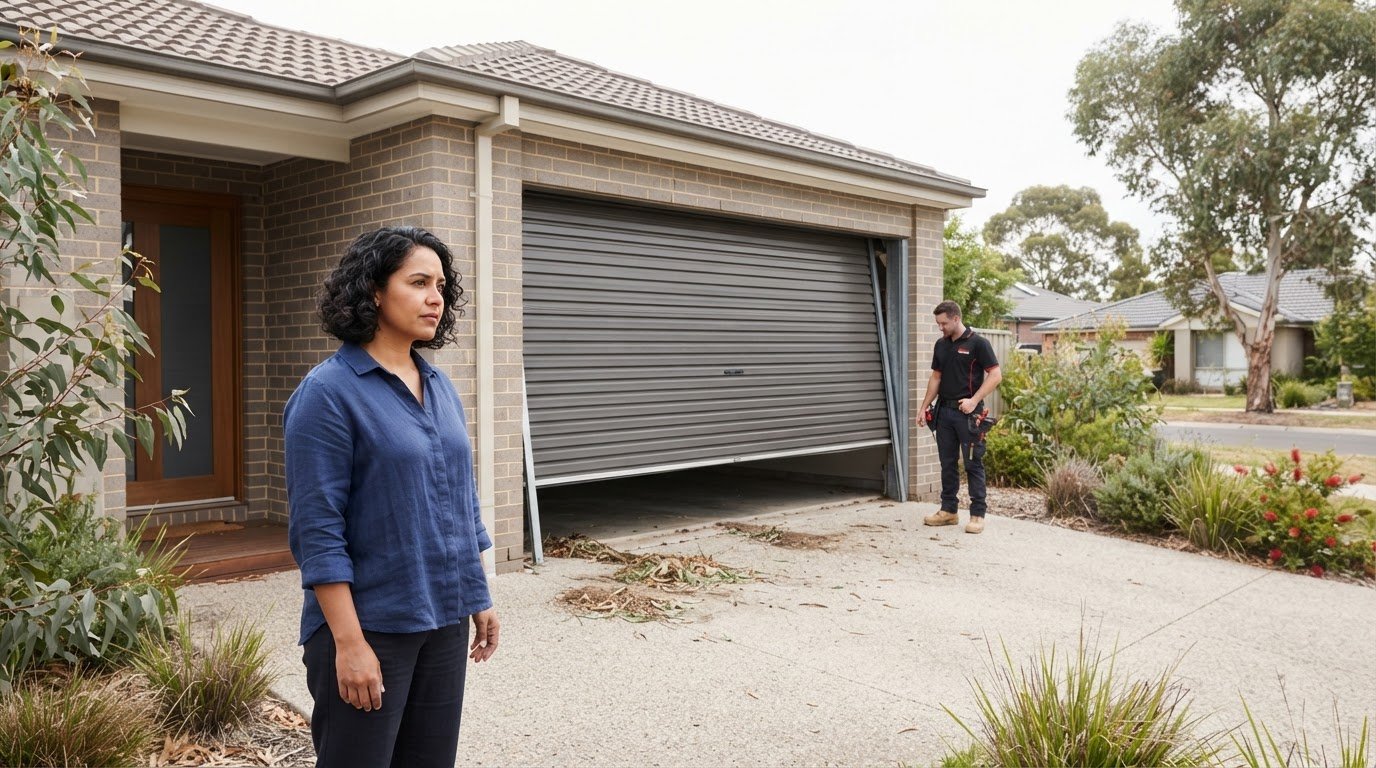

A roller door that suddenly feels heavy is a warning to stop, not a reason to lift harder. If your roller door is hard to lift manually, you may wonder whether something is caught in the guides, the door is damaged or the spring tension has changed.
Extra effort can signal a problem that makes the door unsafe to use. Guessing at the cause or attempting a spring repair can put you at risk. This guide explains common reasons a roller door becomes difficult to move, what you can safely observe and when to leave the work to a repair professional.
You’ll learn how to spot signs such as scraping, jerky movement or visible obstructions without taking the door mechanism apart. We’ll also cover sensible next steps if the door feels unusually heavy or won’t secure properly. For homeowners in Melbourne’s western suburbs, Brimbank Garage Doors & Repairs handles residential roller door repairs and replacement springs across Melbourne’s western and northern suburbs. Check whether service is available in your suburb before arranging an assessment.
Key Takeaways
- If your roller door is hard to lift manually, treat the change in effort as a warning sign, not a diagnosis.
- Spring tension, guides and obstructions can all affect movement. Similar symptoms don’t confirm which part is at fault.
- Stop using a door that feels unsafe. Never force it or try to adjust its springs yourself.
- A safe visual check for debris or damage can help you describe the problem, but leave mechanism checks and repairs to a professional.
- A thorough inspection considers the door, guides and spring system together. Brimbank Garage Doors & Repairs serves Melbourne’s western and northern suburbs, subject to suburb availability.
Roller door hard to lift manually? What the change in effort can tell you
A sudden change in how much effort your roller door needs is useful information, but it doesn’t identify the fault by itself. A door that once moved steadily and now feels heavy, catches part-way or travels unevenly may have increased friction or a mechanical problem that needs attention.
A roller door that’s hard to lift manually may signal excess friction or a problem with its counterbalance system, but the symptom alone can’t confirm the cause. A balanced door should move in a controlled way without excessive force. The feel varies between doors, so compare its movement with what’s normal for yours rather than assuming every door should feel identical.
The curtain rolls around an axle as the door opens and closes. The Roller shutter overview explains this basic arrangement, which helps show why smooth movement depends on more than the visible door curtain. A change in effort can be an early sign that the door, its guides or its spring system needs inspection.
What does a normally operating roller door feel like?
In manual operation, a door in good working order should travel smoothly and in a controlled manner, without sticking or needing a sudden shove. Some variation in effort between doors is normal. What matters is a noticeable change from your door’s usual movement.
If the door is difficult to move by hand, that’s different from an opener or remote that isn’t operating it properly. If it moves smoothly by hand but the opener struggles, note that difference for a technician. Don’t force the door or dismantle the opener to investigate.
Which changes should prompt a closer look?
Pay attention if the door becomes suddenly heavy, sticks at one point, travels unevenly or won’t stay in position. Grinding, scraping or banging noises add useful context, but they don’t prove that a particular part has failed. Several faults can produce similar symptoms.
Stop if the door feels unstable or unsafe to handle. Don’t keep testing it or try to hold it in place. Note what you observed from a safe distance, including when the difficulty occurs, so you can describe the change clearly when arranging an assessment.
Common reasons a roller door becomes difficult to lift by hand
A heavier door can have several possible causes, and the same symptom may come from different parts of the system. A professional inspection can identify what’s happening. Don’t assume the springs are at fault or attempt a repair based on appearance alone.
If a roller door feels unusually heavy, treat it as a reason to have the door system inspected, not to lift harder. The door, guides and counterbalance work together, so a problem in one area can affect how easily the whole door moves.
Could a spring or counterbalance fault be making it heavy?
The counterbalance spring helps offset the door’s weight as it moves, making manual operation more manageable. If a spring has weakened, slipped or broken, the door may feel harder to lift or move unevenly. These are possibilities, not a diagnosis: other faults can create similar signs. Springs are under tension, so don’t attempt to adjust or repair them yourself. For more on this issue, read our guide to garage door spring replacement in Melbourne’s western suburbs.
Can the guides, curtain or an obstruction affect movement?
Yes. Debris near a guide or in the door’s path may interfere with travel. Damaged guides or a curtain that no longer runs straight can cause rubbing, sticking or uneven movement. A shifted running strip may also contribute to friction.
From a safe position, look for obvious debris or visible damage without touching the door mechanism. Don’t dismantle parts, bend guides, try to realign the curtain or apply lubricant to see if the problem goes away. If the door is scraping, catching or moving unevenly, a technician can assess the guides and curtain alongside the spring system. Checking these parts together helps avoid treating one symptom while missing another cause.
If your roller door is hard to lift manually and the cause isn’t obvious, a professional assessment is a sensible next step. Brimbank Garage Doors & Repairs handles residential roller door repairs and supplies replacement springs across Melbourne’s western and northern suburbs. Learn more about residential roller door repairs, and check service availability for your suburb before arranging an assessment.
How to tell a visible obstruction from a roller door fault
A clear obstruction may be visible, but not every cause of a heavy door can be seen from outside. A loose object near the door’s path is different from a curtain that appears uneven or a door that has suddenly changed balance. Symptoms can overlap, so visual clues can help you describe the issue but can’t confirm which part has failed.
Consider when the change began. If the door has always taken more effort than expected, it may have an ongoing setup or movement issue. A sudden increase in effort, especially alongside sticking or uneven travel, is a change worth reporting. Don’t repeatedly operate the door to test it.
What can you safely observe before calling a repairer?
From a safe distance, look for visible debris in the door’s path, damage to the guides or a curtain that seems uneven. Don’t reach into the guides or touch components. Note whether the heaviness started suddenly or developed gradually, and whether you heard scraping, grinding or banging. These details help a repairer understand what you’ve noticed without you needing to diagnose the fault.
| What you notice | Possible explanation | Recommended response |
|---|---|---|
| Visible loose debris near the door’s path | An obstruction may be interfering with travel | Keep clear. Only remove it if it’s plainly accessible without touching or moving the door |
| Door has become heavy or sticks at one point | Friction or a mechanical issue may be affecting movement | Stop testing it and arrange a professional assessment |
| Curtain appears uneven or a guide looks damaged | The door may not be travelling correctly | Don’t realign or bend parts. Have the door checked |
| Sudden change in balance or a hanging component | A fault may make the door unstable | Keep everyone clear and don’t use the door |
Which warning signs mean you should stop using the door?
Stop if you can see a damaged spring, a hanging component or an unstable curtain, or if the door’s balance changes suddenly. Don’t stand beneath it, try to hold it in place or handle parts of the mechanism. Keep children and others clear until a repairer has assessed it.
If your roller door is hard to lift manually, use visible clues to describe what’s happening, not to decide which component needs repair. A professional assessment is the safer way to distinguish an obstruction from a fault inside the door system.
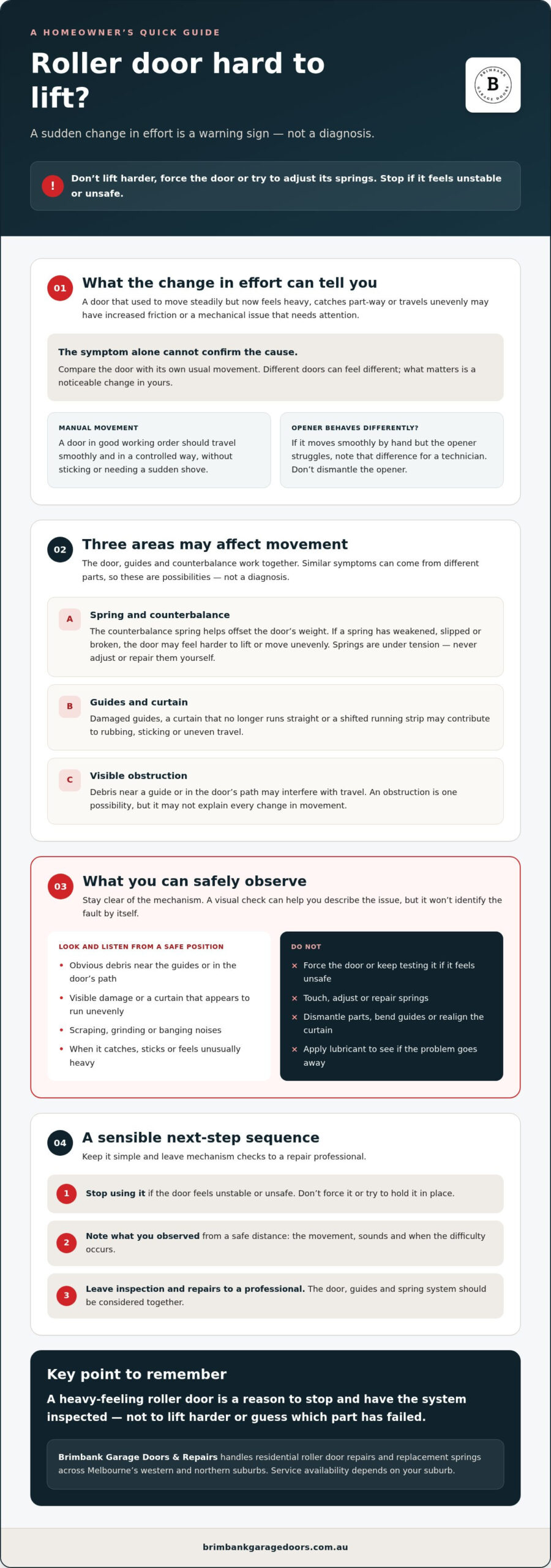
What to do when your roller door is hard to lift manually
If your roller door is hard to lift manually, don’t try to overcome the resistance with extra force. A heavy door or one with a faulty spring can move unexpectedly, putting you at risk of injury or causing damage. Take a measured approach instead.
- 1. Stop operating the door. Don’t keep lifting or lowering it to see whether the problem improves. If it feels unstable, leave it where it is if safe to do so.
- 2. Keep people clear. Make sure others, especially children, stay away from the door and its path. Don’t stand beneath a door that looks unstable or try to hold it in position.
- 3. Observe from a safe position. Look for obvious objects in the door’s path, visible damage, a crooked curtain or a curtain that appears unevenly wound. Don’t reach into the guides or touch the spring assembly.
- 4. Arrange a professional assessment. Describe what changed, when you noticed it and any unusual noises or uneven movement. A repairer can inspect the door system and determine what needs attention.
Which basic checks are safe without dismantling anything?
Keep checks visual and do them from outside the door’s travel area. You can note whether an object is plainly in the way, or whether the curtain looks crooked, damaged or unevenly wound. Don’t move the door to test it or try to clear anything that requires reaching near a moving part. Your observations are useful background for a repairer, not a reason to attempt a fix.
Why should you avoid adjusting a spring yourself?
Spring assemblies can hold significant stored force. If a spring or related part is damaged, attempting to adjust or repair it can cause sudden movement and serious injury. Leave spring work to a trained repairer. Don’t force the door, loosen components or follow DIY adjustment steps, even if the mechanism looks straightforward.
For more homeowner guidance, read about roller door repair guidance for Melbourne homeowners. If you need a professional assessment, arrange residential roller door repairs with a local provider, and check service availability for your suburb. A careful assessment can identify the fault while keeping you and your household clear of a door that may move without warning.
When to book roller door repairs in Melbourne’s western suburbs
Book a professional assessment if the door remains unusually heavy, its movement is getting worse, or you can see damage to the curtain, guides or other components. A door that sticks, travels unevenly or changes balance can be difficult to secure safely. Don’t wait for it to stop moving completely before seeking advice.
Because several parts work together, a repairer should assess the door, guides and spring system as a whole. This helps identify whether the problem relates to friction, damage or the counterbalance, rather than focusing on one symptom alone. If the door appears unstable, keep clear and tell the repairer when you enquire.
What information helps a repairer assess the problem?
A few clear details can make it easier to discuss the issue and confirm whether service is available in your area. Share:
- Your Melbourne suburb and whether the door is a roller door.
- When it became difficult to lift, and whether the change was sudden or gradual.
- Any visible damage, uneven movement or unusual sounds you noticed.
- Whether the door is still moving, sticking or not staying in position.
Describe only what you’ve observed. Don’t operate a suspect door repeatedly to gather more information, and avoid touching damaged or hanging components. Confirm current service availability for your suburb when arranging an assessment.
How can regular care help maintain smooth operation?
Routine professional maintenance can help identify wear or movement issues before they become more pronounced. It gives a repairer an opportunity to assess the door’s condition and spot concerns that may not be obvious during everyday use. Maintenance can’t prevent every spring or mechanical failure, so treat a new change in operation as a reason to get advice rather than waiting for the next scheduled check.
For practical upkeep guidance, see the Melbourne garage door maintenance checklist. Brimbank Garage Doors & Repairs provides residential roller door repairs and maintenance across Melbourne’s western and northern suburbs, with replacement springs available. If your roller door is hard to lift manually, enquire about residential roller door repair support and confirm service coverage for your suburb.
Take the safe next step for your roller door
A roller door that’s suddenly difficult to move needs attention, not extra force. The change may relate to spring tension, friction or another fault, and visible signs can’t always identify the cause. Stop using the door if it feels unstable, and leave spring adjustments and repairs to a professional.
If your roller door is hard to lift manually, note what changed and arrange an assessment, especially if the heaviness persists, movement worsens or you can see damage. A thorough inspection can consider the door, guides and spring system together.
Brimbank Garage Doors & Repairs provides residential roller door repairs and maintenance, along with replacement spring supply and fitting, across Melbourne’s western and northern suburbs. Check service availability for your suburb, then arrange a residential roller door repair enquiry.
A careful assessment is a practical step towards safer, more reliable door operation. You don’t need to diagnose the fault yourself.
Frequently Asked Questions
Why is my roller door suddenly hard to lift manually?
A sudden increase in effort can point to a change in spring tension, friction in the guides, debris in the door’s path or another mechanical issue. These are possible causes, not a diagnosis, as different faults can produce similar symptoms. Note whether the door also sticks, moves unevenly or makes unusual noises. Stop using it if it feels unstable, and arrange a professional assessment rather than testing it repeatedly.
Is it safe to keep using a roller door that is hard to lift?
It’s safest to stop using a roller door that feels unusually heavy, unstable or damaged until it has been assessed. A door with weak or broken springs may fall unexpectedly, causing injury or damage. Keep people clear, particularly if the curtain looks crooked or a component is hanging loose. Don’t try to hold the door in place or keep operating it to see whether the problem goes away.
Can I adjust a roller door spring myself?
No. Don’t attempt to adjust, re-tension or repair a roller door spring yourself. Spring assemblies can hold significant stored force, and an incorrect adjustment or sudden release can cause serious injury. Leave spring work to a trained repairer who can assess the system and determine what work is needed. Avoid dismantling the mechanism or using tools on it, even if the spring looks accessible.
Could dirt in the tracks make a roller door hard to lift manually?
Debris in the door’s path or guides may interfere with travel and add friction, so it’s one possibility to consider. A roller door that’s hard to lift manually can also have a spring or other mechanical issue, and symptoms alone can’t confirm the cause. From a safe position, look for obvious debris without reaching into the guides or moving the door. If it still sticks or feels heavy, arrange an assessment.
What happens if I force a heavy roller door open?
Forcing a heavy roller door can worsen existing damage or cause the door to move unexpectedly. If a spring or another part of the system is faulty, the door may become harder to control and could fall, creating a risk of injury or property damage. Don’t push through sticking or resistance. Stop, keep clear of the door’s path and seek a professional assessment before using it again.
When should I call a roller door repairer?
Arrange an assessment if the door remains heavy, movement is worsening, it sticks or travels unevenly, or you notice visible damage or unusual noises. Stop using it if it seems unstable. Brimbank Garage Doors & Repairs provides residential roller door repairs and maintenance across Melbourne’s western and northern suburbs. When enquiring, share your suburb and the symptoms, and confirm current service availability for your area.
Can a broken spring make a roller door hard to lift manually?
Yes. A broken or weakened counterbalance spring may leave more of the door’s weight for you to manage, making it harder to lift. But heaviness doesn’t prove the spring has failed, as friction, an obstruction or other damage may cause similar symptoms. Don’t use the door or attempt spring repairs if you suspect a problem. Keep people clear and have the spring system assessed by a trained repairer.