
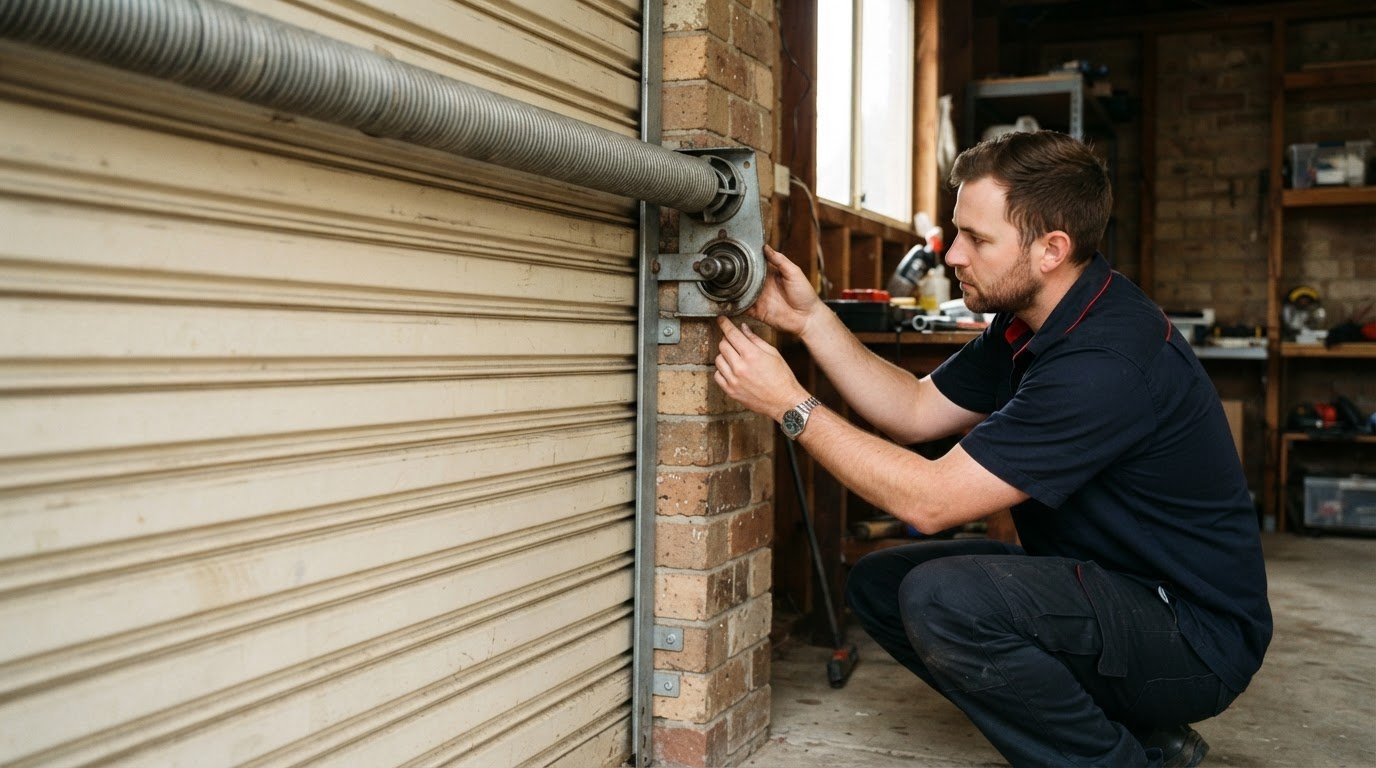
A garage door that seems manageable can still be dangerous to handle. Knowing when to call a professional for garage door repair means acting when the door is heavy, uneven, off track, difficult to move, or making grinding noises. These signs can point to problems with springs, cables, rollers or other components, so don’t force the door or try to open it manually if it appears damaged.
It’s understandable to hope a quick adjustment will solve the problem, but working on a strained door can worsen the fault and put people nearby at risk. This guide explains why DIY repairs and manual opening can be unsafe, what scraping or grinding sounds may signal, and how a professional can assess and repair the door. You’ll also learn when to stop using it and what to expect from expert help.
Key Takeaways
- Leave repairs involving damaged springs or frayed cables to a professional, and keep people clear of an unsafe door.
- A leaning, off-track or unevenly closing door can be unsafe to lift manually; don’t force it into place.
- Grinding, scraping or excessive vibration may signal worn or misaligned parts that need proper diagnosis.
- Professional inspection and maintenance can identify the underlying fault and help prevent further damage.
1. Why Is DIY Garage Door Repair Unsafe?
Garage door springs carry much of the door’s weight, so a broken spring can leave it heavy and difficult to control. A sudden bang, a visible gap in a torsion spring, or a door that stops lifting can indicate spring failure. Don’t keep operating the opener: a broken spring can damage it and create safety risks.
Cables are also under tension. A frayed, loose or snapped cable can make the door unstable; operating it may cause the remaining cable to snap and the door to drop. Don’t pull damaged cables or adjust spring tension. A technician can inspect the springs, cables and lifting system, then repair them without exposing household members to the moving door.
Cracked, dented or warped panels need attention too. Physical damage can affect how the door moves and how well it secures the garage. Broken hinges may let a panel fold outward or come away from its tracks. Keep clear if a panel is shifting, and don’t try to push it back into place.
A professional can safely troubleshoot spring or cable failures, damaged panels, difficult movement and opener faults. Inspection helps identify whether the cause is a single damaged part or a wider problem involving the lifting system. Electrical work on an automated opener requires a licensed electrician in most Australian states.
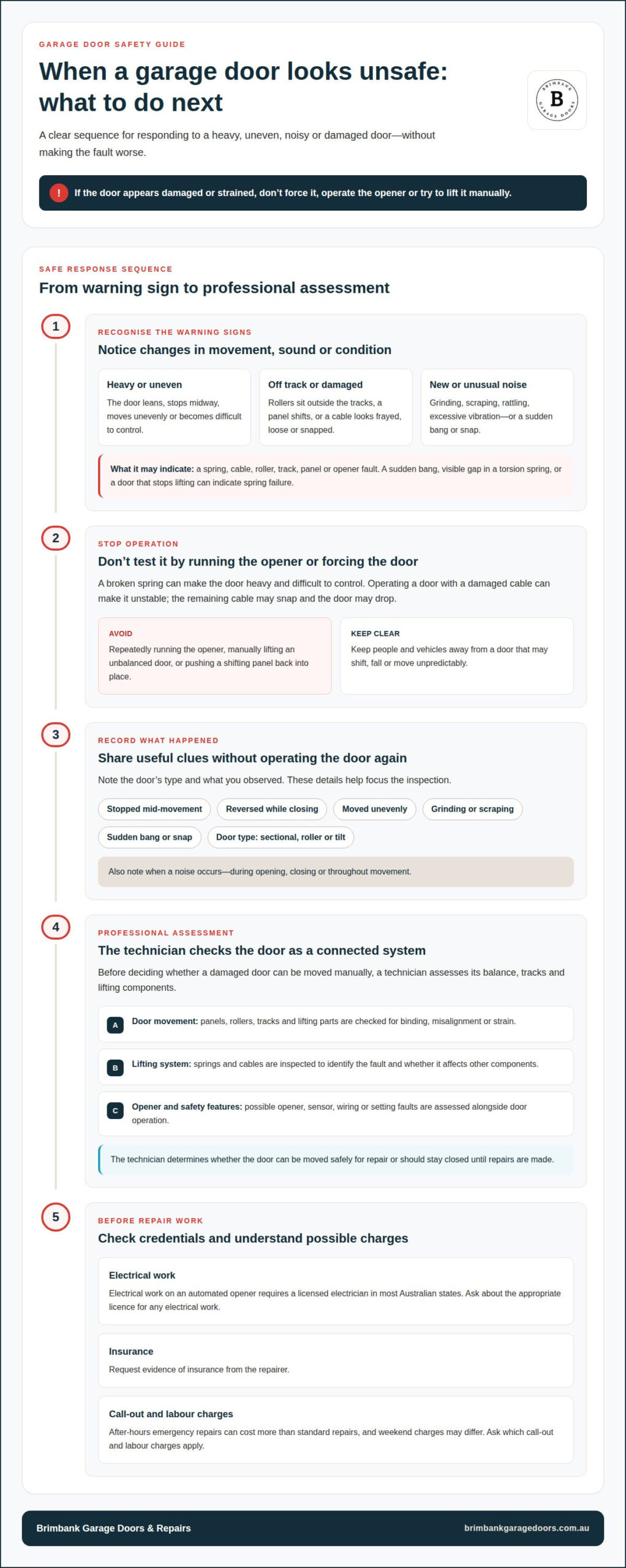
When choosing a repairer, ask about the appropriate licence for any electrical work and request evidence of insurance. After-hours emergency repairs can cost more than standard repairs, and weekend charges may differ, so ask about applicable call-out and labour charges. Before the technician arrives, stop operating an unsafe door, keep people and vehicles clear, and note what happened, such as a sudden bang or uneven movement. Don’t try to open it manually or handle springs and cables.
2. Can a professional safely open a garage door manually when it’s damaged?
Sometimes, but only after assessing the door’s balance, tracks and lifting components. A technician can determine whether it’s safe to move manually or whether it should stay closed until repairs are made. A door that leans, stops midway or has rollers outside its tracks may shift or drop without warning. Keep people and vehicles clear rather than forcing it.
Using a damaged or stuck garage door can worsen the fault, damage the opener or cause the door to fall. A crooked sectional door, jammed roller door or tilt door under strain each needs a different assessment. Manual lifting is unsafe if the door is unbalanced, off track or showing signs of strain. Keep it closed until a technician checks it.
For sectional, roller and tilt doors, a professional checks how the panels, rollers, tracks and lifting parts move together. Misaligned tracks can push rollers out; forcing a sagging or crooked door back into place can cause more damage. The technician identifies what’s binding, then assesses whether the door can be moved safely for repair. Don’t pull on it or repeatedly run the opener.
If a door reverses while closing, the cause may be an obstruction, dirty or misaligned safety sensors, track alignment or opener settings. A professional can assess these possible faults and check whether the door closes securely. A door that sits unevenly or leaves gaps along its bottom or sides also needs inspection, as those gaps may affect security.
Tell the technician whether the door stopped mid-movement, reversed, or moved unevenly, and mention its type. These details help focus the inspection without further operating the door. For help with a door that won’t move smoothly, arrange professional garage door repairs.
3. Why does my garage door make loud scraping or grinding noises?
Grinding, scraping or rattling during operation can point to worn rollers or misaligned components. For example, a roller struggling along its track can create repeated scraping, while loose or worn parts may rattle. These sounds can reveal a mechanical problem before the door stops moving. Don’t ignore a new noise or keep operating the door if its movement becomes uneven.
A sudden snap is different from steady grinding. It can accompany a broken spring or cable, especially if the door then feels heavy or stops lifting. Stop using the opener and arrange an inspection rather than trying to move the door. A technician can assess the lifting system and determine whether a damaged part needs repair or replacement.
Notice how the whole door behaves, not just how it sounds. Excessive vibration or shaking can indicate worn components or an imbalance. If the door shudders, scrapes and moves unevenly, a technician can inspect the rollers, tracks and other mechanical parts to find the cause. Misalignment can make the door bind instead of moving smoothly.
Lubricant may quiet a noisy door temporarily, but using it to mask grinding can leave the underlying problem unresolved. It won’t correct worn rollers, misaligned tracks or an imbalance. Note when the noise occurs, such as during opening, closing or throughout movement. That detail helps a technician focus the inspection without operating the door unnecessarily.
The opener can offer another clue. If its motor runs but the door doesn’t move, the fault may involve a complex opener mechanism. Erratic operation or sluggish responses to a remote can also indicate sensor, wiring or opener faults. Electrical work and internal components need appropriate professional attention. A technician can assess the door and opener together, then recommend repair or replacement based on the fault and condition of the parts.
4. Benefits of professional repair services
A professional diagnoses the cause, not just the symptom. A door that stops halfway might have a track, spring, cable or opener fault. Addressing only the visible issue can leave another worn component affecting the system. A technician can inspect the door, lifting parts and opener together, then explain which repair will address the underlying problem.
A whole-system assessment can also identify safety concerns. For example, a door that closes unevenly may need its balance, tracks and sensors checked. A technician can assess whether the sensors respond correctly and whether the door operates as intended after repairs. A door that doesn’t close reliably can affect access and home security.
Professional work can also prevent a minor fault from becoming more extensive damage. Worn rollers or misaligned tracks can strain other components during operation. A technician can identify the affected parts and recommend suitable repairs or replacement, rather than masking warning noises with lubricant. Regular maintenance can help catch wear early and avoid costly repairs.
It’s useful to know what a repair involves. A clear diagnosis connects the observed fault, such as vibration or a sluggish response, to the components that need attention. It also helps distinguish mechanical problems from opener or sensor faults. If the issue involves electrical work on an automated opener, a licensed electrician is required in most Australian states.
After a repair, the door should be assessed through its operation, including whether it travels smoothly, sits balanced and responds appropriately to its controls. This helps reveal whether the original symptom has been addressed. For persistent noises, poor movement or unreliable closing, arrange professional garage door repairs before continued operation adds strain to affected components.
Brimbank Garage Doors & Repairs
Brimbank Garage Doors & Repairs provides garage door repairs and maintenance for residential doors that are noisy, difficult to move, damaged or no longer closing properly. A professional assessment can identify whether the fault needs repair or maintenance, helping you decide what to do without handling strained parts yourself.
For worn or damaged components, Brimbank provides garage door repairs and maintenance. If the door’s condition calls for a different solution, the business also installs and supplies garage roller doors. The right next step depends on the door’s condition and the fault affecting its operation.
If your garage door is damaged or unreliable, contact Brimbank Garage Doors & Repairs to discuss the issue and arrange a free measure and quote.
Take the next step towards a reliable garage door
Base your next decision on how your garage door behaves, not just the noise it makes. If it’s becoming harder to operate, no longer closing securely or showing damage, an assessment can clarify the right next step. Knowing when to call a professional for garage door repair can help address a fault before it disrupts your routine further.
If you’re unsure when to call a professional for garage door repair, consider whether its operation or security has changed. Brimbank Garage Doors & Repairs can assess the issue and help determine whether repairs, maintenance or installation suit the door’s condition. Sharing what you’ve noticed helps explain the problem clearly.
Contact Brimbank Garage Doors & Repairs to discuss your garage door and take a calm, practical step towards restoring its reliable operation.
Frequently Asked Questions
Why Is DIY Garage Door Repair Unsafe?
DIY repairs are unsafe because springs, cables and moving door sections can release force unexpectedly. Even a small adjustment to spring tension can affect how the door is supported, while hands near hinges or rollers risk being pinched. Leave spring tension, cables, internal wiring and motor housings alone. A professional can assess the fault without turning a minor malfunction into a more hazardous one.
Is it safe to open a garage door manually when it’s damaged?
No, not if the door is crooked, jammed, off track or showing strain. Manual lifting can put uneven force through the door and may cause it to shift or drop. Keep it closed and the area clear until a technician assesses it. If the door is already raised, don’t stand or work beneath it; get professional help to determine how it can be secured safely.
What causes a garage door to stop halfway during movement?
A door that stops partway may have an obstruction, a track or roller problem, a fault in its lifting system, or an opener issue. Sensor alignment or opener settings can also affect its movement. Note whether it stops at the same point each time and whether the motor continues running. That detail can help a technician narrow down the fault without repeated operation.
What should I do if my garage door feels heavy to lift?
Stop trying to lift it. A door that suddenly feels heavier may have a spring or lifting-system fault, and its weight can make it difficult to control. Keep children, visitors and vehicles away from the doorway, then arrange a technician’s inspection. Don’t pull harder or repeatedly use the opener, as either could add strain to damaged components.
Why does my garage door make loud scraping or grinding noises?
Scraping or grinding often points to worn rollers or misaligned components. A change in sound after an impact, or noise that grows louder as the door moves, is useful information for the technician. Avoid applying lubricant just to quiet the noise, as this can conceal the underlying fault. If the door also shakes or moves erratically, stop operating it and arrange an assessment.
Why does my garage door move unevenly?
Uneven movement can result from a problem with the tracks, rollers, springs or cables, leaving one side moving differently from the other. From a safe distance, check whether the closed door sits crooked or leaves a gap along an edge, but don’t touch or reposition it. Stop operating an uneven door and arrange a professional inspection to identify the cause.