
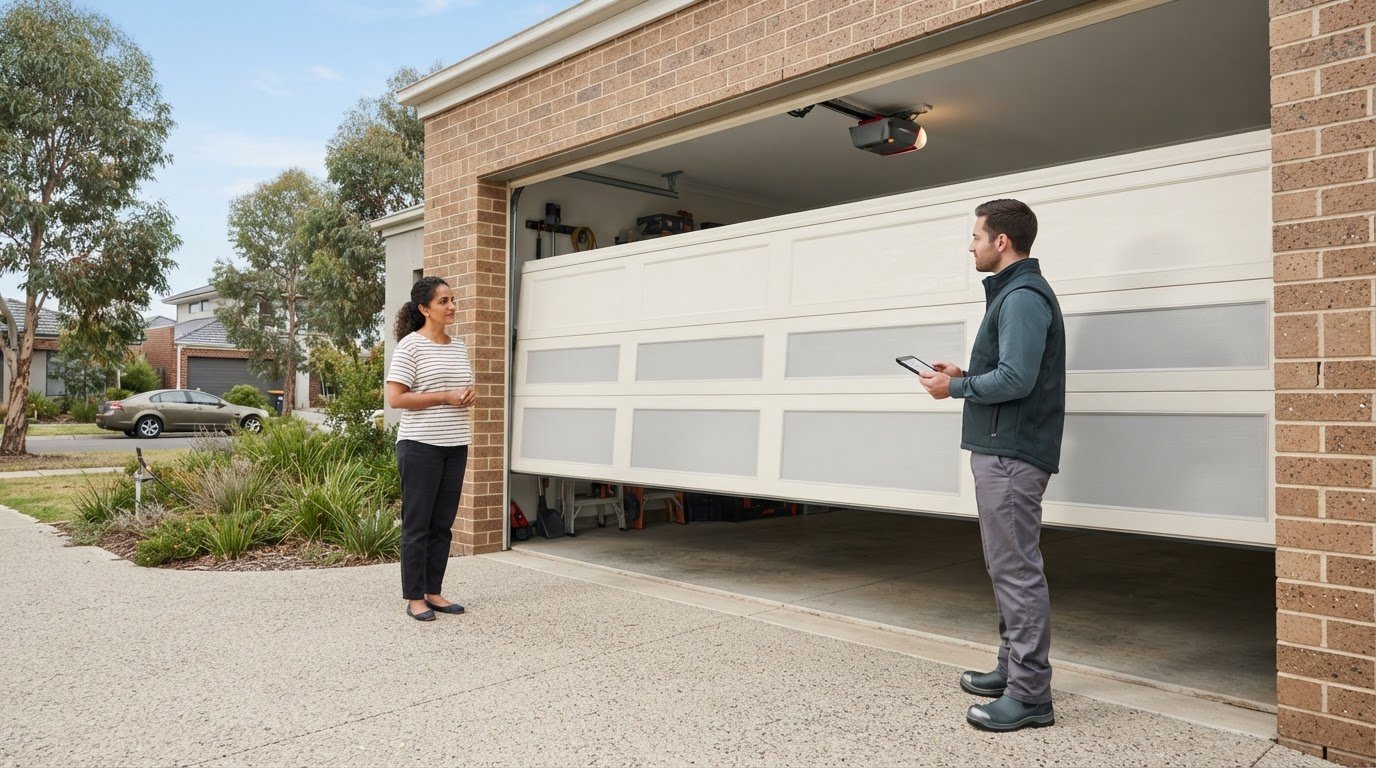
What if the motor isn’t the reason your garage door has started behaving unpredictably? The signs of failing garage door motor can look similar to problems with the door, power supply or remote controls, so replacing the motor too soon may not solve the issue. If the door hesitates, stops part-way or won’t respond, it’s understandable to worry about safe access and home security.
Before assuming the motor is at fault, note what happens when you use the controls and whether the door moves smoothly. These observations can help narrow down the possibilities, but don’t force the door or attempt repairs involving springs, tracks or electrical parts. A professional inspection can help identify the cause and guide the next step.
This guide explains common motor-related warning signs, what you can safely check at home and when to arrange a residential garage door inspection in Melbourne’s western suburbs. You’ll also learn why an assessment matters before deciding whether repair or replacement is appropriate.
Key Takeaways
- Delayed response, inconsistent operation or unusual motor noise can be signs of failing garage door motor, but they don’t confirm the cause.
- Compare what happens with the power supply, remote control and door movement to help describe where the fault may lie.
- A heavy or unbalanced door can put extra strain on the opener, so have the door and related components assessed before deciding on motor work.
- Keep people clear if the door moves unpredictably or appears damaged. Stick to simple observations rather than risky repairs.
- For an assessment, note your door type, symptoms, how often they occur and any recent changes.
What are the signs of a failing garage door motor?
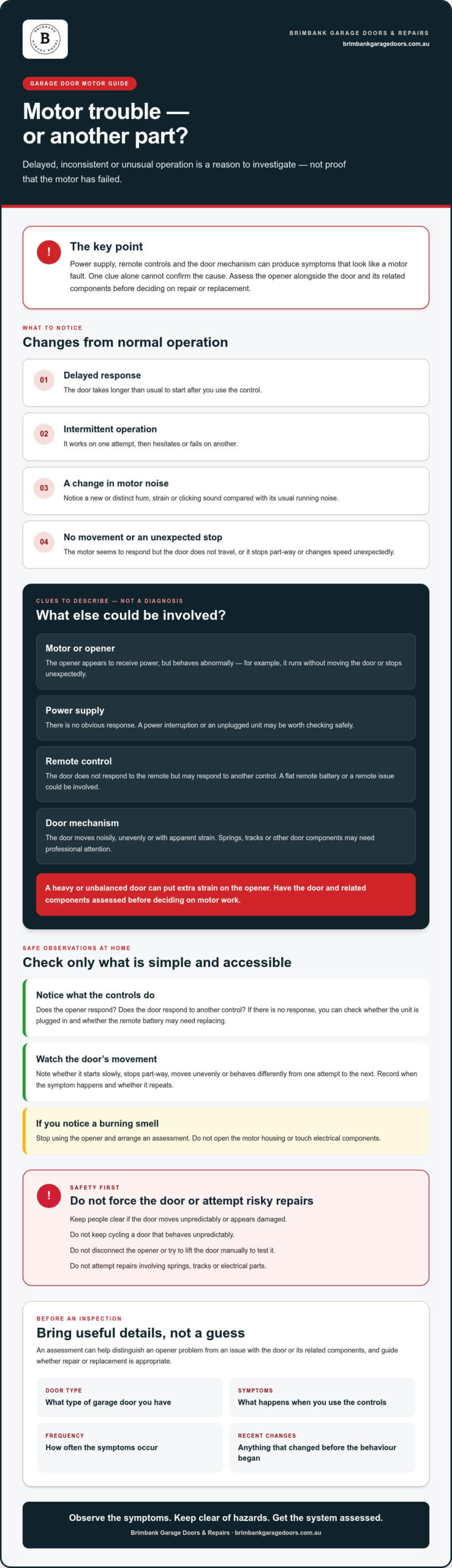
Unusual operation is a reason to investigate, not proof that the motor has failed. A delayed response, inconsistent movement, a change in motor noise or a door that won’t move can all be signs of failing garage door motor. However, similar symptoms can come from the power supply, controls or door mechanism, so one clue alone can’t confirm the cause.
Look for a change from the door’s usual behaviour:
- Delayed response: The door takes longer than usual to start after you use the control.
- Intermittent operation: It works on one attempt, then hesitates or fails on another.
- Unusual motor noise: The motor sounds different from its usual running sound, perhaps straining, humming or clicking.
- No movement: The motor seems to respond, but the door doesn’t travel.
Abnormal door operation can have several causes. An assessment of the opener and the rest of the system is needed to confirm whether the motor is at fault. A garage door opener relies on electrical and mechanical components. This overview of how a garage door opener works provides useful background, but symptoms still need to be considered in context.
Does the motor struggle, stop or respond inconsistently?
Notice whether the door starts slowly, stops part-way, changes speed unexpectedly or behaves differently from one attempt to the next. Intermittent operation can have several causes, including a problem with the power, controls, door or opener. Don’t keep cycling a door that moves unpredictably. Note when the symptom occurs and whether it repeats. That pattern can help a technician assess the fault.
What sounds or smells should prompt concern?
Some sound from a moving door is normal, so focus on a new or distinct change in the motor’s usual running noise rather than general rattling or rolling from the door itself. A persistent hum or strained sound without normal movement deserves attention. If you notice a burning smell, stop using the opener and arrange an assessment. Don’t open the motor housing or touch electrical components.
These observations are useful clues, not a home diagnosis. A technician can assess the motor alongside the door and related components, helping distinguish an opener problem from another fault before repair or replacement is considered.
Is the garage door motor failing or is it another part?
Similar symptoms can come from different parts of the garage door system. A door that won’t move may point to a motor issue, but it could also have lost power, failed to receive a signal from the remote or be struggling with a mechanical fault. Consider the signs of failing garage door motor alongside what the door and controls are doing.
Motor: The opener appears to receive power, but the motor behaves abnormally, such as running without moving the door or stopping unexpectedly.
Power supply: The opener shows no obvious response. A power interruption or an unplugged unit may be worth checking before assuming a motor fault.
Remote control: The door doesn’t respond to the remote but may respond to another control. A flat remote battery or a problem with the remote could be involved.
Door mechanism: The door moves noisily, unevenly or with apparent strain. Springs, tracks or other door components may need attention.
These are clues, not diagnoses. They can help you describe the fault, but they can’t confirm what’s happening inside the opener or door mechanism.
Motor symptoms versus power or remote-control problems
If the opener has power and seems to activate but the door behaves abnormally, the motor or another opener component may be involved. If there’s no response at all, check only simple, safely accessible things, such as whether the opener is plugged in and whether the remote battery may need replacing. Don’t open the unit or inspect wiring. Symptoms alone can’t identify a circuit-board, wiring or internal electrical fault.
Motor trouble versus door or spring trouble
A heavy, uneven or noisy door can place extra strain on the opener, making a motor problem seem likely even when the door mechanism needs attention. Broken or worn springs are a separate mechanical concern and should be assessed professionally. For background on spring-related issues, see this garage door spring replacement guide.
Don’t test the door by disconnecting the opener or trying to lift it manually. Springs and door components can be under tension, and a door that moves unpredictably may pose a safety risk. Keep people clear and arrange a professional assessment if you suspect door or spring trouble. A residential garage door repair inspection can help identify whether the issue is with the opener, door or related components. More information about residential garage door repairs is available online.
Should you repair or replace a failing garage door motor?
A symptom alone isn’t enough to decide. The right next step depends on what an inspection finds across the motor, the door and related components. A technician can assess the system and explain whether a specific fault may be repairable or whether replacement should be considered. This helps avoid replacing a motor when the underlying issue is elsewhere.
Ask what was found and how it affects the recommendation. The decision should take account of the motor’s condition, how reliably the system operates and whether the existing door and opener components work together. Pricing depends on the fault and the work required, so ask for the findings and proposed work to be explained clearly before proceeding.
When might a repair be worth assessing?
Repair may be worth considering when an inspection identifies a specific fault that can be addressed, rather than a broader problem affecting the motor or door system. The assessment should clarify what needs attention and whether the door’s overall condition supports repair. If symptoms keep returning or are getting worse, don’t assume the issue will settle on its own. Arrange an assessment before relying on the door as usual.
When might replacement be considered?
Replacement may enter the discussion if the motor’s condition or reliability raises concerns, or if it isn’t suitable for the existing door system. The door’s condition and related components also matter. Fitting a different motor won’t necessarily resolve a fault elsewhere. There’s no single symptom or age-based threshold that makes replacement automatically necessary. Ask the technician to explain how the condition of the complete system informs the recommendation.
For broader context on assessing a garage door fault and possible repair work, read this Melbourne garage door repair guide. It can help you prepare questions, but a recommendation for your door should follow an on-site assessment.
Before agreeing to work, ask whether the finding relates to the motor, the door or another component, what work is proposed, and whether related issues need attention. If the assessment points to a door or spring fault rather than a confirmed motor issue, ask how that changes the plan. A clear explanation makes it easier to weigh repair against replacement without relying on the signs of failing garage door motor alone.
Residential garage door repairs in Melbourne’s western and northern suburbs include assessment of the door and its components. Information about residential garage door repairs is available from Brimbank Garage Doors & Repairs.
What can you safely check before calling a garage door technician?
A few careful observations can help explain the problem without putting you or your household at risk. You don’t need to diagnose the opener. The signs of failing garage door motor can overlap with door, power or control issues, so focus on what you can see and hear from a safe position.
Record symptoms without dismantling the opener
Only observe the door if it appears intact and can be operated safely as usual. Keep children, pets and other people well clear of its path. Don’t stand beneath a moving door or approach one that is crooked, stuck or behaving unpredictably.
- Note which control you used. If it’s safe to observe, record whether the wall control, remote or neither appears to prompt a response. You can check whether the opener’s plug is visibly connected if it’s safely accessible, but don’t reach behind equipment or handle wiring.
- Describe the movement. Note whether the door starts, pauses, stops, moves unevenly or doesn’t move. Record any change in the motor’s sound, too.
- Write down the pattern. Note when the symptom occurs and whether it has happened before. Avoid repeated attempts to make the door move.
- Stop if conditions change. If the door becomes stuck, moves erratically or presents an immediate hazard, stop using it and keep people clear.
Know when to stop using the door
A crooked door, visible damage or movement that seems unusually heavy calls for professional assessment, not a closer look or a test. Don’t force the door, try to lift it manually, handle springs, open the motor housing or carry out electrical work. Never bypass a safety device or keep cycling a malfunctioning opener. These actions can increase risk or worsen the fault.
For general routine-care context, see this garage door maintenance checklist. It isn’t a guide to diagnosing a motor. A professional inspection is the safer way to assess a fault, especially if the door is damaged or its movement has become unpredictable.
Details such as what happens and which control you used can help describe the issue. Information about residential garage door repair advice is available for homeowners in Melbourne’s western and northern suburbs.
When should Melbourne homeowners book a garage door motor inspection?
Arrange an assessment if the door’s unusual behaviour persists, becomes more frequent or creates a safety concern. A door that stops part-way, responds unpredictably or appears damaged shouldn’t be left to worsen. The signs of failing garage door motor can also point to another part of the system, so an inspection is a practical way to identify what needs attention before deciding on any work.
What information helps a technician assess the fault?
A clear description can help the technician understand the issue, though it can’t confirm the cause before the system is inspected. Before booking, note:
- Door type: For example, whether it’s a roller door or another residential door style.
- What happens: Describe whether it hesitates, stops, moves unevenly, makes an unfamiliar sound or doesn’t respond.
- How often it happens: Is the problem constant, or does it occur intermittently?
- When it began: Note when you first noticed it and any changes since, such as more frequent symptoms or a change in the door’s movement.
- Which control you used: If you’ve safely observed it, say whether the wall control, remote or both were involved.
Share what you’ve observed without trying to reproduce a fault that makes the door unsafe to operate. If it moves unpredictably, appears crooked or is visibly damaged, stop using it and keep people clear.
What to expect from a professional assessment
An assessment may include checking the motor and observing the door’s overall operation, including whether the door or related components could be contributing to the symptoms. The findings should guide the next step. Depending on what’s identified, repair or maintenance may be appropriate, while replacement should only be considered if the inspection supports it. A symptom by itself doesn’t establish that the motor needs replacing.
Brimbank Garage Doors & Repairs provides residential garage door repairs across Melbourne’s western and northern suburbs. For a persistent or worsening fault, the residential garage door service information explains how to contact the business and discuss what you’ve noticed. Details about the door type, its behaviour and any changes over time can help make the conversation more useful.
Choose a safe next step for your garage door
Delayed, inconsistent or noisy operation can be signs of failing garage door motor, but they don’t prove the motor is at fault. Power, controls, springs or the door mechanism may cause similar behaviour. Note what happens and when, but don’t force a door that’s damaged or moving unpredictably.
A professional assessment can help identify whether the concern relates to the motor or another part of the system. The findings should guide any decision about repair or replacement, rather than one symptom alone. That way, you can make a more informed choice while keeping safety in focus.
Brimbank Garage Doors & Repairs provides residential garage door repairs, installation and maintenance across Melbourne’s western and northern suburbs, as well as supplying and fitting roller doors and replacement springs. If your door’s behaviour has you concerned, contact Brimbank Garage Doors & Repairs about your residential garage door. Share what you’ve observed to discuss a practical next step.
Frequently Asked Questions
What are the most common signs of a failing garage door motor?
Common signs of failing garage door motor include delayed response, inconsistent movement, a change in the motor’s usual sound or failure to move the door. The motor may seem to run while the door stays still, or the door may stop part-way. These clues don’t confirm that the motor is at fault. Power, controls, springs or other door components can cause similar symptoms, so note what happens and arrange an assessment if the problem persists.
Why does my garage door motor hum but the door does not move?
A humming sound without door movement may indicate an issue with the opener, but it doesn’t identify the fault by itself. The door mechanism or another component may also be preventing movement. Don’t keep operating the opener to test it, and don’t open the motor housing or touch electrical parts. If the door remains stuck or the humming continues, stop using it and arrange a professional assessment of the motor and door.
Can a garage door remote make it seem like the motor has failed?
Yes, a remote-control issue can make the door appear unresponsive even if the motor isn’t the cause. If it’s safe, check whether the remote battery may need replacing and observe whether the wall control prompts a response. A lack of response from one control doesn’t confirm a motor fault. Avoid opening the opener or inspecting wiring. If basic checks don’t help, a technician can assess the controls and the rest of the system.
Is it safe to keep using a garage door with a failing motor?
Don’t keep using a door that moves unpredictably, becomes stuck, appears crooked or is visibly damaged. Stop operating it and keep people clear of its path while you arrange an assessment. Repeatedly cycling the opener or forcing the door to move may create further risk. If the door seems to be operating normally but has developed a persistent fault, note what’s happening and seek advice before relying on it as usual.
How can I tell whether the problem is the motor or a broken spring?
You can’t reliably confirm the cause from symptoms alone. A broken or worn spring may be associated with a door that looks uneven or struggles to move, while opener problems can also cause stopping or failure to operate. Don’t disconnect the opener, try to lift the door manually or handle the springs. Keep clear of a damaged or unbalanced door and have the system assessed by a professional.
Should I repair or replace my garage door motor?
Have the motor, door condition and related components assessed before deciding. Repair may be considered if an inspection identifies a specific fault that can be addressed. Replacement may be considered if the motor’s condition, reliability or compatibility with the existing system supports it. One symptom alone isn’t enough to justify replacement. Ask the technician to explain what they found and how the recommended work relates to the full door system.
When should I call a garage door technician in Melbourne’s western suburbs?
Arrange an assessment if symptoms persist, worsen or raise a safety concern, such as a door stopping unexpectedly or appearing damaged. Note the door type, what happens, how often it occurs and when you first noticed the change. Brimbank Garage Doors & Repairs provides residential garage door repairs across Melbourne’s western suburbs, with coverage also extending to northern suburbs. Share your observations when discussing service so the next step can be considered clearly.