
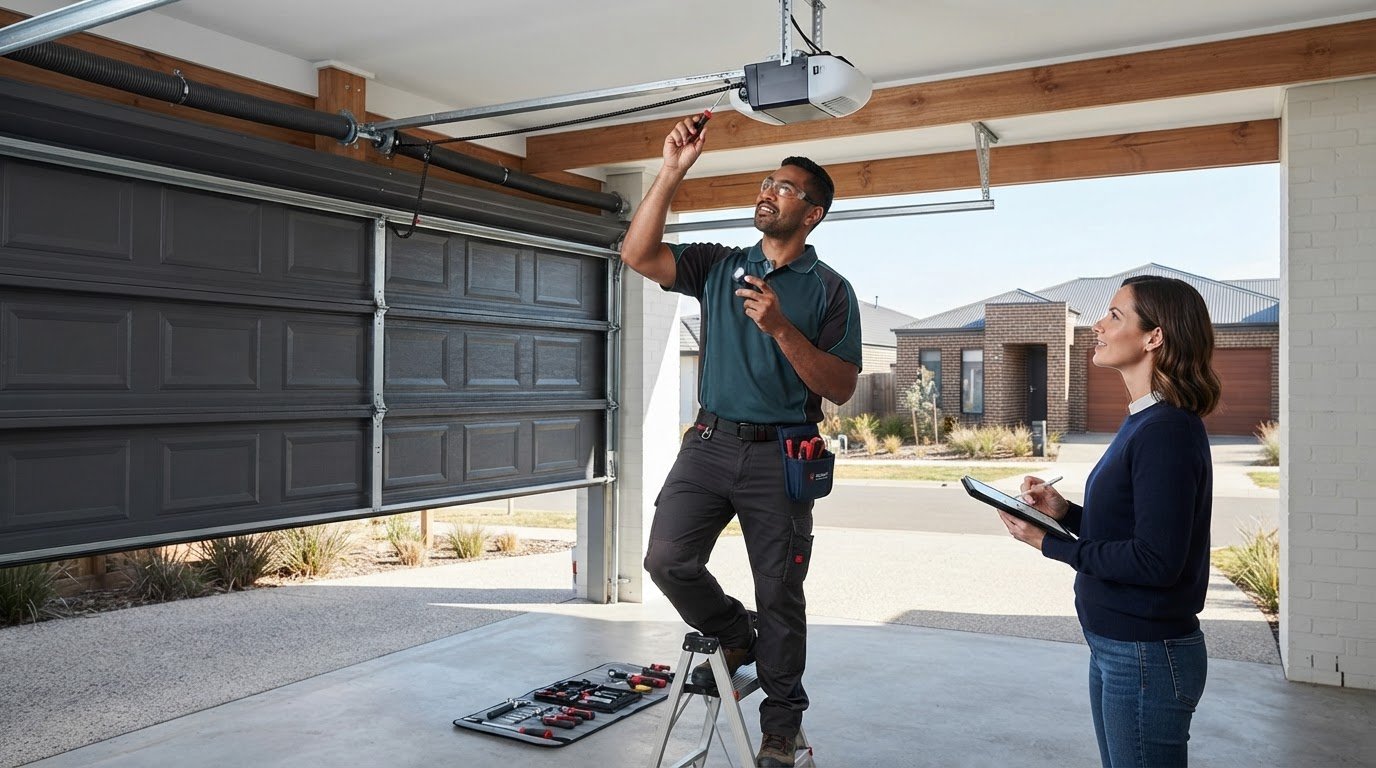
What if the opener isn’t the real reason your garage door keeps stopping? When a door won’t open or close reliably, it’s tempting to assume the motor has failed. But a search for “replace garage door opener melbourne” is only the starting point: the door itself may be causing the trouble.
It’s frustrating when the fault isn’t clear, especially when you need safe, dependable access to your home. Before choosing a replacement, note what the door is doing and whether it moves freely and evenly.
This guide explains how to distinguish common opener symptoms from possible door faults, what compatibility and safety checks matter, and how to plan the next steps for a residential garage door in Melbourne. A practical assessment of the door’s condition can help avoid replacing the wrong part and support reliable operation over the long term.
Key Takeaways
- A door that stops responding may have a problem with its track, spring, power supply or opener. Identify the likely fault before deciding what needs replacing.
- Before you replace a garage door opener in Melbourne, consider the door type, how smoothly it operates and your household’s access needs.
- Compare opener drive mechanisms by practical factors such as noise, use patterns and maintenance, then check compatibility against the manufacturer’s instructions.
- Don’t force a door through repeated cycles if it appears damaged or strained. An assessment of the door can help guide safer next steps.
- Note when the fault occurs and what the door does. These details can help a local residential door repair and maintenance assessment pinpoint the issue.
Replace a Garage Door Opener in Melbourne: Is the Opener Really the Problem?
A garage door that ignores the remote, stops halfway or works only now and then is frustrating, especially when you’re trying to leave home or secure it for the night. But those symptoms don’t automatically mean the opener has failed. A power issue or a problem with the door, track or springs can also affect operation. If you’re searching “replace garage door opener melbourne”, note what happens and look for patterns rather than relying on one failed attempt.
The opener supplies the force that moves the door, while the door’s hardware guides and supports its movement. This overview of garage door openers explains the mechanism in general terms. In practice, an opener symptom can have more than one possible cause. A few observations can help guide the next step without attempting a diagnosis yourself.
What signs suggest the garage door opener may be failing?
Inconsistent response, unusual sounds from the opener, or operation that starts and then stops may point to an opener fault, but none confirms one on its own. A remote or wall control that doesn’t work could have a control, connection or power issue rather than a failed motor. Note when the problem occurs, which control you used and whether it repeats. A one-off interruption is different from a fault that returns during normal use.
Use this quick checklist to organise what you’ve noticed:
- Does the door respond to the remote, wall control, both or neither?
- Does it stop at the same point, or behave differently each time?
- Can you hear an unusual sound from the opener or door?
- Did the issue happen once, or has it repeated?
- Is there an obvious power interruption or change in how the door moves?
These details can help a residential garage door assessment distinguish an opener symptom from a mechanical issue. If you’re weighing up whether to “replace garage door opener melbourne”, don’t keep cycling the door if it’s behaving unpredictably.
Could the garage door itself be causing the problem?
Look for signs such as binding, uneven movement or a door that seems unusually heavy. These can indicate a mechanical problem, and worn or strained components may place extra load on the opener. Don’t force the door or handle springs and other high-tension parts yourself. If you have a roller door, our guide to roller door repairs in Melbourne explains common door issues and repair considerations.
A recurring fault deserves attention, but it doesn’t mean the opener is necessarily the part to replace. Record the symptoms and have the door’s condition assessed before making a replacement decision.
The Garage Door Opener Replacement Process for Melbourne Homes
Choosing a replacement starts with the door, not the motor catalogue. If you’re considering whether to replace a garage door opener in Melbourne, a clear process helps avoid fitting an opener to a door that is still binding, unbalanced or in need of repair.
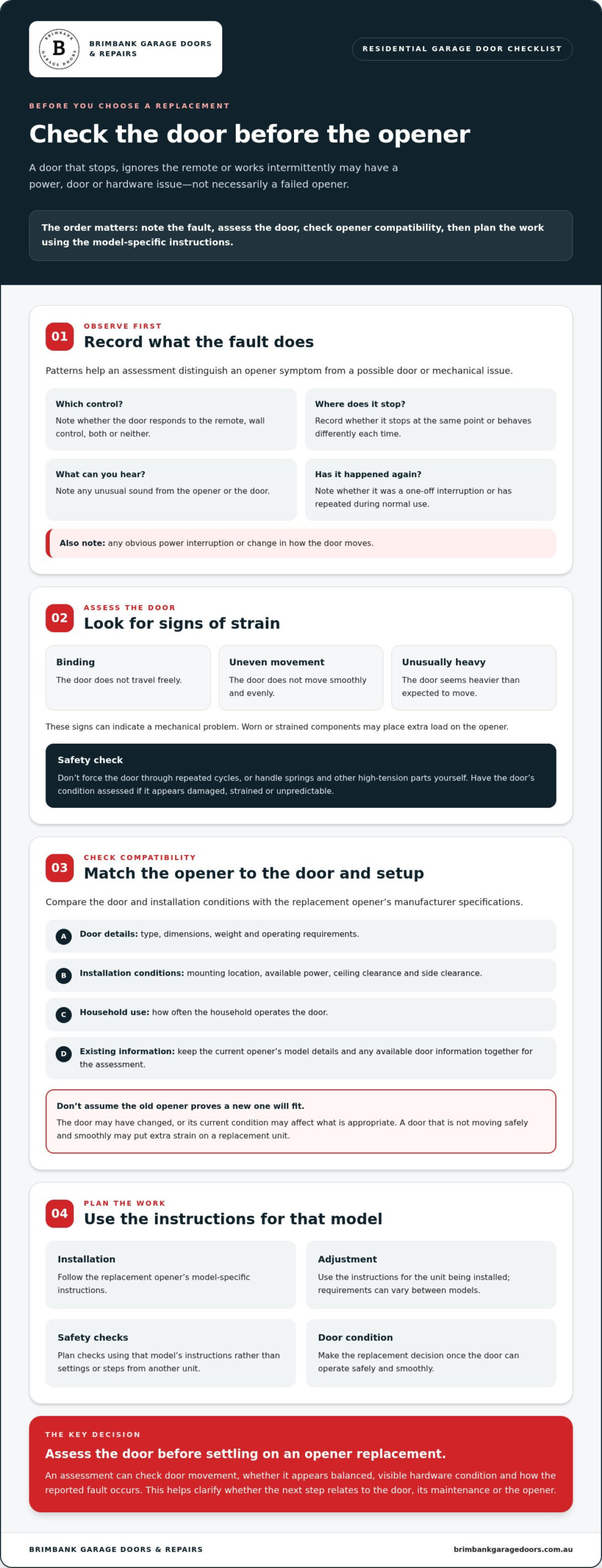
- Identify the fault. Record what happens, when it occurs and whether it repeats. Include which control you used and any unusual sounds or interruptions.
- Assess the door. Check its movement and visible condition. If it doesn’t travel smoothly or appears strained, address the door issue before settling on an opener replacement.
- Check compatibility. Match the door and installation conditions to the replacement opener’s manufacturer specifications.
- Plan the work. Use the model-specific instructions for installation, adjustment and safety checks. Requirements can vary between opener models, so don’t rely on settings or steps from another unit.
Door condition matters: Door type, dimensions, weight, movement, hardware condition and operating demands all influence opener compatibility. A door that isn’t moving safely and smoothly may put extra strain on a replacement unit.
What should be checked before selecting a replacement opener?
Check the door type and dimensions, then compare its weight and operating requirements with the opener manufacturer’s specifications. Also consider where the unit can be mounted, available power, ceiling and side clearance, and how often the household uses the door. A setup suited to one door may not suit another, even if both are in residential garages.
Don’t assume a replacement will fit simply because the old opener operated the door. The door may have changed, or its current condition may affect what’s appropriate. Keep the existing opener’s model details and any available door information together for the assessment.
What happens during a professional garage door assessment?
An assessment can include checking how the door moves, whether it appears balanced, the condition of visible hardware and how the reported fault occurs. These observations help distinguish a door repair or maintenance issue from a problem that may relate to the opener. Make the replacement decision once the door can operate safely and smoothly, rather than using a new opener to compensate for resistance or worn components.
For related information on planning a door installation, read our guide to professional garage door installation in Melbourne’s west. For building-code context, the Australian Building Codes Board provides information about the National Construction Code. Model-specific opener instructions remain essential for installation and adjustment details.
If the door’s movement or hardware is part of the concern, a residential garage door assessment can help clarify the next step before you finalise an opener choice.
Compare Replacement Opener Options by Door Type and Household Needs
The right opener depends on more than its feature list. Door design, available mounting space, how often the household uses the garage and the noise you’re comfortable with all shape the decision. If you plan to replace a garage door opener in Melbourne, compare general drive types as a starting point, then use the door and opener manufacturers’ documentation to establish compatibility.
How does door type affect opener compatibility?
Roller doors and other residential configurations, such as sectional or tilt doors, use different movement and mounting arrangements. An opener suited to one design may not suit another. Door dimensions, weight, operating mechanism and available clearance also matter. A residential door assessment can help establish the door’s condition and configuration, while the opener manufacturer’s documentation sets out its specific limits.
| Option or factor | What to consider | Check before choosing |
|---|---|---|
| Chain drive | A chain moves the door. Consider the sound it may produce, particularly if the garage is close to living or sleeping areas. | Door compatibility, mounting arrangement and manufacturer instructions. |
| Belt drive | A belt is used to move the door. Noise and maintenance needs depend on the particular opener and installation. | Whether the unit is specified for your door and intended use. |
| Direct drive | The motor operates along the drive mechanism. Compare its installation requirements and operation with your household priorities. | Available clearance, door design and model-specific guidance. |
| Household routine | Frequent daily use, noise sensitivity and who needs access can influence which features matter most. | Control compatibility and the opener’s operating requirements. |
Which features matter for a Melbourne household?
Think about the garage’s position in the home, how often the door cycles and whether more than one household member relies on it. A garage beside a bedroom may make operating noise a higher priority. Frequent use may make it useful to understand the opener’s intended operating demands. Access preferences can guide which controls are convenient, but convenience features don’t replace the need for safe, compatible operation.
Separate essentials from preferences. Door type, dimensions, weight, mounting space and compliance with the relevant manufacturer instructions are compatibility considerations. Noise, access and maintenance preferences help narrow suitable options once those basics are addressed. For general door-industry information, the International Door Association provides consumer resources. Use the opener and door manufacturers’ instructions for model-specific requirements. Don’t select by drive category alone: suitability depends on the actual door and installation conditions.
Safety Checks and Decisions Before Replacing a Garage Door Opener
A new opener won’t correct every problem with a garage door. If the door is binding, uneven or under strain, fitting a replacement before addressing the cause may leave the original issue unresolved and put extra load on the new unit. The decision to replace a garage door opener in Melbourne should follow an assessment of the door and reported fault, not just a motor symptom.
Keep the process simple: observe from a safe distance, stop operating the door if it seems unsafe, then arrange an assessment. Follow the opener and door manufacturers’ instructions, and don’t attempt to adjust springs or other high-tension components. These can be hazardous to handle without the right experience.
When should you stop using the garage door?
Stop cycling the door if it moves suddenly, makes a severe or unfamiliar noise, shows visible damage, or appears unstable. Keep children, pets and other people clear of the door and its moving parts. Don’t try to force it, catch it or make risky manual adjustments. Note what you observed so the issue can be assessed without repeated operation.
Should you repair the door or replace the opener?
Let the suspected cause guide the next step. If the door or its hardware is damaged, strained or moving poorly, a door repair or maintenance assessment should come first. If the door operates smoothly but the opener fault continues, an opener-related issue may be more likely. A professional assessment can consider the door’s movement, visible hardware and the symptoms you’ve recorded to help separate these possibilities.
Before replacement is finalised, consider whether the door is in suitable condition and whether the proposed opener matches its design and operating requirements. If the fault repeats, don’t assume that replacing the opener alone will solve it. Understand the underlying cause so the next step supports safe, reliable operation.
- Observe safely: Record unusual movement, sounds and when the fault happens.
- Stop if unsure: Keep clear if the door appears damaged or unstable.
- Arrange an assessment: Have the door condition and reported symptoms considered together.
For practical guidance on ongoing care, see our guide to garage door maintenance in Melbourne. If your door’s operation or hardware is a concern, arrange a residential garage door assessment to help determine the appropriate next step.
Arrange the Right Garage Door Help in Melbourne’s West
Once you’ve noted the symptoms, arrange an assessment if the door is still unreliable or appears unsafe to operate. A clear description of the fault helps a residential garage door specialist consider whether the issue may involve the door, its hardware or the opener. That distinction matters: searching for “replace garage door opener melbourne” doesn’t establish that the opener is at fault.
Brimbank Garage Doors & Repairs provides residential garage door repairs and maintenance across Melbourne’s western and northern suburbs. An assessment of how the door moves and the condition of its visible components can help clarify what work is appropriate before you make replacement decisions.
What details should you have ready when arranging an assessment?
You don’t need to diagnose the fault first. A few practical details can help explain what you’re experiencing:
- Door type: Note whether it’s a roller door or another residential design.
- Symptoms: Describe whether it won’t respond, stops partway, moves unevenly or makes an unusual sound.
- Timing and pattern: Say when the problem began and whether it happens every time or only occasionally.
- Changes: Mention any recent change in movement, noise or the way the door responds to its controls.
- Model details: If the opener or door model information is easy to locate safely, have it available. Don’t climb, remove covers or reach near moving parts to find it.
If the door looks damaged, unstable or strained, avoid operating it and keep people clear. Your observations are useful, but there’s no need to repeat the fault to demonstrate it.
How can local door expertise help with the next step?
A door that resists movement or travels unevenly may need attention beyond the opener. Checking the door’s operation and visible hardware can help distinguish a mechanical door issue from an opener-related symptom, so the next step is based on the condition of the whole system. Brimbank Garage Doors & Repairs provides residential garage door repairs and maintenance, as well as roller door supply and installation. The work needed depends on the assessment.
Keep the focus on safe operation first. If the fault is recurring, describe the pattern and arrange help rather than continuing to cycle the door or attempting to adjust high-tension components yourself.
For practical help with your garage door, contact Brimbank Garage Doors & Repairs about residential garage door repairs or maintenance.
Make Your Next Garage Door Decision with Confidence
An unreliable door doesn’t always mean the opener has failed. Note the symptoms and consider whether the door moves smoothly or a mechanical issue may be affecting it. If you’re searching “replace garage door opener melbourne”, remember that compatibility depends on the door’s design, condition and operating requirements. Follow the relevant manufacturer instructions before deciding on a replacement.
A whole-door assessment can help clarify whether the next step is opener replacement, a door repair or maintenance. Brimbank Garage Doors & Repairs provides residential garage door repairs and maintenance across Melbourne’s western and northern suburbs, along with local supply and installation of residential garage roller doors. Understanding the fault can help you make a more confident decision.
For practical help with your garage door, arrange a garage door assessment with Brimbank Garage Doors & Repairs. A clear understanding of the issue can help you plan the right next step and feel more confident about your door’s operation.
Frequently Asked Questions
How do I know if my garage door opener needs replacing?
Repeated failure, inconsistent operation or unusual sounds can be clues, but they don’t confirm the opener is faulty. Remote or wall-control problems, a power interruption or an issue with the door mechanism can cause similar symptoms. Note when the problem occurs, which controls you’ve tried and whether it keeps happening. A search for “replace garage door opener melbourne” is a starting point, but arrange an assessment if the fault persists or operation seems unsafe.
Can I replace a garage door opener without replacing the door?
Yes, a replacement opener may suit an existing door if the door is compatible and operates safely. The door’s type, condition, weight and operating requirements all matter, as do the opener manufacturer’s specifications. Damaged, strained or binding components should be addressed rather than relying on a new opener to overcome the problem. Follow the relevant manufacturer instructions, and arrange a professional assessment if you’re unsure about compatibility or the door’s condition.
How long does it take to replace a garage door opener?
There isn’t one fixed timeframe for every replacement. The work can depend on the door and opener type, whether the new unit is compatible, the existing installation’s condition and any additional work identified. An assessment can clarify the likely scope and sequence for your home. It’s also useful to distinguish opener installation from separate door repairs or adjustments, as these may affect the overall work involved.
Can I replace a garage door opener myself?
Some opener systems involve electrical connections, moving parts and adjustments that can create safety risks if handled incorrectly. Follow the manufacturer’s instructions, and don’t work on springs or operate a door that appears damaged. If you’re uncertain about compatibility, installation or safe operation, arrange professional help rather than guessing or improvising. Keep clear of moving components, and stop if the door behaves unpredictably during any operation.
Will a new garage door opener fix a door that sticks or makes noise?
Not necessarily. Sticking or noise may come from the door, tracks, hardware or opener, so replacing the opener might not resolve the underlying cause. Don’t force a door that binds, moves unevenly or appears damaged, and avoid repeated cycles to test it. An assessment of the door’s condition and operation can help identify whether the appropriate next step is a repair, maintenance or opener replacement.
What should I check before choosing a replacement garage door opener?
Start with the door type, dimensions, weight and condition, then consider the mounting arrangement and the opener manufacturer’s compatibility requirements. The opener’s stated specifications need to suit the specific door and its operating demands. Household use and preferred features, such as quieter operation, can help guide your priorities after compatibility is established. Don’t choose by features alone; arrange a safe assessment if the door’s requirements aren’t clear.
Do Melbourne weather conditions affect a garage door opener replacement?
Melbourne weather alone doesn’t establish that an opener needs replacing. Consider the door’s exposure and condition, and follow the opener and door manufacturers’ guidance for the installation environment. Base the decision on the fault, the door’s operation and whether a replacement is compatible, rather than a broad assumption about local conditions. If you’re unsure, an assessment can help clarify the cause and suitable next step.