
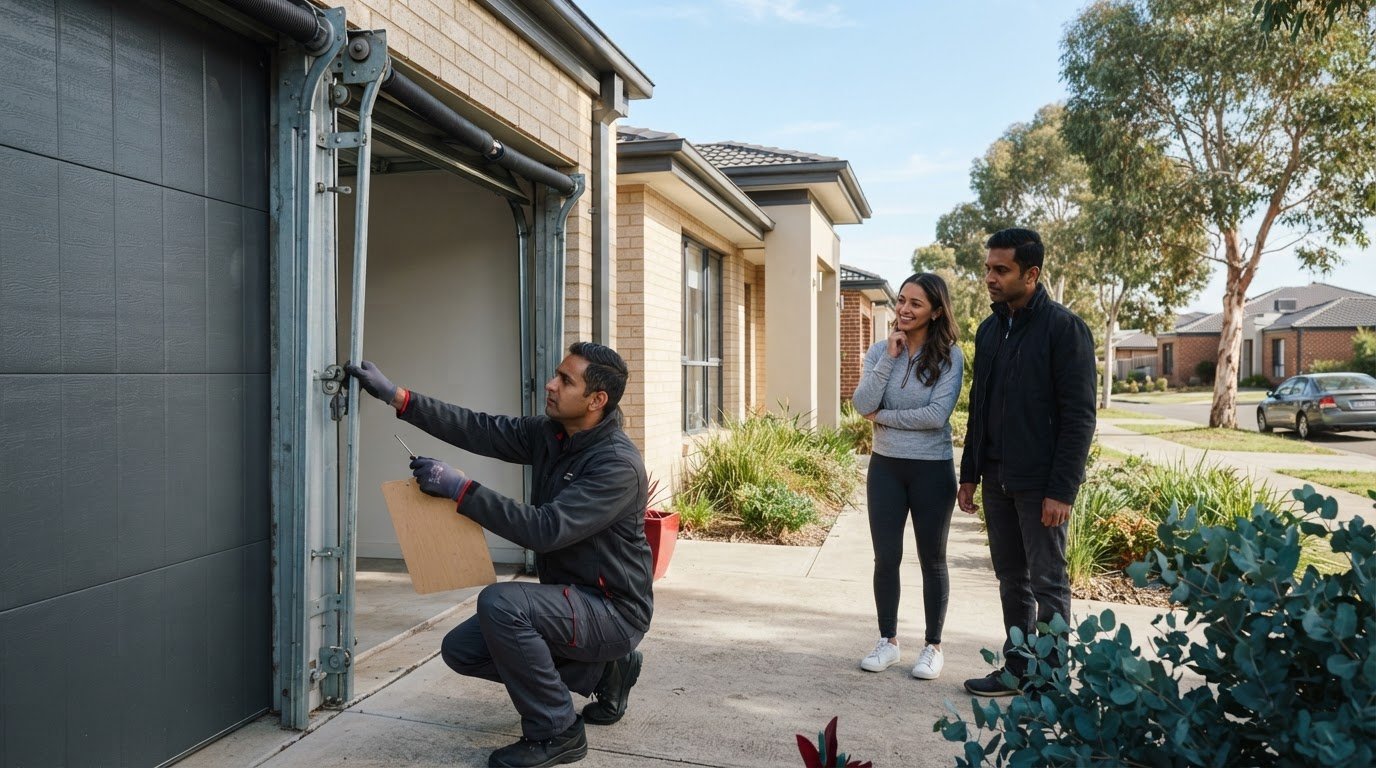
A garage door that glides open during a property viewing may still have a fault that becomes your responsibility after settlement. A quick visual check can reveal obvious wear, damage or uneven movement, but it can’t confirm the condition of springs, balance or safety features. This pre-purchase garage door inspection melbourne checklist will help you make a more informed check before you decide.
A door that sticks, makes grinding noises or seems to strain as it opens deserves attention. These signs don’t automatically mean a major repair is needed, but they can point to an issue worth understanding before you buy. This guide covers what to look at, what a visual check can and can’t show, and when a closer garage-door assessment may help clarify the next step.
Use the checklist to record visible concerns and raise specific questions before settlement. Brimbank Garage Doors & Repairs provides residential garage door repairs and maintenance across Melbourne’s western and northern suburbs, helping owners address issues with their doors.
Key Takeaways
- Check the door panels or roller curtain, tracks, brackets and surrounding opening for visible wear, impact damage or corrosion.
- A buyer’s viewing check, a general property report and a focused door assessment have different purposes and can reveal different details.
- Record unusual movement or damage, and don’t operate the door if it appears unsafe.
- Use a pre-purchase garage door inspection melbourne checklist to decide whether a concern needs closer attention before settlement.
- Garage door repair or maintenance support can help turn findings into practical next steps for ownership.
Why a Pre-Purchase Garage Door Inspection Matters for Melbourne Buyers
A garage door can look neat from the street and still need a closer look. A pre-purchase garage door check reviews the door’s visible condition and, where safe and practical, how it operates during normal use. It can help you spot obvious damage, uneven movement or unusual sounds, then decide whether you need more information before proceeding.
This check differs from a whole-property building or pest inspection. Those reports consider broader parts of the home; a door check focuses on the garage door and its operation. It doesn’t replace a property-wide report, and a viewing alone can’t reveal the condition of every concealed component. For background on common door designs and parts, see Garage door types and components.
The door can affect everyday life after settlement. It may be the main way you bring a car, bikes or household items in and out, and it forms part of the home’s access and security. If it sticks or won’t close properly, you may need to plan for follow-up before relying on it. The aim isn’t to assume there’s a fault, but to understand the condition of the door you’re buying.
What can a garage door check tell a buyer?
A visual check can help distinguish visible wear or impact damage from symptoms that need closer attention. Notice whether the door appears crooked, moves unevenly, makes an unusual noise or struggles during a normal opening or closing cycle. A tidy finish or one smooth operation doesn’t prove that springs, cables or other concealed parts are in good condition. Don’t remove covers or handle high-tension components to investigate them.
A garage door check reviews the door’s visible condition and normal operation; a property-wide report assesses the home more broadly. This distinction helps you understand what a viewing can show, and what it can’t.
Why check the door before buying in Melbourne?
In Melbourne’s western suburbs, homes vary in age, layout and upkeep. Look at the actual door rather than assuming its condition from the property’s presentation or location. A freshly presented garage can still have a door that deserves attention, while signs of age don’t automatically mean it’s unsafe or beyond repair.
Check the door before an offer, auction or settlement if you can. A visible concern gives you something specific to document and follow up on, rather than a vague worry after moving in. For example, a door that stops partway or closes unevenly is a clear observation to raise for further assessment. Focus on what you can see and hear, rather than trying to diagnose the fault.
What a Melbourne Garage Door Inspection Should Look At
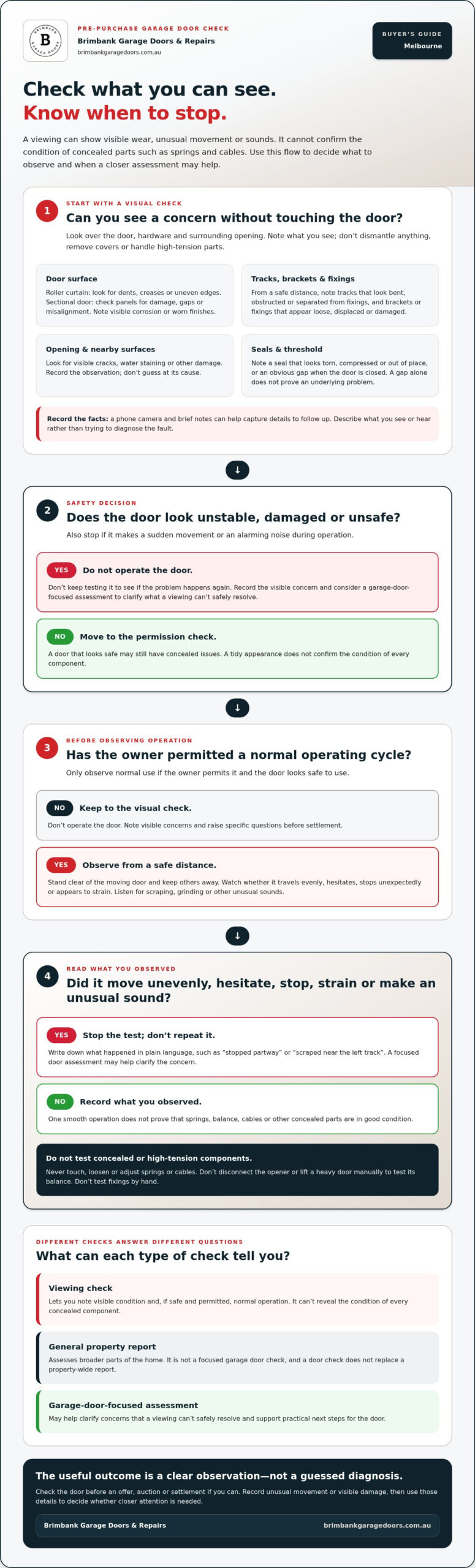
Work through the door in a few clear areas: visible condition, movement, hardware and the surrounding opening. Record what you can see and hear; don’t try to diagnose internal faults or dismantle anything. For a pre-purchase garage door inspection melbourne buyers can use at a viewing, a phone camera and brief notes can help capture details to follow up later.
Visible condition: door, tracks and opening
Start with the door itself. On a roller door, look across the curtain for dents, creases, uneven edges or signs of impact. On a sectional door, check the panels for damage, gaps or misalignment. Note visible corrosion, worn finishes or parts that appear loose, but don’t assume appearance alone tells you how serious an issue is.
Next, look along the tracks, brackets and fixings without touching them. Are the tracks visibly bent, obstructed or separated from their fixings? Do brackets appear loose or damaged? Check the opening and nearby surfaces for cracks, water staining or other visible damage. Record what you see, but don’t guess at the cause of staining or damage from appearance alone.
Weather seals and the threshold are also worth checking visually. Note if a seal looks torn, compressed or out of place, or if there’s an obvious gap when the door is closed. A visible gap is an observation, not proof of a particular underlying problem.
Operation and moving components
Only observe a normal operating cycle if the owner permits it and the door looks safe to use. Stand clear of the moving door and keep others away. Watch whether it travels evenly, hesitates, stops unexpectedly or appears to strain. Listen for scraping, grinding or other unusual sounds. Describe what happened plainly, such as “stopped partway” or “scraped near the left track”, rather than guessing at the fault.
- Rollers and hinges: Look for visible damage, wear or movement that appears uneven.
- Springs and cables: Observe from a safe distance for visible damage, gaps or signs of wear. Never touch, loosen or adjust them.
- Fixings and brackets: Note anything that looks displaced, bent or loose without testing it by hand.
- Door balance: Don’t disconnect the opener or try to lift a heavy door manually to test its balance.
Stop the test if the door looks unstable, damaged or unsafe, or if it makes a sudden movement or alarming noise. Don’t keep operating it to see whether the problem happens again. A garage-door-focused assessment can help clarify concerns that a viewing can’t safely resolve. For buyers in Melbourne’s west and north who need follow-up repairs or maintenance, residential garage door repair and maintenance is a practical next step.
How to Compare a Viewing Check with a Specialist Garage Door Assessment
A viewing, a general property report and a garage-door-focused assessment answer different questions. A viewing gives you a chance to note what’s visible. A property report considers the home within its stated scope, while a focused assessment looks specifically at the door and its operation. For a pre-purchase garage door inspection melbourne buyers should match the type of check to the concern they need to understand.
| Check | Purpose and what it may show | Limits and possible follow-up |
|---|---|---|
| Buyer’s viewing check | Observe visible wear, damage, alignment, sounds and movement during normal operation, with permission and safe access. | A brief look can’t establish the condition of concealed parts or predict future reliability. Note symptoms and consider whether further assessment is needed. |
| General property report | Considers the property within the report’s scope and may record visible concerns around the garage or door. | It isn’t necessarily a detailed examination of door mechanisms. Use relevant findings to decide whether a door-focused review would add useful detail. |
| Focused door assessment | Concentrates on the garage door’s condition and operation, helping examine reported concerns more closely. | It addresses the door rather than the whole property. Findings can help identify whether maintenance or repair follow-up may be appropriate. |
What a buyer can check during a property viewing
If the owner permits operation and the door appears safe, observe a normal cycle from a clear distance. Note exactly what you see or hear, for example, “moves unevenly” or “scrapes near the track”. Avoid writing “broken spring” or naming another cause unless it’s been assessed. A short viewing, a photograph or one smooth cycle can’t confirm hidden wear, the condition of tensioned parts or how reliably the door will work over time.
When a focused door assessment can add detail
Consider a garage-door-specific assessment if the door is noisy, uneven, difficult to operate or visibly damaged. A closer review can help distinguish an issue that may need routine maintenance from a concern requiring repair, rather than relying on appearance alone. It can also give you more relevant information to consider alongside the general property report. For practical upkeep after purchase, the guide Garage Door Maintenance Melbourne: The 2026 Homeowner’s Checklist explains maintenance considerations.
Photos are useful for recording a dent, gap or visible track concern, but they don’t show how the door behaves in operation or reveal every concealed component. Treat them as supporting notes, not a diagnosis. The right follow-up depends on the symptom and the information you need to decide how to plan for repairs or maintenance after settlement.
What to Do if the Pre-Purchase Checklist Finds a Problem
A checklist finding is a reason to gather clearer information, not a diagnosis. A small scuff or worn finish may be cosmetic, while a door that jams, drops quickly, moves unevenly or appears unstable can make continued operation concerning. Don’t estimate repair needs from a photo or the size of a dent alone. The door’s condition and the source of the symptom matter.
Use this simple sequence to keep your next steps practical:
- Document what happened. Write down the visible issue, sound or movement you noticed, when it occurred and whether the door was opening or closing. Take photos of visible damage from a safe distance.
- Put safety first. Don’t force a door that appears jammed, unstable or damaged. Avoid operating it if you’re concerned it could move unpredictably.
- Arrange an appropriate assessment. If the symptom could involve the door’s operation or hardware, get it assessed before making assumptions about the repair required.
Prioritise safety and keep useful records
Clear notes help you communicate the concern to the seller or agent and make follow-up more specific. Record observations neutrally, such as “door stopped halfway” or “scraping sound during closing”, rather than naming a mechanical cause. Never attempt DIY spring or cable work. These components can be under tension and can cause serious injury if handled incorrectly. Leave adjustments and repairs to a garage door professional.
Turn findings into a purchase and repair plan
Before making decisions based on a checklist, work out which observations need a garage-door-focused assessment. A visible mark may need no more than monitoring, while inconsistent movement or a door that won’t close may warrant closer attention. Findings can help distinguish maintenance from repair concerns, or show whether further options need consideration. Don’t assume replacement is necessary from appearance alone.
If you’re weighing up a roller door concern, Roller Door Repairs Melbourne: The 2026 Homeowner’s Guide to Reliable Service offers related information. For general budgeting context, see Garage Door Repair Cost Melbourne: 2026 Homeowner’s Pricing Guide. The work required for a particular door depends on its assessed condition, so treat a guide as background information, not a quote.
A focused assessment can give you more useful information for planning repairs or maintenance before settlement or after taking ownership. Brimbank Garage Doors & Repairs provides residential garage door repair and maintenance support in Melbourne’s west and north. Explore garage door repair and maintenance support.
Arrange Garage Door Help in Melbourne’s West Before You Commit
Visible damage, unusual movement or uncertainty about a door’s condition can be a reason to seek garage-door-specific help before purchase. A viewing checklist helps you record what caught your attention, but it can’t confirm the condition of concealed parts or determine what work the door may need. A focused assessment can help turn those observations into a clearer plan for follow-up.
Brimbank Garage Doors & Repairs provides residential garage door repairs and maintenance across Melbourne’s western and northern suburbs. The right next step depends on what’s found: a door may need maintenance, a specific repair or, if its condition warrants it, replacement. Roller door supply and fitting or replacement springs may be relevant to particular findings, but shouldn’t be assumed necessary from a photo or surface mark alone.
What local garage door support can address
A garage-door-focused assessment can help clarify concerns such as uneven travel, difficulty operating the door or visible damage. Repair or maintenance options can then be considered in light of the door’s actual condition. If the findings point towards replacement, the guide Professional Garage Door Installation in Melbourne’s West: 2026 Homeowner’s Guide provides further information about that option.
This support is specific to the garage door, not a whole-property building or pest inspection. Keep any relevant property report separate and use both sources of information for their intended purpose. That way, you can make a more considered decision about the door without treating one check as a substitute for the other.
A simple next step for buyers
If you’re making an enquiry, have a few details ready. Describe the door type, such as a roller or sectional door, the suburb and the symptoms you observed. Mention whether it sticks, moves unevenly, makes an unusual sound or has visible damage. Photos can help explain what you noticed, though they can’t replace an assessment of the door itself.
Clear observations make it easier to discuss a practical next step, whether that’s repair or maintenance. You don’t need to diagnose the fault yourself. If the door appears unstable or unsafe, don’t keep operating it while arranging follow-up.
For buyers considering a pre-purchase garage door inspection melbourne checklist, the goal is a clearer understanding of the door, not an assumption that every concern calls for replacement. If you’ve spotted damage, unusual movement or are unsure about the door’s condition, contact Brimbank Garage Doors & Repairs to discuss repair or maintenance support.
Make Your Next Step with Confidence
Before you commit, turn any remaining uncertainty into a clear question: what do you need to know about this door to make a comfortable decision? Your notes can help focus that conversation and keep assumptions from shaping your plans for the property. A pre-purchase garage door inspection melbourne buyers arrange can be a practical part of deciding what to address now and what to plan for later.
If the door’s condition is still a concern, Brimbank Garage Doors & Repairs provides residential repair and maintenance support to help you consider a suitable next step. Discuss your garage door repair or maintenance needs.
A little clarity before settlement can make planning ownership feel more manageable. Take it one step at a time and make the decision that feels right for you.
Frequently Asked Questions
Can a general pre-purchase building inspection assess my garage door?
A general property inspection may include observations about accessible doors, but its scope is broader than a focused assessment of garage door operation and components. Check the report’s stated scope and findings rather than assuming every mechanism was tested. For example, a note about visible damage may not explain why a door sticks. If the door is noisy, uneven or difficult to move, treat that as a separate concern requiring attention.
Is it safe to test a garage door during an open home?
Only observe a normal operating cycle if the owner or agent permits it and the area is clear. Stay away from the door’s path, and don’t force it, remove covers or touch springs and cables. If it looks unstable, is stuck or moves unpredictably, stop. Record what you noticed from a safe distance instead. A viewing check should never put you, the agent or another visitor at risk.
What does a noisy garage door mean when buying a house?
A noisy garage door can have several causes, and the sound alone won’t identify the fault. Note whether it scrapes, grinds or rattles, and at what point in the cycle you hear it. Also record whether the door hesitates or travels unevenly. Don’t assume lubrication will solve the problem. If the noise is pronounced or comes with erratic movement, a focused assessment can help clarify the concern before you rely on the door.
Should I check a garage door before an auction in Melbourne?
Yes, include the garage door in your viewing if you can access it safely and have permission to observe its operation. A pre-purchase garage door inspection melbourne checklist can help you record visible concerns before auction day, but it can’t reveal every hidden or mechanical issue. If something may affect your decision, allow time to understand it beforehand. Don’t assume you’ll be able to arrange another inspection after bidding.
Can I negotiate over a faulty garage door before settlement?
A visible fault may be relevant to purchase discussions, but the options depend on your contract, timing and circumstances. Keep a dated record of what you observed and seek clear information about the door’s condition rather than relying on a guessed repair amount. A garage door assessment can inform you about the door’s condition, but it isn’t legal advice. For questions about contract rights or negotiation, speak with a suitably qualified property adviser.
What should I do if the garage door spring looks damaged?
Don’t touch, adjust or try to remove a spring that appears damaged. Garage door springs can be under significant tension, and attempting DIY work can cause serious injury. Keep people clear of the door and don’t operate it if it appears unsafe. From a safe distance, note what you can see and arrange professional garage door attention before deciding whether or how the door can be used.