
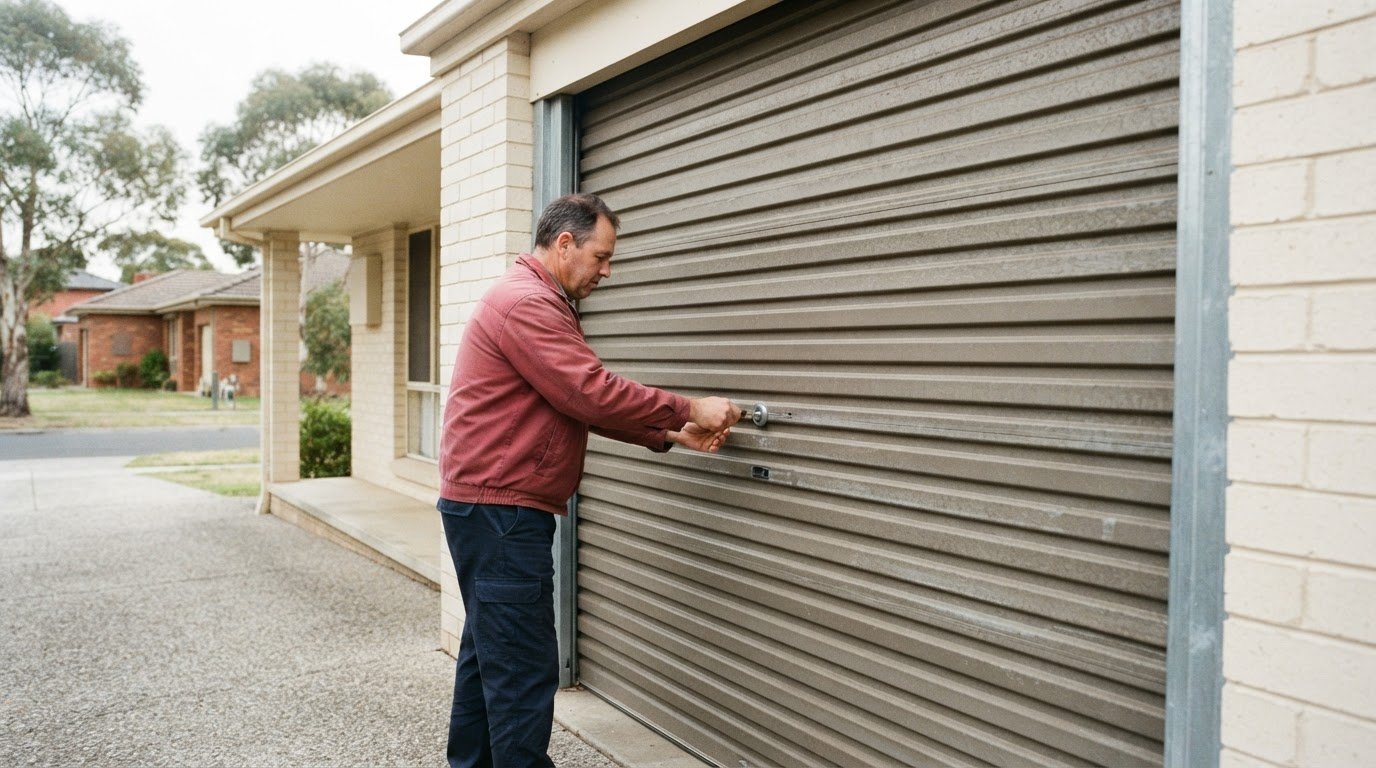

A power cut doesn’t automatically mean your garage door needs repair. If you’re deciding what to do when the power is out and your garage door won’t open, use the manual release only when the door is fully closed. If it’s stuck partway open, don’t disconnect the opener.
It’s understandable to feel uneasy about lifting a heavy door without the motor. The safest next step depends on the door’s position and how easily it moves. Stop if it feels unusually heavy or appears damaged.
This guide explains how to switch to manual mode safely, when to arrange garage door repairs, and how to reconnect the opener once power returns. You’ll also learn what to prepare before an outage, including how to open the door from outside. A few simple precautions can help you avoid forcing the mechanism and keep the door secure in manual mode.
Key Takeaways
- Use an outside emergency release kit to disengage the opener if you need access from outside and your door has one fitted.
- Only switch to manual mode when the door is fully closed, and stop if it feels unusually heavy or appears damaged.
- When power returns, re-engage the opener and test that the door reconnects and operates correctly.
- Prepare before an outage by learning where the release is and considering whether a battery backup or outside release would suit your setup.
Should You Call a Garage Door Repair Service?
If you’re locked out and your garage door has no external emergency release, don’t force it or try to lift it from outside. Arrange professional help to access the garage safely and discuss fitting an external release kit.
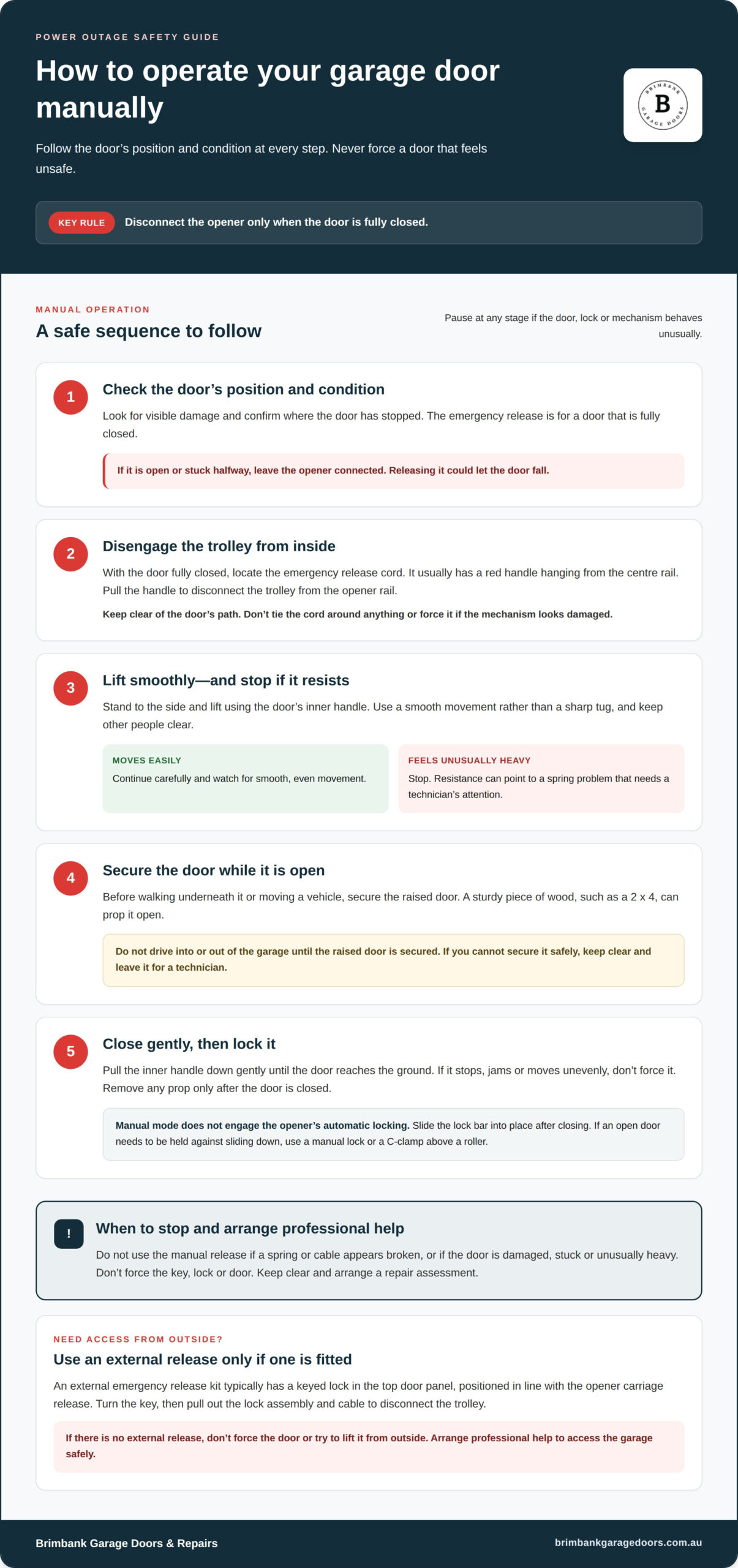
- Check the door position before disconnecting the opener. Only pull the emergency cord when the door is fully closed. If it’s stuck partway open, leave the opener connected and call for professional help, as releasing it could let the door fall.
- Locate the emergency release cord from inside. It usually has a red handle and hangs from the centre rail. Pulling it disengages the trolley from the opener rail, so you can lift the door manually. Don’t tie the cord around anything.
- Use an external release kit if you need access from outside. The kit typically has a keyed lock in the top door panel, positioned in line with the opener carriage release. Turn the key, then pull out the lock assembly and cable to disconnect the trolley.
- Try manual operation only if the door moves easily. Once the trolley is released, lift using the door’s inner handle. If it feels unusually heavy, stop. A heavy door can point to a spring problem that needs a technician’s attention.
- Call for repairs if access or movement isn’t safe. An older system may lack an easy-release feature, while a damaged door or a lock that won’t operate can prevent safe manual access. Don’t force the key, lock or door; arrange professional assessment instead.
Safety precautions before switching to manual mode
Before operating the door manually, check its position and visible condition. These steps can help reduce the risk of sudden movement or a drop.
Disengage the garage door opener
- Keep the opener connected if the door is open or stuck halfway. Disconnect it only when the door is fully closed, because releasing a raised door can let it fall. Once closed, pull the emergency handle to disengage the trolley from the rail. Keep clear of the door’s path, and don’t pull or force the cord if the mechanism appears damaged.
- Stand to the side while opening, and keep other people clear of the moving door. Lift smoothly using the inner handle, without a sharp tug. To close it, gently pull the handle down until the door reaches the ground. If it stops, jams or moves unevenly, don’t force it.
Secure the door while in manual mode
- Secure an open door before walking underneath it or moving a vehicle. A sturdy piece of wood, such as a 2 x 4, can prop it open. Don’t drive into or out of the garage until the raised door is secured. If you can’t secure it safely, keep clear and leave it for a technician.
- Lock the door after closing it manually. Manual mode doesn’t engage the opener’s automatic locking, so slide the lock bar into place. If you’ve opened the door and need to prevent it sliding down, use a manual lock or a C-clamp above a roller. Remove any prop only after the door is closed.
Stop if the door is damaged or unusually heavy
- Don’t use the manual release if a spring or cable appears broken. A damaged counterbalance can leave the door unsupported, making it unsafe to lift or lower. Contact a garage door repair service instead, and keep clear of the door until it has been assessed.
- If the door is stuck or feels unusually heavy during an outage, stop lifting and don’t try to engage the opener by force. A manually disengaged door should lift easily; resistance can signal a spring problem. Leave it in place and arrange professional attention rather than risking a sudden drop.
Reconnecting the opener after power returns
Once mains power is restored, reconnect the trolley before relying on the automatic garage door opener. Follow these steps, and stop if the door or mechanism behaves unusually.
- Check the door and clear its path. Make sure the door is fully closed and nothing is obstructing its travel. Don’t use the opener to move a door that appears damaged or feels unusually heavy. The opener’s chain-driven trolley needs a clear track to reconnect properly.
- Re-engage the release mechanism. Pull the emergency release cord towards the garage door opening, following the direction of the cord’s movement. On some systems, pulling the bypass handle towards the door allows the carriage to reconnect when the opener runs. Keep your hands clear of the track and moving parts.
- Use the opener to complete the connection. Press the remote or wall control once, then watch the trolley move along the rail. On some systems, the opener’s movement brings the spring attachment back into place. If it doesn’t reconnect, stop rather than repeatedly activating the automatic motor.
- Test the door from a safe position. Once the trolley is engaged, use the remote to operate the automatic garage door while standing clear of its path. Watch for smooth movement and listen for unusual noises. If the door stops, jerks or won’t close properly, stop using it and arrange a repair assessment.
- Consider how battery backup affects your opener. An opener with battery backup may keep working during an outage; without backup, operate the door manually. A smart control alone doesn’t power the motor during an outage. After mains power returns, follow the same reconnection steps and confirm the opener responds normally.
Preparing for a garage-door power outage
Prepare before an outage, while the garage door is closed and the opener is working. Knowing what to do when power is out and your garage door won’t open can help you plan safe access.
- Check how you’ll get inside. A keypad won’t work without electricity, and an external emergency release may be needed if the garage has no access door. Check whether your door has an outside release kit, and keep its key somewhere accessible, not inside the locked garage.
- Consider a battery-backup opener. An opener with battery backup may continue operating during a power outage. Without backup, expect to use manual mode. Check the opener’s instructions so you know how its backup operates and what to expect if mains power fails.
- Think about the door’s weight. A door weighing more than 200 pounds can be a concern during an outage, especially when you need to lift it manually. Don’t assume it will be manageable. Plan how you’ll access the garage and avoid relying on manual operation if the door feels too heavy.
- Learn the release location before you need it. Identify the emergency cord and the external release, if fitted. Make sure household members know where the release key is and understand that the door must be closed before disconnecting the opener.
- Arrange regular checks of the door system. A garage door service check-up once a year can help identify issues before an outage leaves you needing manual access. Springs may need maintenance or replacement after about 5 to 7 years, so treat changes in door movement as a reason to arrange an assessment.
- Make a simple outage plan. Decide who will retrieve the release key, how you’ll secure the door if it must stay open, and how you’ll lock it after manual use. If you’re planning what to do when power is out and the garage door opener stops, arrange an external release kit beforehand if your setup has no outside access.
Brimbank Garage Doors & Repairs
Brimbank Garage Doors & Repairs can help when an outage reveals a door fault, damaged component or manual release that won’t operate safely. Its garage door repair and maintenance services address common malfunctions and help restore reliable operation. If the door needs replacing, Brimbank also supplies and installs garage roller doors.
Contact Brimbank Garage Doors & Repairs if the door feels unusually heavy, appears damaged or won’t reconnect to its opener after power returns. Avoid forcing the door or repeatedly activating a faulty mechanism. Describe what happened, including whether the door was closed or partly open, to help explain the problem.
For help with a garage door problem, contact Brimbank Garage Doors & Repairs.
Make your next outage easier to manage
Knowing what to do when the power is out and your garage door won’t open is useful, but preparing before the next outage can make the situation less stressful. If the door’s movement or release mechanism concerns you, don’t force it. A safe assessment can identify what needs attention and whether repair or maintenance is appropriate.
Brimbank Garage Doors & Repairs provides garage door repairs and maintenance, and can assist with installation when a door needs replacing. Choose the next step based on the condition of your door and the problem you’ve noticed.
Contact Brimbank Garage Doors & Repairs to discuss your garage door. A careful next step can help you feel more prepared for the next power outage.
Frequently Asked Questions
How do you open a garage door manually during a power outage in Australia?
Open it manually only if the door is fully closed, undamaged and moves without unusual resistance. With the opener disconnected, lift from the inner handle and keep people and pets away from the opening. If you’re outside, an external emergency release kit may provide access. If there’s no kit, don’t force the door or try to climb around it; arrange professional help.
Where is the emergency release cord on a garage door opener, and how do you use it?
The release cord usually hangs from the opener’s middle rail and often has a red handle. With the door fully closed, pull the handle to disengage the trolley from the opener rail. This allows manual operation; it doesn’t repair a fault or make a damaged door safe. Leave the cord hanging freely rather than tying or wrapping it around another part.
How do you close and secure a garage door manually when the power is out?
Lower the door gently by its handle until it reaches the ground, keeping your hands clear of the tracks and joints. Once closed, slide the manual lock bar into place if your door has one, since manual operation doesn’t provide automatic locking. If the door won’t close evenly or catches along the way, stop instead of forcing it against the obstruction.
How do you reconnect a garage door to its automatic opener after power is restored?
With the door closed and its path clear, pull the release cord towards the door to prepare the trolley to re-engage. Activate the opener and watch the trolley travel along the rail. Some systems reconnect as the opener moves. If the trolley doesn’t catch or the door moves unevenly, stop using the motor and have the mechanism assessed.
How can you keep a manually operated garage door secure during a blackout?
Keep the door closed and use its manual lock bar, if fitted, rather than assuming the opener will lock it. If you need to leave it open temporarily, secure it so it can’t slide down, and keep vehicles outside until it’s stable. Don’t leave a raised door unattended or rely on an unsecured door to protect access to the garage.
Can a garage door opener battery backup operate during a power outage in Australia?
Yes, an opener fitted with battery backup may continue operating during a power outage. Whether the motor runs depends on the backup’s presence and condition, so find out whether your opener has one before relying on it. A keypad still needs electricity and won’t operate during an outage. Without working backup power, use the manual release only when it’s safe.