
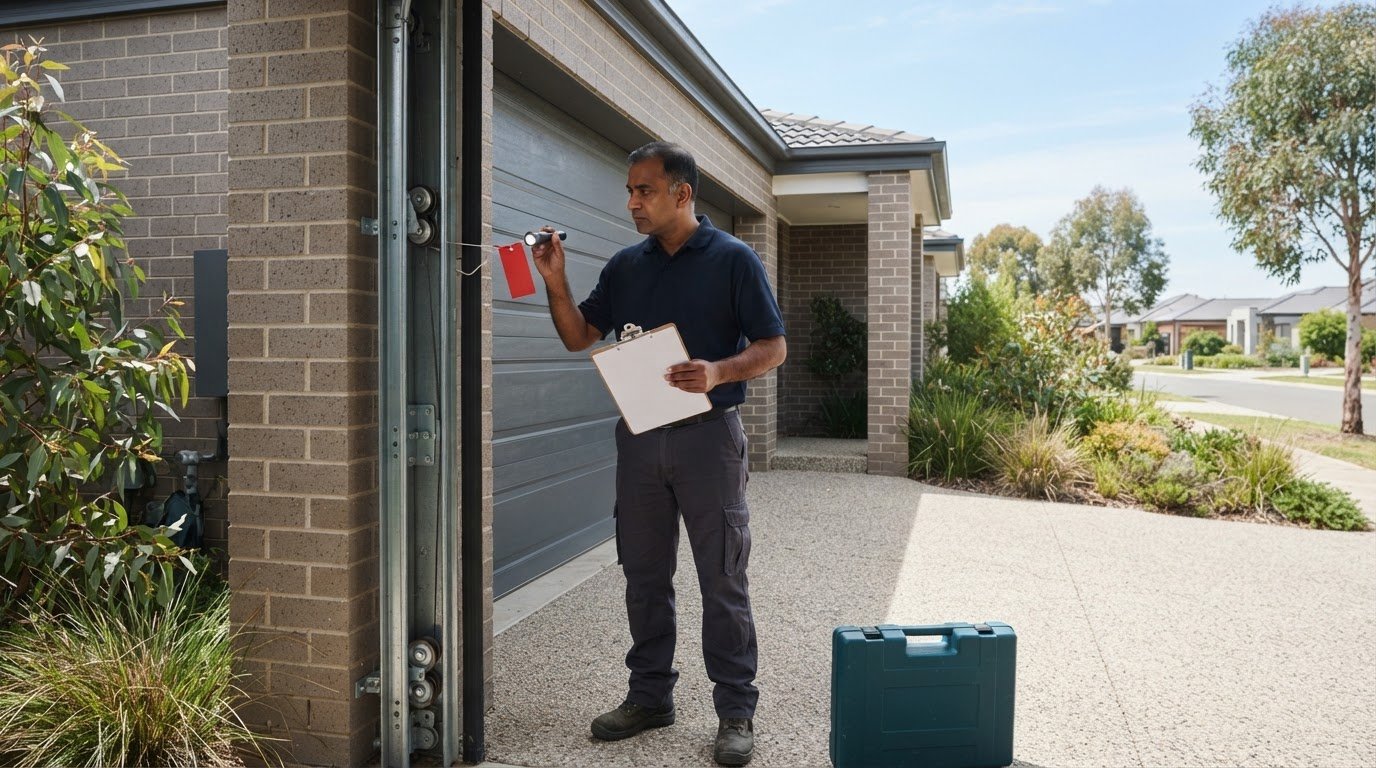
Could a garage door that still opens and closes be hiding a safety concern? A garage door safety inspection melbourne west homeowners can use starts with noticing changes: an unfamiliar scrape, uneven movement or a door that hesitates. Small signs can be unsettling, especially when children, pets or family members are nearby.
It’s sensible to take unusual sounds and movements seriously, but not every check is safe to do yourself. This checklist explains what you can observe from a safe distance, what a professional assessment may cover and how to prepare for residential maintenance or repairs in Melbourne’s western suburbs.
You’ll learn which basic observations are useful without handling hazardous components, and when to leave the door unused until a technician assesses it. If something doesn’t seem right, clear notes about the symptoms can help guide the next step.
Key Takeaways
- A door that still operates may have wear or safety issues that aren’t obvious at a glance.
- A professional assessment should consider the door’s condition and operation in light of its type and symptoms. It can’t promise future faults won’t occur.
- Stick to visual observations. Leave spring tension and other hazardous mechanical checks to a trained technician.
- Before arranging professional help, note the door type, what it’s doing, when the issue began and any visible damage.
- Brimbank Garage Doors & Repairs provides residential maintenance and repair services across Melbourne’s western and northern suburbs.
Garage Door Safety Inspection Melbourne West: Warning Signs to Notice First
A garage door can still open and close while showing changes that deserve attention. A new scraping sound, a jerky lift or a panel that looks out of line doesn’t identify the fault by itself, but it’s a reason to take a closer look from a safe distance. For a garage door safety inspection melbourne west homeowners can prepare for, record what you’ve noticed rather than trying to diagnose or fix it.
Notice whether the change happens during ordinary use, but don’t operate the door just to reproduce a concerning symptom. If it looks damaged, unstable or unpredictable, don’t treat it as safe to use. Keep children, pets and other household members clear, and arrange a professional assessment before relying on it again.
What changes in a door’s movement or sound can signal a concern?
Listen for grinding, scraping or banging that’s new, louder than usual or paired with a change in movement. Watch for uneven travel, hesitation, unexpected stopping or a delayed response to the normal control. These signs can have different causes, so one symptom alone doesn’t confirm what’s wrong. Avoid guessing at the cause or adjusting parts yourself.
Make a brief note of what you observed and when it began. Did the sound occur as the door started moving, while it travelled or as it stopped? Did the movement change once, or have you noticed it on separate occasions during normal use? Don’t keep operating the door to gather more examples if it seems unsafe. A general overview of garage door components and safety features is available from Garage Door Safety on Wikipedia.
What visible damage should homeowners look for?
From a safe distance, look for changes you can see without touching the door or its hardware. Tracks may appear bent, panels may look damaged, or hardware may seem loose or out of place. You don’t need to get close, climb a ladder or remove a cover to make useful observations. If the door is moving unpredictably, step away rather than inspecting it while it operates.
Frayed cables or visibly damaged springs are reasons to keep clear and leave the assessment to a trained technician. Springs and other load-bearing components can be hazardous to handle. Don’t touch, tighten, pull or test them, and don’t try to force a door that appears unstable.
- Jerky travel: Note where you notice the movement change, without trying to correct it.
- Unusual noise: Record whether it’s grinding, scraping, banging or another new sound.
- Visible damage: Describe what you can see from a safe distance, including apparent track, panel, cable or spring damage.
- Unpredictable operation: Keep clear and avoid relying on the door until it’s assessed.
These observations give a technician a clearer starting point. They’re not a diagnosis, and a door that seems to work isn’t automatically safe.
What a Professional Garage Door Safety Inspection in Melbourne West Can Assess
A professional assessment considers how the door operates and the condition of its visible components. It can identify concerns that need attention, but it can’t guarantee that a new fault won’t develop later. The assessment should suit the door type, such as a roller or sectional door, and take account of the symptoms you’ve described.
A residential garage door safety assessment considers a door’s condition, movement and safety-related operation in light of its design and the concerns observed.
For a garage door safety inspection melbourne west homeowners are researching after noticing a concern, it helps to understand the areas a technician may assess. These commonly fall into three connected parts:
- Mechanical condition: Visible wear, signs of strain and the condition of components that support or guide the door.
- Door movement: How the door travels, including whether it appears to move smoothly and evenly.
- Opener and safety response: The opener’s operation and relevant safety functions, assessed in a way that suits the system.
Door balance, springs, cables and moving hardware
Springs and cables help support the door and can be under substantial tension. They aren’t safe DIY adjustment jobs. A technician can assess visible wear, signs of strain and whether the door appears to operate securely. A visual check alone isn’t a complete diagnosis. If your concern relates to a spring, the garage door spring replacement guide explains why spring issues call for careful attention.
The assessment may also consider moving hardware and the door’s travel, particularly if you’ve reported jerking, hesitation or uneven movement. Share when the symptom began and whether it happens consistently. That context helps direct the assessment without assuming a particular component is at fault.
Opener operation and safety response
An assessment may include observing how the opener operates and whether its safety response behaves as expected. The appropriate checks depend on the opener and door setup. Don’t bypass safety features or experiment with mechanisms to try to reproduce a fault. For routine user checks, follow the guidance supplied by the opener’s manufacturer.
Some overseas references discuss automatic door operator safety, including the US Federal Register safety standard. It’s a US source, not a statement of Australian requirements. An assessment should relate to the door installed at your home.
If you’ve noticed a concern, clear details about the door and its symptoms can help guide residential maintenance or repair. Brimbank Garage Doors & Repairs provides these services to homes across Melbourne’s western and northern suburbs. Learn more about residential garage door maintenance and repairs.
DIY Observations vs Professional Garage Door Safety Checks: What’s Safe?
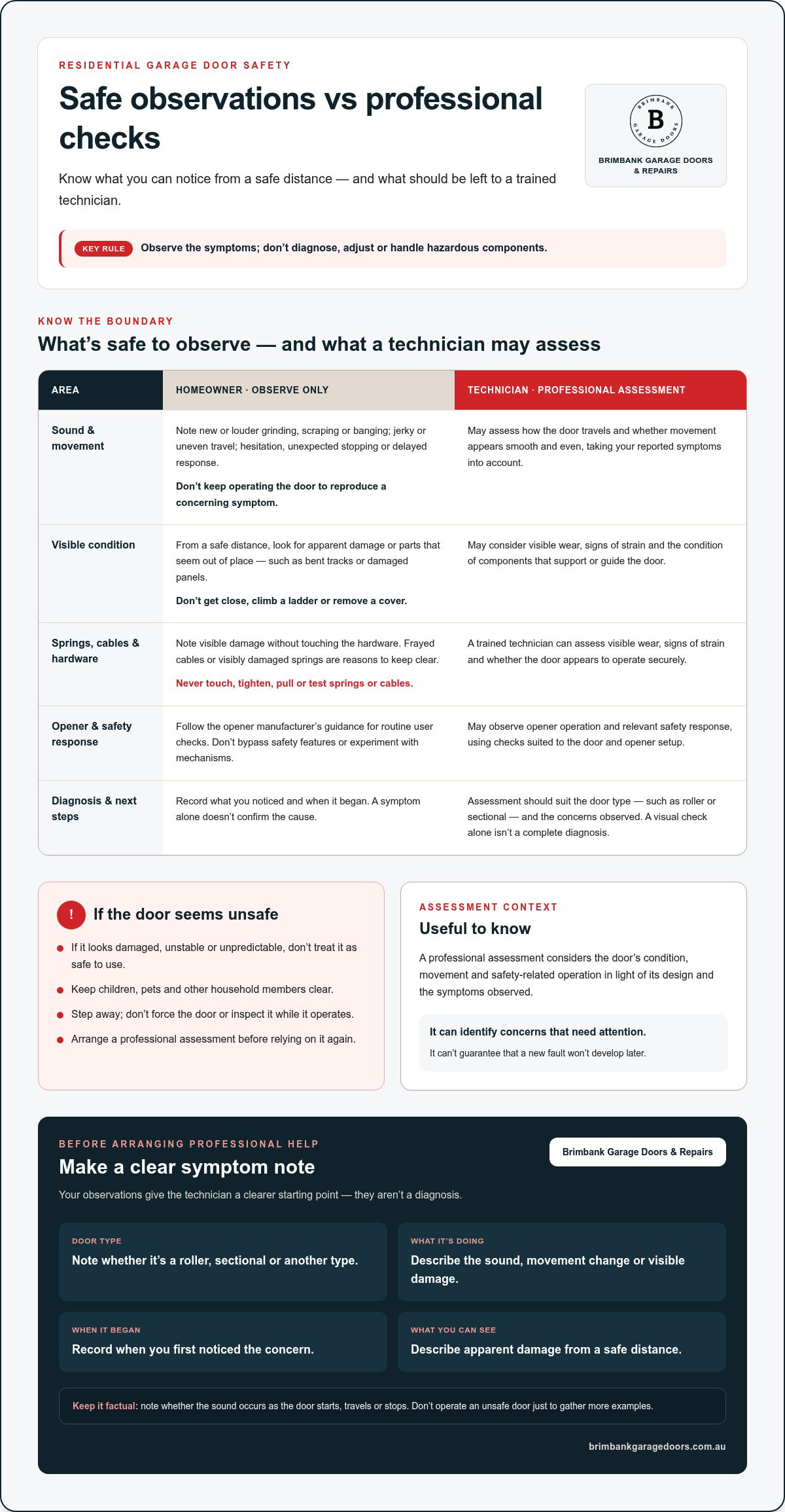
A garage door that opens and closes isn’t automatically a safe one. Some problems aren’t obvious during normal operation, and a homeowner’s visual check can’t replace an assessment of the door’s mechanical condition. The safest approach is to observe what you can without dismantling, touching or adjusting components, and leave hazardous checks to a trained technician.
If the door appears unstable or moves unpredictably, stop using it. Keep children and pets well clear, and don’t try to force it open or closed. If you have a roller door, this roller door repair guidance offers a useful next point of reference.
| Safe visual observations | Checks for a trained technician |
|---|---|
| From a safe position, watch a normal operating cycle only if the door appears stable. Note unusual sounds, uneven travel, hesitation, unexpected stopping or visible damage. | Assessing spring or cable condition, door balance, tension, damaged load-bearing parts and whether hardware needs adjustment or repair. |
| Record whether a symptom happens every time or only intermittently, and when you first noticed it. | Investigating mechanical faults and assessing opener operation or safety response without bypassing safety features. |
| Look for visible changes without climbing, removing covers or touching the door’s components. | Loosening, tightening, replacing or adjusting tracks, springs, cables and other moving or load-bearing hardware. |
What homeowners can observe without dismantling anything
If the door looks stable and you can watch from a safe position, observe its ordinary operation without standing in its path. Keep children and pets away, and don’t ask anyone to operate it while another person is close by. Note what you see and hear, including whether a sound or movement issue repeats. If operation seems unpredictable, stop observing and keep clear rather than running another cycle.
Write down the door type and symptom in plain language. “Scrapes as it starts” or “stops part-way sometimes” is more useful than a guessed diagnosis. These details can help a technician understand what you’ve noticed.
Why springs, cables and tracks aren’t DIY adjustment jobs
Spring systems store tension to help support and move the door. Cables and related hardware work with that system, so disturbing them can cause sudden movement or a release of force. Don’t loosen hardware, force the door or attempt a manual balance test. Tracks guide a heavy moving door, so adjustments also need a proper assessment.
Observe the door from a safe distance; leave mechanical adjustments and repairs to a trained technician. For a garage door safety inspection melbourne west homeowners should keep that boundary clear: visual notes are helpful, but they don’t establish that a door is safe to operate.
A Melbourne West Garage Door Safety Checklist Before You Book Service
A few clear notes can make it easier to explain a garage door concern and help a technician understand what you’ve observed. You don’t need to identify the fault. Stick to what you can see or hear, and don’t operate the door to gather more information if it seems unstable or unpredictable.
Information to record about the door and its behaviour
Before arranging help for a garage door safety inspection melbourne west homeowners can prepare these details. Keep the area clear, especially if children or pets are nearby, and leave the door unused if its movement seems unsafe.
- Identify the door type. Note whether it’s a roller door or another residential door type. If you’re unsure, describe its appearance rather than guessing.
- Describe the symptom. Record what happens during opening or closing. Does the door hesitate, stop, travel unevenly or make an unusual sound?
- Note when it began. Write down when you first noticed the change and whether it happens regularly or only now and then. Include any recent change you observed, without assuming it caused the issue.
- Record visible damage. Describe what you can see from a safe distance, such as a damaged panel or a component that appears out of place. Don’t touch or adjust it.
- Set out the safety concern. Mention if the door appears unstable or behaves unpredictably. Keep people clear and don’t use it while you arrange professional help.
These notes keep the conversation specific: “It pauses while opening and started this week” gives a clearer account than “the door is broken”. If the door seems unsafe, don’t run another cycle for a recording or demonstration. Your safety comes first.
How routine maintenance supports safer operation
Routine maintenance can help identify visible wear or changes in operation, but it can’t guarantee that a fault won’t develop later. Keep a simple record of maintenance and recurring symptoms, including the date and a brief description. If the same noise or movement issue returns, that history can help explain the pattern during an assessment.
For general upkeep, use this Melbourne garage door maintenance checklist as a reference, while leaving hazardous mechanical work to a technician. Regular observations and a clear service history are useful, but they don’t replace professional attention when a door’s operation changes.
Brimbank Garage Doors & Repairs provides residential garage door maintenance and repair across Melbourne’s western and northern suburbs.
Arrange Residential Garage Door Safety Help in Melbourne’s West
If your garage door looks damaged, feels unstable or behaves unpredictably, professional maintenance or repair is a sensible next step. Don’t keep using a door you’re concerned about, and keep household members clear while you arrange help. A clear description of the issue helps guide the discussion, even if you’re unsure what’s causing it.
When a safety concern calls for a repair assessment
Arrange professional attention if the door’s movement has changed, it stops unexpectedly or you can see damage to a panel or mechanical part. The cause and suitable repair depend on the door type and its condition, so don’t assume a familiar symptom always has the same explanation. For wider repair information, see this garage door repair guidance for Melbourne homeowners.
Some issues may be suited to residential maintenance; others may need a repair. A technician can assess the door in light of its condition and the symptoms you’ve reported. This helps move from concern to informed next steps without attempting hazardous adjustments yourself.
What to expect when arranging local residential service
Brimbank Garage Doors & Repairs provides residential garage door maintenance and repairs across Melbourne’s western and northern suburbs. When arranging service, share your suburb or property location, whether the door is a roller door or another type, what it’s doing and when you first noticed the change. Mention visible damage and whether the door seems unstable. You don’t need to diagnose the fault.
Keep the description concise and factual. For example: “The roller door hesitates while closing, and I noticed it this week.” If the door seems unsafe, say so and leave it unused rather than operating it to demonstrate the problem. These details give a helpful starting point for discussing the appropriate residential service.
A garage door safety inspection melbourne west homeowners seek after noticing a concern is an assessment of the door’s condition and operation, not a promise that future faults won’t occur. If maintenance or repair is needed, the recommended work depends on what the assessment finds.
For residential garage door maintenance or repairs in Melbourne’s west, contact Brimbank Garage Doors & Repairs to discuss the next step.
Make a Clear Plan for Your Garage Door
A change in how your door sounds or moves is a useful prompt to pause and make a plan. You don’t need to identify the mechanical cause yourself. Keep clear of any door that seems unstable, and leave adjustments to a trained technician. A measured next step can help protect your household and clarify what attention the door needs.
If you’re considering a garage door safety inspection melbourne west homeowners can arrange residential maintenance or repair through a local team serving Melbourne’s western and northern suburbs. Share what you’ve noticed and where the property is, then discuss a practical way forward.
Arrange residential garage door service in Melbourne’s west and take the next step with confidence.
Frequently Asked Questions
Is a garage door safety inspection required by law in Victoria?
A routine inspection can’t be described as a universal legal requirement for every Victorian homeowner. Building or regulatory requirements may depend on the work being done and the circumstances, so a general maintenance check shouldn’t be treated as legal certification. If you have a specific compliance or permit question, seek guidance from the relevant Victorian building authority or council. For an operational concern, arrange an assessment of the door’s condition.
How often should a residential garage door be inspected?
There isn’t one inspection interval that suits every door. Follow the opener manufacturer’s maintenance guidance, and arrange an assessment sooner if you notice a change in movement, sound or response. A garage door safety inspection melbourne west homeowners seek may also be prompted by visible damage or a recurring symptom. Keeping a record of maintenance and changes helps you describe the door’s history without relying on memory.
Can I use my garage door if a spring looks damaged?
No. If a spring looks damaged, don’t operate the door or touch the spring. A damaged spring may affect how the door is supported, and using it could make an already unsafe situation worse. Keep people clear of the door and arrange a professional repair assessment. Don’t try to release tension, lift the door by hand or secure the spring yourself.
What should I do if my garage door stops halfway?
Don’t push or pull the door, or keep pressing the control to make it move. Keep the opening clear and don’t walk or drive beneath the partly open door. Note whether it stopped while opening or closing and whether the opener made a sound or responded to the control. Share those details when arranging a repair assessment, since the cause depends on the door and its condition.
Can an automatic garage door be opened during a power outage?
Possibly. Some openers have a manual release, but the release method depends on the model, so follow its manufacturer instructions. Don’t attempt to disengage the opener if the door appears damaged, is stuck part-way or may not be properly supported. Once power returns, follow the manufacturer’s instructions for restoring normal operation. If you’re unsure or the door behaves unusually, leave it alone and arrange an assessment.
Does an inspection guarantee that a garage door will not fail?
No. An inspection assesses the door’s condition and operation at the time of the visit; it can’t rule out every future fault. Wear can develop, and a new issue may arise after an assessment. Ask for a clear explanation of any findings and recommended maintenance or repair, then keep a note of the work and any symptoms that return. That record can help guide future maintenance decisions.