
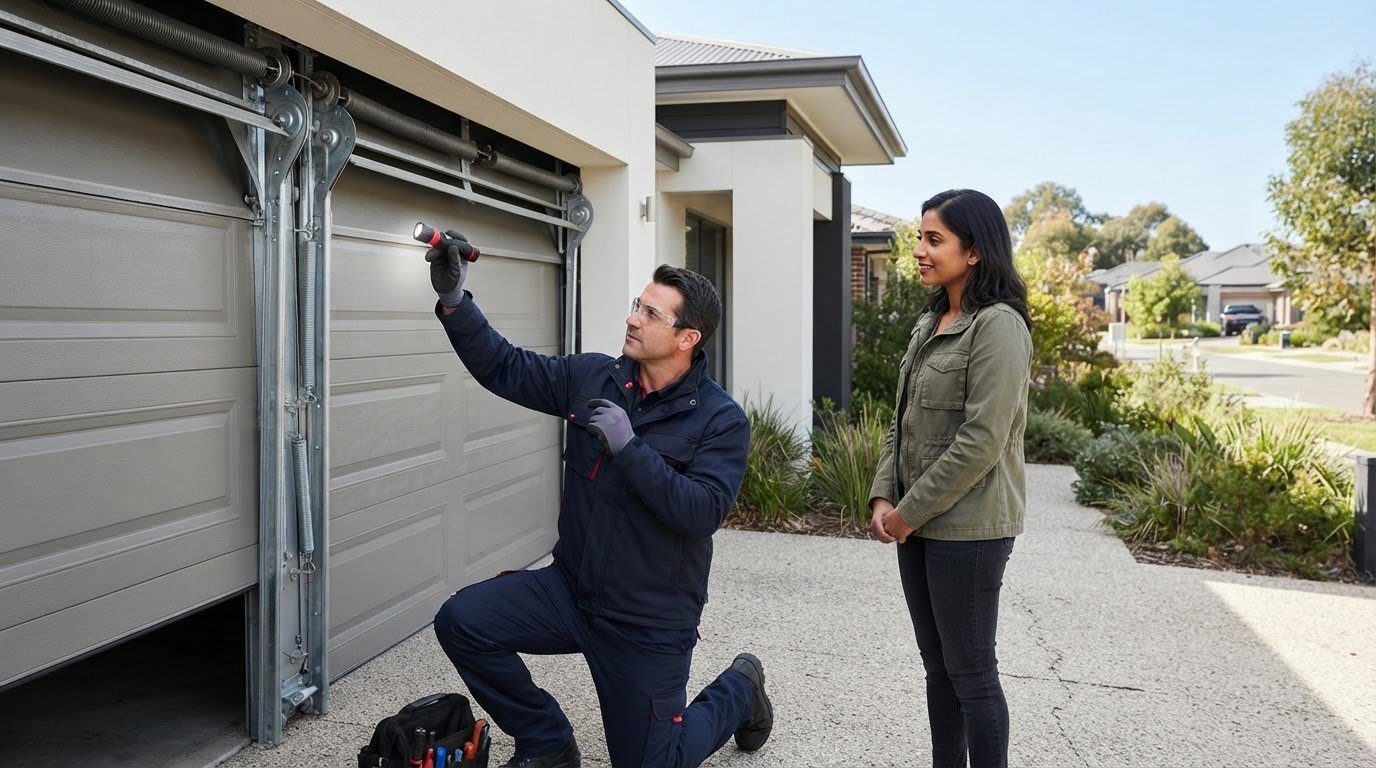
What if a garage door that’s stuck or making unusual noises is warning you about a fault beyond the part you can see? When access to your home or car is disrupted, it’s natural to want a quick fix. Reliable garage door repair Williams Landing starts with finding the cause, so the fault can be addressed and the door can operate dependably again.
Springs and cables are under tension, which can make DIY repairs hazardous. A residential garage door specialist serving Melbourne’s western suburbs can assess the fault, explain the work involved and carry out a repair suited to your door. Sharing clear details about the symptoms can help the technician understand what to investigate.
This guide covers common faults, signs that need prompt attention and what a professional repair assessment may involve. It also explains how maintenance, roller door repairs and replacement springs can support smooth operation. Whether your door won’t open, moves unevenly or has become noisy, you’ll know what to do next.
Key Takeaways
- Uneven movement, grinding, reversing or failure to open can signal a fault that needs attention. Avoid handling high-tension parts such as springs and cables yourself.
- A thorough garage door repair Williams Landing assessment follows the symptoms to their cause, with checks of door movement, visible hardware, balance and operating components.
- An isolated fault may be repairable, while extensive damage or recurring problems can prompt a discussion about replacement. A door’s age alone doesn’t settle the decision.
- Before an assessment, note when the issue occurs, any unusual sounds and whether it comes and goes. Keep the area accessible and household members clear of the door.
- Brimbank Garage Doors & Repairs serves residential customers across Melbourne’s western suburbs with repairs and maintenance, including roller door work and replacement springs.
Garage Door Repair in Williams Landing: Spot the Fault and Act Safely
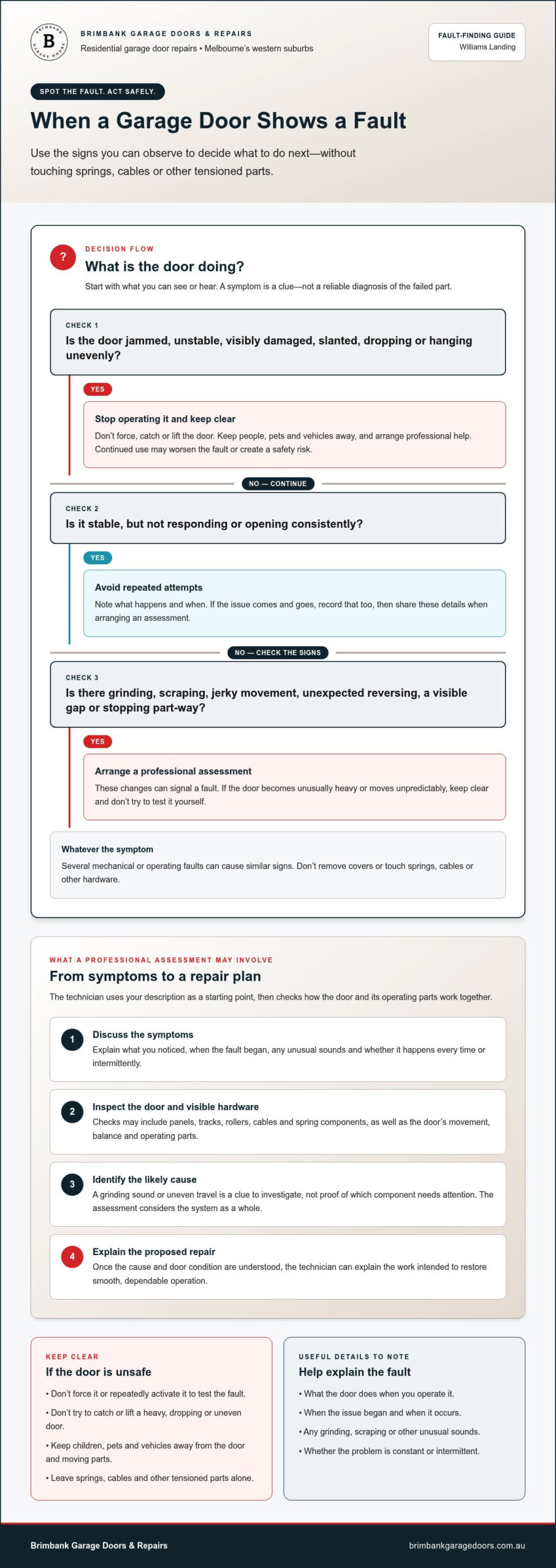
A garage door that won’t open can leave your car trapped, interrupt your routine and make the home feel less secure. In Williams Landing, it may be tempting to keep pressing the remote or try to move the door by hand. If it’s jammed, unstable or visibly damaged, stop operating it. Forcing it may worsen the fault or create a safety risk.
Warning signs include uneven or jerky movement, grinding or scraping noises, a door that reverses unexpectedly, visible damage, or inconsistent opening and closing. A door that suddenly feels unusually heavy or drops faster than normal needs prompt attention. These symptoms can have several mechanical or operating causes, so they can’t be reliably diagnosed from a description alone. Understanding basic garage door components can help you describe what you’re seeing, but don’t attempt to inspect tensioned parts yourself.
A door that moves unevenly needs professional assessment because the imbalance may involve its supporting hardware or operating system, making continued use unpredictable. A remote that doesn’t respond may be a simple inconvenience, but a door that shifts, drops, hangs at an angle or appears to be coming away from its track is a reason to keep clear.
Which garage door warning signs need professional attention?
Pay attention to changes in sound and movement. Grinding, scraping, sudden jerks, a visible gap or a door that stops part-way can indicate a fault that needs assessment. If the door becomes heavy, drops or hangs unevenly, don’t try to catch, lift or force it. Keep people away and arrange professional help. If the door remains stable but won’t respond, avoid repeated attempts to operate it and note what happens instead.
What should you do before arranging a Williams Landing repair?
Put safety first. Stop using the door if it’s obstructed, unstable or mechanically damaged, and keep children, pets and vehicles away from the door and moving parts. Don’t remove covers or touch springs, cables or other hardware. Instead, note what happens, when the fault began, any unusual sounds and whether it occurs every time or only intermittently. These details help explain the issue when arranging garage door repair Williams Landing, without putting you at risk.
- Keep clear if the door is jammed, slanted or dropping.
- Don’t force the door or repeatedly activate it to test the fault.
- Share the symptoms and when they occur when you arrange a repair.
How a Garage Door Repair Diagnoses the Cause of the Problem
A dependable repair starts with diagnosis, not guesswork. During a garage door repair Williams Landing assessment, the technician can use your description of the symptoms as a starting point, then inspect how the door and its operating parts work together. The aim is to identify the cause before recommending a repair.
A symptom alone can’t identify the failed component, because several different faults can cause similar noises, movement problems or operating failures. A grinding sound, for example, is a clue to investigate, not proof of which part needs attention.
What might a technician inspect during a residential repair?
The assessment generally follows a clear sequence: discuss what you’ve noticed, inspect the door and its hardware, identify the likely fault, then explain the repair work. The inspection may include visible panels, tracks, rollers, cables and spring components, along with the door’s movement, balance and operating parts. Movement and balance checks are part of the professional assessment. Don’t test a suspect door yourself.
Looking at the system as a whole helps distinguish a fault in one component from a wider issue affecting the door. For instance, uneven travel may involve a roller or track, but the inspection also needs to consider balance and other operating components. Once the cause and the door’s condition are understood, the technician can explain the proposed repair and how it’s intended to restore smooth, dependable operation.
How are garage door springs and roller door faults assessed?
Spring or cable damage can affect the door’s support and movement. If these parts appear damaged, leave the door alone and arrange professional help rather than attempting an adjustment or replacement. The assessment considers the affected hardware and how the door is operating, so the repair addresses the underlying fault. For more background on this work, read the garage door spring replacement guide.
With a roller door, movement problems need assessment of both the door and the parts that guide or operate it. A door that catches or stops may have a localised fault, or the wider mechanism may need attention. Diagnosis helps clarify which situation applies before repair work is chosen. For general consumer information about the door industry, the International Door Association offers additional background. The repair assessment should be based on the condition of your door.
If your door’s fault is recurring or difficult to identify, arrange residential garage door repairs so the cause can be assessed and the next steps explained.
Repair or Replace? Guide for Williams Landing Homes
Choosing between repair and replacement depends on more than the door’s age. Consider whether the fault is isolated, whether the door remains in sound condition and whether problems keep returning. A professional assessment helps weigh safety and reliability against the work needed.
| What the assessment finds | What it may mean |
|---|---|
| An isolated, identifiable fault on an otherwise serviceable door | A targeted repair may restore smooth operation. |
| Extensive damage, recurring breakdowns or unreliable operation | Discuss whether continued repairs or replacement is the more suitable path. |
This is a guide, not a diagnosis. The door’s condition, the nature of the fault and the technician’s findings determine the appropriate recommendation. Repair scope varies with the cause and the components required, so a fixed price or blanket rule won’t tell you which option suits your home.
When can a targeted garage door repair make sense?
If an inspection identifies one repairable component fault and the rest of the door is serviceable, a focused repair may be appropriate. Addressing the cause can restore smoother, more dependable movement and help extend the door’s useful life. A fault that appears isolated may be connected to a wider issue, so the door’s overall condition should inform the recommendation.
When should a homeowner consider garage door replacement?
Extensive damage, repeated breakdowns or a door that no longer operates reliably may warrant discussing replacement. If faults keep recurring, consider the likely scope of further repairs alongside the option of a suitable new door. Replacement isn’t automatically the right answer. The decision should reflect safety, the condition of the existing door and what the inspection finds. Brimbank Garage Doors & Repairs also provides residential garage door installation for homeowners considering that option.
For garage door repair Williams Landing, a clear explanation of the findings helps you understand why a repair is recommended or why replacement may be worth considering. The Melbourne garage door repair cost guide explains factors that can affect repair scope, but it can’t replace an assessment of your door.
Preparing for a Garage Door Repair Visit in Williams Landing
A little preparation can make a residential repair assessment more straightforward. Clear access gives the technician room to inspect the door and its operating parts, while a useful description of the fault explains what’s been happening. For garage door repair Williams Landing, note the symptoms and keep the area safe rather than investigating the mechanism yourself.
What information helps explain the garage door fault?
Think about what the door does and when the problem occurs. Is it stuck open or closed, noisy, moving unevenly or reversing unexpectedly? Note any recent change in operation, such as a new sound or a fault that has become more frequent. Also mention whether it happens every time or only intermittently. Share details of visible damage from a safe distance, but don’t touch springs, cables or other loaded components.
How can you make the repair area safer and easier to access?
If it’s safe to do so, move vehicles and stored items away from the door and its travel path. Keep children and pets clear of the work area during the assessment and repair. If the door looks unstable, don’t operate it while preparing or trying to clear space around it. Leave the door alone and keep others away.
- Make the door and its surrounding area accessible where safe.
- Note when the fault occurs, what sounds you hear and whether it’s intermittent.
- Keep people, pets and vehicles away from a damaged or unstable door.
- Don’t remove covers or handle springs, cables or other loaded parts.
Clear access supports an efficient inspection, but the repair scope depends on the fault and what the assessment finds. A straightforward component issue may call for different work from damage affecting multiple parts. Sharing accurate symptoms gives the technician useful context; the inspection establishes what repair is appropriate. Don’t assume that similar symptoms have the same cause or repair requirements.
Once the door is operating again, regular care can help you keep an eye on its condition. Use this garage door maintenance checklist for practical ongoing guidance. When arranging a residential assessment, share the symptoms you’ve recorded.
Book Residential Garage Door Repair in Williams Landing with Brimbank
A faulty garage door can affect daily access and leave your home less secure. Brimbank Garage Doors & Repairs provides residential garage door repairs and maintenance across Melbourne’s western suburbs, including support for homeowners in Williams Landing. The work focuses on finding the cause and matching the repair to the door’s condition, rather than applying a quick fix that may not address the fault.
What residential garage door repair help can homeowners seek?
Residential systems can need attention for a range of reasons, from noisy or unreliable movement to damaged components. Brimbank’s repair and maintenance work covers garage doors, including roller door faults and replacement springs. The assessment helps establish what’s affecting operation and which repair is appropriate for the system.
Roller doors and spring components each contribute to the door’s operation, so it’s important to consider how the door moves as well as the visible fault. If a roller door is sticking or a spring appears damaged, avoid forcing or dismantling the mechanism. For more detail on common roller door faults and repair considerations, read the Melbourne roller door repairs guide.
What is the next step for a garage door fault in Williams Landing?
When arranging a repair assessment, describe what the door is doing, when the issue began and whether it happens consistently. Mention any unusual sounds or visible damage, and keep people clear of a door that appears unstable. These details give the technician useful context. The recommended work follows the inspection findings, the diagnosed fault and the door’s condition, so you can understand why a repair is proposed.
Brimbank provides residential repair support across Melbourne’s western suburbs, helping homeowners work towards safe, smooth and dependable access to their garage. A clear diagnosis can help address the cause and restore reliable operation.
Arrange a residential garage door repair and share the symptoms you’ve noticed to take the next step for your Williams Landing home.
Get Your Garage Door Moving Reliably Again
A faulty garage door doesn’t always need replacing, but the cause needs to be identified before the right repair can be chosen. Note changes in movement or sound, keep clear of an unstable door, and let a professional assess its condition. That approach helps you make a considered decision about repair or replacement and restore dependable access.
For garage door repair Williams Landing, Brimbank Garage Doors & Repairs provides residential repairs and maintenance across Melbourne’s western suburbs. Support includes garage roller door supply and fitting, as well as replacement springs, with the repair guided by the fault and the door’s condition.
Take the next step towards smoother operation and greater peace of mind. Arrange a residential garage door repair with Brimbank and get your home access back on track.
Frequently Asked Questions
Is it safe to use a garage door with a broken spring?
No. A broken spring can affect the door’s balance, making it unusually heavy or unpredictable. Stop operating it and keep people and vehicles clear of the door and its travel path. Don’t try to release, adjust or replace the spring yourself, as the system can be hazardous. Arrange a professional assessment so the fault and any related damage can be identified before the door is used again.
Can I open my garage door if it is stuck?
Avoid forcing it. A stuck door may have a mechanical fault, an obstruction or a damaged component, and applying extra force can worsen the problem or create a safety risk. If the door looks uneven or unstable, keep clear. Note what happened and arrange a professional inspection rather than trying to lift or dismantle it. This helps protect you and avoids adding strain to the door or its operating parts.
How much does garage door repair in Williams Landing cost?
The cost depends on the fault, the door’s condition and the parts and work needed. A symptom alone can’t establish the repair scope, so a professional assessment is the practical starting point. For garage door repair Williams Landing, the findings help determine what work is appropriate for your residential door. You can also read the Melbourne garage door repair cost guide for an overview of factors that affect pricing.
What are common signs that a garage door needs repair?
Common warning signs include grinding or scraping noises, jerky or uneven movement, a door that reverses unexpectedly, failure to open or close, and visible hardware damage. A sudden change in how the door feels or sounds deserves attention. If it appears unstable, stop operating it and keep people clear. A professional assessment can help identify the cause and determine the repair needed to restore dependable operation.
Should I repair or replace my garage door?
The right option depends on the door’s overall condition, the cause of the fault and whether problems keep returning. A serviceable door with an isolated, diagnosable fault may be suitable for repair. Extensive damage or repeated breakdowns may make replacement worth discussing. Age alone doesn’t settle the decision. A technician’s inspection can clarify the door’s condition and likely repair scope, helping you weigh the options before deciding.
Can I replace a garage door spring myself?
Spring systems can hold significant tension, so attempting replacement without appropriate training and equipment can cause serious injury or further damage. Don’t loosen, cut or remove spring components yourself. If you suspect a spring fault, stop operating the door and keep people and vehicles clear. Arrange professional service so the spring system and door can be assessed and repaired safely. Avoid trying to balance or lift the door by hand.
How do I prepare for a garage door repair appointment?
Note the symptoms, when they started and whether they happen every time. For example, record if the door sticks only during closing, makes a new noise or reverses intermittently. If it’s safe, move vehicles and stored items away from the door’s travel path, then keep children and pets clear of the work area. Don’t force a stuck door or touch damaged springs and cables. Clear observations help explain the issue to the technician.