
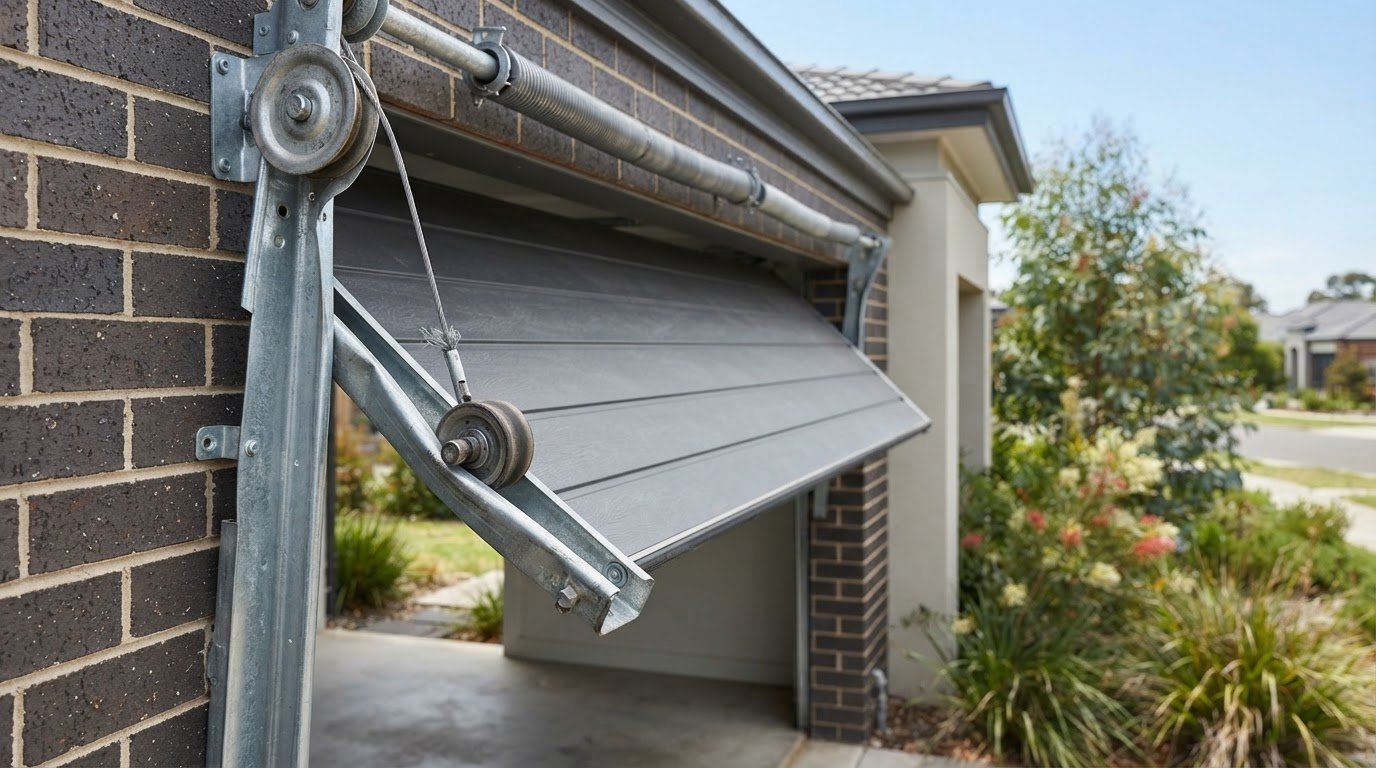
Worn or broken rollers are a common reason a garage door comes off its tracks. Frayed lift cables, failed springs, an unbalanced door, bent tracks, loose fixings, debris or a vehicle impact can also dislodge rollers. To understand what causes a garage door to come off its tracks, look beyond the visible gap: an underlying fault may still be straining the door. If it has come off, stop using it and keep people clear while arranging a repair.
A door hanging unevenly, moving jerkily or resisting the opener can be unsettling. Trying to move it may make the damage worse, and the cause is not always obvious from the track alone.
This guide explains how roller wear, cable or spring problems, poor balance and other faults can lead to an off-track door. Learn what signs to notice, why the underlying cause matters and when professional repair is the safer next step.
Key Takeaways
- A bent or misaligned track can point to a deeper fault, so the visible damage may not be the only issue to address.
- Worn, seized or broken rollers can jam or slip out of the track; watch for rough or uneven movement.
- Frayed cables and worn springs can upset the door’s balance, making it hang at an angle or strain as it moves.
- Vehicle impacts, debris and loose fixings can also disrupt the door. If it comes off its tracks, stop using it and keep people clear.
What Causes a Garage Door to Come Off Its Tracks?
A garage door can come off its tracks when a roller meets a bent or misaligned rail, or when a fault elsewhere puts uneven strain on the system. Stop using the door, keep people clear of the area and arrange professional help.
Track Alignment and Strength
Horizontal tracks guide the garage door rollers; if a track bends, shifts out of alignment or lacks strength for the door, rollers can jam or slip free. A track problem can also point to an underlying fault, rather than being the only damage. For example, lightweight tracks intended for a single door may contribute to problems when fitted to a two-car garage door. If a track appears bent or misaligned, stop using the door and seek professional advice. Track recommendations include 14-gauge steel, with 13-gauge L-shaped angle iron for reinforcement.
Warning Signs of Track Problems
A misaligned or off-track door may hang unevenly, move jerkily, make unusual noises or resist the opener. A visible gap between a roller and the track, or a roller sitting crookedly in its rail, is another warning. Continuing to operate the opener can strain the rollers, brackets and other parts. Don’t force the door if it moves unevenly.
Safety sensors near the bottom of the tracks use an invisible beam to detect objects in the door’s path. A blocked or misaligned sensor can stop the door operating as expected, but that does not mean a roller has left its track. Check for an object blocking the beam, but don’t assume a sensor issue proves the tracks are straight.
If the door is already off its tracks, don’t use the opener or try to guide the rollers back into place. Keep children and others away from the opening, then arrange for a technician to inspect the track, rollers and supporting brackets. Springs or other components may be putting the door under strain, so avoid touching them while it is unstable.
Worn or broken rollers
Worn or broken rollers are a common reason a garage door leaves its tracks. Each roller needs to turn freely and stay seated in the rail. If one seizes, cracks or wears unevenly, it can drag against the track and strain the others. Even one or two failing rollers can put extra stress on the door.
Yes. Even a low-speed vehicle impact can damage a garage door and knock rollers out of their tracks. If a car has hit the door, don’t operate it. Keep clear and arrange a professional inspection.
Toys, tools or other debris in the track can also jam rollers. Dirt, a damaged roller or a bent section may create resistance, leaving the door stuck partway or moving unevenly. Listen and watch for changes such as scraping, rattling or a sudden hitch. Don’t force the opener to push through resistance.
Roller design matters too. Standard nylon rollers are stated to last 5 to 7 years under normal use, but wear depends on use and condition. Rollers with at least 10 ball bearings are recommended for smoother movement. Double garage doors 4.9 m wide may use long-stem rollers, which help keep the roller engaged with the track.
The stem connects each roller to a hinge on the door panel. A bent stem, loose roller or damaged hinge can affect how the roller sits in the track. From a safe distance, look for cracks, looseness or uneven positioning. Don’t touch a door that’s already off track: its weight and tensioned parts make hands-on checks dangerous.
If roller damage or a track obstruction is affecting operation, garage door repair can address the fault and help restore safe movement. A proper repair should deal with the cause, not just the roller that first showed warning signs.
Broken lift cables and unbalanced doors
Lift cables and springs work together to raise and lower a garage door. If either side fails, uneven tension can pull the door out of alignment and strain its rollers.
Broken or Displaced Lift Cables
A garage door has a lift cable on each side, helping it rise evenly. A frayed, broken or displaced cable can leave one side unsupported, causing the door to hang crookedly or bind as it moves. The uneven load may pull rollers towards the edges of their tracks.
Look for a loose cable, visible fraying or slack, but don’t touch it. Cables and spring hardware are under tension, and handling them can cause serious injury. If a cable appears damaged, keep clear, don’t use the remote and arrange professional repair. Regular inspections can help identify wear before a cable breaks.
Door Imbalance
An unbalanced door doesn’t rise evenly, putting extra force on one cable, spring and track. If one side hangs lower, a spring may be worn or broken; as the door moves, a roller may then leave its track. Stop operating the door if it hangs at an angle, jerks or resists the opener.
For a door that’s moving normally, a balance check involves disconnecting the opener and lifting the door halfway by hand. It should stay in place. Don’t perform this test if the door is off track, hanging unevenly or showing cable or spring damage. Leave it still and call a technician instead.
A garage door is heavy, and a failed cable can make it unstable without warning. Keep people and vehicles away from its path, and don’t try to support or reposition the door. Avoid pulling the emergency release if the door is hanging or unstable: disconnecting the opener won’t correct cable tension.
After a cable or spring fault, the repair needs to address the imbalance, not just put a roller back in the track. A technician can assess the cables, springs, track and related hardware together, then confirm the door moves evenly before normal use resumes.
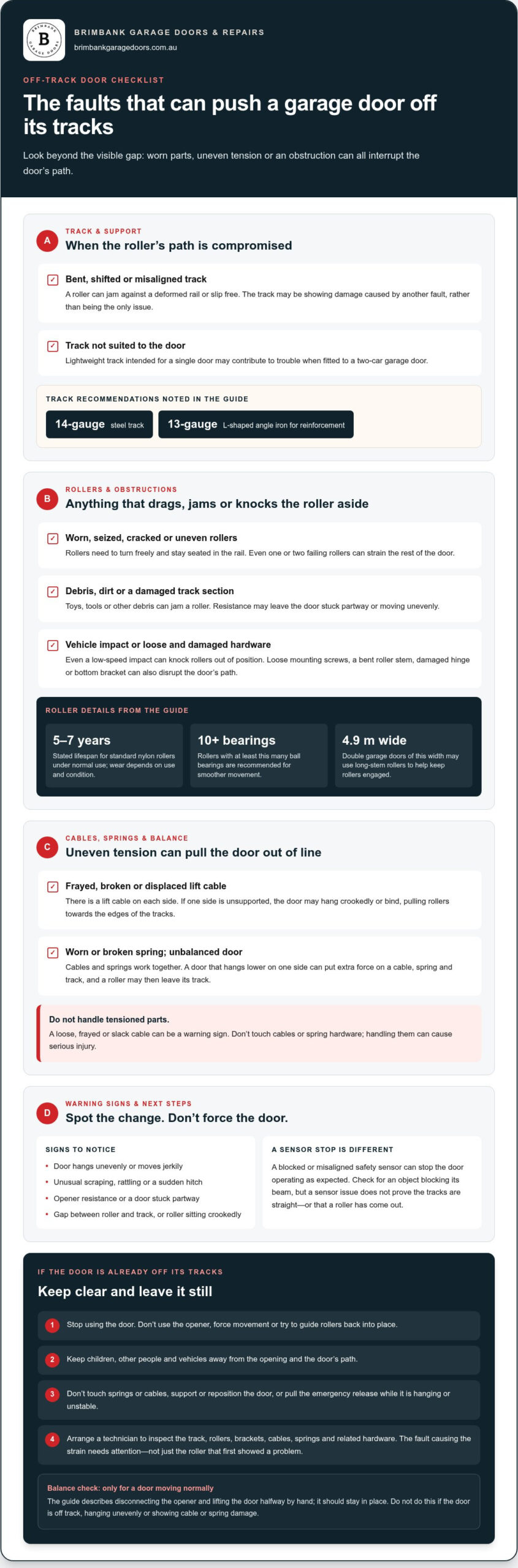
Common causes of garage doors coming off their tracks
Yes. Broken rollers and bent tracks can push rollers out of position, while other faults add uneven stress. A vehicle impact, loose mounting screws, trapped debris, spring failure or a damaged bottom bracket can also disrupt the door’s path.
Roller Failures and Bent Tracks
A broken roller or bent track interrupts the straight path a garage door needs to travel. A roller may jam against a deformed section, then slip out as the door moves. Even a slight bend may point to another fault, such as loose track fixings or uneven tension on the door.
Horizontal tracks need to suit the door’s size and support its movement. Lightweight tracks intended for a single door may contribute to problems with a two-car garage door. If the track is bent by more than a couple of centimetres, stop operating the door and call a technician. Don’t try to straighten a loaded track yourself.
Other Common Track Failures
A vehicle striking the door can shift its alignment and damage panels, rollers or the track. Even an impact at 5 to 8 km/h can cause real damage. Loose mounting screws may let a bracket or track shift, while a damaged bottom bracket can weaken the door’s support.
Small obstructions can cause problems too. A toy or tool lodged in the track can stop a roller and create stress as the opener continues to push. Failed springs can also disrupt the door’s balance and pull a roller from its track. Faults may combine: an impact can loosen hardware, and continued operation can worsen the alignment.
After an impact or sudden stop, leave the door in place rather than testing it with the remote. Keep the opening clear and note any visible damage from a safe distance. A technician can assess the track, brackets, spring system and door together, addressing the underlying fault rather than just one symptom.
If a collision, loose hardware or spring fault has affected the door, arrange garage door repairs before using it again.
Brimbank Garage Doors & Repairs: Garage Door Installation
Brimbank Garage Doors & Repairs provides Garage Door Repairs for doors that have come off their tracks or need attention to rollers, cables or other parts. A lasting repair addresses what caused the door to shift, rather than simply returning it to position. If the door is unstable, leave it unused and keep people clear until it can be assessed.
Garage Door Maintenance can help identify wear and operating issues before they develop into a larger fault. If the door needs replacing, Brimbank Garage Doors & Repairs also provides Garage Door Installation and Garage Roller Doors Supply for residential properties. The right next step depends on whether the existing door can be repaired or needs replacement.
Contact Brimbank Garage Doors & Repairs to discuss your garage door issue.
Get your garage door back on track safely
Knowing what causes a garage door to come off its tracks can help you describe the problem. The next step is to determine whether the door needs repair or replacement. A professional assessment can identify the affected parts and whether the existing door can be restored to safe, reliable operation. Don’t use a door that’s unstable or moving unevenly while arranging an assessment.
Brimbank Garage Doors & Repairs provides Garage Door Repairs for faults, Garage Door Maintenance to support ongoing operation, and Garage Door Installation when replacement is the right option. The best solution depends on the door’s condition and the damage involved. Address the cause, not just the visible symptom.
For a straightforward next step, contact Brimbank Garage Doors & Repairs to discuss your garage door. A clear assessment can help you move forward with confidence and restore peace of mind at home.
Frequently Asked Questions
Can You Fix It Yourself?
No. Don’t try to lift, realign or re-seat an off-track door. Its weight and tensioned components can shift unexpectedly, and spring repairs can cause serious injury. Keep people away, leave the door still and arrange professional repair. If you can see a loose part from a safe distance, describe it when booking, but don’t touch the cables, springs or brackets.
How Long Does an Off-Track Repair Take?
Replacing rollers and realigning a garage door is estimated to take 45 to 90 minutes. That estimate applies to this specific work, not every off-track repair. A technician needs to assess whether the job also involves track replacement, cable or spring damage, or impact damage to panels. The amount of repair needed determines the work involved, so a complex fault can take longer.
What are the most common causes of a garage door coming off its tracks?
Roller failure, track damage, vehicle impact and faults affecting the door’s balance are common causes. Several problems can combine: a small impact may shift hardware, while continued operation adds strain and worsens alignment. The point where a roller leaves the track may not reveal the original fault, so the whole door system needs assessment.
Can a broken cable or spring make a garage door come off its tracks?
Yes. A broken cable or spring can upset the door’s balance and change how its weight is supported as it moves. The uneven load can affect roller travel and pull the door out of alignment. If one side drops or the door moves differently after a sudden bang, stop operating it. Don’t adjust or replace tensioned hardware yourself.
Do worn parts, poor installation, or lack of maintenance cause garage door derailment?
Yes. Worn rollers and loose or damaged hardware can disrupt smooth travel, while an unsuitable track setup may not guide a particular door and opener correctly. The right track setup can depend on the door and opener, so compatibility is worth considering when investigating operating problems. Routine maintenance helps identify visible wear, debris and loose fixings before continued operation adds strain.
What warning signs indicate a garage door is about to come off its tracks?
Watch for changes in the door’s movement before a roller slips out. It may pause at the same point, travel unevenly, make scraping or rattling sounds, or leave a changing gap beneath the bottom edge. A door that repeatedly resists the opener also needs attention. Stop operating it if these signs appear, and keep clear if it begins hanging at an angle.