
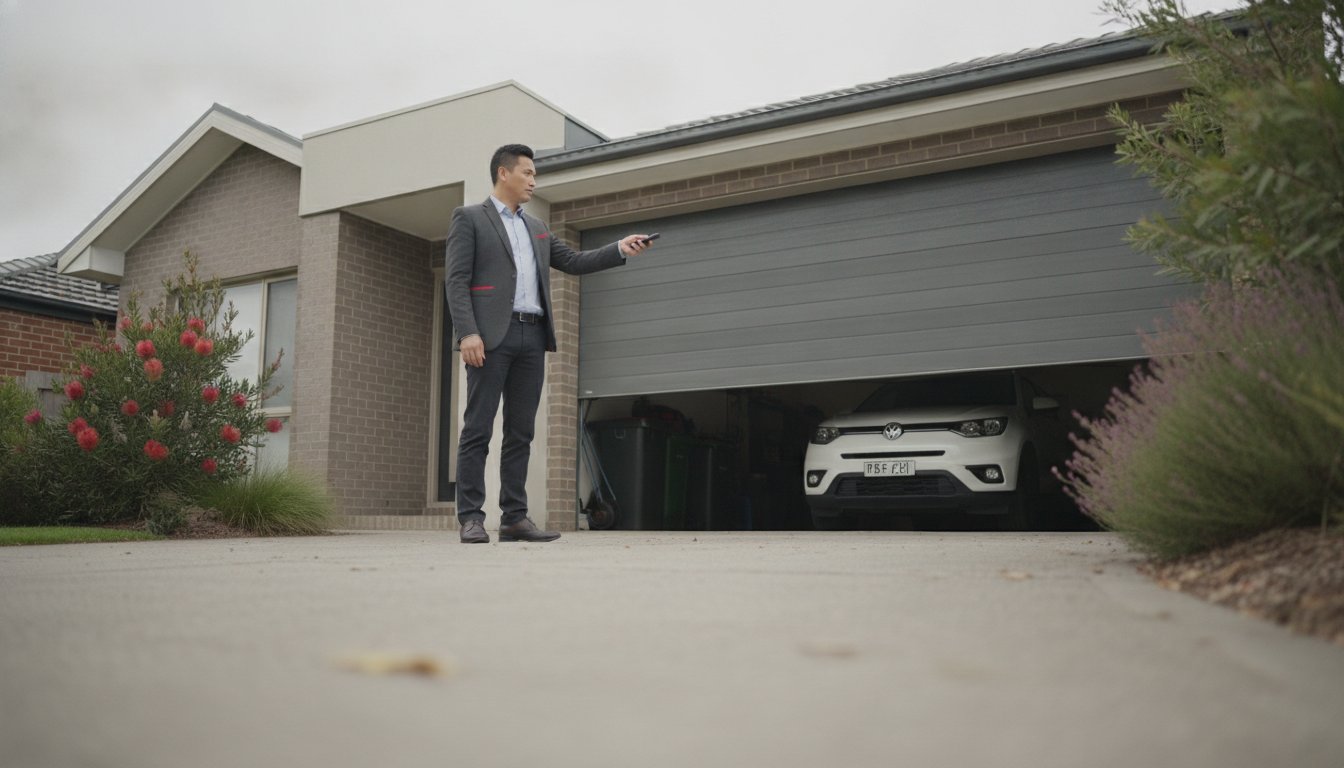
It’s 7:30 AM on a drizzly Tuesday in Melbourne’s west, you’re already running late for work, and your garage door motor not working is the last thing you need. You press the remote again, but instead of the familiar hum, you get a clicking sound or, worse, total silence. It’s a stressful moment that leaves your car trapped and your home’s security feeling compromised.
We understand that a faulty motor feels like a major blow to your budget and your daily routine. Most homeowners immediately dread the thought of a massive repair bill or a complex mechanical failure. However, many motor issues are actually simple connectivity glitches or minor sensor misalignments that you can resolve yourself. This guide will help you identify exactly why your motor has stopped responding and provide the steps to get it moving again safely.
We’ll walk through essential DIY checks, explain the latest AS/NZS safety standards regarding monitored beams, and help you decide when it’s time to call in a local expert for a professional repair.
Key Takeaways
- Learn to decode motor sounds—from total silence to grinding—to pinpoint exactly what’s gone wrong before you start any repairs.
- Discover why a garage door motor not working is often just a tripped safety switch or a simple power supply issue common in Melbourne homes.
- Find out how to align your safety sensors to fix “ghosting” issues where the door starts to close but immediately reverses.
- Use the manual balance test to see if your motor is struggling because of a broken spring rather than a mechanical failure.
- Recognise the specific warning signs that indicate you need a professional technician to handle complex circuit board or motor repairs.
Troubleshooting 101: Is Your Garage Door Motor Really Dead?
Finding your garage door motor not working usually triggers an immediate sense of dread about the potential cost. Before you assume the worst, it’s vital to understand that “not working” is a broad term. There is a significant difference between a motor that has completely lost power and one that is trying to move but failing. To get a clearer picture of what you are dealing with, you can refer to this comprehensive overview of garage door openers to understand the standard mechanical components involved.
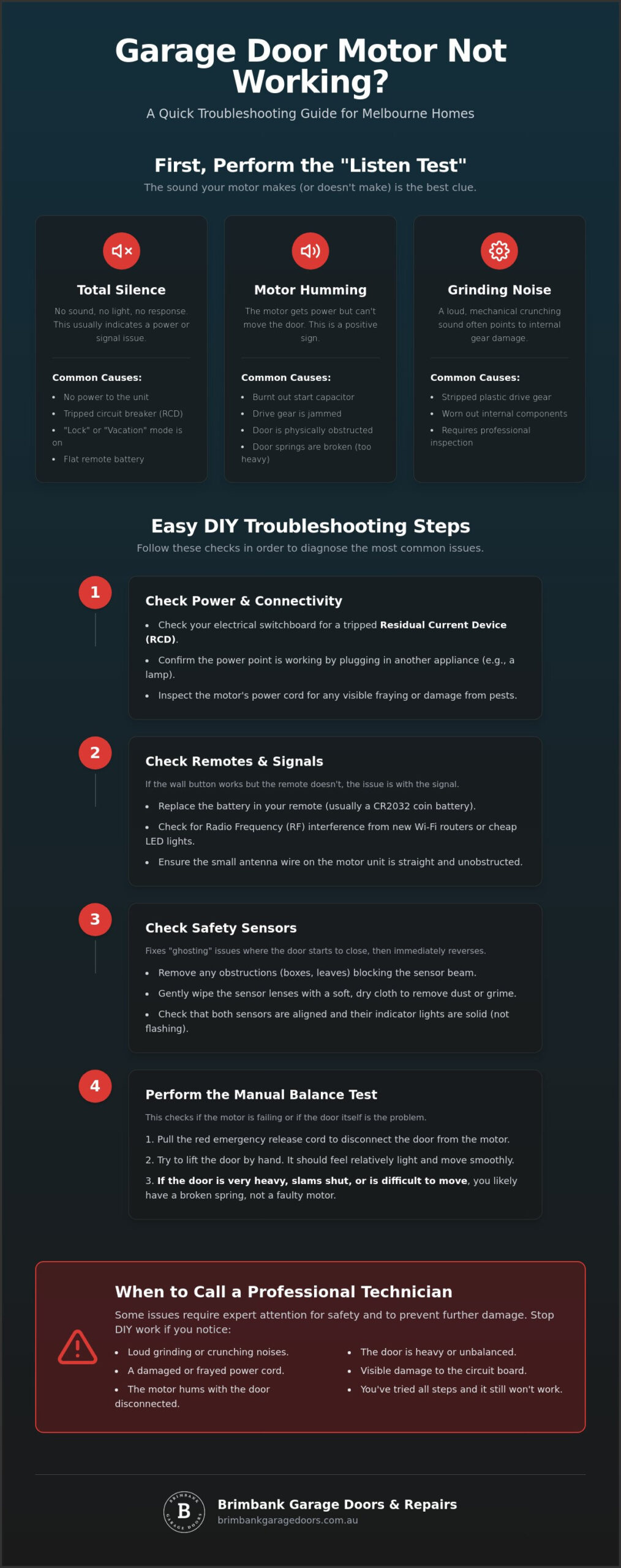
Think of your opener in two parts: the motor unit is the “brain” containing the logic board, while the drive system is the “muscle” that actually moves the door. When things go wrong, we use the “Listen Test” to narrow down the culprit. Silence usually suggests an electrical fault or a dead logic board. A humming sound indicates the motor has power but is physically stuck. Grinding noises often point to a stripped plastic drive gear within the unit. Before you open the casing to inspect these internal parts, always disconnect the unit from the power point to avoid electrical shocks.
The Quick Silence Check
If there is absolutely no sound, no light, and no response from the unit, you likely have a power or signal issue. First, check the wall button inside your garage. If the wall button works but the remote doesn’t, you simply have a flat battery or a lost signal. However, if the wall button is also unresponsive, look for a “Lock” or “Vacation Mode” switch on the console. This feature is a common cause of a garage door motor not working; it’s designed to disable remotes for security while you’re away, and it’s easily bumped by accident during daily use.
Motor Humming but No Movement
A humming motor is actually a positive sign because it confirms the logic board is receiving power and attempting to work. If you hear a hum for a few seconds before it cuts out, the motor might have a “burnt out” start capacitor. This small component gives the motor the extra “kick” it needs to begin moving. Alternatively, the drive gear might be jammed. You can test this by pulling the red emergency release cord to disconnect the door from the motor. If the motor runs freely once the door is disconnected, the problem lies with the door’s weight or a mechanical obstruction in the tracks rather than the motor itself.
Power and Connectivity: The Most Common (and Easy) Fixes
Melbourne’s western suburbs often experience volatile weather. Local power surges during a summer storm can easily trip a safety switch. If you find your garage door motor not working after a thunderhead has passed over Sunshine or Werribee, check your electrical switchboard first. A tripped Residual Current Device (RCD) is a frequent culprit. It’s a vital safety measure, but it can leave you stuck. Before assuming the unit is fried, follow these professional garage door safety tips to ensure you’re handling the equipment correctly.
A simple visual inspection of the power lead is also essential. In many Melbourne garages, mice or rats can chew through the insulation, causing a short circuit. Look for fraying or exposed copper along the cord leading from the ceiling GPO to the motor head. If the cord is damaged, do not attempt to patch it with electrical tape; the entire lead needs professional replacement to maintain safety standards.
Restoring the Power Connection
Is the power point actually live? Unplug the motor and plug in a hair dryer or a toaster to verify the GPO is working. If the secondary appliance doesn’t work, reset the circuit breaker in your main board. If the motor still doesn’t show signs of life after confirming power, the internal transformer or logic board might have sustained surge damage. For more complex electrical diagnoses, our team provides expert garage door repairs to get your system back online.
Signal and Remote Interference
Sometimes the motor is fine, but the message isn’t getting through. Start by replacing the batteries in your remote. Most Melbourne-standard remotes use a CR2032 or similar lithium coin battery. While you’re at it, clean the metal contact points inside the remote with a dry cloth. This ensures a strong connection.
Radio Frequency (RF) interference is a hidden enemy. Cheap LED globes in the garage or a new Wi-Fi router placed near the unit can drown out the remote’s signal. Check the small antenna wire hanging from the motor unit. It should be straight and unobstructed. If it’s tucked inside the housing or wrapped around a metal bracket, the range will drop significantly. You may need to re-sync the remote by pressing the “Learn” button on the motor head. This process usually takes less than 30 seconds but solves many connectivity issues.
Safety Sensors and Alignment: Why Your Motor Might Be Ghosting You
If you press your remote and the door starts to close but immediately reverses, or if the motor unit clicks and flashes its light without moving the door at all, you’re likely dealing with a safety sensor issue. This is a common reason for a garage door motor not working, and it’s actually a built-in safety feature rather than a mechanical failure. These sensors, often called “photo-eyes,” create an invisible beam across the base of your door opening. If that beam is broken or the sensors can’t “see” each other, the system assumes there’s an obstruction and refuses to close.
Safety is the priority here. These mechanisms are strictly governed by federal safety standards for garage door openers, which mandate entrapment protection to prevent accidents. In Melbourne’s western suburbs, our sensors face unique local challenges. Wind-blown dust from new housing estates or thick spider webs from local redbacks can easily coat the lenses. Even a single blade of tall grass or a stray leaf can be enough to “ghost” your motor and stop it in its tracks. If you’re in a hurry, you can usually bypass the sensors by holding down the wall-mounted button continuously until the door is fully shut; however, this should only be an emergency measure as it disables the safety reversal.
Cleaning and Realigning the Sensors
Start with the basics. Use a soft, dry cloth to gently wipe the grime and dust off both sensor lenses. Once clean, look at the small LED indicator lights on the side of each sensor. In most systems, one light is green and the other is orange or red. If one light is flickering or completely off, the sensors are out of alignment. Loosen the wing nut on the bracket, adjust the sensor until the light glows solid, and then tighten it back up. A solid light on both sides means the invisible beam is restored and the motor is ready to operate.
Checking for Physical Obstructions
Sometimes the sensor is fine, but the motor detects resistance elsewhere in the system. Inspect your tracks for small pebbles, children’s toys, or a heavy buildup of old, hardened grease that can cause the door to bind. A slightly bent track can also trigger the safety reversal as if the door hit an object. You can check your motor’s force sensitivity with the “Paper Towel Test.” Place a roll of paper towels on the floor under the door. As it closes, the door should reverse immediately upon touching the roll. If it crushes the roll, your force settings are too high and require professional adjustment to ensure your home remains safe.
Mechanical Obstructions vs. Motor Fatigue: Identifying the Root Cause
A common mistake Melbourne homeowners make is assuming the motor is a heavy-duty winch. In reality, the motor is only meant to provide the initial nudge and guide the movement. The heavy lifting is done entirely by the springs. If you find your garage door motor not working, it might not be a motor failure at all, but rather a case of the motor’s safety sensors detecting that the door is simply too heavy to lift. When a motor is forced to pull a dead weight, it will eventually burn out its internal circuitry or strip its gears. Most quality motors in Melbourne are built to last 10 to 15 years, but this lifespan is cut short if the springs aren’t doing their job.
The Balance Test: Is the Door Too Heavy?
To determine if weight is the issue, you need to perform a balance test. Close the door fully and pull the red emergency release cord to disconnect the door from the drive system. Now, try to lift the door manually. A well-maintained door should be light enough to lift with one hand and should stay in place when left halfway up. If the door feels like a ton of bricks or crashes back down, your motor isn’t the problem. Usually, this means a garage door spring snapped, leaving the motor to do work it wasn’t designed for. Since springs are rated for roughly 10,000 to 20,000 cycles, they often fail before the motor does.
Internal Gear and Sprocket Issues
If the motor hums and you hear a distinct grinding noise, the internal gears have likely failed. Most modern openers use high-grade plastic or nylon gears. These are specifically designed to fail or “sacrifice” themselves if the door becomes too heavy or hits an obstruction. This prevents the actual motor windings from burning out. If you take the plastic cover off the unit and see what looks like “snow” or white shavings, your gear kit is stripped. You might also notice the chain or belt hanging low with excessive slack. This isn’t a DIY fix, as it requires timing the new gears perfectly with the logic board. If your motor is over 10 years old and the gears have stripped, remember the industry 50% rule: if the repair quote is more than half the price of a new installation, a full replacement usually offers better long-term value. For a reliable diagnosis in the western suburbs, we recommend booking a professional garage door maintenance check to ensure your drive assembly is correctly aligned.
Professional Garage Door Motor Repair in Melbourne’s West
While many issues can be solved with a quick sensor wipe or a battery change, there comes a point where DIY troubleshooting reaches its limit. If you have followed the steps in this guide and still find your garage door motor not working, it’s likely an internal electronic failure or a significant mechanical imbalance. Attempting to repair a logic board or adjust high-tension springs without the right tools is a major safety risk. Professional intervention ensures the job is done right the first time, protecting both your family and your home’s security.
Understanding the garage door repair cost Melbourne homeowners can expect is the first step toward a stress-free fix. We believe in transparent pricing and honest assessments rather than high-pressure sales. Being based in the western suburbs means Brimbank Garage Doors & Repairs carries a wide range of parts for common Australian brands like Merlin and ATA. This local availability often means we can resolve your issue much faster than companies that have to order parts from across the city.
What to Expect from a Professional Service
A professional technician doesn’t just fix the immediate symptom. We perform a comprehensive safety audit of the entire system, including the springs, cables, and motor limits. We use precise diagnostic tools to test the logic board and recalibrate the force and travel settings. This ensures the door stops exactly where it should without straining the motor. If your unit is approaching that 15-year mark, we provide straightforward advice on whether a repair is a sound investment or if a new, more efficient model would better serve your home’s long-term needs.
Serving Brimbank and Beyond
Matt and the team at Brimbank Garage Doors & Repairs have built a reputation for being the reliable local specialist in Keilor, Sunshine, St Albans, and Sunbury. We live and work in these communities. We understand that a garage door is often the main entry point for a family home, making its reliability a cornerstone of your residential security. We pride ourselves on a hands-on, accountable approach that larger corporations simply can’t match. If your door is stuck or making concerning noises, Contact Brimbank Garage Doors & Repairs for a reliable motor inspection and a solution that prioritises your peace of mind.
Restore Your Home’s Security and Convenience
A garage door that won’t budge is more than a minor annoyance; it’s a genuine security concern for your family. We’ve explored how simple fixes like sensor alignment or power resets can often save the day. However, we also identified that a heavy door or a snapped spring is frequently the hidden reason behind a garage door motor not working. Recognising these red flags early prevents you from burning out your opener and facing a much larger replacement bill.
As a local family-owned business, we specialise in residential roller door and motor repairs across Melbourne’s western suburbs. We bring expert local knowledge to every job, ensuring your home remains safe and your door operates with quiet confidence. Don’t risk your safety with complex mechanical or electrical repairs that require specialist tools and training.
Book a Professional Motor Diagnostic with Brimbank Garage Doors & Repairs today for no-nonsense, reliable service you can trust. You’ll be back on the road and secure in no time.
Frequently Asked Questions
Why is my garage door motor making a humming sound but not opening?
A humming sound usually means the motor is receiving power but cannot physically move the door. This often points to a stripped internal drive gear or a failed start capacitor. You can test this by pulling the emergency release cord; if the door is heavy to lift manually, the motor isn’t the problem, but rather a mechanical issue with the springs or tracks.
Can I replace a garage door motor myself?
While you can buy motors off the shelf, DIY installation isn’t recommended for most homeowners. Modern Australian standards, such as AS/NZS 60335.2.95:2024, require specific safety beam setups for smart openers. Professional installation also ensures your manufacturer’s warranty remains valid and that the motor is perfectly balanced with your door’s weight to prevent premature failure.
How do I reset my garage door motor after a power outage?
After power is restored, you need to re-engage the opener carriage to the drive system. Pull the red emergency release cord back towards the motor unit and manually move the door until you hear a distinct click. Once re-attached, run the motor through one full cycle using your remote to allow the logic board to recalibrate its travel limits correctly.
Why does my garage door start to close and then immediately go back up?
This “ghosting” behaviour is almost always caused by misaligned or dirty safety sensors at the base of your door. If the invisible beam is broken by dust, spider webs, or a small obstruction, the motor reverses as a safety precaution. Clean the lenses with a soft cloth and ensure the LED lights on both sensors are glowing solid rather than flickering.
How long do garage door motors usually last in Australia?
In Melbourne’s climate, a quality garage door motor typically lasts between 10 and 15 years. This assumes you perform regular maintenance and that your springs are correctly balanced. If your springs have snapped or lost tension, the extra strain can cause a garage door motor not working well before it reaches its expected lifespan.
What should I do if my remote works but the wall button doesn’t?
If your remote works but the wall button doesn’t, check the “Lock” or “Vacation” switch on your wall console first. This feature often gets bumped by accident, disabling the hardwired button for security. If the lock is off, the issue is likely a loose or frayed bell wire running from the motor to the button, which requires a professional wiring check.
Is it worth repairing an old garage door motor or should I replace it?
We recommend the “50% Rule” for older units. If the cost of the professional repair approaches half the price of a new installed motor, replacement usually offers better long-term value. New models also provide quieter belt-drive operation and improved safety features that older units lack, making them a smarter investment for your home security.
Why is my garage door opener light flashing and the door won’t move?
A flashing light on the motor unit is a diagnostic code designed to tell you exactly what is wrong. Most often, this specific signal indicates that the safety sensors are blocked or misaligned. It can also mean the motor has exceeded its force limits because the door is binding in the tracks, which prevents the motor from safely initiating movement.