
A draughty garage doesn’t always need a new door. Garage door bottom seal replacement in Sunshine can close the gap beneath the door, helping reduce draughts and keep out dust and rain. If the door is damaged or isn’t working properly, replacing the seal alone may not fix the underlying problem.
It’s reasonable to want a lasting fix without paying for work your door doesn’t need. The right solution depends on whether the issue is a worn seal or a sign of a wider repair or replacement need.
This guide explains what a bottom seal can do, the signs that a repair may be needed, and how sealing compares with garage door repair or replacement costs. You’ll also find a practical decision guide to help you weigh the options for your home.
Key Takeaways
- A worn bottom seal can leave a gap that lets draughts and outside air into the garage; sealing may help make the space more comfortable.
- Look at where air and light enter to understand whether the issue is confined to the seal or may involve the door itself.
- Compare the scope of a seal fix, a repair and a full replacement before deciding which option best suits the door’s condition.
- When the door is damaged or malfunctioning, professional repair or maintenance can help identify the right next step; replacement may suit a door with broader problems.
Benefits of sealing a garage door
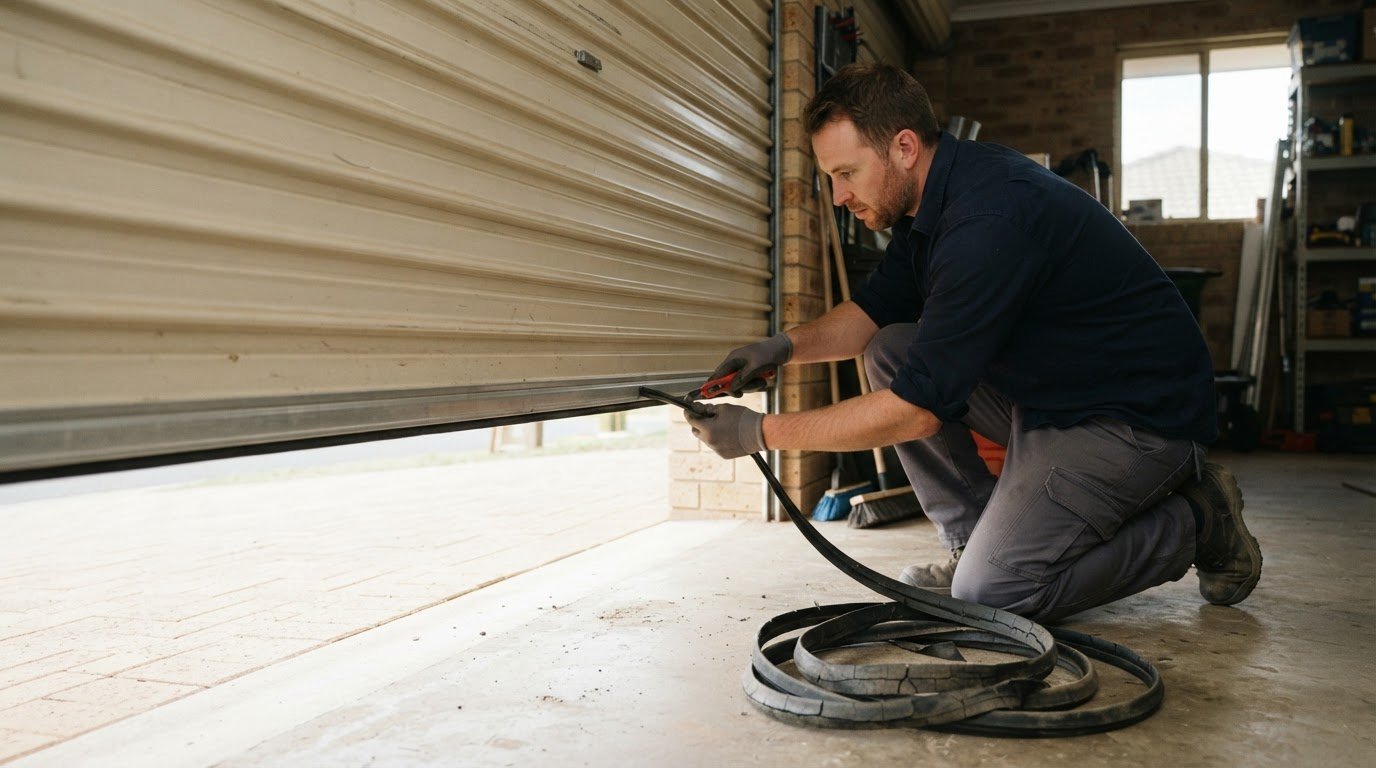
A fitted bottom seal closes the gap between the door and the floor. It can reduce draughts and help keep out dust, leaves, rainwater and crawling pests. For example, a suitable seal can help close the opening where a garage door meets an uneven concrete edge.
That barrier can make a garage more comfortable for storing belongings or using as a workspace. It can also limit air movement between the garage and adjoining rooms. A seal won’t correct a door that sits crooked or fails to close, which may point to a wider issue.
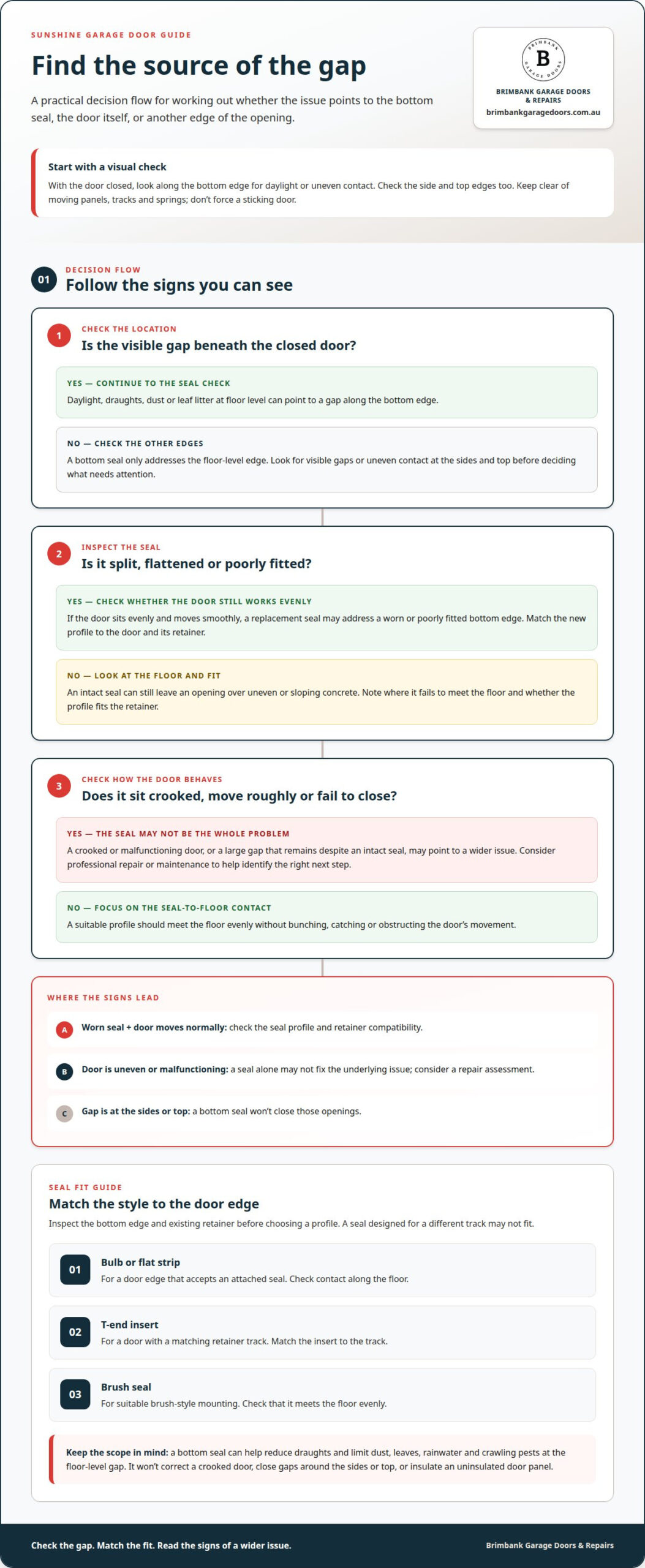
Common seal styles include bulb-shaped seals, flat strips, brush seals and T-end inserts that slide into a matching track. Some suit sectional and roller doors, while tilt doors may need a different arrangement. Compatibility depends on the door’s bottom edge and existing retainer.
EPDM rubber is one seal material option. The profile needs to suit the door and make even contact with the floor, helping close gaps where water or pests could enter. A split, flattened or poorly fitted seal may leave openings, even if it appears to cover the full width.
To identify the right profile, inspect the door’s bottom edge and retainer, then check the gap along the floor. Note whether the seal slides into a track or attaches directly, and look for uneven flooring that could leave openings.
| Option | Door or fit criterion | Practical consideration |
|---|---|---|
| Bulb or flat strip | Door edge accepts an attached seal | Check contact along the floor |
| T-end insert | Door has a matching retainer track | Match the insert to the track |
| Brush | Suitable brush-style mounting | Check that it meets the floor evenly |
Choose a profile that matches the door and closes the floor gap without obstructing its movement.
For a Sunshine home, the right replacement seal depends on the door’s profile and track. Check these before choosing a seal, as parts designed for a different retainer may not fit.
Comfort and draft reduction
A gap beneath a closed garage door lets outside air in. On a windy Sunshine afternoon, that airflow can carry dust and leaf litter across the floor. A continuous bottom seal reduces the opening and helps limit draughts at floor level.
Notice where the discomfort occurs. If a breeze is strongest near the garage entry to the house, air may be moving through the garage towards that doorway. A well-fitted seal addresses the lower edge, but it won’t close gaps around the sides or top of the door.
For a simple visual check, stand inside the garage with the door closed and look along its bottom edge. Daylight beneath one section can indicate uneven contact with the floor. If the seal touches the ground at one end but lifts at the other, it may leave a path for air and water.
Floor shape matters. A sloping or uneven concrete threshold can leave a gap even when the seal looks intact. Note where the seal fails to meet the surface. The right profile needs to make consistent contact without bunching or catching as the door moves.
- Light beneath the door: identify the section where the seal loses contact.
- Dust near the threshold: note whether it gathers along one edge or across the opening.
- Seal dragging or folding: look for contact that may interfere with door travel.
Keep the check visual. Don’t put fingers near moving panels, tracks or springs, and don’t force a sticking door. If the door sits unevenly, moves roughly or leaves a large gap despite an intact seal, the cause may be alignment rather than the seal alone. Consider the full opening, including the side edges and the floor beneath the door.
Energy efficiency and insulation
A bottom seal can reduce uncontrolled air movement beneath a closed garage door. It doesn’t insulate the door panel or stop heat passing through an uninsulated surface. Think of it as one part of the garage’s boundary, not a complete insulation upgrade.
For example, a garage beside a living room may transfer warm or cool air through an adjoining internal door. Sealing the garage-door gap can reduce one route for outside air to enter. The internal door, walls and ceiling still affect how the garage connects with the home.
To understand where heat may be moving, consider the whole opening. Check the bottom edge, side seals and top section for visible gaps or worn contact points. A new bottom seal only addresses the floor-level edge, so other openings may still let air through.
- Bottom edge: look for worn, split or flattened sections along the seal.
- Side edges: note daylight or uneven contact beside the door panels.
- Top section: look for a visible opening between the door and frame.
- Garage connection: consider whether an internal doorway links the space to living areas.
Door construction also matters. An insulated garage door and a sound bottom seal address different issues: the panel can slow heat transfer, while the seal limits air movement at floor level. If the door is uninsulated, a new seal won’t insulate the panel.
Fit affects the result. A seal that’s too short leaves gaps at the ends; one that bunches may stop the door closing evenly. The right profile should meet the floor without impeding door travel. A professional assessment can help distinguish a worn seal from a door alignment issue.
For a practical comparison, observe the garage as conditions change. If the opening at floor level is the clear pathway, replacing the seal may address that weakness. If the door panel or several edges remain exposed, consider those separately rather than expecting a bottom seal to improve the garage’s overall insulation.
Garage door repair and replacement costs
The work required depends on whether the fault is limited to the seal or involves the door mechanism. Compare the repair needed, not just the visible gap.
DIY seal replacement
DIY replacement may suit a door with an accessible retainer and a seal that slides out easily. You may need a tape measure, a compatible replacement seal and basic hand tools. The work depends on the retainer’s condition, the seal fit and access. A clogged track or hardened seal can make the job harder. Don’t loosen springs or cables, which remain under tension.
A worn, split or flattened seal may need replacing. A visual check can identify obvious damage, but a crooked, sticking or unevenly moving door may need more than a new strip.
Professional seal replacement
A professional can assess the seal, retainer and door movement together, helping distinguish a straightforward replacement from a wider repair. This considers alignment and other visible faults rather than treating the bottom edge alone. The cost depends on the work required, including the door’s condition and scope of work. Brimbank Garage Doors & Repairs provides free measurement and quotation.
The time required depends on the job: a clear retainer and straightforward fit involve less work than a damaged track or a door needing adjustment. Spring-loaded doors carry a safety risk if springs or cables are disturbed, so leave those components untouched.
| Option | Best suited to | Cost depends on |
|---|---|---|
| Seal replacement | Worn or split seal, sound door movement | Seal profile, door width and retainer condition |
| Door repair | Sticking, uneven movement or damaged parts | Fault type and repair scope |
| Door replacement | Broader door damage or deterioration | Door type, size and installation work |
Choose a seal replacement when the door moves evenly and the damage is confined to the seal. If the track, panels or movement are affected, request an assessment of the door before deciding between repair and replacement.
Brimbank Garage Doors & Repairs
Brimbank Garage Doors & Repairs helps homeowners across Melbourne’s western and northern suburbs, including Sunshine, assess garage door problems and choose a practical next step. If a worn seal comes with sticking, uneven movement or other faults, garage door repairs or maintenance can address the wider issue rather than the gap alone.
For a door with broader damage or deterioration, garage door installation and roller door supply may be appropriate options. The right approach depends on the door’s condition and what is causing the problem, so consider the seal concern alongside how the door operates.
Contact Brimbank Garage Doors & Repairs for free measurement and quotation, and discuss the right option for your Sunshine home.
Choose the right next step for your garage
Before arranging work, consider how you use the garage and what you want the door to do better. A space used for storage may have different priorities from one used as a workshop or connected closely to living areas. For garage door bottom seal replacement in Sunshine, start by matching the work to the door’s actual condition rather than treating every gap as the same problem.
Brimbank Garage Doors & Repairs provides garage door installation, repairs and maintenance across Melbourne’s western suburbs. Describe what you see, hear or feel as the door opens and closes to help identify whether the problem is limited to the seal or needs a broader solution.
Contact Brimbank Garage Doors & Repairs to discuss the door and the next step for your home. With the right assessment, you can move forward with confidence.
Frequently Asked Questions
Why should I seal my garage door?
A bottom seal helps close the opening beneath a garage door, limiting paths for outside air, water, dust and small pests. For homeowners considering garage door bottom seal replacement in Sunshine, first identify whether the gap is confined to the lower edge. Sealing that edge can help protect stored tools and boxes from dust and moisture entering underneath.
How much does garage door bottom seal replacement cost in Sunshine, Victoria?
The cost of garage door bottom seal replacement in Sunshine depends on the work required. Factors include the seal profile and length, the condition of the existing track, and whether the door needs adjustment or other repairs. Replacing a seal differs from repairing a damaged retainer or uneven door movement, so the scope determines the cost. Brimbank Garage Doors & Repairs provides free measurement and quotation.
Which bottom seal materials best withstand Melbourne weather, water and pests?
EPDM rubber is one available seal material. Choose a profile that fits the door and makes even contact with the floor to help limit water and pests.
How long does garage door bottom seal replacement take?
The time required depends on the job: a clear retainer and straightforward fit involve less work than a damaged track or a door needing adjustment.
Where can I buy garage door bottom seals near Sunshine, Victoria?
Garage door parts retailers near Sunshine, Victoria, can be a place to source replacement seals. Check the door’s bottom edge and retainer so you can match the seal profile and track.
What are the steps to replace a garage door bottom seal?
Inspect the bottom edge and retainer, measure the floor gap, and check whether the existing seal slides into a track or attaches directly. Choose a compatible profile, replace the worn seal, and check that it contacts the floor without bunching or obstructing door movement. Don’t disturb springs or cables.