

The lowest upfront option isn’t automatically the best fit. Choosing a new garage door in Melbourne means matching the door type to your budget, garage layout and the way you use it. Roller doors are a practical, often budget-friendly choice, while sectional doors can offer more design flexibility and insulation. If you’re weighing DIY against professional installation, correct fit and smooth operation make professional fitting the sensible route.
It’s understandable to want a door that looks right without stretching the budget or making everyday access harder. For Australian-manufactured doors, curtain warranties can extend up to 10 years, while moving parts and hardware may be covered for 1–5 years. This guide explains how roller and sectional options compare, what warranty terms may cover, and how Melbourne’s climate, insulation needs and ease of operation can shape your decision. You’ll have a clearer basis for choosing a door that suits your home and daily use.
Key Takeaways
- Compare roller and sectional doors against your garage layout, including headroom, side room and available depth.
- Read warranty terms by component so you can distinguish cover for the door curtain from cover for moving parts and hardware.
- Understand why fitting a garage door professionally matters, particularly when the door’s balance and spring system affect safe operation.
- Weigh insulation, finish upkeep and ease of daily use alongside the upfront budget to find a door suited to Melbourne conditions.
1. Roller garage doors
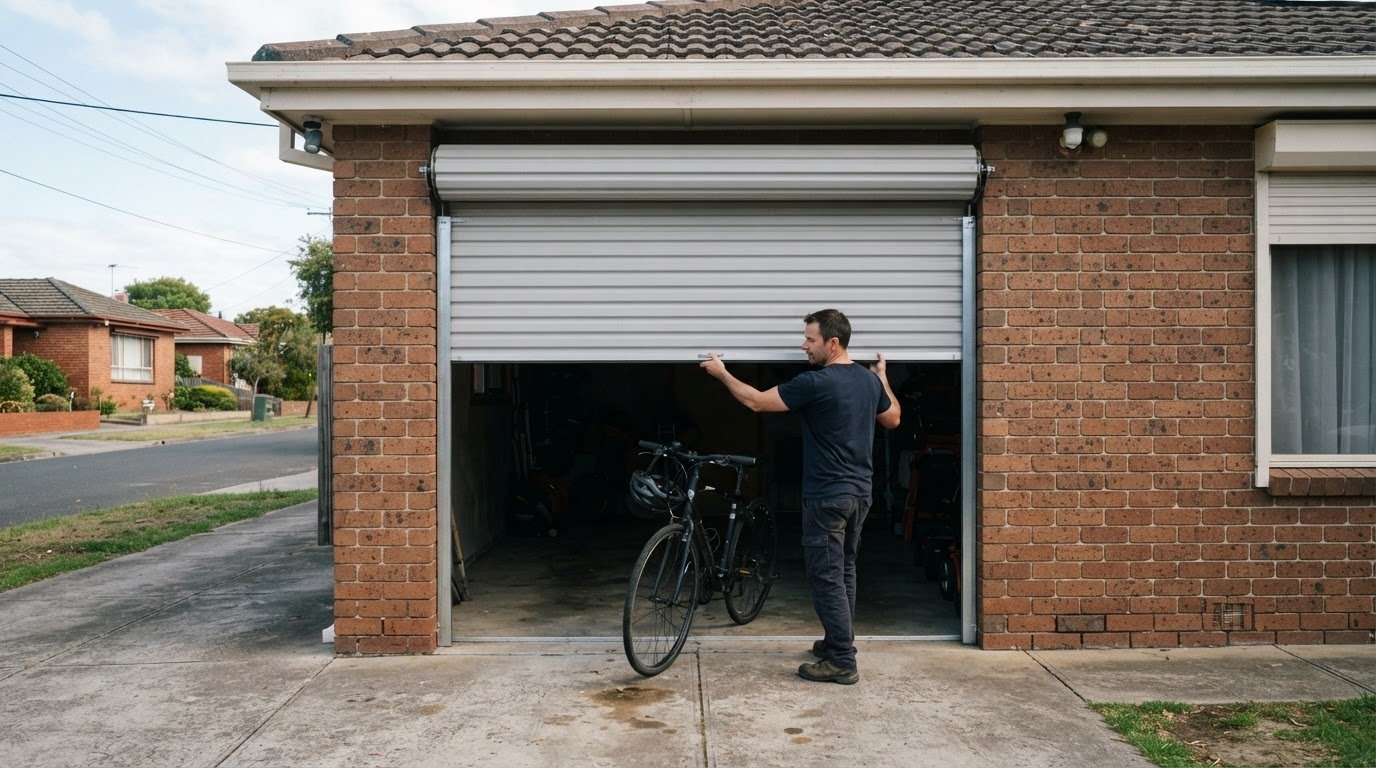
A roller door is made from horizontal corrugated steel sections that roll up above the garage opening. Its compact shape suits a standard garage, shed or simple façade, especially where a door that tracks along the ceiling would be inconvenient. The straightforward mechanism is described as requiring minimal maintenance, and roller doors are generally a practical, durable, budget-friendly option.
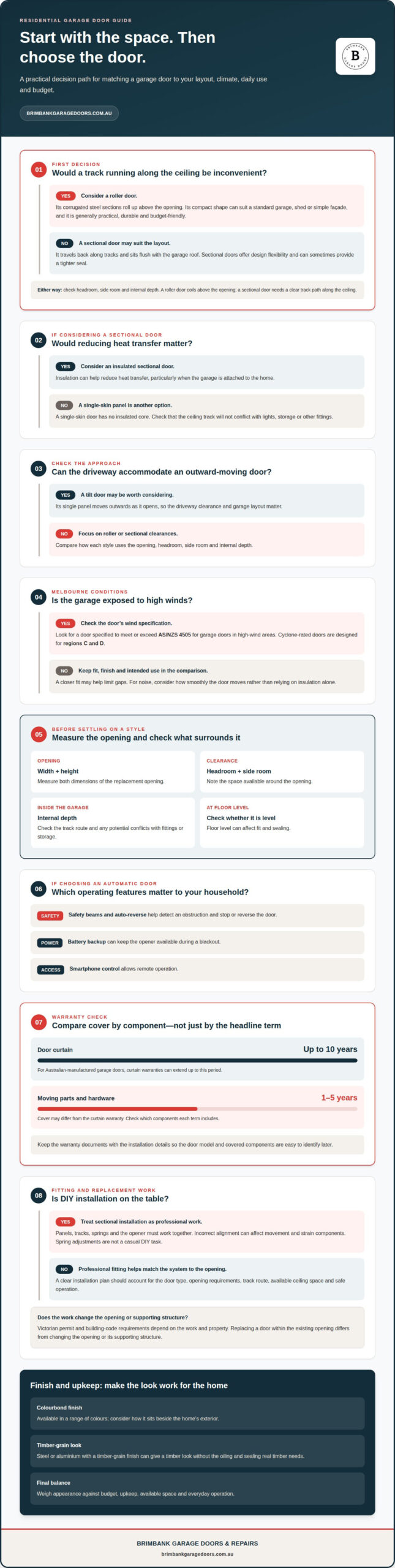
Compare the space each style needs. Roller doors coil above the opening, while sectional garage doors travel back along tracks and sit flush with the garage roof. Sectional doors have a sleek, modern appearance and can sometimes provide a tighter seal. Tilt doors are another option to consider; their single-panel design moves outwards as it opens, so the driveway clearance and garage layout matter. Specialty designs can suit a distinctive façade, but the material, finish and available space affect the choice.
For Melbourne homes, the street-facing finish can matter as much as the door mechanism. Colorbond finishes come in a range of colours, while steel or aluminium with a timber-grain finish can give a timber look without the oiling and sealing real timber needs. Consider how the door will sit beside your home’s exterior, then balance appearance against budget and upkeep.
To assess a replacement opening, measure its width and height, then note the available headroom, side room and internal depth. Check whether the floor is level, as this can affect fit and sealing. These details help establish whether a roller or sectional door suits the space.
For an automatic door, look for an opener with safety beams and auto-reverse. These features help detect an obstruction and stop or reverse the door. Battery backup can keep the opener available during a blackout, while smartphone control allows remote operation.
2. How long is the warranty on a typical Australian manufactured garage door?
Warranty cover depends on the door component. For Australian-manufactured garage doors, curtain warranties can extend up to 10 years, while moving parts and hardware may be covered for 1–5 years. These are different warranty periods, so identify which parts each term covers before comparing options. Keep the warranty documents with the installation details, so the door model and covered components are easy to identify later.
Australian manufacture can provide clear product and warranty information to weigh alongside fit, finish and intended use. Match a residential door to the opening and available space: tilt doors may suit openings with limited head height, while roller and sectional designs have different clearance needs. A custom finish can complement a modern home, but appearance should be considered alongside operation and warranty terms.
Victorian permit and building-code requirements depend on the work and property. Replacing a door within the existing opening is different from changing the opening or its supporting structure, so the proposed work matters.
For wind exposure, look for a door specified to meet or exceed AS/NZS 4505 for garage doors in high-wind areas. Cyclone-rated doors are designed for regions C and D. Insulated sectional doors can help reduce heat transfer, particularly when the garage is attached to the home; a closer fit may also help limit gaps. For noise, consider how the door moves and how smoothly it operates, rather than relying on insulation alone.
Residential garage doors differ from commercial and industrial systems in their application and scale. This section focuses on residential choices, where the opening, headroom, insulation and wind exposure guide selection. A replacement that changes the opening calls for a different assessment from a like-for-like installation. For help with a residential replacement, explore garage door installation options.
3. Can I install a garage door myself or do I need a professional?
A sectional door is best fitted by a professional, rather than treated as a simple DIY project. Its panels, tracks, springs and opener must work together for smooth operation. Incorrect alignment can affect movement and strain components. Professional installation helps match the system to the opening and available ceiling space, whether the door is insulated or single-skin.
Choose between an insulated and a single-skin panel based on how you use the garage. An insulated sectional door can help reduce heat transfer, which may matter when the garage adjoins living areas. A single-skin door has no insulated core. Sectional doors run back along the ceiling, so check that the track path won’t conflict with lights, storage or other fittings.
Design choices can suit different homes. You can customise colour, material and finish; a Hamptons-style sectional door may complement a home with that architectural look. The panel design still needs to suit the opening and ceiling layout. In a garage with limited space, check whether ceiling tracks will conflict with storage or equipment before choosing a sectional door.
When choosing a garage door installer in Melbourne, look for a clear explanation of the door type, opening requirements, installation and opener setup. The installer should account for the panels, track route and safe operation, rather than treating every garage as identical. A common mistake is choosing by appearance alone, then finding the design doesn’t fit the available space. Don’t treat spring adjustments as a casual DIY task.
Industrial doors serve a different purpose from residential sectional doors, so keep the comparison relevant to your home. For a typical residential garage, weigh insulation, panel finish, ceiling clearance and opener operation together. Professional installation brings these details into one plan, helping the door move correctly and suit the way your household uses the garage.
4. Choosing a door based on budget, climate and ease of operation
Choosing a new garage door in Melbourne means balancing upfront budget with climate and daily use. A standard single roller door sits at the budget end, while large custom, insulated or architectural doors cost more. Price depends on the door’s size, type, material, insulation and motor. Roller doors are typically more budget-friendly; sectional doors offer more insulation and design flexibility.
For homeowners choosing a new garage door in Melbourne, the local climate is another practical factor. An insulated sectional door can help keep heat out during summer and in during winter, particularly when the garage is attached to the home. Sectional doors often insulate better than roller doors, which may help maintain a steadier temperature during colder months. Regularly washing a Colorbond finish helps it stand up to Melbourne weather and coastal salt air.
Consider everyday operation, too. A motor can make opening and closing easier, especially when the garage is used often. Smooth movement also depends on a suitable fit and maintenance. Unusual noise or uneven travel can indicate that the door needs repair.
Finally, weigh appearance against upkeep. Steel or aluminium with a timber-grain finish offers a timber look without real timber’s oiling and sealing. Rank your priorities, such as budget, insulation, finish care and ease of use, then compare door types against them. If a roller door suits your needs, explore garage roller door options for your home.
Brimbank Garage Doors & Repairs
Brimbank Garage Doors & Repairs can help turn your shortlist into a practical choice for your home. For a replacement, the business supplies garage roller doors and provides installation, helping you consider style, fit and everyday use. If a door sticks, feels unbalanced or no longer operates smoothly, repairs can address the fault, while maintenance helps keep its components working as intended.
Brimbank Garage Doors & Repairs serves Melbourne’s western and northern suburbs, with residential garage door services. Share the door type you’re considering and what matters most, such as budget, insulation or ease of operation. This gives the conversation a useful starting point, whether you’re planning a replacement or dealing with an existing problem.
Contact Brimbank Garage Doors & Repairs to discuss your garage door needs.
Make your next step a considered one
Choosing a new garage door in Melbourne is an opportunity to improve everyday access for your household, not just replace the door. Before moving ahead, decide which priority matters most: a simple design, comfort near the garage or easier operation. A clear priority makes the next conversation practical and keeps the choice focused on your home.
Brimbank Garage Doors & Repairs provides installation, repairs and maintenance for planned replacements and existing door problems. Share what you need the door to do and what isn’t working now. That context helps shape a solution around how you use the garage, while keeping fit, appearance and everyday function in view.
Discuss your garage door needs with Brimbank Garage Doors & Repairs and take the next step with confidence.
Frequently Asked Questions
Can I install a garage door myself or do I need a professional?
Professional installation is the safer, more practical choice for a complete garage door system. A sectional door’s panels, tracks, springs and opener, for example, must align and operate together. A DIY installation can leave movement uneven or strain components. You can help by deciding how you use the garage and noting any access or clearance constraints.
How long is the warranty on a typical Australian manufactured garage door?
Warranty length varies by component: Australian-manufactured door curtain cover can extend up to 10 years, while moving parts and hardware may have cover for 1–5 years. Compare the written terms for the specific door, rather than treating one warranty period as cover for every part. For example, check separately what applies to the curtain, tracks and operating hardware.
Need Some Inspiration?
Start with the home’s façade and how the door will look from the street. Clean sectional panels may suit a modern home, while a roller door can work well with a simple façade. Consider colours that complement the exterior, then weigh appearance against practical needs such as insulation, available space and upkeep. A timber-grain finish gives a timber look without the oiling and sealing real timber needs.
What types of garage doors are available in Melbourne, Australia?
Common residential options include roller, sectional and tilt doors, each with different space and design requirements. Roller doors coil above the opening; sectional doors travel back along the garage ceiling; tilt doors move as one panel. Specialty designs can suit particular façades. Build your shortlist around the opening, available headroom and side room, desired finish, insulation needs and how you use the garage.
How much does a new garage door cost in Melbourne, including installation?
There isn’t one set cost for a new garage door and installation. The total depends on the door type, size, material, insulation, motor and replacement requirements. For instance, a standard single roller door sits at the budget end, while a large custom or insulated design costs more. A quote request gives the installer the project details needed to price the chosen door and work.
How do roller, sectional, tilt, and sliding garage doors compare?
Roller doors coil above the opening, while sectional doors run back along the ceiling and offer design flexibility. Tilt doors move as a single panel, so driveway clearance matters. Sliding doors move sideways along a track and need clear wall space beside the opening. Compare each door’s movement path with your garage layout before choosing a style.