
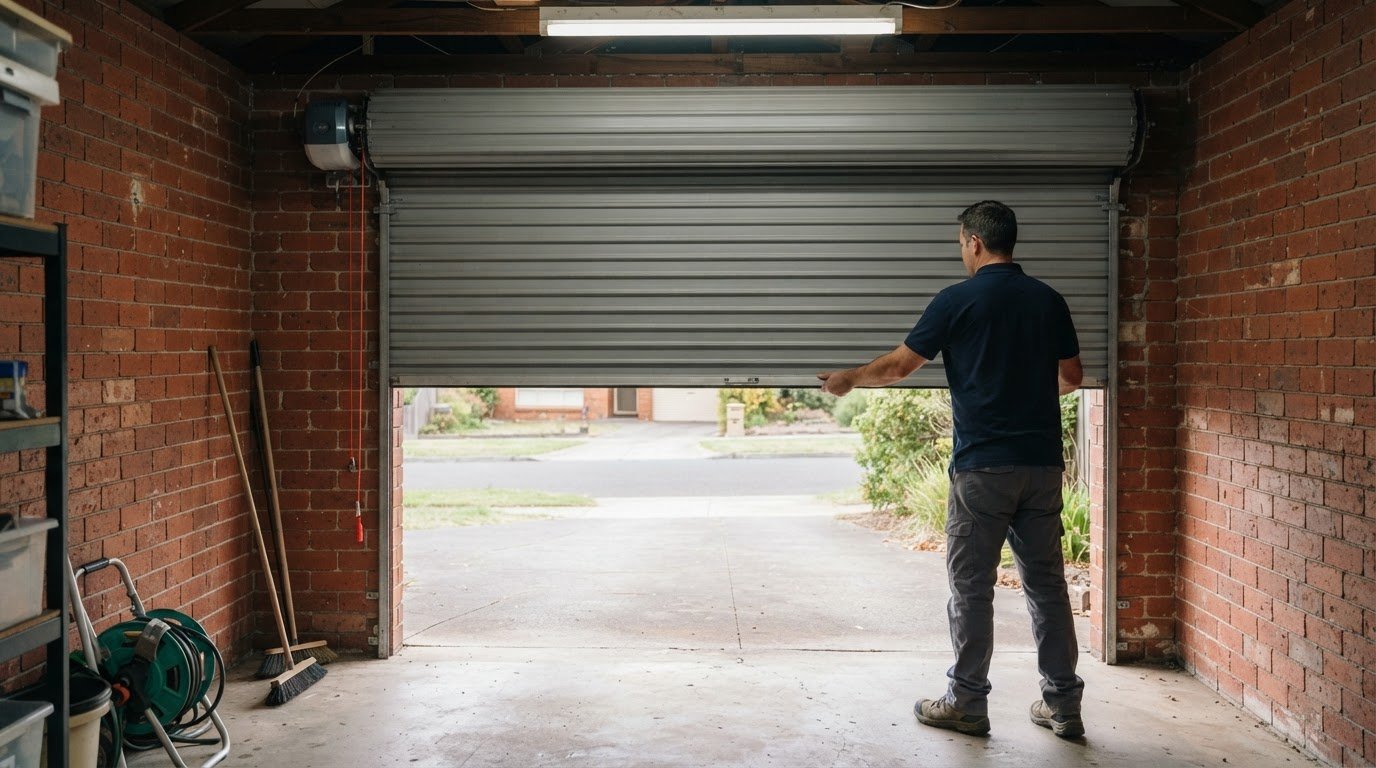
A roller door that’s off its tracks isn’t safe to lift by hand. To learn how to manually open a garage roller door, first check that it’s seated in its tracks, then use the opener’s manual release cord to disconnect the motor. If the door appears damaged, uneven or difficult to move, don’t force it.
A failed opener can be stressful, especially when you need to get your car out or secure the garage. You can often operate the door by hand once the opener is released, but keep control of its weight as you lift and lower it.
This guide explains how to release the opener, lift the door carefully and check that it tracks properly. It also covers reconnecting the motor when safe, and when to get professional help.
Key Takeaways
- Check the door is seated evenly in its tracks before attempting to move it by hand.
- Use the manual release cord to disconnect the opener, and be alert to the door’s weight.
- Lift and lower the door with control; stop if it jams, appears damaged or feels unusually heavy.
- Once the door is safely closed and power is available, re-engage the motor and test its operation.
Disconnecting the opener with the manual release cord
- Check the door before touching the release. Look for a visible gap between the roller and its guides, a crooked bottom edge, or damage to the door. A door that has slipped from its tracks may fall, so don’t release or lift it if it looks unstable. Keep people clear of the opening.
- Find the manual release cord. On an electric opener, it’s usually a red cord hanging directly above the door. A roller door motor is generally positioned at one side, unlike a sectional door motor in the ceiling centre. Knowing how to manually open a garage roller door starts with locating the correct release, not pulling an unfamiliar cable.
- Disengage the opener carefully. If the door is closed and stable, pull the release cord down firmly. On a B&D roller door, pull it until it clicks. This disconnects the motor so the door can move by hand. Don’t stand beneath an open or partly open door while releasing it.
- Release any separate door lock. The opener’s release cord disconnects the motor; it may not unlock a separate manual lock. If a key-operated lock or locking bar is engaged, use its normal key or handle to unlock it before lifting. Don’t force a locked door or pull harder on the release cord.
- Stop if the cord or door resists. A jammed door or release that won’t operate may indicate a mechanical problem. Don’t tug repeatedly, pry at the door, or reach through a gap. The cord is usually inside the garage, directly above the door, so it may not be accessible from outside. If you’re locked out, use an authorised entry method; don’t try to fish out the cord or force the panels. An open door may fall quickly if its springs are weak or broken, so keep clear and arrange professional help for a jam or failed release.
Lifting the roller door by hand
Yes, you can open an electrically operated roller door during a power outage if it is working properly and the opener has been disengaged. If the door is jammed, unusually heavy or uneven, or you suspect a spring fault, stop and arrange an assessment by a garage door professional. Don’t attempt repairs yourself or assume a particular licensing rule applies.
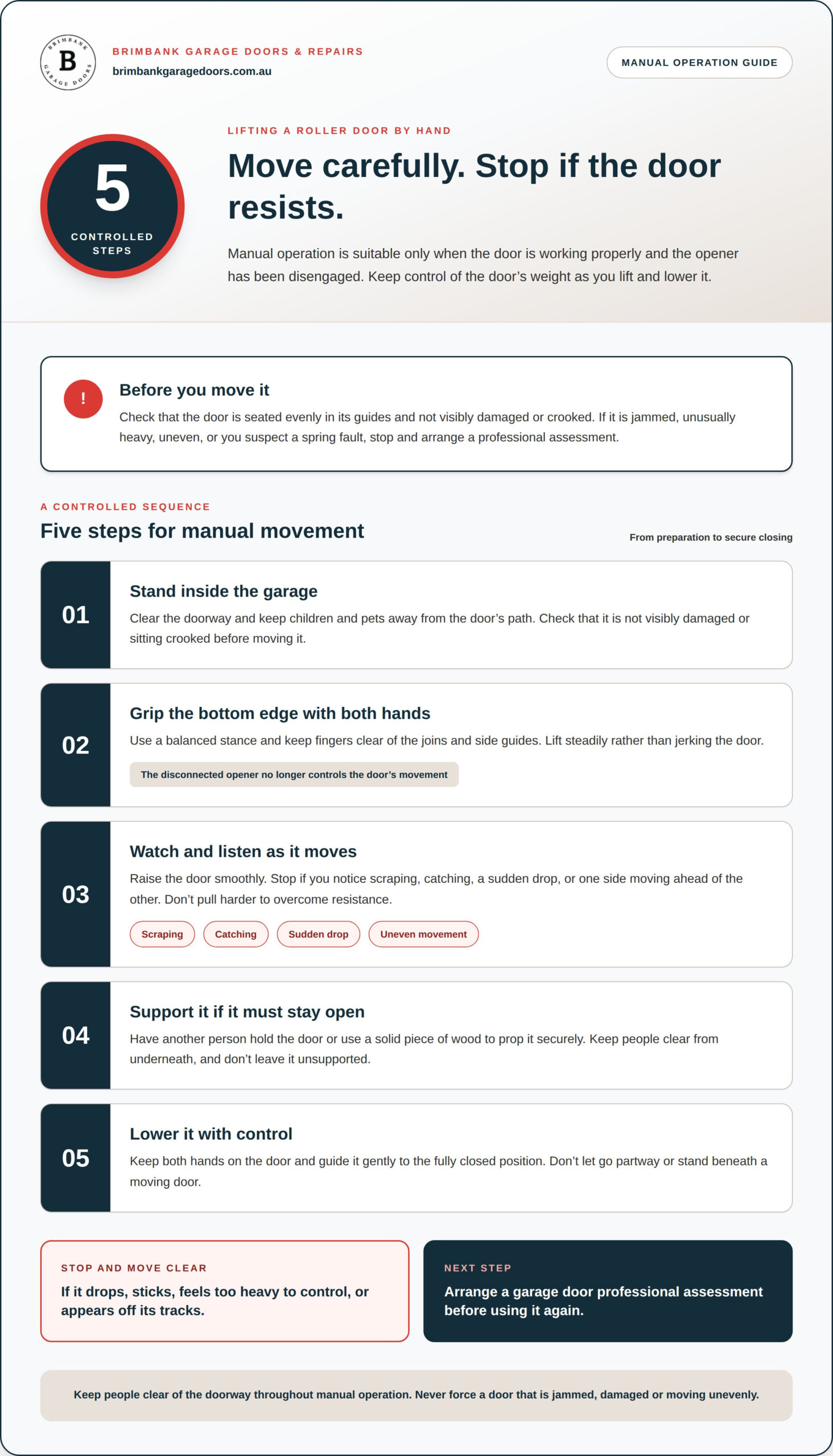
- Stand inside the garage. Manual operation during a power failure should be done from inside. Make sure the opening is clear, and keep children and pets away from the door’s path. Check that the door isn’t visibly damaged or sitting crooked before you move it.
- Grip the door with both hands. Hold its bottom edge firmly, using a balanced stance and keeping your fingers clear of the door’s joins and side guides. Lift steadily rather than jerking the door. The opener no longer supports or controls its movement once disconnected.
- Watch how it moves. Raise the door smoothly and stay alert for scraping, catching, sudden drops or one side moving ahead of the other. Stop if you notice any of these signs. Don’t try to overcome resistance by pulling harder, as the door may be damaged or unsafe.
- Keep the open door supported. If it needs to remain raised, have another person hold it or use a solid piece of wood to prop it open securely. Keep people clear from underneath. Don’t leave an unsupported door open while you move away or attend to something else.
- Lower it with control. Keep both hands on the door as it descends, guiding it gently into the closed position. Don’t let go partway or stand beneath a moving door. If it drops, sticks or feels too heavy to control, move clear and arrange professional assessment before using it again.
Checking that the garage door is on its tracks
- Inspect the door before moving it. Look at the roller door from inside the garage, then from a safe position outside. Check whether its bottom edge appears level and both sides sit evenly in their guides. A crooked edge, visible gap or hanging section can indicate the door isn’t seated correctly.
- Look along both side guides. Check for a section of door that has slipped out, bent metal, loose-looking parts or an obstruction in the guides. For example, a branch or other object near one side could interfere with the door’s movement. Don’t put your hands into a guide or try to straighten damaged parts.
- Notice how the door sits when closed. A door that meets the floor unevenly or leaves a larger gap on one side may be out of alignment. This visual check can help identify a problem before manual operation. Don’t pull the release cord or lift the door if it looks unstable or visibly off its tracks.
- Watch for signs of uneven movement. If the door is already partly open, look for one edge sitting higher than the other, or a side that appears to have moved away from its guide. Don’t stand beneath it or reach around it to inspect hidden parts. An off-track door may fall and cause injury.
- Keep the area clear during inspection. Move people, pets and loose objects away from the doorway. Check that there’s room for the door to travel without striking a vehicle, stored items or anything near its path. This makes it easier to spot an obstruction without trying to move the door.
- Stop if you find damage or misalignment. Don’t try to force the door back into its tracks, lift it to test its balance or operate the motor. Leave the door untouched and arrange assessment by a trained garage door professional. A visible fault can make manual movement unsafe, even if the door seems close to level.
How do you re-engage a roller door motor after manual operation?
- Close the door before reconnecting it. Keep hold of the roller door and guide it gently into the fully closed position. Don’t reconnect the motor while the door is raised or moving. A closed door is easier to secure before the opener is engaged again.
- Make sure the door is clear to operate. Check that the doorway is free of people, pets and objects. Look for visible damage or uneven positioning before using the opener. If the door appears jammed or off its tracks, don’t re-engage the motor or test it.
- Restore power when it’s safe. If a power failure caused the opener to stop, wait until power returns before testing the motor. Keep clear of the door’s path. The opener should only be used once the door is closed and the area is clear.
- Pull the red release cord down firmly. This re-engages the garage door motor after manual operation. Follow the opener’s normal operating instructions, and don’t force the cord if it resists. The release mechanism needs to reconnect before the motor can move the door.
- Test the opener from a safe position. Use the normal control to operate the door, watching its movement from outside the path. After power returns, check that the door opens and closes correctly. Stop the test if the door catches, moves unevenly or behaves unexpectedly.
- Check the connection if the motor runs without moving the door. Pull the manual release cord again to ensure the motor is engaged, then test only when the door is safely closed and the area is clear. If it still won’t operate correctly, don’t keep cycling the opener. Arrange professional garage door repairs to assess the mechanism.
Brimbank Garage Doors & Repairs: Garage Roller Doors Supply
Brimbank Garage Doors & Repairs can help when a roller door fault goes beyond a safe manual release or the door needs replacing. Its garage roller door supply service is suited to homeowners considering a replacement, while its repair service addresses common faults that prevent reliable operation.
If the door is damaged, keeps sticking or still won’t operate correctly after you reconnect the motor, don’t force it. A repair can address the fault, while installation is an option when you need a new door. Regular maintenance can also help keep the door operating smoothly.
For an unsafe, jammed or persistently unreliable door, contact Brimbank Garage Doors & Repairs to discuss the next step.
Keep your garage door ready for everyday use
Knowing how to manually open a garage roller door can help when the opener fails, but repeated trouble may point to an ongoing fault. A door that sticks, moves unevenly or won’t reconnect smoothly may need more than another manual reset. Don’t force it, as this can make it harder to operate safely.
Brimbank Garage Doors & Repairs provides garage door repairs when a fault affects normal operation, maintenance for ongoing care, and installation when a replacement is needed. The right next step depends on the fault and whether the door can be used safely.
For help deciding what your roller door needs, contact Brimbank Garage Doors & Repairs. A clear description of the fault is a useful place to start, and you can take the next step with confidence.
Frequently Asked Questions
How do you manually open a garage roller door in Australia step by step?
To learn how to manually open a garage roller door, first check that it appears stable and isn’t caught or visibly damaged. From inside the garage, use the opener’s release cord, then lift the door with both hands and steady pressure. During a power outage, manual operation is possible once the opener is disengaged. If the door shifts unevenly or resists, stop rather than forcing it.
How do you disengage the automatic opener on a roller garage door?
Use the manual release cord to disconnect the opener before moving the door by hand. On a B&D roller garage door, pulling the cord down until it clicks releases the opener. The cord operates the opener mechanism, not necessarily a separate door lock, so don’t assume the door is unlocked just because the motor has disengaged.
Where is the emergency release cord on a roller garage door?
The manual release cord is usually above the door, hanging from the electric opener. On a roller door, the motor is generally mounted at one side, so the cord may be near that part of the mechanism. It is normally accessed from inside the garage. If you’re locked out, don’t try to reach or pull it from outside.
What safety risks should you check before manually opening a roller garage door?
Check whether the door sits crooked, has come away from a guide or shows visible damage. An off-track door may fall and cause injury; weak or broken springs can also make an open door drop quickly. Keep people clear, and don’t test a door that feels unusually heavy, catches or moves unevenly. Stop and arrange a professional assessment.