
A 20-year-old garage door isn’t automatically due for replacement: a well-maintained door can typically last 15-30 years, and age alone doesn’t decide whether it’s worth repairing. The answer to whether it’s worth repairing a 20-year-old garage door depends on its condition and the fault. If the damage is limited to a repairable part and the rest of the door is sound, a repair may extend its useful life; widespread wear or recurring problems can make replacement more practical.
It’s understandable to weigh the safety and reliability of an older door against the disruption of replacing it. The key is to look beyond its age and distinguish a minor fault from signs that the door, opener or other components are nearing the end of their useful life.
This guide explains which problems may suit a repair, when replacement deserves consideration and how to compare the options. You’ll have a clearer basis for deciding what makes sense for your home in Melbourne’s western suburbs.
Key Takeaways
- A 20-year-old garage door may still be worth repairing; its condition and the specific fault matter more than age alone.
- Routine attention to rollers, tracks, hinges and weatherstripping can help spot developing problems before they affect how the door operates.
- Repairs are more suitable when damage is limited to a component and the rest of the door remains in sound condition.
- When weighing replacement, compare the repair with a proposal that clearly sets out the door, installation work and any equipment to be retained.
2025 Guide to Garage Door Replacement and Repair: Repair or Replace?
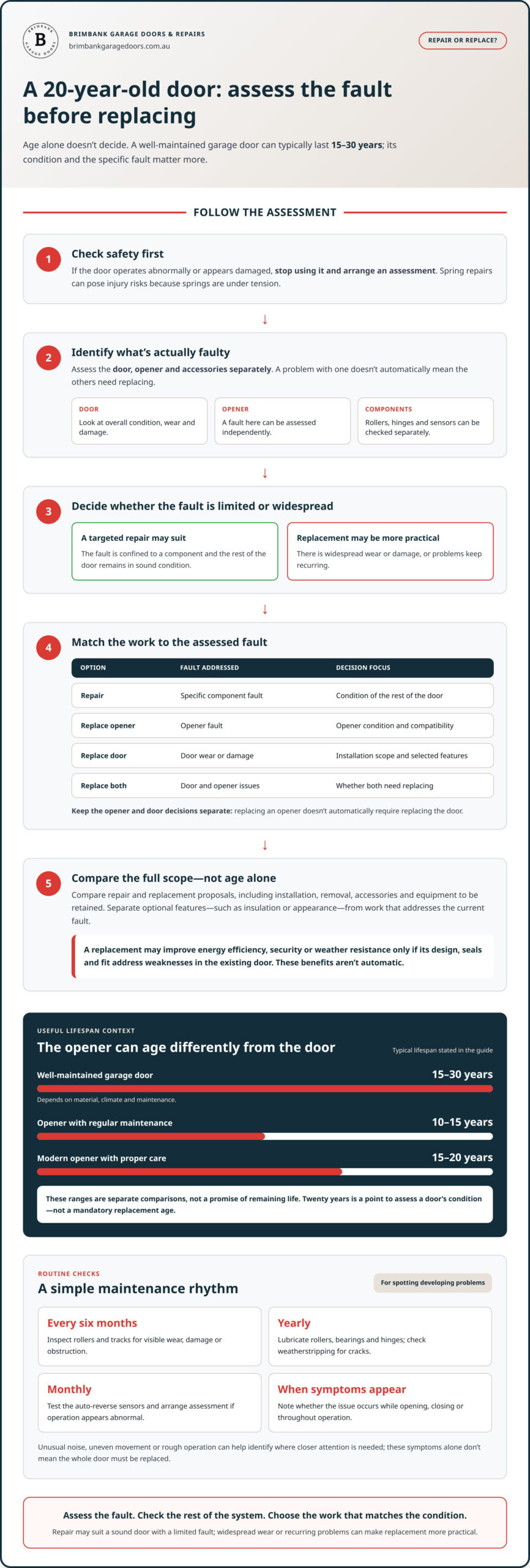
A 20-year-old garage door isn’t automatically due for replacement. Whether it is worth repairing a 20 year old garage door depends on the condition of the door and the fault. Assess the door, opener and accessories separately, because a problem with one doesn’t automatically mean all need replacing.
Garage lifespan and repair decisions
A well-maintained garage door typically lasts 15-30 years, depending on its material, climate and maintenance. Twenty years is a useful point to assess its condition, not a mandatory replacement age. If the fault is limited to a component and the rest of the door remains sound, repair may be suitable. Widespread damage or recurring faults can make replacement more practical.
If the door operates abnormally or appears damaged, stop using it and arrange an assessment. Springs are under tension, so spring repairs can pose injury risks.
Opener lifespan compared with door lifespan
Openers generally last 10-15 years with regular maintenance; modern openers may last 15-20 years with proper care. The opener can therefore need attention before the door, or remain functional after the door has aged. Assess them separately: replacing an opener doesn’t automatically require replacing the door.
Replacement doors versus older models
A replacement may improve energy efficiency, security or weather resistance if its design, seals and fit address weaknesses in the existing door. These benefits aren’t automatic. Compare the new door’s features and installation with the existing door’s actual condition rather than assuming age alone guarantees an improvement.
In Australia, a door’s age alone doesn’t determine whether it should be repaired or replaced. The requirements for installation and repair depend on the work being done, not simply how old the door is.
Replacement costs in Australia
Compare repair and replacement proposals by their full scope, including installation, removal, accessories and existing equipment to be retained. Optional features, such as insulation or a particular appearance, should be separated from work addressing the current fault. The practical question is whether it is worth repairing a 20 year old garage door given its condition and the proposed work.
| Option | Fault addressed | Door retained? | Decision focus |
|---|---|---|---|
| Repair | Specific component fault | Yes | Condition beyond the fault |
| Replace opener | Opener fault | Yes | Opener condition and compatibility |
| Replace door | Door wear or damage | No | Installation scope and selected features |
| Replace both | Door and opener issues | No | Whether both need replacement |
Choose the option that addresses the assessed fault, and consider the opener separately from the door.
Maintenance and servicing to prevent problems
A consistent maintenance routine can reveal wear before it affects a garage door’s operation. For an older door, attention to rollers, tracks, hinges, weatherstripping and safety sensors can help identify changes that need assessment.
- Every six months: inspect the rollers and tracks for visible wear, damage or obstruction. Changes in movement or unusual noise can help identify where closer attention is needed.
- Yearly: lubricate the rollers, bearings and hinges. These moving parts work together during operation, so keeping them maintained supports smoother movement.
- Yearly: check weatherstripping for cracks. Damaged seals can affect how well the door closes against the surrounding frame.
- Monthly: test the auto-reverse sensors. They are a safety feature, so confirm they respond as intended and arrange assessment if operation appears abnormal.
These intervals offer a practical routine, not a substitute for responding to a fault. If a door starts moving unevenly, makes unfamiliar noises or appears damaged, stop using it and arrange an assessment. Take particular care if the issue involves a spring or another tensioned component.
During maintenance, assess the condition of these parts alongside the door’s operation. Rough movement, for example, may relate to rollers or tracks; it doesn’t by itself mean the entire door needs replacing. First identify the fault and its scope, then decide whether maintenance or repair can address it.
For an older door, note when a symptom occurs to help describe the issue clearly. Record whether it happens while opening, closing or throughout operation. If several components show wear, a broader assessment can help distinguish a specific repair from a pattern affecting reliable use.
Regular garage door maintenance can help assess wear and keep the door’s operation in focus, rather than relying on age alone.
When minor garage door damage is suitable for repair
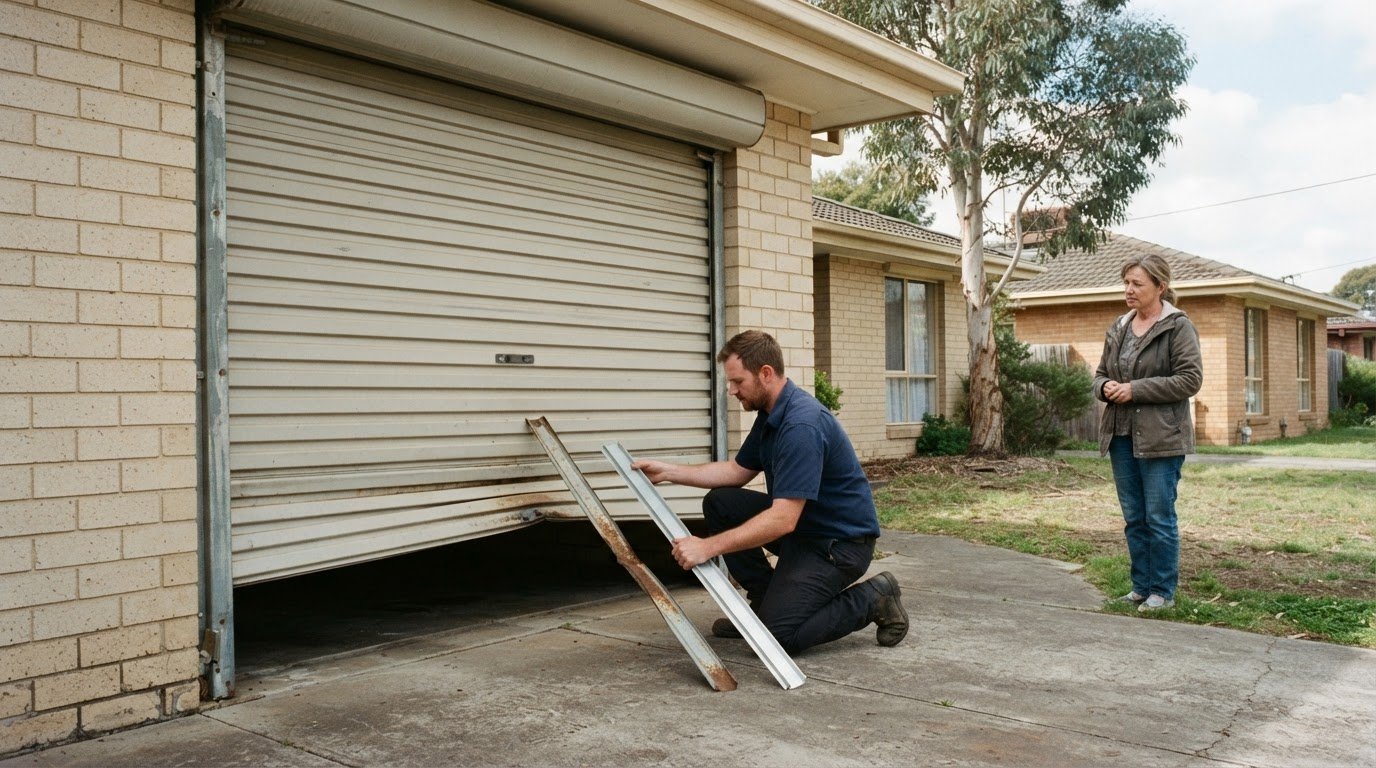
Repair can suit a 20-year-old garage door when the fault is confined to one component and the rest remains in sound condition. Rollers, hinges and safety sensors are examples of parts that can be assessed separately. A fault in one of these parts doesn’t automatically mean the whole door needs replacing.
Consider how the problem affects the door’s operation. A sensor issue, for example, differs from damage to the door itself. An assessment should identify the fault, the proposed work and what falls outside its scope. This helps distinguish a targeted fix from a broader problem.
- Rollers or hinges: assess whether the issue is limited to these moving components or also affects the door’s movement.
- Safety sensors: assess the sensor fault separately from the door and opener.
- Springs: consider their age and use as well as visible condition. Springs are rated for 10,000 cycles, or 6 to 10 years of typical use, before replacement is due.
- Multiple faults: consider whether several worn components point to a wider condition issue.
Spring work needs particular care. Springs hold tension, and attempting a repair yourself can cause injury. If the door operates abnormally or appears damaged, stop using it and arrange an assessment rather than testing it repeatedly.
Repair is more likely to make sense when the work addresses a specific fault and the other components remain serviceable. Consider replacement if damage is widespread, problems keep returning or the repair leaves significant concerns unresolved. A previous repair invoice cannot show which part will fail next or how long a replacement installation will last.
For a clear decision, assess the door, opener and accessories separately. An opener fault may call for different work from a damaged door panel or worn spring. The proposed scope should make clear what the repair addresses, so you can judge whether it suits the door’s overall condition.
How much does it cost to replace a garage door in Australia?
There isn’t one fixed price for replacing a garage door in Australia. The price depends on the door type, size and replacement requirements, and is provided in a quote. A straightforward replacement and a project involving additional site work have different scopes, so compare the work included rather than relying on a headline figure.
Compare the repair proposal with the replacement proposal. A repair quote should identify the assessed fault, proposed work and what falls outside the repair. A replacement proposal should specify the door, selected options, installation scope and any existing equipment to be retained. This makes it easier to compare like with like.
Before weighing the options, establish whether the replacement figure includes:
- Installation and removal of the existing door.
- Accessories required for the selected door or opener.
- Attendance or assessment charges.
- Any site work arranged separately.
- Whether the existing opener and other equipment will remain.
Door type, size and design can affect the project scope. List selected appearances or optional features separately from the work needed to address the current fault. This helps show which items are essential to the replacement and which are additional choices.
For an older door, compare the repair quote with a replacement proposal that includes installation and relevant work. Replacing an opener is not the same job as replacing both the opener and the door. If a repair addresses one fault while the rest of the door remains serviceable, the scopes differ; if a proposal replaces several components, make sure each is identified.
To weigh replacement for your home, request a garage door installation quote with the proposed door and installation scope clearly set out. A clear breakdown helps you assess the work against the repair option and avoid comparing different project scopes.
Brimbank Garage Doors & Repairs
Brimbank Garage Doors & Repairs can assess your door’s condition and the fault affecting it, then help you weigh repair against replacement. The assessment clarifies whether a targeted repair can address the problem or whether a new installation is the more practical option.
For a 20-year-old door, the assessment can consider its moving components, opener and overall operation separately. That distinction helps clarify the proposed work and what it will address. If maintenance may help keep the door functioning, that can be considered alongside repair or replacement. Roller door supply is also available where a new door is the right direction.
Brimbank Garage Doors & Repairs serves Melbourne’s western suburbs. If your door is operating abnormally or appears damaged, stop using it and arrange an assessment. You’re welcome to contact Brimbank Garage Doors & Repairs to discuss your garage door and the options that may suit its condition.
Make a clear plan for your garage door
Whether it’s worth repairing a 20-year-old garage door comes down to the condition of its parts and the work needed to keep it operating safely. Your next step is to turn the symptoms into a clear decision: describe what’s happening, when it occurs and whether the same fault has returned. That gives the assessment a practical starting point.
Brimbank Garage Doors & Repairs provides garage door repairs, maintenance and installation, so the next step can match your door’s needs. A repair may address a specific fault; maintenance can focus on operation and wear; installation is an option when replacement is the better fit. Get a free measure and quote to understand the work involved and choose a way forward for your home.
Share what you’ve noticed and discuss the options with Brimbank Garage Doors & Repairs. A straightforward conversation can help you move towards a well-informed decision and greater peace of mind.
Frequently Asked Questions
What is the average lifespan of a garage door?
A well-maintained garage door typically lasts 15-30 years, depending on its material, climate and maintenance. That range is a guide, not a fixed expiry date. For example, two doors of the same age may be in different condition if one has had regular upkeep and the other has faced more wear. Look at the door’s current condition and operation alongside its age.
What is the average lifespan of a garage door in Australia?
In Australia, a well-maintained garage door typically lasts 15-30 years, with material, local climate and maintenance influencing its service life. There isn’t a separate age limit that automatically makes a door due for replacement. In Melbourne, consider how the door has held up in its setting and whether it operates reliably. Age is useful context, but the door’s actual condition matters.
Which garage door faults are worth repairing, and which require replacement?
A fault affecting one replaceable component may suit repair if the rest of the door remains serviceable. For example, a sensor problem differs from damage across the door itself. Consider replacement when damage is widespread, faults recur or the proposed repair leaves other significant issues unresolved. An assessment should spell out the fault and proposed work.
How much do common garage door parts and repairs cost, including springs, cables, tracks and motors?
There isn’t one fixed price for spring, cable, track or motor repairs. The cost depends on the fault, parts required and work involved: a motor issue, for example, differs from a damaged track or spring. Brimbank Garage Doors & Repairs provides a free quote based on the specific job, with the fault and repair scope clearly identified.
How can I compare the cost of repairing a 20-year-old garage door with replacing it?
Compare proposals with the same scope: a repair should identify the fault and its limits, while a replacement should cover the door, installation and relevant work. Note whether removal, accessories and existing equipment are included or retained. Keep optional features separate from work addressing the current fault. This makes it easier to judge a repair against a complete replacement proposal rather than comparing mismatched totals.