
The most dangerous DIY garage door repair mistakes involve spring work, forcing misaligned tracks, handling damaged cables and ignoring unusual movement or noise. A garage door can weigh a couple of hundred kilos, while springs and cables hold substantial tension. A repair error can cause serious injury or further damage.
It’s understandable to think a visible fault might be straightforward to fix. But parts that seem simple to adjust can affect the door’s balance and safe operation. This guide explains why spring work, track alignment and damaged cables are best left to a professional, and what unusual sounds or movements may signal.
You’ll learn when to stop using the door, why improvised repairs can make the problem worse, and how to recognise signs that need attention. The aim is to help you make a calm, informed decision and get the door operating safely again.
Key Takeaways
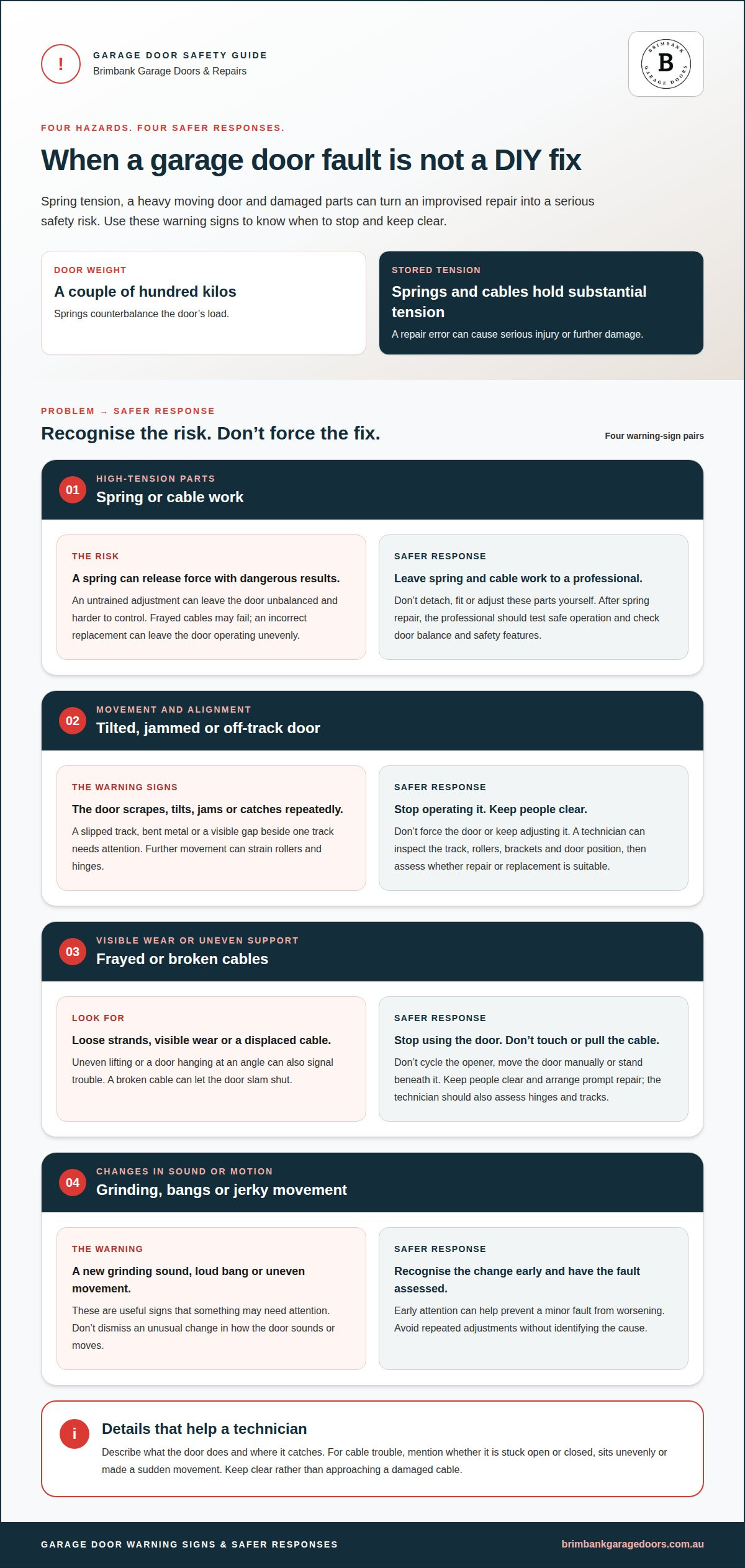
- Leave spring adjustments and replacements to a trained technician, as a mistake can release stored tension with dangerous force.
- A door that tilts, jams or slips from its track needs professional attention before further movement causes more damage.
- Frayed or broken cables can affect the door’s support and operation, so don’t keep using the door as if nothing is wrong.
- Grinding, loud bangs or jerky movement are useful warning signs; recognising them early can help prevent a minor fault from worsening.
1. Risks of replacing or adjusting springs
A garage door can weigh a couple of hundred kilos, and its springs counterbalance that load. Springs hold substantial tension. If one breaks during a repair, the released force can send pieces flying and cause severe injury. Adjusting a spring without suitable training and tools can also leave the door unbalanced and harder to control.
Cables are also under tension. A frayed cable may be close to failing, and replacing one means working near the door’s heavy moving parts. Don’t try to detach or fit cables yourself. A cable failure can affect how the door is supported, while an incorrect replacement can leave it operating unevenly.
Internal wiring adds another risk, particularly around an automatic opener. A fault may involve electrical components as well as the door mechanism. Avoid opening the motor housing or changing wiring to get a stuck door moving. A professional can assess whether the problem is mechanical, electrical or both.
Australian requirements for garage doors and automatic openers depend on the equipment and work involved. Don’t assume one standard covers every repair. For a specific job, have the relevant requirements identified before work begins.
When choosing a repair company, ask for relevant licence details and evidence of current insurance. Confirm the licence details with the appropriate state regulator before work starts.
If a door won’t open or close, a professional can inspect its movement, springs, cables, tracks and opener to identify the fault. They can then recommend a repair suited to the cause, rather than forcing the door through its cycle.
Common opener mistakes include fitting the wrong parts, forcing a door with a mechanical fault, or making repeated adjustments without identifying the cause. These can worsen damage to the door or opener.
After a spring repair, the professional should test that the door opens and closes safely. A maintenance check can also assess door balance and safety features, as well as cables and other moving parts.
2. When to call a professional for track alignment
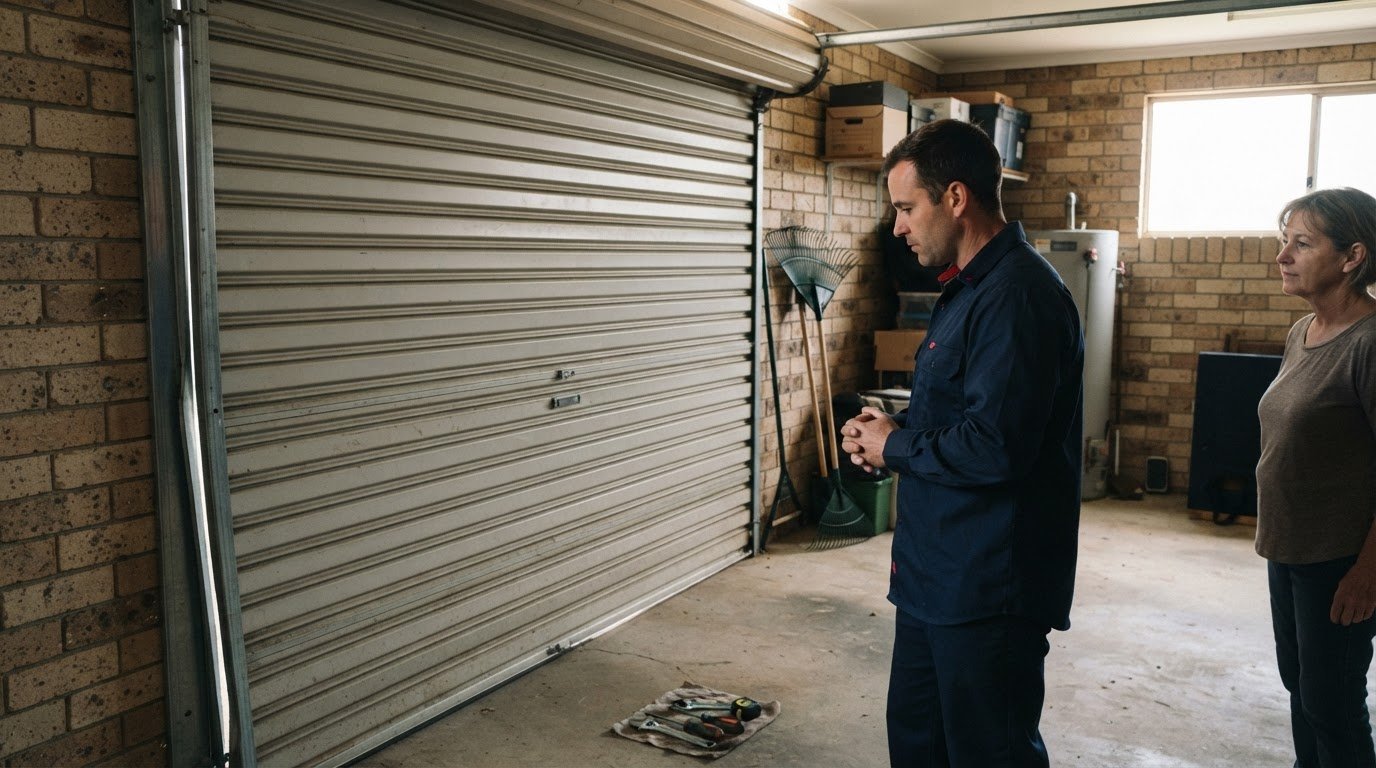
A misaligned track can make a garage door jam, scrape or tilt to one side. If the door has slipped off its track or the metal looks bent, stop operating it and arrange a professional inspection. Further movement can strain rollers and hinges, while forcing the door may worsen the damage. Keep people clear of the affected area until it’s assessed.
A technician can assess whether the track, rollers, brackets or door position is causing the fault. Track alignment involves more than shifting metal into place: the door’s weight and spring tension affect how it moves through the tracks. An adjustment in the wrong place can cause uneven travel or stop the door from closing properly. If a repair attempt has made operation worse, stop rather than continuing to adjust it.
Professional repair is appropriate when the door repeatedly jams, catches at the same point or leaves a visible gap beside one track. A technician can inspect the full travel path and identify whether debris, worn rollers or damaged components are contributing. Maintenance checks can help spot wear and alignment issues before they disrupt everyday operation.
Repair or replacement depends on the door’s condition and the fault. A localised track problem may be repairable if the door and its supporting parts remain in sound condition. Replacement may be more suitable when damage affects the door itself or several connected components. The deciding factors are the extent of damage, safe operation and whether a repair can restore reliable movement.
For a door that’s tilted, off its tracks or repeatedly sticking, a professional garage door repair can identify the cause and prevent further strain. Describe what the door does, where it catches and whether the tracks appear bent; those details help focus the inspection. Don’t try to force the door through a jam.
3. Frayed or broken cables
A frayed cable is a serious warning, not a minor cosmetic fault. Look for loose strands, visible wear or a cable that appears displaced, but don’t touch or pull it. Garage door cables work under high tension, and handling a damaged one can be dangerous. A broken cable can also let the door slam shut, potentially trapping someone inside.
Cable trouble may show up in the door’s movement before a cable fully breaks. One side may lift unevenly, for example, or the door may appear to hang at an angle. These signs don’t identify the fault by themselves, but they do mean the door needs professional attention. Continuing to operate it can put extra stress on the hinges and track.
Don’t try to replace a cable or keep cycling the opener to see whether the door will move. A damaged cable can affect how the door is supported, and the remaining tension makes hands-on repairs hazardous. Even if the door is still open, avoid standing beneath it or trying to move it manually. Keep people clear of the doorway.
If a cable has snapped or you can see fraying, stop using the door and arrange prompt repair. Tell the technician whether the door is stuck open or closed, sits unevenly, or made a sudden movement. These details help explain what happened without requiring you to approach the damaged cable.
A professional can assess cable damage alongside the door’s other moving parts, including hinges and tracks. This matters because worn cables can put extra strain on both. After replacing a damaged cable, the technician should check that the door operates safely and evenly. A quick replacement without assessing related strain may leave the original operating problem unresolved.
Treat visible cable wear as a repair priority, not something to monitor over time. Frayed or broken garage door cables need prompt attention, since leaving worn cables in place can put additional stress on the hinges and track. Keeping the door out of use until it has been assessed avoids relying on a system with a cable problem.
4. Ignoring unusual noises or movements
A new grinding sound, sudden bang or uneven movement is a reason to stop and seek a professional assessment. These changes can signal wear or a developing fault, even if the door still opens. Continuing to operate it may worsen damage or create an injury risk, particularly if the door sticks or shifts unexpectedly. Note when the sound occurs, such as during opening, closing or while the motor runs.
For example, worn rollers can grind against the rails, creating noise and friction as the door moves. Vibration during normal operation can also loosen bolts and screws over time. A technician can inspect the rollers, rails and fasteners to find the cause, rather than treating the sound alone. The right repair depends on which component is worn or loose.
Jerky movement, a door that stops partway or a loud bang can indicate a failing spring. These symptoms don’t prove the spring is the only problem, so avoid trying to correct the movement yourself. A professional can assess how the door travels and inspect its connected parts before deciding what needs repair.
Unusual motor sounds need attention too. A motor that strains, runs without moving the door or stops unexpectedly may point to an opener fault or resistance in the door mechanism. Opener repairs can involve electrical components and moving parts, so repeated operation or improvised adjustments can make the fault worse.
When arranging an inspection, describe the sound, where the door stops and whether its movement has changed. If the door has made a loud bang or now moves unevenly, keep people clear and don’t keep cycling it. After repairs, a technician can check the door’s operation, hardware and safety features.
If a new noise or movement points to a fault, arrange professional garage door repairs before continued use adds strain to the mechanism.
Address unusual motor sounds, loud noises and abnormal door movements rather than ignoring them. Jerky movement, a stuck door or a loud bang can signal failing springs.
Brimbank Garage Doors & Repairs
Brimbank Garage Doors & Repairs helps homeowners across Melbourne’s western suburbs address garage door faults safely. If a spring, cable, track or opener problem is affecting how your door operates, professional assessment can identify the cause and the work needed to restore reliable operation.
Brimbank’s garage door repair and maintenance services address common malfunctions and help identify wear in connected components. If damage is extensive, garage door installation may be the more suitable next step. The right approach depends on the door’s condition and the fault, not on forcing a quick DIY fix.
Describe what you’ve noticed, such as unusual noises, uneven movement or a door that won’t open or close. Contact Brimbank Garage Doors & Repairs to discuss your garage door concern.
Make the next step a safer one
Choosing professional help doesn’t mean every fault calls for a major repair. A careful assessment can clarify what needs attention and whether a targeted fix is suitable. That’s a more useful starting point than trying another adjustment when the cause remains unclear.
Keep a brief note of what changed and when you first noticed it. This gives the technician helpful context and helps focus the conversation on the door’s condition and the right way forward. Don’t treat a temporary improvement as proof that the problem has gone away. Reliable operation matters more than a quick workaround.
DIY garage door repair mistakes can turn a manageable fault into a more difficult one. Trust your judgement when a repair involves parts you can’t safely assess. Take the next step with a clear account of the issue and a professional who can explain the repair options in plain language.
Speak with Brimbank Garage Doors & Repairs about the concern and find a practical path towards a properly working garage door.
Frequently Asked Questions
What are the most common DIY garage door repair mistakes?
Common mistakes include forcing a jammed door, adjusting tracks without identifying why the door is misaligned, and fitting parts that don’t match the fault. Another is replacing an opener when resistance elsewhere in the door may be the cause. These shortcuts can turn a local issue into damage affecting several connected components. Stop if the repair doesn’t address the underlying problem.
Why is adjusting or replacing garage door springs dangerous?
Garage door springs store force that helps counterbalance the door, so mishandling them can release that force suddenly. A spring may move unexpectedly during adjustment or replacement, and the door can become difficult to control if its balance changes. This work calls for appropriate tools and training. It isn’t suitable for an improvised repair or a substitute tool.