
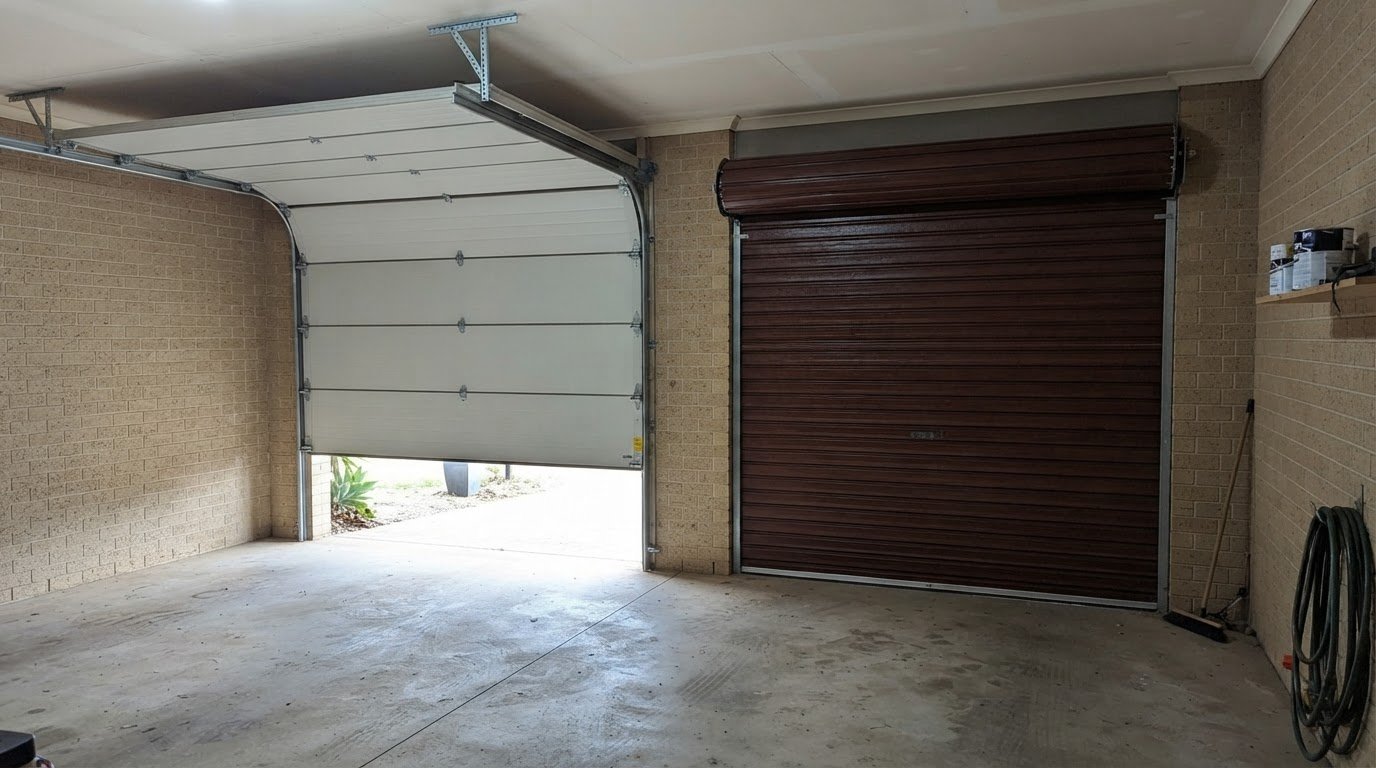

The best-insulated option isn’t automatically the best fit for every garage. If you’re deciding what type of garage door is best for your home, consider a sectional door when insulation, temperature comfort or design flexibility matters most. A roller door may suit you better if you want a compact door that leaves ceiling space clear. Both can provide strong protection, but their security features differ.
Appearance is only one factor: the door also needs to suit your garage layout and how you use the space. This guide compares sectional and roller doors for insulation, security, materials and style, including what to consider if your garage is attached to your home or doubles as a workshop. Use your space and design priorities to narrow the choice and focus on features that matter in your home.
Key Takeaways
- Compare each door’s insulation and security features with how you use your garage, especially if it’s attached to your home or doubles as a workshop.
- Weigh the finish against upkeep: steel is low maintenance, while timber needs more care as it weathers.
- Consider the space around and above the opening. The garage layout can narrow your options and help make the choice clearer.
- Balance appearance, climate and practical priorities to find a door that suits both your home’s style and your everyday needs.
Sectional garage door construction, security and insulation
Sectional garage doors are made from horizontal panels that lift vertically, then travel along tracks beneath the ceiling. Their close-fitting design can seal well, and insulated panels can help regulate temperature and reduce noise. This can matter in a Melbourne home when the garage is attached or used as a workshop. Sectional doors also offer design flexibility, including flat-panel styles for modern homes.
Roller doors use a single steel curtain that rolls into a compact drum above the opening. They usually cost less upfront than sectional doors and have fewer moving parts, which can make maintenance more straightforward. Tilt doors work differently: one panel moves outwards before lifting into place. Custom doors can be made for non-standard widths and bespoke finishes.
For Australian homes, prioritise an opener with obstruction detection and safety features. Have a qualified technician install and test it. The door type alone doesn’t tell you which safety functions the opener has, so compare those separately from the door’s construction.
Automation costs vary with the opener and features selected. Compare safety beams, auto-reverse, battery backup and optional smartphone control. For the door itself, size, type, material, insulation and motor all affect cost. Roller doors are typically more affordable, while sectional doors may cost more upfront.
| Door type | Construction and space | Insulation and design | Budget and upkeep |
|---|---|---|---|
| Sectional | Panels run back beneath the ceiling | Insulation options; broad design choice | May cost more upfront |
| Roller | Steel curtain coils above opening | Usually lacks insulation; compact design | Typically more affordable; fewer moving parts |
| Tilt | Single panel moves outward, then lifts | Can be clad to match the home | Depends on specification |
| Custom | Can suit non-standard widths | Bespoke finishes available | Depends on specification |
Choose a sectional door for insulation options and design choice, or a roller door when compact storage and a tighter budget matter most.
Garage door materials, colours and finishes
Material affects upkeep and appearance, while the finish shapes how the door looks against your home. For example, Colorbond steel offers a broad colour choice and a low-maintenance surface.
Garage door materials
Steel, including Colorbond steel, is described as strong and low maintenance, with minimal cleaning. Timber offers a different look, but needs more upkeep because it is more likely to weather over time. A sectional door can also have a timber-look finish, giving the appearance without being made of timber. Compare the actual material with the look you want, rather than judging by surface appearance alone.
Colours and finishes
Colorbond steel garage doors come in a wide range of colours, while sectional doors can have smooth, ribbed, timber-look or powder-coated finishes. Flat panels or glass features can complement modern architecture; timber-look panels can bring warmth to a classic facade. Consider the door alongside your home’s exterior colours and other visible finishes. A cohesive combination can help the large garage opening feel integrated with the overall design.
Materials for Australian conditions
In coastal areas, regular washing of Colorbond finishes can help them withstand salt exposure. Steel is a practical, low-maintenance choice, while timber needs more attention as it weathers. These material characteristics don’t establish performance in every condition. In particular, don’t treat a colour or finish as evidence of bushfire suitability. Heat, rain and bushfire performance depend on product-specific properties, not appearance alone.
Separate visual preference from practical performance: compare the material’s upkeep, the finish you want and any relevant exposure at your property. This makes it easier to choose a suitable style without assuming every finish works in every Australian setting.
Rolling door insulation and design limitations
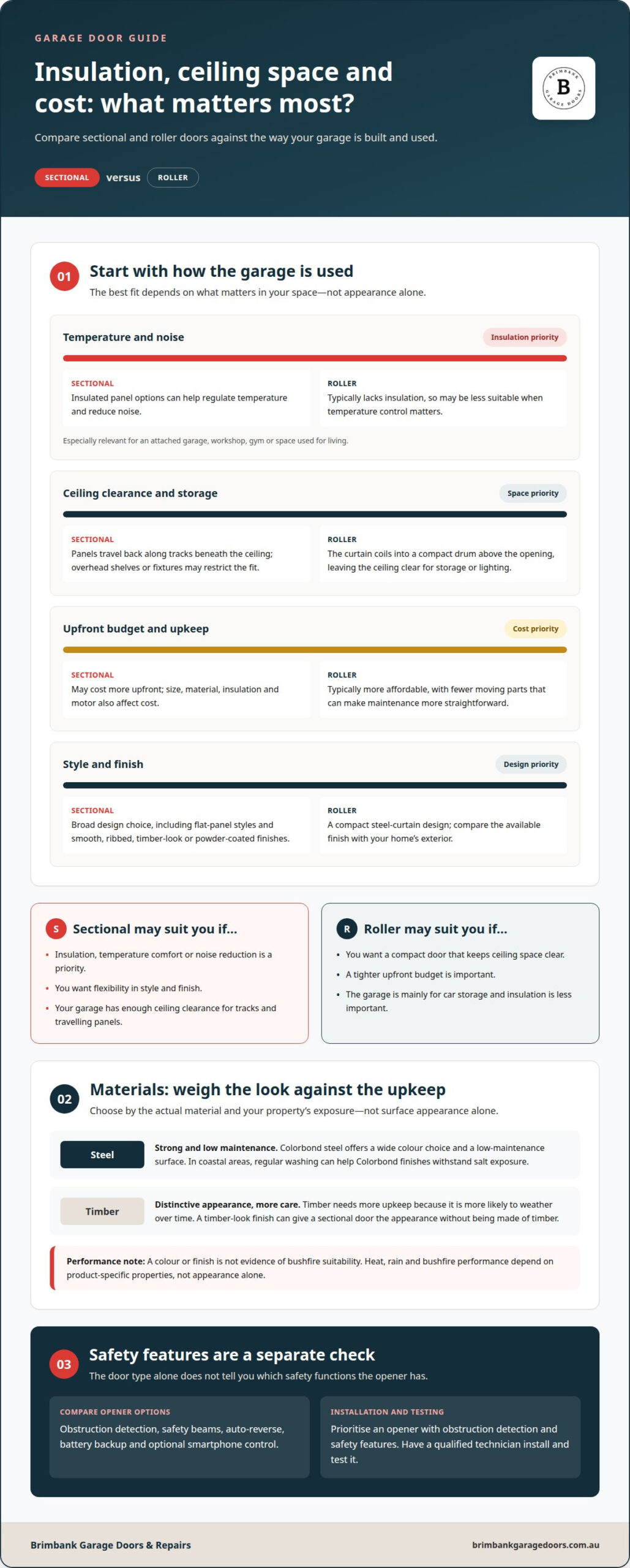
Insulation matters most when a garage connects to living areas or serves another purpose. Roller and sectional doors differ in insulation options, noise reduction and the space they occupy.
Insulation for attached or usable garages
An insulated sectional door can help regulate heat and reduce noise in a garage attached to your home. These benefits can also matter if you use the space as a workshop, gym or living area. Roller doors typically lack insulation, so they may be less suitable when temperature control is a priority. Match the door to how the garage functions, not just how it looks.
Insulation and noise reduction
Insulated sectional doors can reduce noise as well as help regulate garage temperature. This can be useful if a workshop shares a wall with a bedroom or the garage sits beneath living space. Insulation and quiet mechanical operation aren’t the same thing, though: insulation helps with heat and noise transfer, while operation depends on the door’s moving parts and opener.
A roller door coils into a compact drum above the opening, leaving the ceiling clear for storage or lighting. This space-saving design can suit a garage with limited overhead room, but the door typically doesn’t provide insulation. Sectional doors need ceiling clearance for their panels to travel back along tracks, so overhead shelves or fixtures may restrict their fit.
For a garage used mainly to store a car, insulation may be less important than keeping internal space free. If the garage is attached or used for exercise, work or relaxation, an insulated sectional door may better meet your needs. Custom designs can accommodate specific architectural preferences, but the door still needs to suit the garage’s layout and intended use. Consider temperature, noise, ceiling space and daily operation together before choosing.
Choosing a door based on home and lifestyle priorities
Match the door to your priorities: appearance, security, budget and how you use the garage. Deciding what type of garage door is best for my home starts with the space’s practical needs, then narrows down to a style that suits your facade.
Budget, style and local climate
Set your budget around the complete specification, including door size, type, material, insulation and motor. For street appeal, compare the colour and panels with your home’s facade rather than viewing samples in isolation. A sectional door offers more design flexibility, while a roller door has a compact profile. Both can provide strong protection, but their security features differ, so factor security and local climate into your priorities.
Space and headroom clearance
Door size depends on the opening, while your garage layout affects installation. Consider headroom, side room, garage depth and whether the floor is level. Low headroom narrows the options but doesn’t rule out a suitable door. Roller doors coil above the opening and leave the ceiling free; sectional doors need clearance for panels to travel beneath it. Sectional doors can also preserve driveway space because they don’t swing outwards.
Door choice for Melbourne’s climate
Melbourne’s hot summers and cold winters make insulation worth considering, particularly for an attached garage or one used as a workshop. An insulated sectional door can help regulate temperature, while roller doors typically lack insulation. Balance comfort with space, style and budget. Regular washing helps Colorbond finishes withstand coastal salt air, an important care consideration for homes exposed to salt.
So, what type of garage door is best for my home? Prioritise insulation for an attached or regularly used garage, compact storage for limited internal space, or design flexibility for a street-facing opening. Then consider the opening, ceiling clearance and motor as part of your decision. For help matching the layout and your priorities, discuss your garage door options.
Brimbank Garage Doors & Repairs
Brimbank Garage Doors & Repairs can help you turn your priorities into a practical choice for your home. If you’re weighing insulation, appearance, available space and budget, the company’s garage door installation and roller door supply can put those considerations into action. Repairs and maintenance can also address problems with an existing door before you decide whether replacement is the right next step.
For homes across Melbourne’s western and northern suburbs, start by considering how you use the garage and what the opening and ceiling space allow. Matching the door to those needs keeps the choice grounded in everyday use, not appearance alone.
Contact Brimbank Garage Doors & Repairs to discuss the garage door options for your home.
Make your next garage door decision with confidence
The right choice fits your home’s layout and how you use the garage, not just the style that catches your eye. If you’re still weighing what type of garage door is best for your home, make a clear brief: note what matters most, what the space allows and how you want the finished door to look. That gives you a practical starting point for discussing a suitable option.
Brimbank Garage Doors & Repairs provides installation, repairs and maintenance, whether you’re planning a replacement or dealing with a door that no longer operates as it should. A conversation about your home and needs can help shape the next step without guesswork.
Contact Brimbank Garage Doors & Repairs to talk through your garage door plans and move towards an option that feels right for your home.
Frequently Asked Questions
Are insulated garage doors worth it?
Insulation can be worthwhile if the garage is attached to your home or used regularly as a workspace. It may help moderate temperature changes and reduce noise transfer, making the space more comfortable to use. If the garage is detached and mainly stores a car, those benefits may matter less. Consider how much time you spend there before prioritising insulation.
Sectional vs Roller Garage Doors: Which Is Better?
Neither type is best for every home; the choice depends on your garage layout and priorities. Sectional doors can suit homeowners who value insulation options and design variety. A roller door can work well in a narrow or space-conscious garage because its curtain coils above the opening. Compare ceiling clearance, how you use the garage and the appearance you want before deciding.
What types of garage doors are available in Australia?
Common options include sectional, roller and tilt doors, as well as custom designs. Sectional doors use connected panels, roller doors use a curtain that coils above the opening, and tilt doors move as one panel. Custom designs can accommodate particular dimensions or architectural preferences. The right type depends on the opening, internal clearance, intended use and the look you want.
What are the pros and cons of sectional, roller, tilt, and side-hinged garage doors?
Sectional doors offer design choice and insulation options but need ceiling clearance. Roller doors save overhead space, though they typically lack insulation. Tilt doors open as one panel that moves outwards, so you’ll need driveway space in front. Side-hinged doors open outwards on hinges and also need clear space outside. Compare how each door moves with your driveway and garage layout.
Which garage door type suits a small or narrow Australian garage?
A roller door is often practical for a narrow garage or one with limited internal space. Its curtain coils above the opening, leaving the ceiling available for storage or lighting. Before choosing, consider the opening width, side room, garage depth and floor level. These layout details help determine whether a roller door suits the available space.
How much do garage doors cost in Australia, including installation?
There’s no single cost for a garage door with installation. The price depends on the door type, size, material, insulation and motor; replacement requirements also affect a full replacement quote. Brimbank Garage Doors & Repairs provides a free measure and quote, so the proposed work can reflect the door and your home’s requirements. A dollar figure without those details could mislead.