
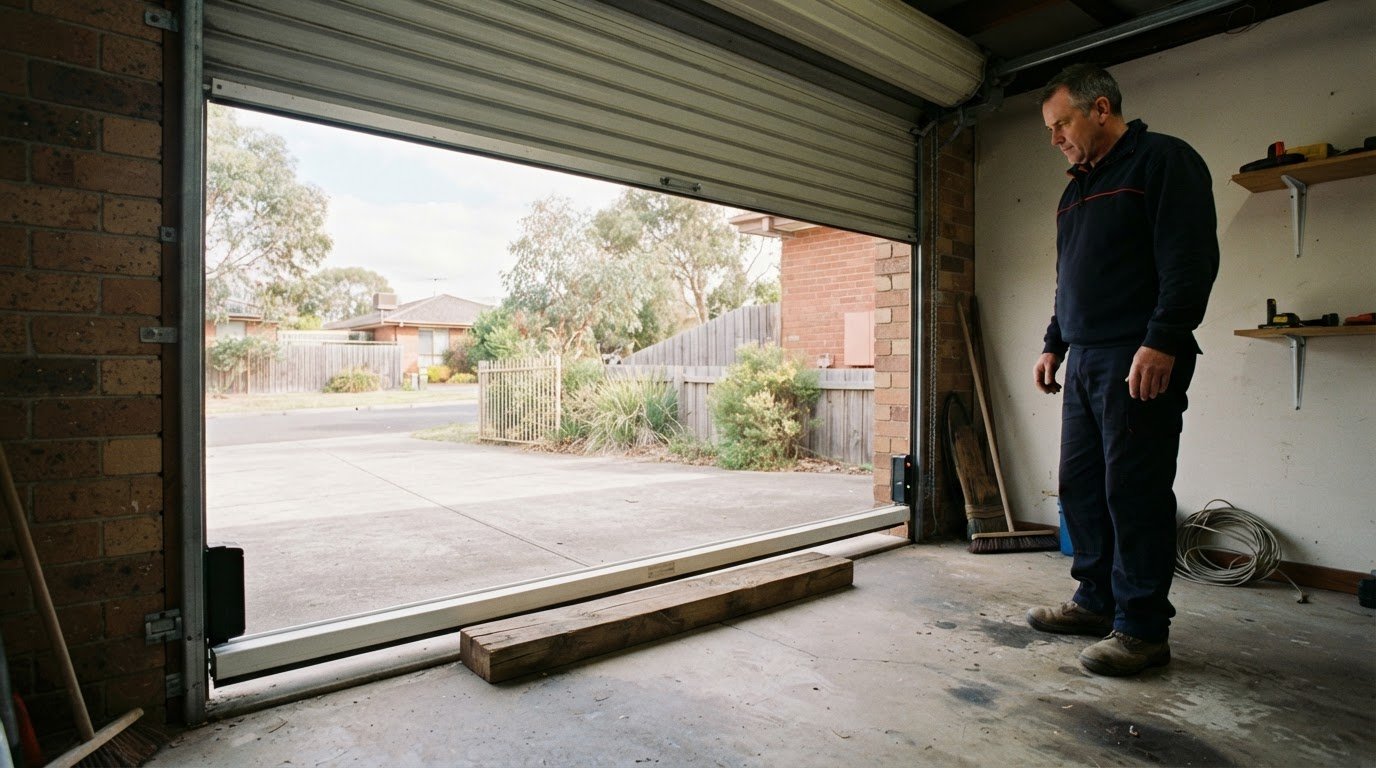
An automatic garage door’s safety feature is only useful if it works when tested. For a child safe garage door check in Sunshine, test auto-reverse once a month with a piece of timber about 40 mm thick laid flat in the door’s path; the door should stop and reverse after touching it. Keep children and pets well clear during the test.
It’s understandable to want more than a quick glance when a heavy door moves in and out of the garage. This guide explains how to check for potential hazards, review the door’s operation and service records, and make sure safety sensors are clean, aligned and responding. You’ll also learn what to do if the door doesn’t reverse as expected, with practical steps to help protect children and pets at home.
Key Takeaways
- Test the auto-reverse once a month with a piece of timber about 40 mm thick, and watch for the door to stop and reverse.
- Keep children and pets clear of the moving door, tracks, springs and cables, and keep toys and other obstacles out of its path.
- Review service records and note any unusual operation, such as poor balance, misalignment or inconsistent motor performance.
- Keep photoelectric sensor lenses clean and correctly aligned so the door responds when its safety beam is interrupted.
1. How do I test the auto-reverse on my garage door?
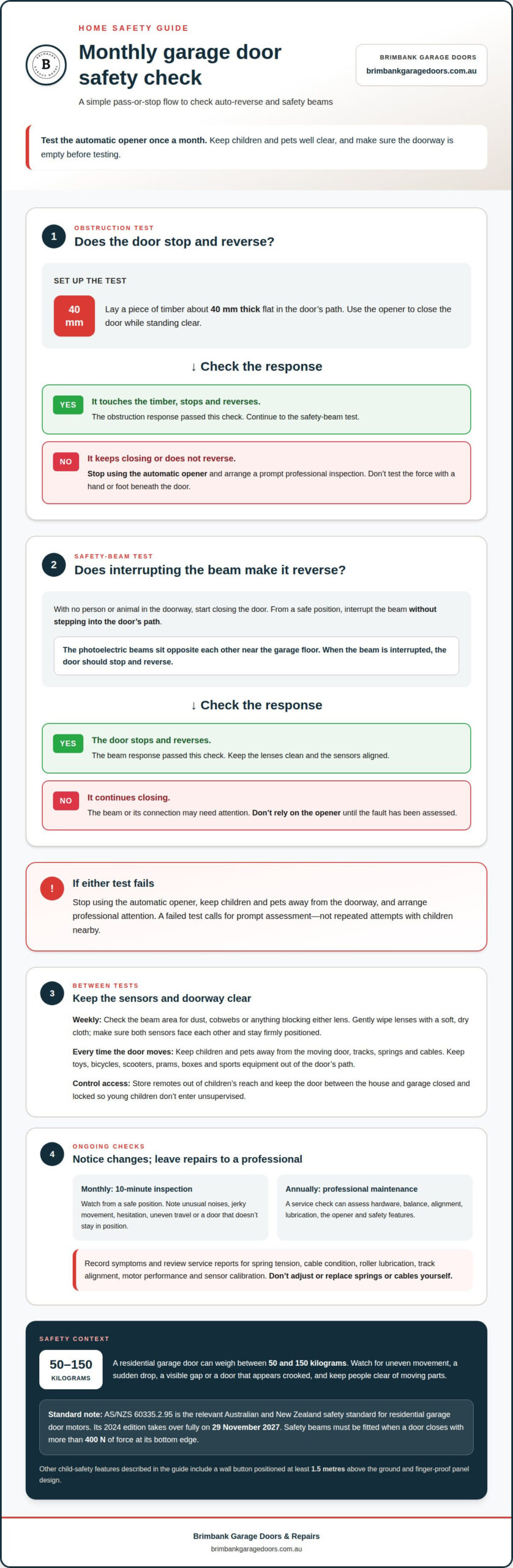
Test an automatic garage door opener’s safety reverse monthly. Keep children and pets away, and make sure the doorway is clear before testing. A garage door should stop and reverse if it meets an obstruction while closing. Its photoelectric safety beams should also trigger a stop and reverse when something interrupts the beam.
To test the door’s response to an obstruction, lay a piece of timber about 40 mm thick flat in its path. Use the opener to close the door, standing clear as it moves. The door should touch the timber, then stop and reverse. If it keeps closing, stop using the automatic opener and arrange a prompt professional inspection. Never try to measure the door’s force by placing a hand or foot beneath it.
Before testing the beams, make sure no person or animal is in the doorway. Start closing the door, then interrupt the beam from a safe position without stepping into the door’s path. The door should stop and reverse. If it continues closing, the beam or its connection may need attention. Don’t rely on the opener until the fault has been assessed.
For residential garage door motors, AS/NZS 60335.2.95 is the relevant Australian and New Zealand safety standard. Its 2024 edition takes over fully on 29 November 2027. Safety beams must be fitted when a door closes with more than 400 N of force at its bottom edge.
Safety features that help protect children include auto-reverse, photoelectric beams and a wall button positioned at least 1.5 metres above the ground. In Sunshine, a garage door technician can assess the opener, test the reverse response and inspect the safety beams. A failed test calls for prompt professional attention, not repeated attempts with children nearby.
2. Garage door weight and potential hazards
A residential garage door can weigh between 50 and 150 kilograms. That weight makes an uncontrolled closing door a serious hazard, especially for children and pets nearby. Don’t let children run underneath a moving door or play beside its tracks, springs or cables. Keep the doorway clear during opening and closing, even when the remote starts the door from a distance.
Walk through the garage and move anything that could enter the door’s path. Bicycles, scooters, prams, ride-on toys, boxes and sports equipment can obstruct the closing edge or interfere with rollers. A toy left beside the track may also tempt a child to play near moving parts. Store these items away from the opening, and keep the floor clear where the door meets it.
Control access as carefully as the moving hardware. Store remotes out of children’s reach, rather than on a bench, side table or in an unlocked car. A child pressing the button may start the door without seeing someone nearby. Keep the door between the house and garage closed and locked, so young children don’t enter the garage unsupervised.
Look for signs that the door’s weight may not be properly supported: uneven movement, a sudden drop, a visible gap, or a door that appears crooked while moving. Springs and cables carry important loads, so don’t attempt to adjust or replace them yourself. A damaged spring or cable can affect the door’s movement and create an accident risk. A professional inspection can assess the door and its supporting parts. If wear or unstable movement is a concern, garage door maintenance can help identify issues before they worsen. When planning an install, consider child-safety features such as finger-proof panel design, which helps reduce the risk of fingers being caught between sections.
3. Operational testing and service reports
Arrange professional garage door maintenance annually to assess the door, opener and safety features. A service check can cover loose or damaged hardware, balance, alignment and lubrication. These checks can identify changes that affect smooth operation before they become more serious faults.
A useful service report records the technician’s findings and any repairs completed. Look for observations about spring tension, cable condition, roller lubrication, track alignment, motor performance and sensor calibration. These details clarify what was inspected and help you track recurring issues, such as a door that repeatedly slips out of alignment.
Between professional visits, a 10-minute monthly inspection can help you notice changes in operation. Watch the door open and close from a safe position. Note unusual noises, jerky movement, hesitation, uneven travel or a door that doesn’t stay in position. Record when the symptom occurs, such as during closing or after rain, to give the technician useful context.
In Australia, arrange garage door maintenance annually and monitor the door’s operation throughout the year. If it fails a safety test, stop using the automatic opener and keep children and pets away from the doorway. Don’t attempt to adjust springs or cables yourself. Arrange professional repairs so the fault can be assessed safely.
After repairs, review the report for the fault identified, work completed and any remaining concerns. Ask for the door’s operation and safety features to be tested as part of the completed work. Keep the report with earlier service records, so changes in spring condition, motor performance or track alignment are easier to spot over time. That record supports informed decisions and helps maintain peace of mind around daily use.
4. Photoelectric and motion sensors
Photoelectric safety beams sit opposite each other near the garage floor. One sensor sends an infrared beam to the other. If an object interrupts it while the door is closing, the opener should stop and reverse. This helps prevent the door from continuing against a person, pet or object in its path.
Check the beam area weekly for dust, cobwebs or anything blocking either lens, then gently wipe the lenses with a soft, dry cloth. Make sure both sensors face each other and remain firmly positioned. A bumped sensor or dirty lens can interrupt the signal, causing the door to stop or behave inconsistently.
Test the response from a safe position, with children and pets well clear. Start closing the door, then interrupt the beam without stepping beneath the moving door. The door should stop and reverse. If it continues closing, stop using the automatic opener and arrange an assessment. Don’t bypass a sensor or try to realign electrical components if you’re unsure.
A motion sensor detects movement in its coverage area, while a photoelectric beam detects an interruption between two points. These functions aren’t interchangeable: a motion sensor shouldn’t be treated as a substitute for the door’s reversing safety beam. Sensor requirements can vary, so ask a qualified technician to check whether your setup is appropriate. A qualified technician can assess sensor positioning, operation and whether replacement is needed.
Keep a simple record of weekly observations, such as a lens obscured by cobwebs or a beam that fails to trigger reversal. That gives garage door experts useful detail when diagnosing faults and helps identify repeated problems before they contribute to injuries. For a sensor or opener fault in Sunshine, arrange a garage door repair and keep the door unused until it’s assessed.
Brimbank Garage Doors & Repairs
Brimbank Garage Doors & Repairs can help if a garage door fails a safety test, moves unevenly or shows signs of wear. Its garage door maintenance and repair services address common malfunctions and assess the door’s operation and condition.
If a spring, cable, opener or sensor problem affects safe operation, arrange a professional assessment instead of attempting hazardous adjustments yourself. If the door is damaged or no longer suits your home, Brimbank Garage Doors & Repairs also supplies roller doors and installs garage doors.
Share what you’ve noticed, such as a failed reverse test, inconsistent movement or an unresponsive sensor. This helps clarify the issue and the appropriate next step. Contact Brimbank Garage Doors & Repairs to discuss your garage door safety concerns.
Make your next garage-door check count
Turn what you’ve noticed into a clear next step. A record of unusual movement, noises or sensor behaviour can help identify what needs attention and keep your household’s safety routine practical. If the door’s behaviour changes, don’t dismiss it as a passing nuisance. Arrange an assessment.
A child-safe garage door check in Sunshine is also a chance to remind everyone at home to stay clear while the door moves and not to play near its tracks or controls. Consistent habits matter alongside well-maintained equipment. Make the rules clear for children, visitors and anyone caring for pets.
For help deciding what the door needs next, contact Brimbank Garage Doors & Repairs. A straightforward conversation can help you move from concern to an appropriate next step for your home. Take action calmly, and make safety part of the way your household uses the garage every day.
Frequently Asked Questions
How do I keep kids and pets safe around an automatic garage door?
Keep children and pets supervised and outside the garage doorway whenever the door is moving. Before using a remote, make sure you can see the door’s path and that nobody is underneath it. A child-safe garage door check in Sunshine can also reinforce clear household rules: controls aren’t toys, and children stay away from the garage while the door operates. Keep the door between the house and garage closed to limit unsupervised access.
How do I test the auto-reverse on my garage door?
Follow the opener manufacturer’s instructions and keep everyone clear while testing. A common obstruction test uses a firm piece of timber laid flat where the door closes. The door should reverse after contacting it. Observe from a safe position. If it doesn’t reverse, stop using the automatic opener and arrange a professional assessment rather than attempting mechanical adjustments.
How do garage door safety sensors work?
Photoelectric safety sensors use a beam between two points near the doorway. If something interrupts the beam while the door is closing, the opener should stop and reverse the door. For example, a pram or pet crossing the beam should trigger a response. Dirt, cobwebs or sensors facing away from each other can affect operation, so keep the beam area clear.
What Types of Sensors Improve Safety?
Photoelectric safety beams detect an obstruction crossing the doorway, while an opener’s auto-reverse function responds to resistance as the door closes. Motion sensors detect movement within their sensing area, but shouldn’t be treated as a replacement for the door’s reversing safety systems. Each feature works differently, so a technician can assess how the installed sensors and opener operate together.
What’s the difference between safety beams and auto-reverse?
Safety beams detect an interrupted light path before the closing door reaches an object. Auto-reverse responds when the door detects an obstruction or resistance during closing. For example, someone crossing the beam may trigger reversal before contact, while the obstruction response acts at the door itself. Both functions support safety, but neither should be assumed to replace the other.
What does a child-safe garage door safety check in Sunshine, Victoria include?
A child-safe garage door check in Sunshine can assess the door’s balance, alignment, hardware, springs, cables, rollers, opener and sensor response. The technician can note visible wear or irregular movement and explain any repairs needed. Brimbank Garage Doors & Repairs provides residential garage door maintenance and repairs across Melbourne’s western and northern suburbs, including Sunshine. Share concerns such as hesitation or unusual noises to help guide the assessment.