
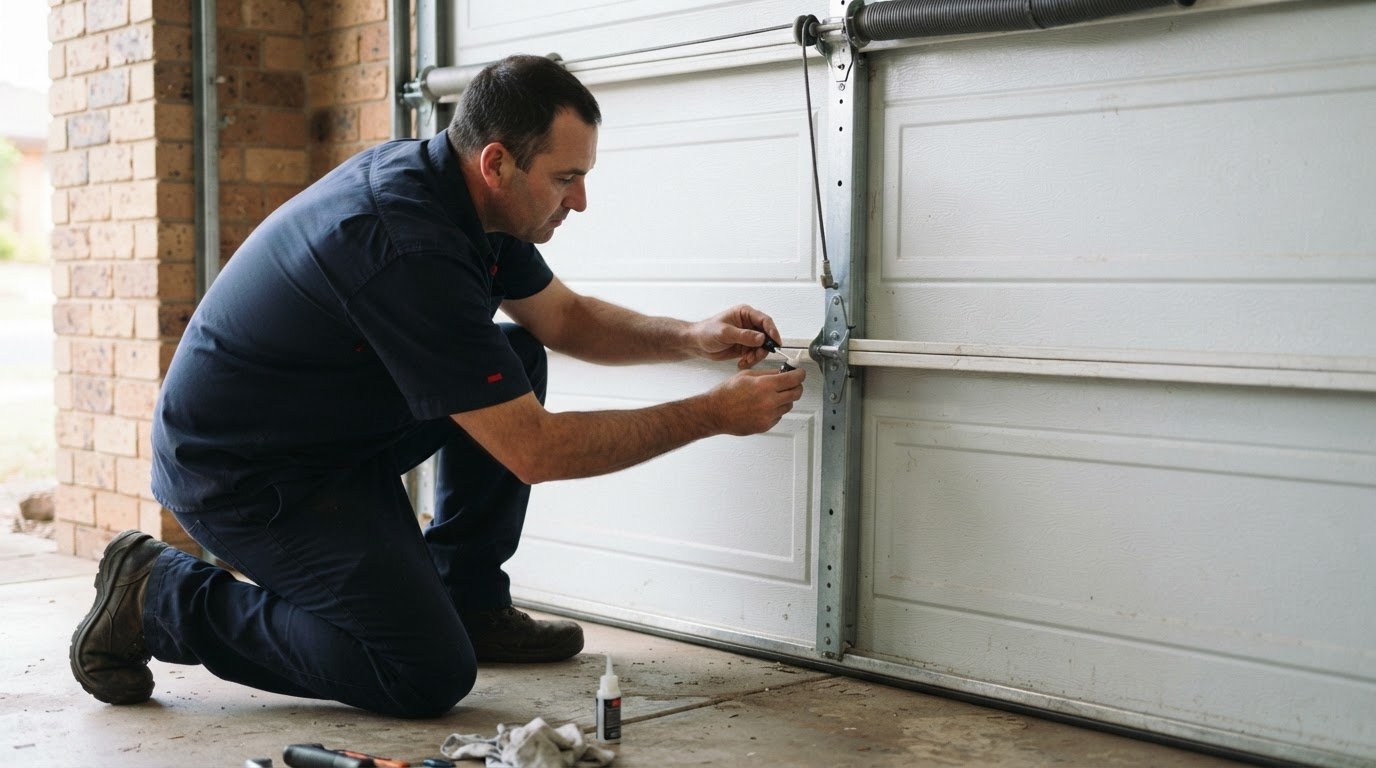

Reducing garage door noise in Melbourne’s western suburbs starts with matching the fix to the sound: lubrication can ease friction, quieter nylon rollers can reduce rolling noise, and a soft-start opener and secure hardware can limit jolts and rattles. For homes where garage noise carries into living or sleeping areas, insulation may also help reduce sound travelling through the door.
It’s frustrating when an everyday task makes the whole house rumble. But the loudest sound doesn’t always point to the part that needs attention. Start by working out whether the noise comes from friction, vibration or loose components.
This guide explains how lubrication, nylon rollers, soft-start openers and tightened hardware can make operation quieter, and where insulation fits. You’ll also learn when unusual noises may signal a mechanical issue that needs professional attention, so you can choose a practical next step with safety in mind.
Key Takeaways
- Use a suitable garage-door lubricant sparingly to reduce friction, and avoid applying lubricant to opener chains or belts unless the manufacturer’s instructions allow it.
- Nylon rollers can make door travel quieter than metal rollers, particularly where rolling noise is the main nuisance.
- Soft-start and soft-stop opener mechanisms reduce abrupt jolts, while the right opener setup can help quieter operation.
- Loose connections can cause rattling or rumbling; unusual or persistent noises may need professional attention rather than a DIY adjustment.
Lubrication advice for springs and openers
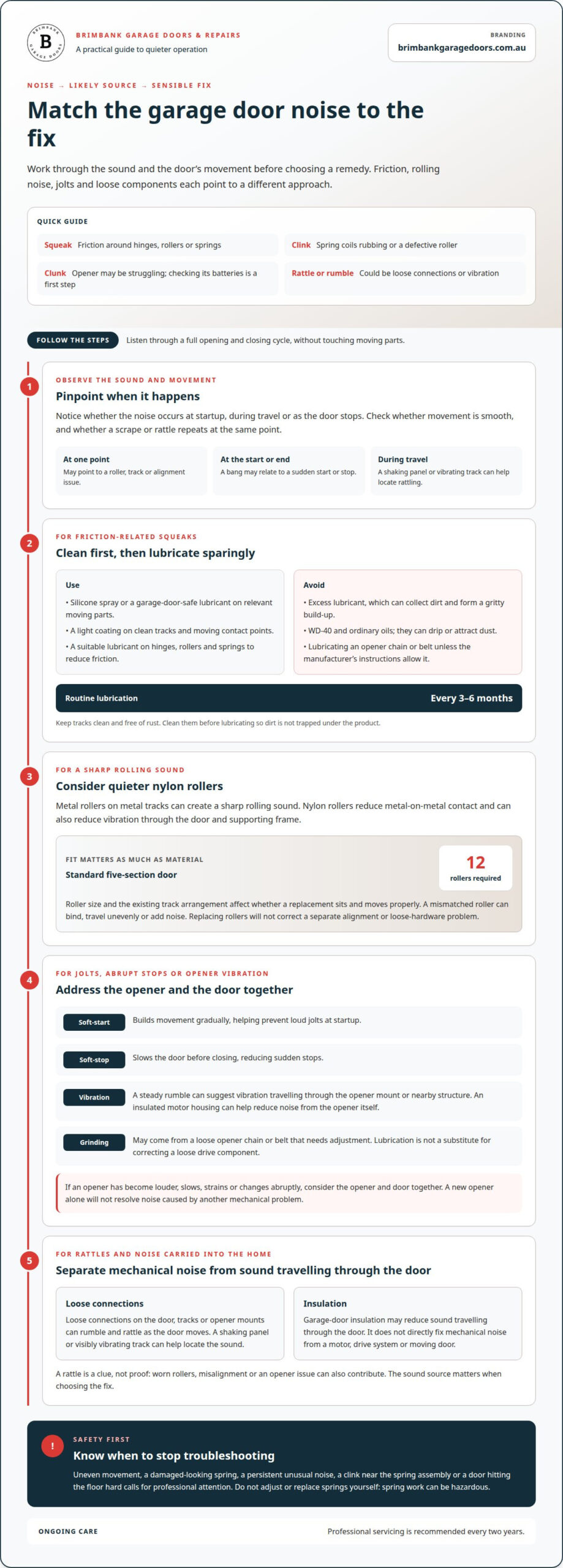
A squeak often points to friction around hinges, rollers or springs. Metal rollers travelling along metal tracks can also sound loud. Listen as the door moves, without touching its moving parts: squeaking suggests friction, while clinking may come from spring coils rubbing together or a defective roller. A clunk can mean the opener is struggling, so checking its batteries is a sensible first troubleshooting step.
For rollers, tracks and hinges, use silicone spray rather than grease. Apply it sparingly to the relevant moving parts, as excess lubricant can collect dirt and create a gritty build-up. A garage-door-safe lubricant can also reduce friction-related squeaks at hinges, rollers and springs. Keep the tracks clean and free of rust, since debris or corrosion can contribute to clanking as the door travels.
Clean the tracks before lubricating them, so dirt isn’t trapped under the product. Wipe away visible debris, then apply a light coating of suitable lubricant to the track and moving contact points. Avoid WD-40 and ordinary oils: they aren’t designed for garage doors and can drip or attract dust. Don’t lubricate an opener chain or belt unless its manufacturer’s instructions call for it.
Lubricate garage-door moving parts every 3-6 months. Brimbank Garage Doors & Repairs recommends professional servicing every two years, which can address wear and noise beyond routine lubrication. Regular maintenance can also help extend a door’s lifespan—a principle that applies across broader building upkeep, where trade and facility specialists such as servicekingcommercial.co.nz highlight routine servicing to avoid unexpected breakdowns.
A noisy door becomes a safety concern if it moves unevenly, a spring appears damaged, or an unusual noise persists. Don’t adjust or replace springs yourself: spring work can be hazardous and should be handled by a professional technician. A clink near the spring assembly or a door hitting the floor hard calls for professional attention, not more lubricant.
Choosing quieter nylon rollers
Metal rollers travelling along metal tracks can create a sharp rolling sound. Nylon rollers are quieter because they reduce metal-on-metal contact as the door moves. They’re particularly useful when reducing garage door noise western suburbs homeowners hear as a rolling sound along the track, rather than a rattle from the opener or a panel. Listen as the door opens and closes to help locate the sound.
A quieter roller system can also reduce vibration through the door and its supporting frame. Precision-engineered roller and track systems can reduce vibration and wear over time. Repeated movement transfers small jolts through panels, tracks and fixings. Replacing worn or noisy rollers may help, but it won’t correct a separate problem such as poor alignment or loose hardware.
Fit matters as much as material. A standard five-section garage door requires a dozen rollers, and each must travel smoothly in its track. Roller size and the existing track arrangement affect whether a replacement sits and moves properly. A mismatched roller can bind, travel unevenly or add noise. Assessing compatibility is important when reducing garage door noise western suburbs homes may experience from worn or unsuitable rollers.
Notice whether the sound is continuous or occurs at one point in the door’s travel. A repeated scrape or rattle in the same place may point to a roller, track or alignment issue. A general rolling rumble may be more noticeable with metal rollers. If the door jerks, sits unevenly or makes a new, pronounced noise, its movement and hardware need assessment.
For Melbourne homeowners considering a quieter replacement, garage roller door supply can be considered alongside the existing tracks and door. Nylon rollers address rolling noise, while an assessment can identify whether another part contributes to the sound.
Soft-start and soft-stop opener technology
Reduce opener motor and vibration noise by addressing abrupt movement and transmitted vibration. Soft-start technology builds the door’s movement gradually, while soft-stop slows it before closing. These controlled changes can prevent the loud jolts and sudden stops that make smooth operation sound harsh. Insulated motor housings can also help reduce noise from the opener itself.
The sound can help identify the likely cause. A bang at the beginning or end of travel may point to a sudden start or stop, while a steady rumble can suggest vibration travelling through the opener’s mount or nearby structure. Grinding may come from a loose opener chain or belt that needs adjustment. Lubrication isn’t a substitute for correcting a loose drive component.
An opener that has become louder over time may be struggling to move the door smoothly. An older opener can lack the power to open the door efficiently, adding noise during operation. If movement slows, strains or changes abruptly, consider the opener and door together. A new opener alone won’t resolve noise caused by another mechanical problem.
Insulation has a different role. Insulated motor housings can help limit opener noise, while garage-door insulation may reduce sound travelling through the door. It doesn’t directly fix mechanical noise from a motor, drive system or moving door. The source matters: a soft-start mechanism addresses jolts, but not a loose connection or worn component.
Listen to the opener through a full opening and closing cycle. Note whether the noise happens at startup, during travel or at the stopping point, and whether the door moves smoothly. This pattern helps distinguish abrupt operation from ongoing vibration or strain. A technician can assess the opener alongside the door’s movement and determine whether adjustment, repair or replacement is the appropriate next step.
Tightening loose bolts and screws
Loose connections on garage doors, tracks or opener mounts can rumble and rattle as the door moves. The sound may grow louder during travel, then ease when the door stops. A shaking panel or visibly vibrating track can help locate the noise. The sound is a clue, not proof: worn rollers, misalignment or an opener issue can create similar symptoms.
A careful inspection follows the door’s structure. A technician checks track supports, hinges, panel joins and opener mounting points for movement or loose fasteners. They also look for uneven panels, which can knock against each other or the frame. Tightening suitable loose connections and correcting alignment can reduce rattling, but forcing a fastener can damage its thread or the surrounding material.
Garage doors carry substantial weight, and springs and cables are under tension. Don’t reach near those components or adjust their brackets to chase a noise. Spring adjustment can be hazardous. If a bolt appears attached to a spring, cable or lifting mechanism, leave it alone and arrange professional attention. This is especially important if the door moves unevenly, drops suddenly or makes a sharp bang.
In Australia, a practical way to describe the problem is to note when it happens: during opening, while travelling, or at closing. Mention whether the sound is a steady rattle or a single knock, and whether a panel or track visibly moves. Those details help a technician trace the source and inspect the relevant fixings, alignment and opener connections rather than tightening parts at random.
If the door rattles or bangs despite routine care, a professional inspection can identify loose hardware and related repair needs. Arrange garage door repairs to have the door’s fixings and movement assessed safely.
Brimbank Garage Doors & Repairs
Brimbank Garage Doors & Repairs helps homeowners address noisy operation through garage door repairs and maintenance. A technician can assess whether friction, worn rollers, loose hardware or opener vibration is contributing, then identify a suitable repair rather than treating every sound the same way.
If the door is worn or no longer operating smoothly, garage door installation or a replacement roller door may be a more suitable longer-term option. The right approach depends on the door’s condition and the source of the noise. A professional assessment is particularly useful when the door moves unevenly, makes a sudden bang or has a spring-related concern, as those components can be hazardous to handle.
For practical help with a noisy garage door, contact Brimbank Garage Doors & Repairs to discuss the issue.
Take the next step towards quieter operation
A quieter garage can make daily routines more comfortable, particularly when the door sits beside a bedroom or living area. For reducing garage door noise in Melbourne’s western suburbs, identify the sound’s source before choosing a fix. A change that quietens one part may not address another, so the door’s overall movement and condition matter.
If the noise persists or the door starts moving unevenly, professional attention can help identify a practical next step. Brimbank Garage Doors & Repairs offers installation, repairs and maintenance, with the work guided by the door’s condition and the issue affecting its operation. There’s no need to guess at a mechanical fault or adjust parts under tension yourself.
Ready to discuss a noisy door? Contact Brimbank Garage Doors & Repairs to talk through the issue and move towards a quieter, more comfortable home.
Frequently Asked Questions
How do I lubricate garage door rollers, hinges, springs and tracks safely?
Use a garage-door-safe silicone spray sparingly on accessible rollers, hinges and springs, following the product instructions. Clear loose debris from the tracks before applying a light coating. Keep your hands clear while the door is moving, and don’t touch spring brackets, cables or lifting components. Leave spring adjustments to a professional, as those parts are under tension and can cause injury.
What garage door rollers are quietest: nylon or steel?
Nylon rollers are generally quieter than steel rollers running along metal tracks because they reduce metal-on-metal contact. They’re a useful option if the main sound is a rolling rumble that follows the door’s travel. The correct size and fit matter too: a roller that doesn’t suit the existing track may bind or move unevenly, so assess compatibility before replacement.
Which garage door repair services cover Melbourne’s western suburbs and offer noise reduction?
Brimbank Garage Doors & Repairs provides garage door repairs and maintenance across Melbourne’s western and north-western suburbs. These services can address mechanical causes of noise, such as worn components or loose connections. An assessment can help distinguish a repairable fault from broader wear affecting the door’s movement. This is a practical option when noise persists or operation becomes uneven.
Can garage door insulation or acoustic seals reduce noise, and what do they cost?
Insulation can reduce sound travelling through a garage door, while acoustic seals can limit sound passing through gaps. Neither directly fixes mechanical noise from rollers or an opener. Costs depend on factors such as the door’s dimensions, panel construction, seal type and fitting requirements. These details shape the work involved, so there isn’t one useful price that applies to every door.