

Grease isn’t the answer to every noisy garage door. If you’re wondering how to make a garage door quieter in Melbourne, start by cleaning the accessible moving parts and applying a light coat of silicone spray where suitable. Too much lubricant can attract grime and make the noise worse.
Squeaks and rattles can be frustrating, especially when the door opens early or late. The right fix depends on the source: dry rollers or hinges may need lubrication, while worn or missing Nylofelt running strips can contribute to noise on a roller door.
This guide explains which lubricant to use, where to apply it and why grease can cause problems. You’ll also learn how Nylofelt strips can quiet a roller door, and when persistent noise may point to a worn or misaligned component that needs attention.
Key Takeaways
- Choose a silicone-based spray for suitable moving parts, and clean away dirt before applying it.
- Nylofelt running strips can help reduce noise as a roller door moves along its guides.
- Apply lubricant sparingly; excess grease can collect grime and contribute to noisy operation.
- Persistent rattling, grinding or banging may point to a worn or unbalanced component that needs professional attention.
1. What is the best lubricant for a garage door?
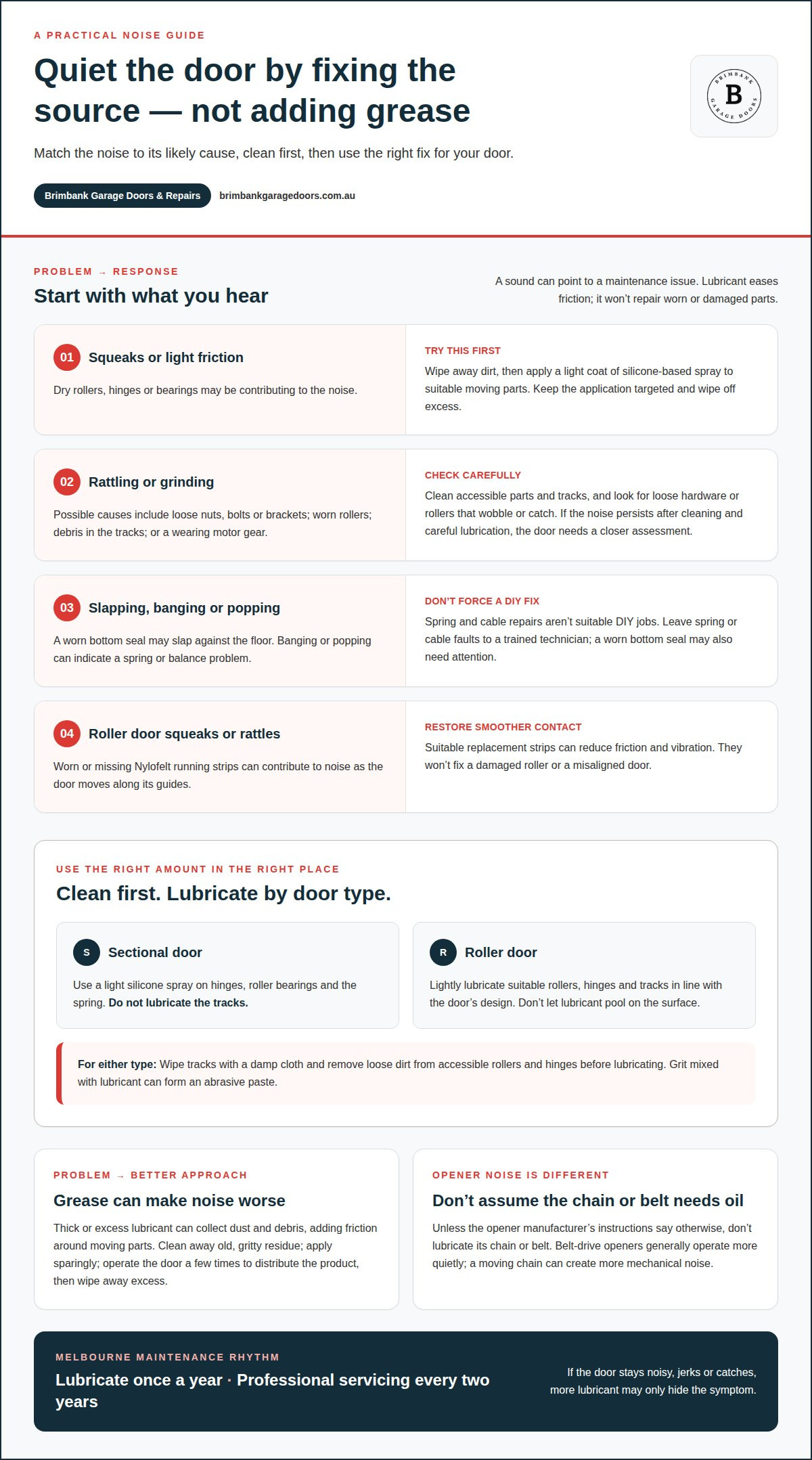
A silicone-based spray is suitable for garage door rollers, hinges and bearings. On a sectional door, apply it sparingly to the hinges, roller bearings and spring, but not the tracks. Wipe the tracks with a damp cloth first: dirt mixed with lubricant can form a gritty paste that contributes to grinding. Lubrication can ease friction, but it won’t repair a cracked roller or worn component.
Noise can also signal a maintenance issue. Rattling may come from loose nuts, bolts or brackets, including hardware around the motor rail. Grinding can point to worn rollers, debris in the tracks or a wearing motor gear. A worn bottom seal may slap against the floor, while banging or popping can indicate a spring or balance problem. If the door jerks or stays noisy after cleaning and lubrication, it needs a closer assessment.
Insulation and seals can help reduce noise beyond the moving parts. Insulated panels can act as a barrier to external noise and soften some operational noise. Weather seals along the door’s edges can limit gaps and help reduce vibration; a worn bottom seal may need attention if it hits the floor. A sectional door’s panels fold along tracks as it opens, and this design can reduce wear on moving parts that might otherwise contribute to noise.
In Australia, belt-drive and chain-drive openers are available; belt drives generally operate more quietly, while a moving chain can create more mechanical noise. Replacement cost depends on opener type, door compatibility, installation needs and any repairs identified; the price is provided after a quote request. In Melbourne, professional servicing every two years and lubrication once a year help address wear before it worsens. A reputable repair service assesses door balance, spring tension, worn components and the motor, rather than treating every noise with lubricant alone.
2. Nylofelt running strips and quieter roller door operation
Nylofelt running strips can help a roller door travel more quietly along its guides. Their woven nylon exterior and felt interior create a smoother contact surface as the door moves. If a roller door squeaks or rattles, worn or missing strips may contribute to the noise. Suitable replacement strips can reduce friction and vibration, but won’t fix a damaged roller or misaligned door.
Nylon-coated rollers are generally a quieter option for sectional doors because they glide smoothly along tracks and can reduce rattling. Steel rollers may suit some doors, but the right replacement depends on the door’s design and fittings. Roller and sectional doors use different running systems, so their rollers and guides aren’t interchangeable.
Lubrication also depends on the door type. For a sectional door, apply a light silicone spray to the hinges, roller bearings and spring, not the tracks. For a roller door, lightly lubricate suitable rollers, hinges and tracks in line with the door’s design. Don’t let lubricant pool on the surface. Excess can catch dirt and interfere with smooth movement.
Clean first. Wipe the tracks with a damp cloth, then remove loose dirt from accessible rollers and hinges. Check that the tracks look aligned, and watch for rollers that wobble or catch as the door moves. Lubricating over grit can create abrasive paste, so cleaning helps prevent friction from undoing the benefit.
Spring and cable repairs aren’t suitable DIY jobs. Garage door springs can be hazardous to adjust or replace, and a mistake can affect how the door moves. Leave spring or cable faults to a trained technician. If worn rollers or running strips keep the door noisy, garage door repairs can address the cause rather than masking the sound with more lubricant.
3. Avoiding grease and excess lubricant
Grease isn’t a shortcut to a quieter door. A thick coating can collect dust and debris, creating a dirty layer around moving parts. That buildup can interfere with rollers and hinges, add friction and contribute to grinding. If lubricant is visibly clumped or gritty, adding more will make the problem worse. Keep the application light and targeted instead.
Start with the door manufacturer’s instructions, then clean accessible parts before applying lubricant. Use a silicone-based spray sparingly on the parts that need it. Avoid coating tracks with grease: residue can hold dirt where rollers travel and affect their movement. After lubrication, operate the door a few times to distribute the product, then wipe away excess with a clean cloth.
The opener needs separate care. Unless its manufacturer’s instructions say otherwise, don’t lubricate the opener’s chain or belt. Product can leave a sticky coating that attracts dust and may affect operation. A noisy chain or belt may have another cause, so don’t assume extra lubricant will solve it. Follow the specific opener instructions rather than treating every moving part alike.
Notice what changes after cleaning and careful lubrication. A brief squeak may ease, but persistent grinding, rattling or jerking points to more than excess grease. For example, a roller that catches in the track can stay noisy even when nearby hinges are lubricated. Stop adding product if the sound continues. Repeated spraying may briefly hide the symptom while leaving worn or misaligned components untouched.
A light, tidy application is easier to maintain than a thick coating. Keep a cloth handy and wipe drips from the door and surrounding surfaces. If old grease has trapped dirt, clean it away before applying anything new. The aim is smooth movement, not a glossy layer over every visible part.
4. Quiet garage doors for Melbourne homes
For a quieter Melbourne home, consider where the noise travels. If a bedroom or living area shares a wall with the garage, door movement may be especially noticeable indoors. Insulated garage door panels can act as a sound barrier, helping block outside noise and soften some operational sound. Insulation won’t correct a mechanical fault, but it can be part of a broader approach to making a garage door quieter in Melbourne.
Door design matters too. A sectional door opens vertically, with panels folding along tracks, while a roller door moves around a barrel above the opening. Their moving parts and contact points differ, so a noise remedy for one style may not suit the other. Identify the door type first, then match maintenance and replacement parts to its design.
Listen to the sound and note when it occurs. Rattling during movement can point to loose hardware or a motor rail, while grinding can indicate worn rollers, track debris or a wearing motor gear. A bottom seal slapping against the floor sounds different from squeaking hinges. These clues can help distinguish a contact or seal issue from a moving-part fault.
Consider the whole opening, not just the motor. Worn weather seals can leave gaps around the door and allow more outside sound through. Seals along the edges can improve insulation and help limit vibration. If the door shudders, jerks or bangs, lubrication alone won’t address the cause. Making a garage door quieter in Melbourne starts with identifying the source before choosing a fix.
For Melbourne homes where noise persists after basic cleaning and lubrication, arrange a professional assessment rather than repeatedly spraying parts. Book garage door maintenance to identify worn components and address the source of the noise.
Brimbank Garage Doors & Repairs
Brimbank Garage Doors & Repairs can help if cleaning and careful lubrication haven’t quietened your garage door, or if it rattles, grinds, jerks or bangs. An assessment considers the door’s movement and condition to identify whether worn components, balance issues or another fault needs attention. Adding lubricant won’t fix a damaged part, and spring problems require professional handling.
For Melbourne homeowners, the next step depends on the door’s condition. Repairs or maintenance may address a noisy or poorly moving door; installation may be appropriate when replacement is needed. The aim is to find the cause and a practical way forward, with the door operating smoothly and safely.
For help with a noisy garage door, contact Brimbank Garage Doors & Repairs.
Take the next step towards a quieter garage
A quieter door starts with understanding what its sound is telling you. Notice whether the noise happens as the door starts, moves along its tracks or reaches the floor. That detail can help distinguish a movement issue from a seal or opener concern and give a technician a useful starting point.
If you’re working out how to make a garage door quieter in Melbourne, avoid masking persistent noise with repeated sprays or adjustments. A professional assessment can identify whether the door needs maintenance, a repair or a broader solution. Brimbank Garage Doors & Repairs can help you choose a practical next step for your home.
Contact Brimbank Garage Doors & Repairs to discuss a noisy garage door and move towards smoother, quieter operation.
Frequently Asked Questions
What is the best lubricant for a garage door?
A silicone-based spray is suitable for garage door moving parts, while grease can hold dust and dirt. Choose a product intended for this use and follow the door manufacturer’s instructions, as components differ between roller and sectional doors. A squeaking hinge may respond to light lubrication, but a cracked roller needs repair or replacement, not more spray.
What are the common causes of a noisy garage door?
Noisy operation can come from dry hinges or rollers, loose hardware, track debris, worn rollers, a damaged seal or an opener problem. The sound can help narrow down the cause: squeaking may come from dry moving parts, while grinding can indicate a roller or track issue. Banging or popping needs prompt attention because it can signal a spring or balance fault.
How do you lubricate garage door rollers, hinges, springs and tracks safely?
Start with the door manufacturer’s instructions and clean accessible components before applying lubricant. Use a light silicone spray on suitable parts, keeping it away from the floor and surrounding surfaces. Don’t touch, adjust or try to lubricate a spring if doing so means reaching into a tensioned mechanism. If the door moves unevenly or the spring looks damaged, stop and arrange a professional assessment.
How can you reduce garage door opener noise, including vibration and rattling?
First distinguish motor noise from door noise: listen for whether the sound comes from the opener or follows the door along its path. Loose nuts, bolts, brackets or a motor rail can cause rattling, while a worn motor gear may contribute to grinding. Don’t lubricate a chain or belt unless the opener manufacturer instructs you to. Persistent vibration needs an assessment, not repeated spraying.
When should garage door tracks, springs or rollers be adjusted or replaced by a professional?
Arrange professional help if tracks appear misaligned, rollers wobble or catch, or the door jerks, drops or bangs during operation. Springs are under tension, so don’t try to adjust or replace them yourself. A technician can assess the door’s balance and inspect worn components together, rather than treating each noise in isolation. Stop using a door that behaves unpredictably until it has been assessed.
How can you soundproof a garage door without affecting its operation or warranty?
Start with low-impact measures, such as addressing gaps with suitable weather seals and checking the manufacturer’s guidance before adding insulation. Avoid attaching heavy materials or anything that could catch in the tracks, interfere with movement or alter the door’s balance. Door designs and warranty conditions vary, so use only compatible materials and installation methods specified for your door.