
A cheap-looking fix may not close every gap. For draft-proofing garage doors in Melbourne’s western suburbs, the cost depends on the seal type and length, the door’s condition and whether installation or adjustment is needed. The price is determined after assessing the work involved.
A draughty garage can let in dust, leaves, pests, air and moisture. Sealing gaps can make it more comfortable, especially if it’s attached to your home or used as a workspace.
This guide explains how to find gaps, replace a sectional door’s bottom seal and fit flexible seals along the top and sides. It also covers the factors that affect cost, helping you weigh up practical next steps.
Key Takeaways
- Learn when a floor-mounted threshold seal can help with a gap beneath the door, and what to allow for after fitting.
- See the key steps for replacing a sectional door’s bottom seal and creating a closer barrier against debris.
- Find out how flexible multi-seals can address small gaps along the top and sides of a garage door.
- Understand how draught-proofing can make a garage more comfortable and help keep dust, leaves and pests out.
Can I Replace a Garage Door Bottom Seal Myself?
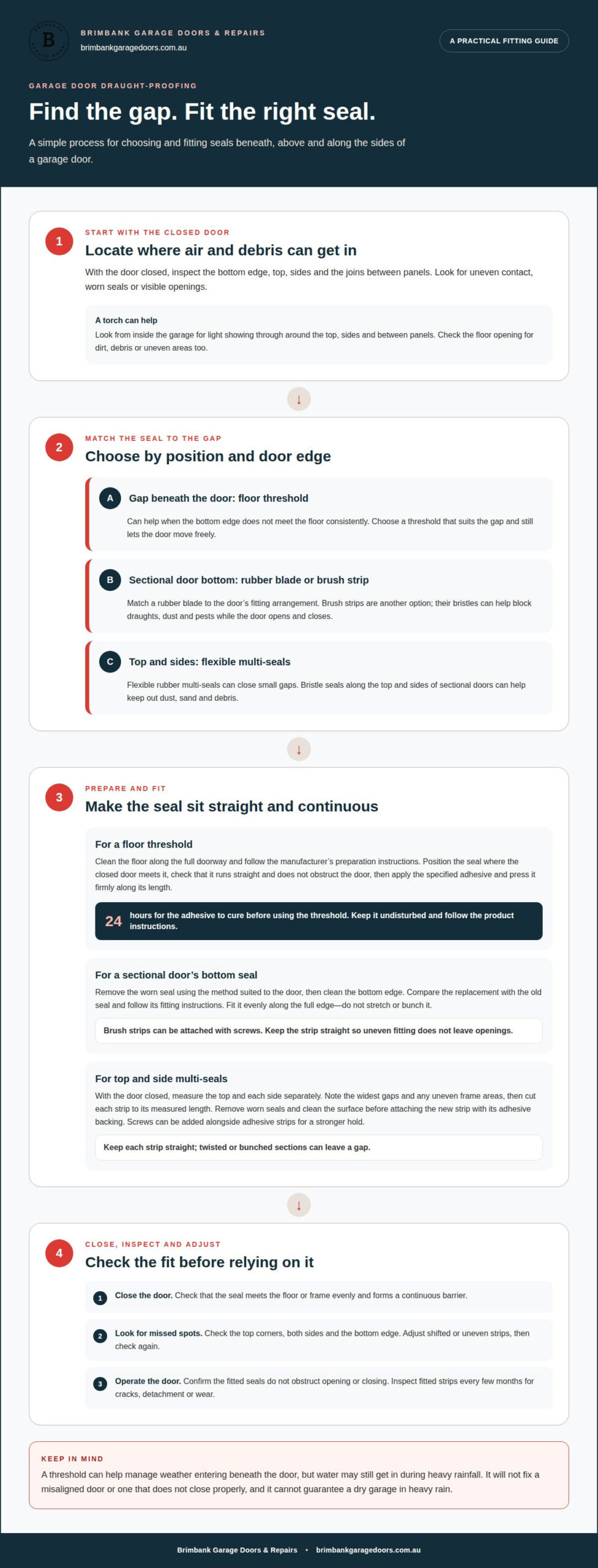
A floor threshold seal can help close the gap beneath a garage door. Check the opening first, then fit the threshold so the door can still move freely.
-
Check floor threshold seals
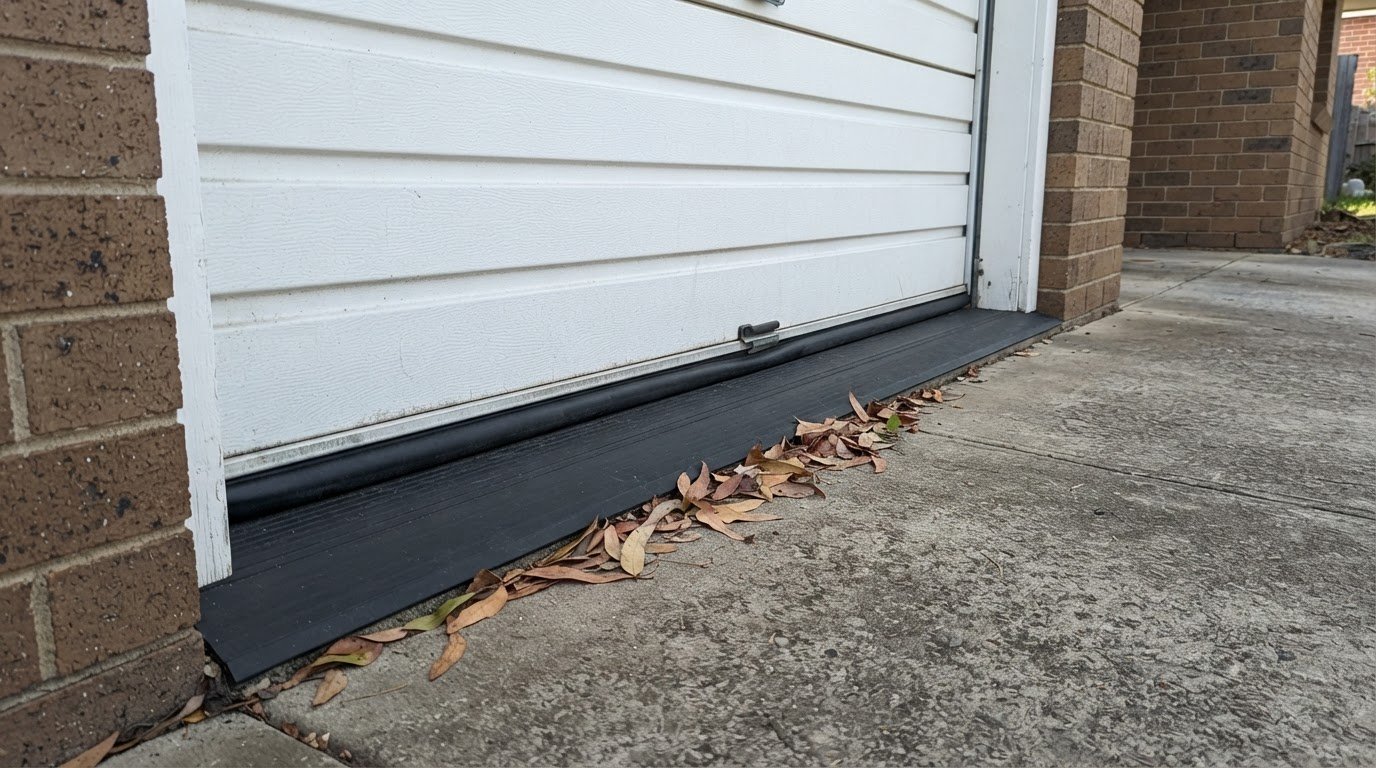
With the door closed, inspect the space between its bottom edge and the floor from inside the garage. A threshold seal sits beneath the door to help block draughts and water. It may reduce leaks, but water can still enter during heavy rainfall. Choose a seal that suits the gap without obstructing the door.
Clear dirt and debris from the floor where the door meets it, then check for uneven areas that could prevent firm contact. A threshold can help when the bottom edge doesn’t meet the floor consistently. It won’t fix a misaligned door or one that won’t close properly, so check that the door sits evenly before fitting one.
-
Install a floor threshold seal
Clean the floor along the full doorway, following the seal manufacturer’s preparation instructions. Position the threshold where the closed door will meet it, then check that it runs straight and doesn’t obstruct the door. Apply the specified adhesive and press the seal firmly along its length. This creates a continuous floor-level barrier rather than leaving gaps at the edges.
Leave the adhesive to cure for 24 hours after installation before using the threshold. Keep the seal undisturbed during that period, and follow the product instructions for any additional preparation or handling. For Australian standards or regulations, use a seal suitable for the door and follow its fitting instructions; the door must still close and operate without obstruction. After curing, close the door and check that it meets the threshold evenly. A floor seal can help manage weather entering beneath the door, but it cannot guarantee a dry garage in heavy rain.
Replacing a sectional garage door’s bottom seal
To block draughts beneath a sectional door, choose a rubber blade seal designed for its edge. Brush strips are another option, helping to block draughts while the door opens and closes.
-
Choose a bottom seal
Inspect the existing seal and door edge before choosing a replacement. A rubber blade seal fits along the bottom to form a barrier against draughts. Match the replacement to the door’s fitting arrangement instead of assuming every sectional door uses the same type.
Look for wear that could break the seal, such as cracks, detachment or a misshapen edge. When the door is closed, the replacement should meet the floor evenly. This contact helps block water, debris and pests from getting underneath.
-
Consider brush strips
Choose a brush strip if its bristles suit the gap along the bottom edge. Stiff nylon bristles help block draughts, dust and pests while the door opens and closes. Brush strips make contact differently from rubber blade seals, so consider the gap and the existing door edge.
Check that the strip can be secured along the bottom without interfering with the door’s movement. Brush strips can be attached with screws. Keep the strip straight, as uneven fitting can leave openings for dust and debris.
-
Install the bottom door seal
Remove the worn seal using the method appropriate for the door, then clean dirt from the bottom edge. Compare the replacement with the old seal before fitting it. Follow the product instructions, whether it slides into place or uses another fixing method.
Fit the new seal evenly along the full bottom edge. Don’t stretch or bunch it, as either can leave gaps when the sectional door closes. Check the finished edge before operating the door.
Close the door and inspect the seal from inside. It should form a tight, continuous barrier without preventing the door from opening or closing. If it sits unevenly, adjust the fitting before relying on it to block water, debris and pests.
Flexible multi-seals for gaps at the top and sides
Flexible seals can close small gaps around a garage door’s top and sides. For draft-proofing garage doors in Melbourne’s western suburbs, measure each opening carefully before choosing and fitting a seal.
-
Measure the door and choose seals
With the door closed, measure the top edge and each side where it meets the frame. Note the widest gaps and check whether the frame is uneven. Flexible rubber multi-seals can close small gaps at the top, bottom and sides. On sectional doors, bristle seals along the top and sides can help keep out dust, sand and debris.
Choose a seal suited to the door and gap rather than assuming one type fits every edge. Multi-seals are also used along the top and sides of up-and-over doors. Record each length separately so the strips can be cut to fit their positions.
-
Cut and attach the multi-seals
Cut each strip to the measured length, keeping the ends neat so they meet the frame without leaving an obvious opening. Remove worn seals before fitting replacements. Clean the surface so dirt doesn’t get trapped between the seal and frame.
Position the new strip and secure it with its adhesive backing. Screws can be added alongside adhesive strips for a stronger hold. Keep the seal straight as you attach it; a twisted or bunched section can leave a gap.
-
Inspect and replace worn seals
Inspect fitted strips every few months for cracks, detachment or wear. These faults can let air or water in, so replace sections that no longer sit against the door or frame. Check the top corners too, where separate strips can leave a small opening.
A torch can help reveal visible gaps around the top, sides and between panels. With the door closed, look for light showing through and identify which seal needs attention. This gives draft-proofing garage doors in Melbourne’s western suburbs a practical starting point: the actual gap, not a guess.
-
Test and adjust fitted seals
Close the door and check that it sits flush with the frame. Look along the top and both sides for spots where the seal misses the door or presses unevenly. Adjust any shifted strip, then close the door again to check the fit.
Operate the door to confirm the fitted seals don’t obstruct its movement. Check the edges again afterwards. A strip that peels away or folds over needs refitting to seal the gap reliably.
Benefits of draught-proofing a garage door
Draught-proofing can do more than close a visible gap. It can make the garage more comfortable, limit debris and help manage heat transfer between an attached garage and the home.
- Reduce unwanted heat loss. Sealing gaps around an attached garage can help reduce heat escaping from the home. The effect on heating bills depends on the property and how it’s used. Draught-proofing is most relevant when the garage shares a wall or ceiling with living areas.
- Make the space more comfortable. Insulation and sealing can help retain warmth in winter and keep a garage cooler over summer. This can matter if you use the space as a home gym, workshop or hobby area. Closing door gaps can reduce draughts near a workbench or exercise space.
- Keep debris outside. After windy weather, check the garage floor and edges for dust, leaves or sand. Sealing gaps can help keep these materials and pests from entering beneath or beside the door. Clear dirt from the door edges so it doesn’t affect the seal’s contact.
- Manage moisture without trapping damp. Gaps can let water and damp air into a garage. Excess moisture may contribute to mould and structural damage, so sealing openings can help protect the space. Maintain proper ventilation, as airflow helps prevent condensation and dampness from building up.
- Match the fix to the space. Start by identifying whether the main problem is heat loss, debris, water or draughts. A home gym may benefit from improved comfort, while a storage garage may need better protection from leaves and pests. If the door needs a broader assessment, arrange garage door maintenance to review its condition and sealing performance.
Brimbank Garage Doors & Repairs
Brimbank Garage Doors & Repairs helps homeowners across Melbourne’s western and north-western suburbs with garage door problems that affect everyday use. If a worn seal is accompanied by a door that doesn’t close evenly, repairs or maintenance can address the door’s condition and operation, not just the visible gap.
For persistent draughts, water entry or a door that sticks after seal work, an assessment can help identify alignment issues, damaged parts or general wear. Garage door installation and roller door supply are also available when replacement is more suitable than another small adjustment.
Contact Brimbank Garage Doors & Repairs to discuss your garage door and the draughts you want to reduce.
Choose a practical next step for your garage
Planning to draft-proof your garage door in Melbourne’s western suburbs? Consider how you use the space and whether the door closes and operates properly. A seal can address a gap, but wear or alignment problems may need attention to the door as a whole.
The cost depends on the type of fix, the door’s condition and the work involved. These factors determine the scope and price. Brimbank Garage Doors & Repairs provides garage door repairs and maintenance for doors that need attention, as well as installation when replacement is the more suitable option.
You don’t need to guess which option is right. Describe the draughts or other door concerns to Brimbank Garage Doors & Repairs and discuss a practical way forward.
Contact Brimbank Garage Doors & Repairs to talk through your garage door needs and take the next step towards a more comfortable space.
Frequently Asked Questions
What Does Garage Door Draft-Proofing Cost?
The cost depends on the seal type and length, the door’s condition and whether fitting or adjustment is needed. A short, accessible edge can require different work from several worn seals or a door that closes unevenly. An assessment establishes the scope and price for the specific garage. There’s no single cost that suits every door.
Can I Adjust the Opener to Press a New Seal Down Harder?
Don’t increase the opener’s closing force just to compress a new seal. The seal should meet the floor without stopping the door from closing and operating properly. If it leaves a gap, check that it’s fitted evenly and suits the door. If the door still closes unevenly, its alignment or operation may need assessment rather than extra pressure from the opener.
How Much Does Winter Weatherstripping Cost?
The cost of winter weatherstripping varies with the material, the edges being sealed and the fitting involved. Replacing one short section differs from renewing seals along the top and sides, especially if old material needs removing. The door’s condition can also affect the work. An assessment establishes the cost for the particular garage and proposed fix.
Is a Floor Threshold Better Than a Bottom Seal?
Neither option is automatically better; each suits a different gap. A floor threshold attaches to the garage floor beneath the closed door, while a bottom seal fits along the door’s lower edge. Consider where the opening is and how the door meets the floor. A threshold may reduce leaks, but heavy rainfall can still bring water into the garage.
What If Rainwater Still Comes In After I Replace the Seal?
Water can still enter during heavy rainfall, even with a threshold seal. If it appears in ordinary conditions, check for another opening along the door’s sides or top, or a section where the closed door doesn’t meet the frame evenly. Note where the water enters and whether the gap changes as the door closes. This can show whether the problem extends beyond the replaced seal.
Why Is There Still Light Under One Corner?
Light under one corner usually indicates uneven contact between the door and floor. Check whether the bottom seal is worn, displaced or sitting unevenly, and whether the door closes flush with its frame. A localised gap can remain even if the rest of the edge looks sealed. If it persists after correcting the seal, the door’s alignment or operation may need attention.