
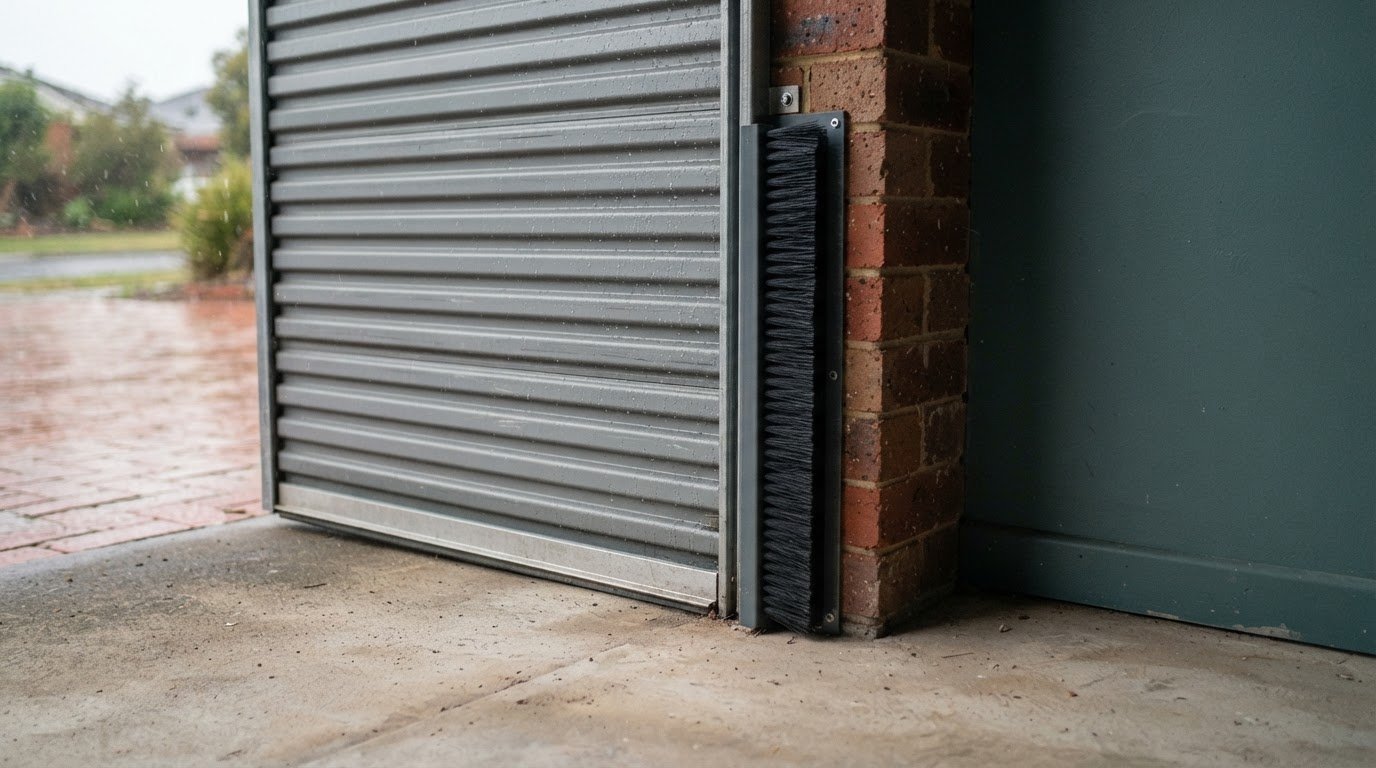
The right garage door seal depends on the door, not just the gap. Garage door weather stripping in Melbourne can help reduce rainwater and debris entering around the edges, but water that pools or flows beneath the door needs a different solution. Brush seals are suited to roller doors and gaps larger than 20 mm, with side brush seals designed to cover gaps up to 25 mm.
A worn or poorly matched seal can leave your garage exposed, so choose one that suits the door’s design. This guide explains how weather stripping helps, which types may suit roller, sectional and tilt doors, and what to consider when arranging installation. It’s a practical starting point for protecting your garage from Melbourne weather.
Key Takeaways
- A perimeter seal helps limit rainwater and debris entering around the garage door, but it isn’t a solution for water pooling or flowing underneath.
- Top, bottom and side seals address different gaps; the door’s layout and the location of the gap help determine the right fit.
- Sectional, tilt and roller doors can require different seal profiles, so compatibility matters as much as the material.
- If a seal is worn or the door no longer closes neatly, maintenance or repairs can help address the underlying fit or operating issue.
Why should you get a Garage Door Seal?
Suitable garage door weather stripping helps close perimeter gaps where rainwater and debris can enter. The door type and size of the gap determine which seal is likely to fit properly.
Brush seals for larger gaps and roller doors
Brush seals suit roller garage doors and larger gaps, particularly where a flexible edge can follow an uneven surface. They’re recommended for gaps larger than 20 mm. Bristle lengths range from 18 mm to 55 mm, so the right size depends on the gap being covered. Measure the opening along the door’s edge, then match the brush length to that space.
Double brush seals for garage doors
A double brush seal has two rows of bristles, creating two contact lines along the edge. It may suit a door where a single row leaves a visible path through the gap. Check how the door sits when closed and whether both rows can meet the surrounding surface without obstructing movement. The seal needs to suit the door’s travel, not just its appearance.
Side brush seals
Side brush seals close gaps along the vertical edges, where windblown debris or rain can enter. A side brush seal uses a 2250 mm metal rod, and its design can conceal gaps up to 25 mm. Check the gap from top to bottom, as uneven spacing may affect coverage. Frayed, bent or missing bristles are practical signs that the seal needs replacing.
Brush seals wear at different rates depending on exposure, use and upkeep. Keep the bristles clear of dirt and check their contact with the door during regular maintenance.
Installing or replacing weather stripping
To install or replace weather stripping, first identify the gap and the seal position, such as the side track of a roller door. Remove the worn strip, clean the mounting surface, then fit a compatible replacement. Check that the seal meets the door evenly and doesn’t interfere with opening or closing.
Replace weather stripping when it’s loose, damaged or no longer covers the gap. If the door’s movement changes after fitting, stop using the seal until it has been adjusted to clear the door’s path.
Protection from rainwater, flooding and debris
A garage door seal helps close gaps around the door, limiting the routes rainwater, windblown leaves and grit can take to enter. A seal along the sides and top addresses openings around the perimeter, while a bottom seal meets the floor when the door closes. A perimeter seal may help limit dust and draughts, but it is not a substitute for measures to manage water entering the garage.
Water entry depends on more than the seal. Notice where water collects during rain, whether the driveway slopes towards the garage and whether there’s a visible gap beneath the door. If water pools outside, it may still flow under a closed door. A seal may help with minor run-off at the threshold, but it can’t redirect water or prevent flooding. Recurring water entry may involve drainage or site conditions as well as a gap around the door.
Dust and small debris often enter through narrow openings at the sides or top. A well-fitted perimeter strip reduces these entry points and can make it easier to keep stored items and floors clean. Wind can also carry rain and loose material through an uneven gap. Check the full edge, not just the spot where you first noticed dirt. A gap near one corner may indicate uneven contact between the door and frame.
Seals can also reduce access through gaps for insects and other small pests, but they don’t make a garage pest-proof. Check the bottom edge, side tracks and top corners for openings, damaged material or a strip that has come loose. After heavy rain, note where moisture or debris appears, then match that entry point to the relevant door edge. If a poorly closing door leaves several gaps, garage door maintenance can help address its fit and operation.

Garage door perimeter seal types
A perimeter seal closes gaps along a garage door’s sides and top. Rubber and foam seals are commonly used at the top or bottom and may suit different garage door types. The right position depends on where an opening remains when the door is shut. A seal fitted to the wrong edge won’t close the gap letting dust or rain in.
Top seals sit above the door and help close the space between its upper edge and the frame. Bottom seals meet the floor when the door closes. Look at the closed door from inside the garage: a strip of daylight at the top indicates a different gap from one beneath the door. This helps identify which position needs attention.
Side and top perimeter seals run along the frame, closing openings beside and above the door. They need to sit close enough to meet the door without catching as it moves. A side strip that presses too firmly may interfere with smooth travel, while one set too far away can leave the gap exposed. Check both sides and the top for consistent contact.
Sectional doors have another possible sealing point: the joins between panels. Thin rubber strips can close gaps along those joins. This differs from a perimeter seal, which follows the door’s outside edges. If light or dust appears between panels, the joints may need attention as well as the frame edges.
Match each garage door seal to its position and the opening it needs to cover. Rubber or foam may suit a top or bottom gap on different door types, while thin rubber strips address sectional panel joins. Inspect the full closed door, including its frame and panel connections, before choosing a seal. This keeps the solution focused on the actual gap rather than replacing a strip that still fits.
Compatibility with different garage door types
Garage door weather stripping in Melbourne needs to suit the door’s movement and the edge where the gap appears. Sectional, tilt and roller doors have different layouts, so a profile that fits one style may not suit another. Identify the door type and locate the gap with the door closed to narrow down which seal may fit the opening.
PolyThermovinyl seals are generally used for sectional doors only. Thin rubber strips can also close gaps between sectional panels. First identify whether the opening is at a panel join or around the outside frame. Those positions need different sealing approaches, even on the same door.
Roller doors have a moving curtain that travels around a drum, so edge clearance matters. Brush seals are recommended for roller doors, particularly when the side gap is larger than 20 mm. Their bristles can meet the edge while allowing door movement. The brush length needs to cover the gap without obstructing the door’s travel.
A rubber bottom seal between 48 and 75 mm wide suits sectional and roller doors. Its width helps determine whether it can cover the opening beneath the closed door. Seals are also available for tilt counterweight doors. For each style, match the seal to the edge and check that the door moves freely after fitting.
The fixing channel can matter as much as the door type. For example, specific tracks require exact weather seal profiles to lock into position correctly. This shows why the door’s channel shape matters: a strip may appear suitable but fail to seat correctly if its ends don’t match the designated rail.
For garage door weather stripping in Melbourne, the door type, gap and fixing profile all help guide the choice. If the profile or fit is unclear, arrange garage door repairs to address fit and operation together.
Brimbank Garage Doors & Repairs
Brimbank Garage Doors & Repairs can assess whether a gap points to a seal issue, door misalignment or a broader operating problem. Its garage door maintenance and repair services address common door faults, including problems with how a door closes. A replacement strip won’t resolve a gap caused by a door that doesn’t sit or travel correctly.
If your existing door is beyond practical repair, garage door installation or garage roller door supply may be suitable options. The right next step depends on the door type, where the gap appears and how the door operates. Describing the issue clearly helps focus the assessment.
Contact Brimbank Garage Doors & Repairs to discuss your garage door and the gaps you’ve noticed.
Take the next step towards a better-fitting seal
Start by connecting the gap you’ve noticed with the way your door closes. Note whether it appears at the floor, frame or between panels, and whether the door moves smoothly. These details help identify the right repair or maintenance need, rather than treating every opening as a seal problem.
For garage door weather stripping in Melbourne, Brimbank Garage Doors & Repairs can assess your door and how it operates. If the issue goes beyond a worn seal, its repair and maintenance services address common faults. Installation is also available when replacing the door is more suitable. The aim is to find a practical next step that considers the whole door.
Contact Brimbank Garage Doors & Repairs to discuss the gaps you’ve noticed and find a clear way forward for your garage.
Frequently Asked Questions
What types of garage door weather stripping are available in Melbourne?
Common options include rubber and foam strips for top or bottom edges, brush seals for side gaps, and thin rubber strips between sectional panels. The right type depends on where air or debris gets through and how the door moves. A brush strip may suit an uneven side gap, while a bottom seal needs to meet the floor without catching.
Which weather seals suit roller, sectional, tilt, and panel-lift garage doors?
Seal choice depends on the door’s edges, movement and fixing points. Brush seals may suit roller doors, while sectional doors can use seals around the perimeter or between panels. Tilt doors need a profile that clears their outward and upward movement. Panel-lift doors vary in design, so match the seal to the frame and door travel rather than relying on the door name alone.
How do I measure a garage door for replacement weather stripping?
Measure the edge where the replacement will sit, not the door’s overall dimensions. With the door closed, record the length of the top, bottom or side section and note the widest visible gap. For panel joins, measure each affected join separately. Also note how the existing strip attaches, as its fixing shape can affect the replacement’s fit.
What are the best garage door weather stripping materials for Melbourne’s climate?
There isn’t one material that suits every Melbourne garage. The gap and seal position matter: rubber and foam may suit top and bottom edges, while bristles can suit larger side openings. Consider whether the seal needs to flex as the door moves and whether it meets an even surface. A suitable profile closes the opening without obstructing the door.
Can weather stripping stop rain, dust, leaves, pests, and drafts entering a garage?
A correctly fitted seal can reduce entry through gaps, including windblown dust, leaves and draughts. It may also limit access for small pests, but it won’t make a garage pest-proof. Heavy rain or water flowing beneath the door can still get inside, particularly where water collects at the entrance. If moisture appears, note where it enters before deciding which edge needs attention.
Where can I buy garage door weather stripping in Melbourne?
Contact Brimbank Garage Doors & Repairs to discuss garage door weather stripping for your door.