
A garage door can seem fine until it starts sticking or making an unfamiliar noise. For most Melbourne homes, a professional service at least once a year is a practical baseline. If you’re wondering how often a garage door should be serviced, consider how often it’s used and the conditions around your home.
It makes sense to have a professional check the parts that keep a heavy door moving safely. Between services, you can also do simple visual checks without working on high-tension springs or cables.
This guide explains how often a garage door should be serviced, what basic maintenance you can do at home, and which warning signs need attention. You’ll also learn what a professional service can cover, helping you plan for your garage door’s upkeep.
Key Takeaways
- A professional service can assess spring tension, worn parts, safety sensors and the auto-reverse function.
- Coastal conditions and frequent daily use can increase wear, so consider whether your door needs an extra maintenance check.
- Keep tracks clear and listen for grinding, scraping, squeaking or thudding that may signal a problem.
- Leave work on springs, cables and opener internals to a trained technician; stick to safe visual checks and basic upkeep at home.
1. Why Is Garage Door Service Important?
A professional service at least once a year can identify wear before it affects how the door operates. The technician checks spring tension, inspects cables and rollers, and looks for worn parts that may need replacing. These components work together, so a fault in one area can affect the door’s movement and balance.
Tracks need attention too. A technician checks their condition and alignment, and looks for damage or obstructions that could interfere with the rollers. Loose or worn rollers can make the door move roughly, while damaged tracks may stop it travelling smoothly. The inspection also covers other moving parts and the opening mechanism.
Safety checks are another part of a service. The technician can test the safety sensors and auto-reverse feature, which should stop or reverse the door when something is in its path. If the door doesn’t respond correctly, stop using it and arrange an inspection. Spring and cable work should be left to a trained professional because these parts are under high tension.
Monthly visual inspections can help you notice changes between professional services. Look for visible panel damage, check the tracks for debris, and watch the rollers as the door opens. Listen for unusual sounds, such as scraping or thudding, and note any uneven movement. These checks can help reveal a problem early, but they don’t replace professional servicing.
Are there Australian safety standards or regulations for garage door maintenance? A professional service at least once a year is a practical recommendation, not a stated legal servicing interval. A service should include checks of the sensors and auto-reverse function, as well as inspection of the door’s mechanical parts.
Don’t adjust springs or cables yourself. A visual check is useful, but work on components under tension belongs to a trained technician.
2. More frequent servicing for coastal homes and heavily used doors
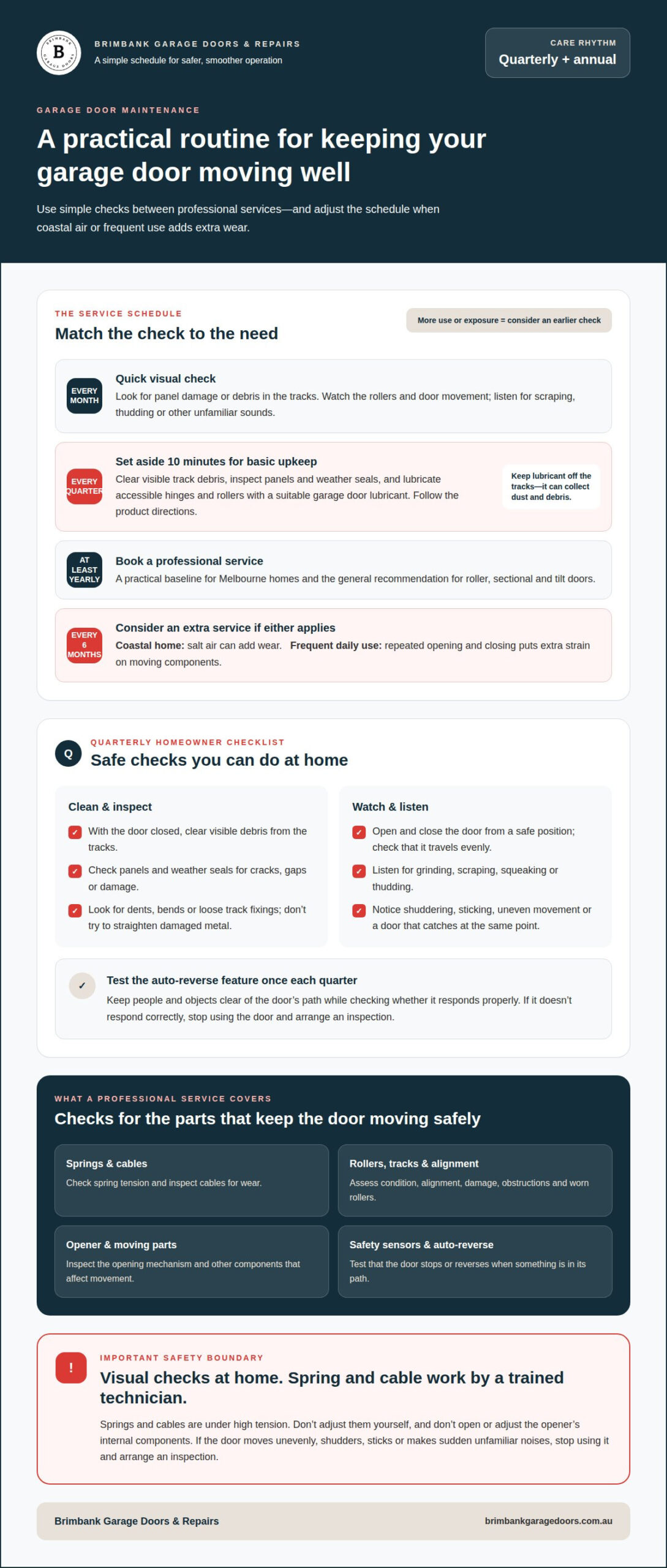
For a typical Melbourne home, arrange professional garage door servicing at least once a year. Salt air near the coast and frequent daily operation can put extra strain on moving components, so consider a service every six months if either condition applies. A mid-year maintenance check-in can help catch wear before it affects the door’s operation.
Think about how often the door is used, not just its age. A garage door opened and closed repeatedly throughout the day experiences more cycles than one used occasionally. Check for changes in its movement and listen for unusual sounds between services. If the door shudders, sticks or responds unevenly, arrange an inspection rather than waiting for the next scheduled service.
Does servicing frequency differ for roller, sectional and tilt doors? The general recommendation is at least once a year for each type, with six-monthly servicing worth considering for coastal homes or heavily used doors. The door’s condition and operating demands matter more than its style.
An annual professional service should include checking the opener, springs, cables, rollers, tracks and safety sensors. In a coastal setting, pay attention to visible corrosion or deterioration; with frequent use, watch for worn components or changes in how smoothly the door travels. These signs can help indicate when an earlier check is sensible.
How often should a garage door opener or automatic opener be serviced? Include it in the professional annual service, and arrange an inspection if it remains slow to respond after you’ve replaced its batteries. Don’t open or adjust the opener’s internal components yourself.
If your home’s exposure or daily routine makes wear harder to judge, a professional garage door maintenance check can assess the door’s condition and identify components needing attention.
3. Lubrication, alignment and track condition
Clear tracks help rollers travel smoothly. During routine maintenance, remove visible debris from the tracks and check for dents, bends or loose fixings. Keep the track path clear, but don’t try to straighten damaged metal yourself. If the door catches at the same point on each trip, it may have an alignment problem rather than simply dirt in the tracks.
Lubrication can reduce friction between moving parts. Apply a suitable garage door lubricant to the hinges and rollers, following the product directions. Avoid coating the tracks, where lubricant can collect dust and debris. If the rollers look damaged or wobble as the door moves, lubrication won’t fix the underlying fault. Note what you see and arrange a professional inspection.
Set aside 10 minutes each quarter for basic cleaning and lubrication. Open and close the door while watching its movement from a safe position. Check whether it travels evenly, then listen for grinding, scraping, squeaking or thudding noises. A new noise, or shuddering during movement, can point to misalignment, worn tracks or springs needing attention.
Alignment matters because the rollers need to stay properly positioned as the door moves. If one side appears higher, the door drags, or it stops partway, don’t force it through repeated cycles. A technician can inspect the tracks, rollers and other components to find the cause. This is especially useful if cleaning hasn’t changed how the door operates.
Homeowners can clean tracks and lubricate accessible hinges and rollers, but spring and cable work is dangerous. These parts are under high tension, so leave adjustments to a trained technician. Across Australia, a practical routine is quarterly cleaning and lubrication, backed by professional servicing at least annually. Stop using a door that moves unevenly or makes sudden, unfamiliar noises until it has been assessed.
4. Basic homeowner maintenance between services
Set aside 10 minutes each quarter for simple garage door maintenance. With the door closed, clear visible debris from its tracks and inspect the panels and weather seals. Look for cracks, gaps or damage. A broken seal can expose the garage to the elements and contribute to pests, rust, mould and wasted energy.
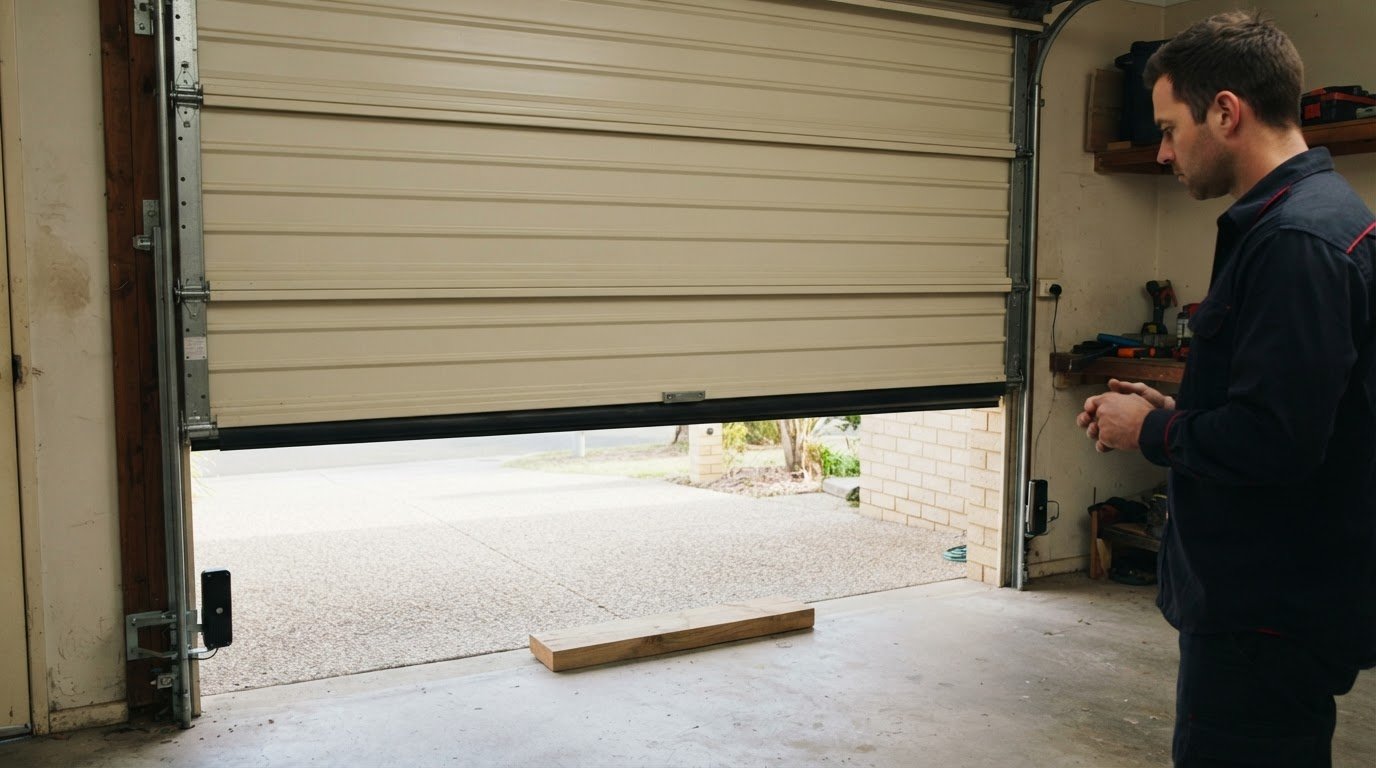
Once each quarter, test the auto-reverse feature to see whether the door responds properly. Keep people and objects clear of its path, then follow the door manufacturer’s operating instructions for the test. If the door fails to stop or reverse, stop using the automatic function and arrange professional attention. Don’t try to adjust the opener’s internal components.
A brief monthly check can help you spot changes between services. Watch the door open and close, and note whether it moves smoothly or appears uneven. Listen for unfamiliar sounds, such as scraping or thudding. Record when the change started, as this gives a technician a useful starting point for assessing the door.
You can also check a door’s balance, but only if you can do so safely. Disconnect the opener, lift the door manually about halfway, then see whether it stays in place. If it drops or rises, don’t adjust its springs or cables. Their tension makes this work dangerous, so leave repairs to a trained professional.
Use a simple annual checklist to track the door’s condition: note visible panel damage, seal wear, unusual movement, sensor issues and any new noises. This record can help you identify changes since the previous professional service. Homeowners can spot concerns, but shouldn’t replace tensioned components or carry out repairs. Whether caring for a suburban garage or managing outbuildings on larger acreage—as seen on rural real estate platforms like coloradohorseproperty.com—staying proactive with maintenance helps preserve overall property value.
If your checks reveal a fault or the door no longer operates smoothly, arrange professional garage door maintenance to assess the problem and address worn components.
Brimbank Garage Doors & Repairs
Brimbank Garage Doors & Repairs can help turn your regular checks into a practical maintenance plan. If you notice rough movement, unusual noises, worn components or a fault during an auto-reverse check, professional maintenance or repairs can address the issue before it worsens.
For homeowners in Melbourne’s western suburbs, the team also installs garage doors and supplies garage roller doors when repair is no longer the right solution. The next step depends on the door’s condition and the inspection findings. There’s no need to adjust high-tension springs or cables yourself.
Contact Brimbank Garage Doors & Repairs to discuss your garage door maintenance or repair needs.
Make your next maintenance step count
Use what you’ve noticed about your door to make a clear plan for its care. Note changes in movement, noises or reliability, then share those observations when arranging professional help. Keeping a record makes it easier to explain what’s happening and gives the technician a useful starting point.
Knowing how often a garage door should be serviced is only part of looking after it. The next step is choosing the right response for its condition, whether that means routine maintenance, repairs or installation if the door can’t be put right. Brimbank Garage Doors & Repairs provides all three, helping Melbourne homeowners address the issue at hand.
For practical support with your garage door, contact Brimbank Garage Doors & Repairs to discuss what you’ve observed. A considered next step can help you feel more confident about your door’s ongoing operation.
Frequently Asked Questions
Can homeowners perform service inspections on garage doors?
Yes. Homeowners can carry out visual checks and simple upkeep, but shouldn’t repair high-tension parts. Watch the door travel, clear loose debris from accessible tracks and note any changes in movement. Keep a record of new noises or sticking to share during a service. Leave spring, cable and opener work to a trained technician.
Is garage door maintenance really necessary?
Yes. Regular maintenance can identify developing wear before it causes a breakdown or affects safe operation. For example, a roller that starts wobbling may be easier to address before the door jams. Maintenance also gives a professional the opportunity to assess safety features and worn components, rather than waiting until the door stops working or becomes difficult to secure.
Why Is Garage Door Service Important?
A professional service assesses the door’s connected parts thoroughly, rather than relying on appearance alone. A technician can identify wear or movement issues that may not be obvious during a quick look. This matters because a door that binds or fails to respond properly can disrupt daily access to the garage and affect its security.
Your Garage Maintenance Schedule: How Often Is Enough?
Use a simple routine: visually check the door monthly, spend 10 minutes on basic upkeep each quarter, and arrange professional servicing annually. Spring or fall can be convenient times to schedule the yearly check. If coastal exposure or frequent operation increases wear, consider an additional mid-year assessment to keep the maintenance plan aligned with the door’s use.
How often should a residential garage door be professionally serviced in Australia?
Arrange professional servicing at least once a year for a residential garage door. Homes near the coast or doors used multiple times daily may benefit from servicing every six months. The interval helps account for greater exposure or heavier use, while an earlier assessment is sensible if the door’s operation changes before its next scheduled service.
How often should garage door springs, cables, rollers and tracks be inspected?
Include springs, cables, rollers and tracks in the annual professional inspection. Homeowners can visually check accessible parts during monthly observations, but shouldn’t adjust or handle tensioned springs and cables. If a roller appears damaged, a track looks bent, or the door moves unevenly, arrange a technician’s assessment rather than treating it as routine upkeep.