
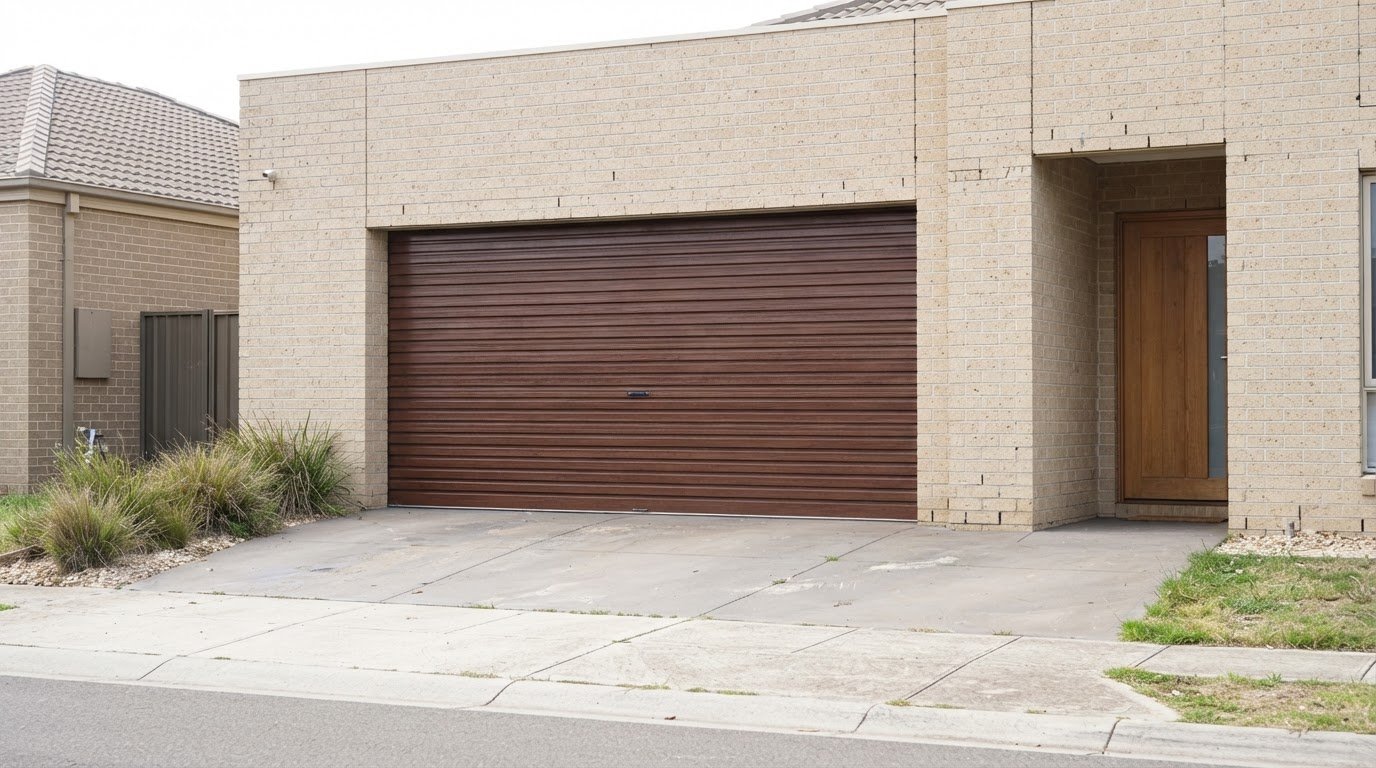

The finish determines the care. For timber look garage doors in Melbourne, a timber-grain finish on steel offers a lower-maintenance alternative to natural wood. Real timber needs regular oiling or sealing, and sealed doors may need refinishing every 5–7 years; professional garage door servicing is recommended every 12–18 months.
Natural timber has warmth and character, but it also needs regular upkeep. This guide explains how real timber and timber-look finishes differ, what to consider when choosing between them, and how to coordinate a door with your home’s exterior. See how timber tones and panel styles work with brick, render, stone, fencing and other finishes to choose a look that suits your Melbourne home.
Key Takeaways
- Choose between real timber and a timber-look finish by weighing the natural appearance you want against the care each material needs.
- Consider how cedar, plywood and aluminium-frame construction affect the look and design of a natural timber door.
- Coordinate the door’s tone and panel style with your home’s façade, front door and other exterior finishes for a more cohesive appearance.
- Explore customisation options to shape a design around your home, and consider professional installation or maintenance when you need a practical next step.
How do I maintain my Timber Garage Door?
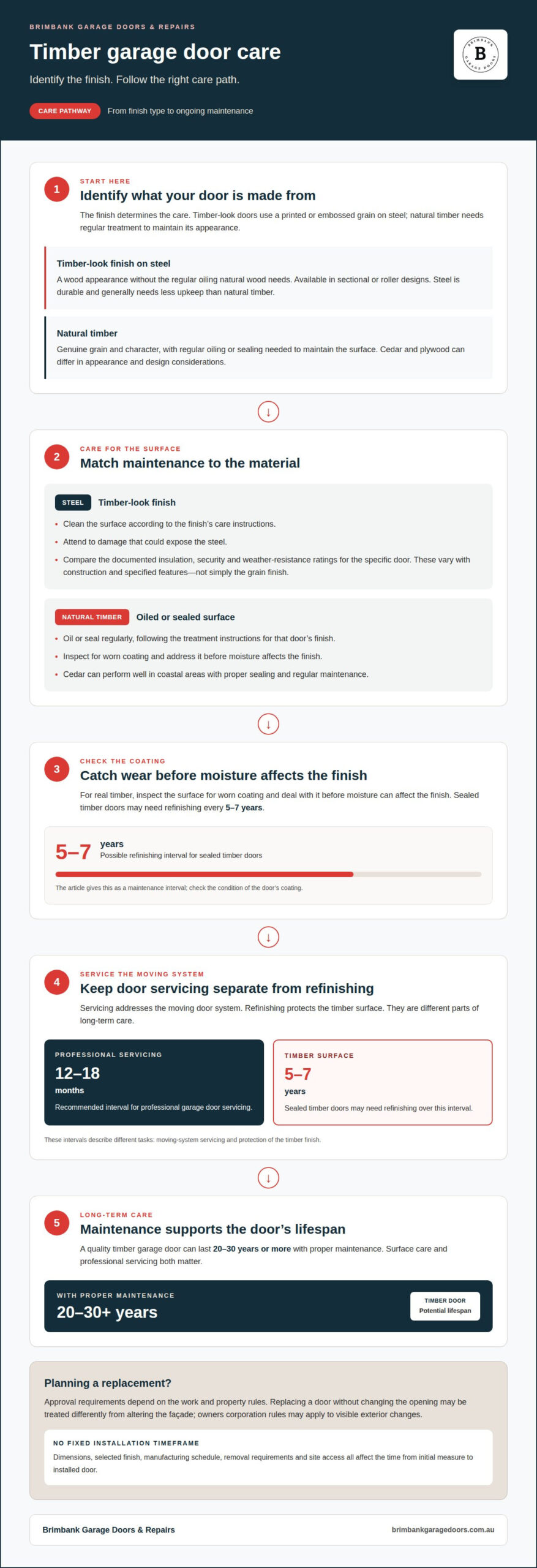
First, identify whether the door is natural timber or has a timber-look finish. Timber-look garage doors use a printed or embossed grain on steel, in sectional or roller designs. The finish creates a timber appearance without the regular oiling natural wood needs. For homes in Melbourne’s western suburbs, consider how the material and finish affect ongoing care.
Permit or owners corporation approval requirements depend on the work and property rules. Replacing a door without changing the opening may be treated differently from altering the façade, and owners corporation rules may apply to visible exterior changes. Consider these requirements before planning the replacement.
Timber-look garage doors do not all have the same insulation, security or weather-resistance rating. Performance depends on the door’s construction and specified features. Compare the documented ratings for the particular design instead of assuming the timber-grain finish determines performance.
Steel is durable and generally needs less upkeep than natural timber. Clean the surface according to the finish’s care instructions, and attend to damage that could expose the steel. A timber-look profile can suit homeowners who want a wood appearance without regular timber treatments. Natural timber, in contrast, needs regular oiling or sealing to maintain its appearance.
For real timber, inspect the surface for worn coating and address it before moisture affects the finish. Sealed timber doors may need refinishing every 5–7 years. Cedar can perform well in coastal areas with proper sealing and regular maintenance. Oil treatments help preserve real timber cladding, but follow the treatment instructions for that door’s finish.
Professional garage door servicing is recommended every 12–18 months. Servicing addresses the moving door system, while refinishing protects the timber surface. A quality timber garage door can last 20–30 years or more with proper maintenance, making both tasks important to its long-term care.
Measuring, manufacture and installation do not follow one fixed timeframe. Door dimensions, the selected finish, manufacturing schedule, removal requirements and site access all affect the process. These details determine the time from the initial measure to the installed door.
Why Choose Natural Wooden Garage Doors?
Natural timber gives a home’s façade genuine grain and texture. Cedar, plywood and aluminium-frame construction each bring different design and maintenance considerations.
Available Timber-Look Door Types
Timber-look options in Melbourne include steel sectional doors and roller doors with a printed or embossed grain. Timber-look aluminium battens create another effect, with linear elements that give the façade a timber-inspired appearance. Consider the profile, finish and available space: a sectional door runs along ceiling tracks, while a roller door coils above its opening.
Natural cedar has distinctive grain and character, but needs regular sealing or oiling to protect its appearance. Plywood can provide a flatter surface for a consistent finish, while the timber and coating influence the final look. An aluminium frame can support a timber-faced design. Ask how the facing is attached and finished to make sure the construction suits the appearance and care routine you want.
Aluminium battens create a more defined, contemporary profile than broad timber boards. Their spacing, direction and colour shape the finished effect. Check how they meet the door edges and whether the arrangement suits the garage opening. For natural timber, compare cedar and plywood samples in daylight: grain and tone can look different beside your home’s brickwork or render.
Choosing a Door and Installer
Before choosing a door, establish the opening dimensions, preferred material and operating style. Then consider whether the design needs to work with an existing opener, ceiling tracks or limited space above the opening. These practical details help narrow down suitable styles and construction.
Installation planning should account for accurate measurement, the door’s frame and finish, operating hardware, removal requirements and site access. A clear process brings these details together with a compatible design, rather than treating timber appearance as the only decision.
Coordinating garage doors with home architecture
A garage door can take up to 60% of a home’s façade, so its finish strongly shapes the street-facing aesthetic. Choose colours and textures alongside the whole exterior, not as an isolated feature. For example, a warm timber tone can soften a home with broad areas of rendered masonry, while a darker finish can add contrast against pale walls.
Match the timber tone to your home’s architectural style. Lighter oak tones suit coastal and Scandinavian designs, while darker walnut and cedar tones complement contemporary and mid-century homes. Consider the roof, window frames and surrounding landscape too. A light oak door beside dark window frames creates contrast; matching the tones gives the façade a more understated look.
Timber-look finishes pair well with natural stone, render, brick and timber cladding. Use the materials already on your façade as a guide: a cedar-toned door can echo timber cladding, while a subtle grain can sit comfortably beside textured brick. Aim for balance. Repeating every texture can make the exterior feel busy, so let one surface provide visual warmth.
For a cohesive exterior, coordinate the door’s timber tone with the front door, decking, fencing or window frames. Start with an existing feature, such as a timber front door, and choose a garage finish that complements its colour without competing for attention. View samples beside your home’s brick or render in daylight, as nearby colours can affect how the finish looks.
Panel profile matters as much as colour. Broad horizontal lines can reinforce a wide, low façade, while a vertical profile can draw the eye upwards. Consider the texture from the footpath, where the door’s scale and pattern influence the overall impression. A beautiful result balances grain, panel direction and surrounding materials, while the chosen finish preserves the strength of the home’s architectural character.
Customisation and architectural design
Melbourne homes suit a range of door styles, colours and grain effects. Timber-look finishes use printed or embossed grain on sectional or roller doors. Lighter oak suits coastal or Scandinavian homes, while darker walnut and cedar complement contemporary or mid-century façades.
Custom Design Options
Start with the opening and the home’s architectural lines. Choose a sectional or roller format, then consider the panel profile, grain direction and finish. These choices shape how the door sits against the façade. Panel boards are available in 86 mm or 135 mm widths, giving the design a finer or broader visual rhythm.
To picture the result, compare the proposed finish with existing brick, render or timber cladding. A warm grain can add texture to a plain façade; a subtler finish can keep a detailed exterior from feeling crowded. Consider the front door, fencing and window frames together so the new design connects with existing colours.
Melbourne Styles, Colours and Timber-Grain Finishes
For a contemporary Australian home, a darker timber grain can contrast with pale render. Lighter oak tones can support an open, relaxed look on a coastal-style façade, while cedar tones bring warmth to brick or timber-clad homes. The right choice depends on your existing materials and the effect you want from the street.
View samples beside your home in daylight before choosing a finish. Check how the grain looks against nearby surfaces, then decide whether the door should blend in or stand out. A bold profile may suit a simple façade, while a restrained pattern can balance decorative brickwork. Each decision contributes to the overall composition.
Ready to shape a design around your home? Discuss your garage door design as a practical next step.
Brimbank Garage Doors & Repairs
Brimbank Garage Doors & Repairs can help with garage door decisions, installation, repairs and ongoing maintenance across Melbourne’s western and northern suburbs. If your existing door is worn, noisy or no longer suits your home, professional assessment can clarify whether repair or replacement is the practical next step.
For a new door, installation and garage roller door supply support a range of residential needs. The right choice depends on the opening, the look you prefer and how the door will operate. Maintenance and repairs can address common faults and help keep an existing door working reliably.
Contact Brimbank Garage Doors & Repairs to discuss your garage door needs.
Make your next door choice with confidence
Choosing timber-look garage doors in Melbourne involves more than picking a grain or colour. Consider how the door will look as part of your home each day, and whether its appearance and care needs suit your preferences. Deciding what matters most, such as natural timber or a simpler maintenance routine, gives the design discussion a clear starting point.
Bring your preferred look together with practical details, including the existing opening and the exterior finishes you want the door to complement. This provides a useful basis for the design decision, rather than leaving it to colour alone. Brimbank Garage Doors & Repairs can help you plan the next step for your garage door.
Contact Brimbank Garage Doors & Repairs to discuss your plans and move towards a door that feels right for your home.
Frequently Asked Questions
What materials are used in Timber Garage Doors?
Natural timber doors can use cedar or plywood, while timber-look doors commonly use steel with a printed or embossed grain. Some designs include aluminium frames or timber-look aluminium battens. These materials are not interchangeable: the outer finish creates the appearance, while the door and frame construction determine the underlying material. Identify both when comparing care needs and design options.
Which materials and finishes best replicate the look of timber garage doors?
For genuine grain, natural timber such as cedar offers real wood character. A printed steel finish gives a timber-style pattern, while embossing adds surface texture. Aluminium battens create a defined, linear timber-inspired look. The closest match depends on whether you value natural variation, a consistent grain effect or distinct battens. Consider the overall profile as well as the colour.
Which Melbourne suppliers and installers offer timber-look garage doors?
Brimbank Garage Doors & Repairs provides residential garage door installation and garage roller door supply, as well as repairs and maintenance. Homeowners considering timber-look garage doors in Melbourne can discuss the opening, door format and preferred finish when planning a replacement. These details shape the installation requirements and connect the look you want with the practical work involved.
How do timber-look garage doors compare with real timber doors in durability and maintenance?
Timber-look garage doors in Melbourne are often steel doors with a wood-grain finish, offering durability with less routine care than natural timber. The finish does not need oiling, but attend to surface damage to protect the underlying material. Real timber needs regular oiling or sealing to preserve its appearance. Choose according to whether authentic wood and its upkeep suit your preferences.