
A new grinding noise is a warning to investigate, not ignore. A garage door safety check for families in Melbourne should include a monthly auto-reverse test, clean and aligned photo-eye sensors, and a visual inspection of the springs, cables and tracks. Professional servicing is recommended once a year. If the door doesn’t reverse when it meets an object, stop using it.
It’s understandable to wonder whether a noisy door is safe to operate, especially with children nearby. This guide explains what to look for, how to test the auto-reverse feature safely, and when grinding noises or visible wear need attention. You’ll also find practical checks for the controls, moving parts and general operation, so you can spot concerns early and decide what to do next.
Key Takeaways
- Check springs, cables and sensors for visible wear, damage or misalignment, but leave spring adjustments to a professional.
- Inspect moving parts at least every quarter and lubricate them every three months to help keep the door operating smoothly.
- Keep remotes out of children’s reach and position wall controls at least 1.5 metres above the floor.
- Test the auto-reverse once a month; if the door doesn’t reverse when it encounters an obstacle, stop using it.
- A new grinding noise, a door that drops or visible spring damage calls for attention, not guesswork.
1. What does a garage door safety check in Melbourne cover?
A garage door safety check for families in Melbourne covers the door’s moving parts, safety sensors and automatic reverse. It also means noticing changes such as uneven movement, visible damage or a new grinding noise. Check what you can see and test safely. Don’t adjust springs or force a door that seems faulty.
For residential garage doors in Australia, household checks assess safe operation, but they don’t certify compliance with a particular Australian Standard or regulation. Follow the manufacturer’s safety instructions for your door and opener, as sensor layouts and testing steps can vary.
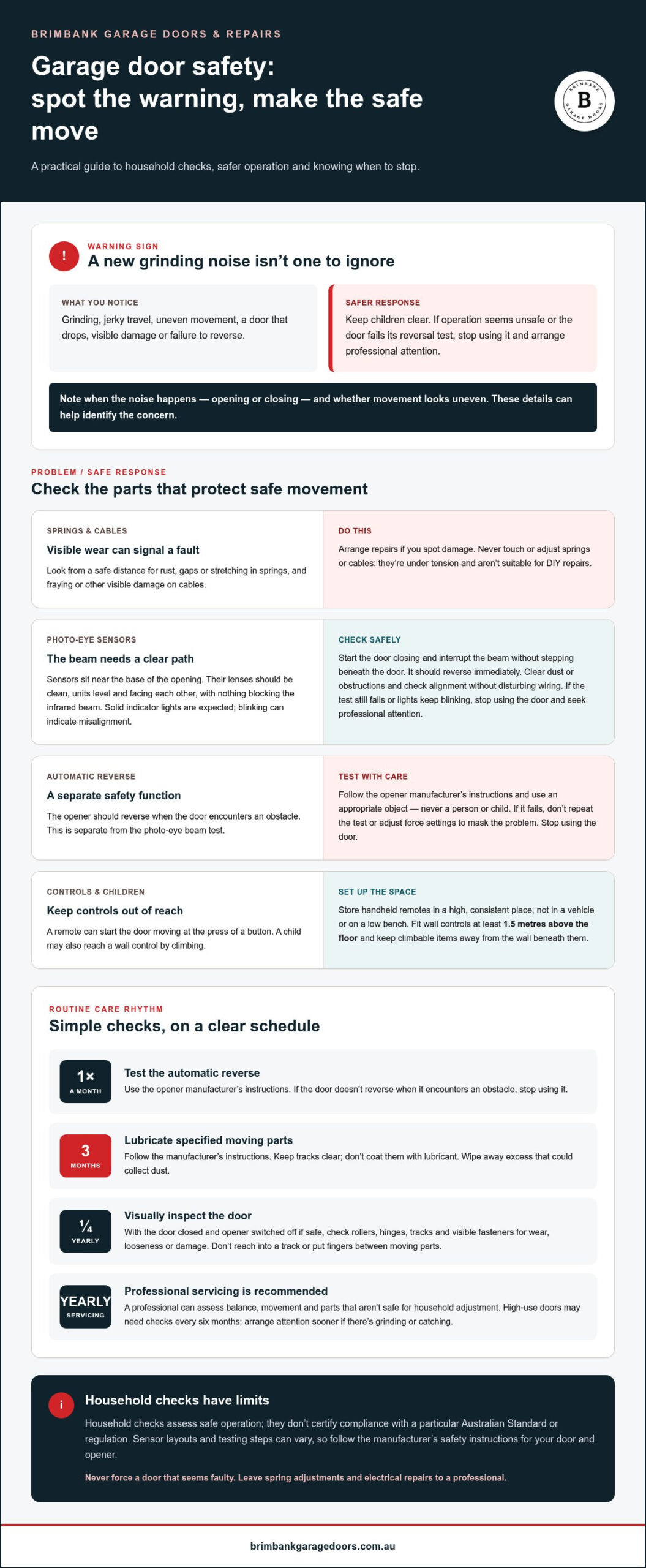
Families should visually check springs and cables from a safe distance, then confirm that sensors are clean, aligned and unobstructed. Look for rust, gaps or stretching in springs, and fraying or visible damage on cables. Arrange repairs if you spot a fault. Never handle or adjust springs yourself, as they are under tension.
Photoelectric sensors sit near the base of the door opening. Their infrared beam should pass uninterrupted between the units. If something breaks the beam while the door is closing, the door should stop and reverse. Keep sensor lenses clear and check that the units face each other, sit level and show solid indicator lights. Blinking lights can indicate misalignment.
To test the sensors, start the door closing and interrupt the beam without stepping beneath it. The door should reverse immediately. If it continues closing, stop using it. Gently clean dusty lenses, remove anything blocking the beam and check alignment without disturbing the wiring. If the lights keep blinking or the test still fails, faulty wiring or a damaged sensor may need professional attention.
Automatic reverse is a separate safety function from the photo-eye beam. Test it according to the opener manufacturer’s instructions, using an appropriate object in the door’s path, never a person or child. The door should reverse when it encounters the obstacle. Don’t repeat the test if it fails, and don’t adjust force settings to mask a problem. Force calibration affects how the opener responds to resistance, so incorrect settings can compromise safe operation.
A new grinding noise, jerky travel, a door that drops, or failure to reverse deserves attention. Note when the noise occurs, such as during opening or closing, and whether the movement looks uneven. These details can help identify whether the concern involves the opener, tracks or another component. Keep children clear, stop using a door that fails its reversal test, and arrange repairs for damage or unsafe operation.
2. Quarterly lubrication and visual inspections
Set a recurring calendar reminder to inspect the door visually at least every quarter. Lubricate moving parts every three months, following the garage door manufacturer’s instructions. Regular checks can reveal changes before movement becomes uneven or noisy. They don’t replace professional servicing, which is recommended at least once a year.
Start with the door closed and the opener switched off, if you can do so safely. Inspect the rollers, hinges, tracks and visible fasteners for wear, looseness or damage. Check that the tracks haven’t shifted and that the rollers sit correctly. Don’t put fingers between moving parts or reach into a track while the door is operating.
Use lubricant only on the components and in the locations specified by the manufacturer. Tracks should remain clear, so don’t coat them with lubricant. Apply products carefully to the recommended moving parts, then wipe away excess that could collect dust. If the manual gives different care instructions, follow the directions for your door and opener.
Inspect springs and cables from a safe distance, without touching or adjusting them. Look for visible rust, gaps or stretching in springs, and fraying or other damage on cables. A door that sits unevenly, drops or struggles while closing can also signal a problem. Stop using it if operation seems unsafe. Springs and cables carry tension and aren’t suitable for DIY repairs.
Check visible wiring for loose sections, damaged insulation or signs of corrosion, but don’t pull wires or open electrical housings. Leave wiring and electrical faults to a professional. If a sensor light keeps blinking after you’ve cleared dust and checked alignment, note the symptom rather than attempting a wiring repair. That detail can help focus the inspection.
Choose a Melbourne technician who examines the complete door system, including cables, springs, sensors, wiring and opener operation. A clear explanation of the fault, proposed repair and any replacement parts helps you understand what the work addresses. Ask for the inspection findings and care recommendations in plain language.
During a professional inspection, the technician can assess balance, movement and components that aren’t safe for household adjustment. Annual servicing is recommended, while high-use doors may need checks every six months. A new grinding sound or a door that catches while closing is a reason to arrange attention sooner. A professional garage door maintenance inspection can assess wear and help identify the next repair step.
3. Keeping remotes and wall controls out of children’s reach
A garage door remote can start the door moving at the press of a button, so keep it out of children’s reach. Store handheld remotes in a high, consistent place, such as an adult’s cupboard, rather than on a low bench or beside the entry. Don’t leave a remote in a vehicle where a child can reach it. Put it away after each use.
Fit wall-mounted control panels at least 1.5 metres above the floor, out of reach of young children. Check the panel’s height from the floor, not from a nearby shelf or step. Keep furniture, storage tubs and other climbable items away from the wall beneath it. That helps prevent a child from reaching the button by climbing.
Set a simple household rule: children stay clear of garage doors while they’re moving and don’t operate them themselves. Explain that the door is heavy and can move without warning once an adult presses a control. Use plain language, such as “stand back until the door has stopped”. Practise the rule during everyday arrivals and departures.
Adults should operate the door and keep children in a safe place while it opens or closes. Before pressing a remote or wall button, check that children are away from the doorway and can’t run beneath the moving door. Keep them beside an adult, rather than in the garage near the tracks. Wait until the door stops before walking through.
Make the rule specific to common family routines. For example, ask children to wait inside while an adult opens the garage door, then leave together once it has stopped completely. If a child is playing nearby, pause before operating the door and move them to a clear area first. Don’t ask a child to fetch an object from beneath a moving or partly open door.
Review these habits with visitors and other adults who care for children. Show them where remotes are stored, which wall control operates the door, and where children should wait. If a remote is misplaced, look for it rather than leaving controls accessible in a shared area. Keep controls visible to adults but secured from children.
Include control placement in a family safety check: confirm the wall button is at least 1.5 metres high, remotes are stored out of reach, and children know not to operate the door. Revisit these steps when furniture or storage arrangements change. A new shelf beneath a control panel, for instance, may give a child an easy way to reach it.
4. How do I test my garage door auto-reverse feature?
Test the auto-reverse function once a month, following the opener manufacturer’s instructions. The mechanism should make the door reverse if it meets an obstacle while closing. This check can reveal a fault before the door’s automatic movement puts someone at risk.
Before testing, clear the doorway and keep children and pets well away. Make sure the door and opening are visible, with no one standing beneath the door. Use the wall control or remote to start closing it, then follow the manufacturer’s method for placing an object in its path. Never use a person or body part as the test object.
Watch the door throughout the test. It should reverse when it encounters the object. If it keeps closing, stops without reversing or behaves unpredictably, stop using the door and arrange a professional inspection. Don’t keep repeating a failed test or change force settings to alter the door’s response. Incorrect force calibration can affect how the mechanism reacts to resistance.
Photo-eye sensors provide another automatic reverse safeguard. Their beam should be clear, and the units should face each other. If they’re misaligned or obstructed, the door may refuse to close or may not respond as expected. Clean dust from the sensor lenses and remove objects blocking the beam, then test again according to the opener instructions. If the fault persists, leave wiring and electrical repairs to a professional.
A monthly check should also include watching the door move from fully open to fully closed. Note whether it travels smoothly, pauses, jerks, makes a new grinding noise or closes unevenly. These changes don’t identify the fault on their own, but they’re useful details to report during an inspection. Keep clear of the tracks and moving panels while observing.
Door balance matters because the opener shouldn’t have to compensate for a door that’s difficult to move. Don’t disconnect the opener or try to lift a heavy door to test its balance unless the manufacturer’s instructions specifically guide you through that process. A door that drops, strains the opener or moves unevenly needs attention, not repeated testing.
Record the date and result of each monthly check. A simple note such as “reversed correctly” or “failed to reverse” helps track changes over time. If the door fails, stop using it. The automatic safety mechanism may not protect against accidents until the underlying issue is addressed.
5. Garage door system safety checks
A safe garage door depends on the whole system working together: door, springs, cables, tracks, opener and safety sensors. A standard garage door can weigh 100–200 kg, so a fall can cause serious injury or death. Check the door’s overall operation, not just whether the opener responds to a remote.
During normal use, watch the door move from fully open to fully closed. It should travel smoothly, without slamming, dropping, catching or stopping unexpectedly. Check that it closes properly and doesn’t leave gaps where fingers could become trapped. If the door behaves differently, stop using it until the cause is assessed.
Look over visible components from a safe distance. Rust, gaps or stretching in springs can signal a problem, as can frayed cables or visible damage around tracks and fittings. Don’t adjust torsion or extension springs yourself. Their stored tension makes DIY repairs hazardous, and a damaged spring needs a technician’s assessment.
Check that the manual release cord is accessible, then follow the opener manufacturer’s instructions for using it. Test the emergency release once or twice a year, as recommended, and only when the instructions say it’s safe. Make sure everyone in the household knows where the cord is, but keep children from pulling it during automatic movement.
Have the complete system professionally serviced at least once a year. High-use garage doors may need checks every six months. A technician can inspect the opener, door balance, safety sensors, wiring and structural parts together, rather than treating one symptom in isolation. This can help identify why a door strains, makes a new noise or fails to close properly.
Age also matters. A garage door or opener more than 15 years old may lack safety features considered essential. During an inspection, ask whether the existing door’s safety features and operation suit the household’s needs. If the door is damaged, drops or fails to reverse, stop using it rather than relying on the automatic system to prevent an accident.
For a practical record, note the inspection date, unusual sounds, uneven movement and any failed checks. Share those observations during professional servicing. If wear or a fault needs attention, arrange a garage door maintenance assessment to help identify the appropriate repair and restore safe operation.
Brimbank Garage Doors & Repairs: Garage Door Installation
Brimbank Garage Doors & Repairs can help when a safety check reveals a fault that needs professional attention. If the door grinds, moves unevenly, or has damaged components, its garage door repairs and maintenance can address common malfunctions. For a door that needs replacing, the business also provides garage door installation and supplies garage roller doors for residential properties.
Describe what you’ve noticed, such as a failed auto-reverse test, a new noise or visible wear. That gives the team a practical starting point for assessing the door and suitable work. If you’re planning a replacement, installation is the relevant next step. If the door remains serviceable, repairs or maintenance may be appropriate.
Contact Brimbank Garage Doors & Repairs to discuss your garage door, or visit brimbankgaragedoors.com.au.
Make safety part of the household routine
A garage door safety check for families in Melbourne works best when everyone knows the household plan. Agree on who operates the door, where children wait, and how family members report a new sound or change in movement. Include other carers in the conversation so the same habits carry through school runs, visits and busy mornings.
Keep a simple record of concerns and actions taken. This makes recurring faults easier to describe and helps ensure small changes aren’t overlooked. If you’re unsure whether the door is safe to operate, getting the issue assessed is a sensible next step. Brimbank Garage Doors & Repairs can discuss the problem and suitable repairs or maintenance.
Contact Brimbank Garage Doors & Repairs to talk through your garage door concerns and take the next step towards a safer routine at home.
Frequently Asked Questions
Is it safe to use a garage door that makes a new grinding noise?
No. Stop operating the door if a new grinding noise comes with jerky movement, catching or a visible change in how it sits. Repeated operation can worsen a mechanical fault or leave the door stuck partway. Keep children clear and note whether the sound happens during opening, closing or both. Share those details when arranging an assessment rather than trying to locate the fault by touching moving parts.
What do the lights on my garage door sensors mean?
Solid indicator lights generally show that the sensors are powered and communicating, while a blinking light on the receiving unit can point to misalignment or an interrupted beam. Light patterns vary between opener models, so use your manual to interpret a specific signal. If the lights keep blinking after you clear dust and check alignment, don’t rely on the sensors. A wiring fault or damaged unit may need professional attention.
What does a garage door safety check in Melbourne cover?
A garage door safety check for families in Melbourne reviews the door, opener and safety components together. It can identify visible wear, unusual movement, sensor faults and signs that need repair. The findings help distinguish a simple obstruction from a mechanical or electrical issue. Note symptoms, such as a door stopping halfway or lights changing after rain, to give the technician useful context.
Can I keep using my garage door if it is stuck or uneven?
No, don’t force a stuck or uneven door through another cycle. Stop operating it, keep people clear of the opening and avoid lifting it by hand if it feels heavy or unstable. A shifted door may be under strain, even if the opener still responds. Don’t pull the release cord to move it unless the manufacturer’s instructions say it’s safe in that situation.
Can a garage door injure or kill someone?
Yes. A standard garage door can weigh 100–200 kg and may cause serious injury or death if it falls. The danger isn’t limited to a door dropping: a person can also be struck or trapped during movement. Treat a damaged, unstable or non-reversing door as unsafe, keep everyone away from its path and don’t attempt spring or cable repairs yourself.
How can a safety check lead to the right repair?
A useful check records what happened, not just the suspected cause. For example, note whether the opener clicks, the door reverses or a sensor light changes when the fault occurs. A technician can compare those symptoms with the door’s movement and inspect relevant components before recommending work. This helps distinguish an obstruction or alignment issue from damaged parts, wiring trouble or an opener fault.
How do I test my garage door auto-reverse feature?
Test it once a month, following the opener manufacturer’s instructions and using an appropriate object, never a person, as the obstacle. Keep the doorway clear and watch from a safe position. The door should reverse when it encounters the object. If it doesn’t, stop using the door and arrange repairs rather than adjusting the opener’s force settings yourself.
How do I use the emergency release on my garage door?
Use the emergency release only as described in your opener’s manual, because release methods vary by model. The cord should be accessible, but don’t pull it while the door is moving or if the door appears unstable. Keep clear of the opening, then follow the manual’s steps for disengaging the opener and moving the door. If it feels unusually heavy or won’t move smoothly, stop.