
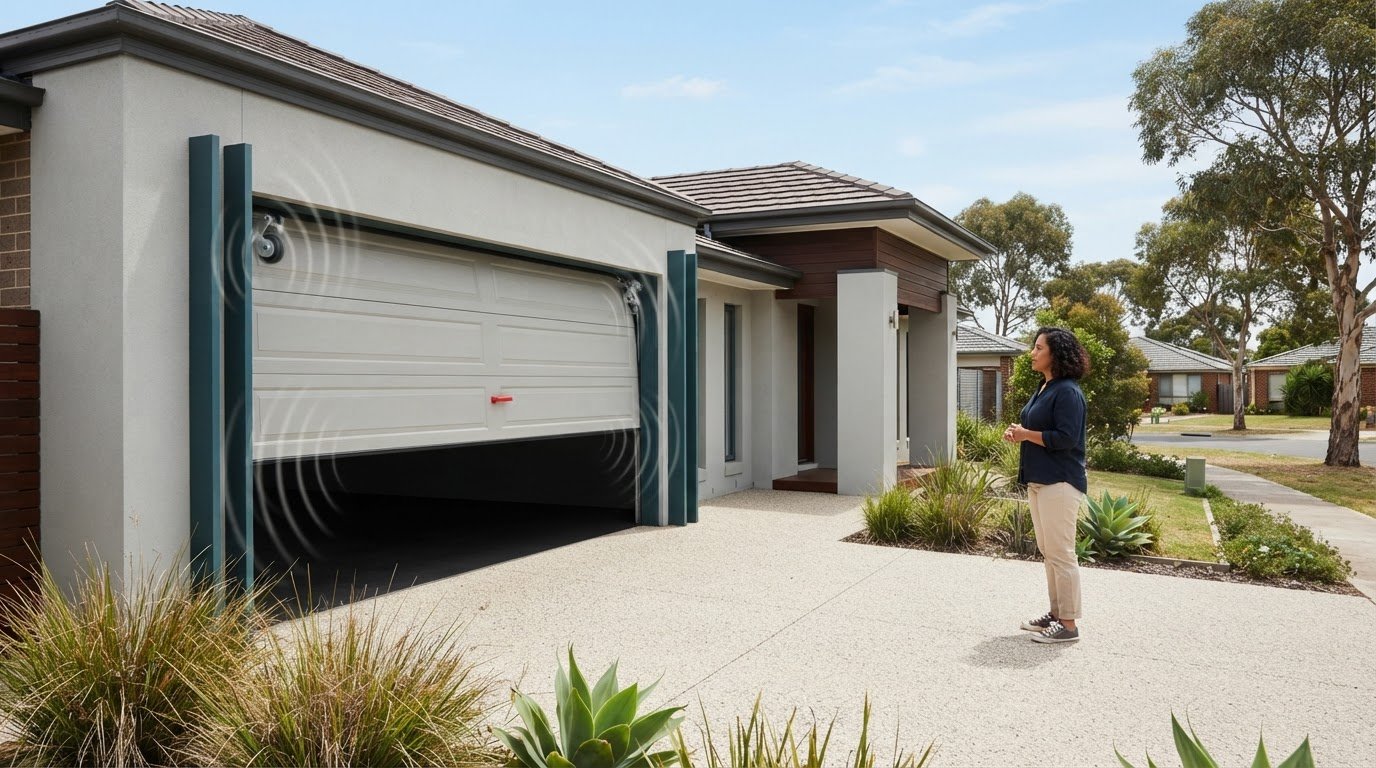
If you’re thinking, “my garage door is very loud”, the noise may be more than an annoyance. You might be wondering whether it’s safe to keep using the door or whether doing so could make a fault worse. The sound can offer useful clues, but guessing at the cause is no substitute for a safe inspection.
Squeaking, grinding, rattling and sudden bangs can have different causes, including friction, loose hardware, worn parts, an unbalanced door or an issue with the opener. This guide explains what common sounds may signal and how their timing can help narrow things down. You’ll also learn which visual checks are safe, why springs and cables should be left alone, and when to stop using the door and arrange a professional repair. Start with careful observation, not a tool.
Key Takeaways
- If you’re thinking “my garage door is very loud”, note what changed and when the sound occurs before assuming a particular part has failed.
- Grinding, squeaking, rattling, banging, scraping and popping can offer clues, but sound alone can’t confirm the cause.
- Stick to safe visual checks. Leave repairs or adjustments involving springs and cables to a professional.
- Pause, observe the door’s movement from a safe distance and record details that can help with diagnosis.
- Brimbank Garage Doors & Repairs provides local garage door repairs and service across Melbourne’s western and north-western suburbs. The business is fully insured, with support available 24 hours a day, 7 days a week.
Why Is My Garage Door So Loud? Start With What Has Changed
A garage door that suddenly clatters, squeals or shakes can disrupt the whole house. A change in sound is worth noticing, but it doesn’t prove that one specific part has failed. If you’re thinking, “my garage door is very loud”, start by observing what’s different instead of reaching for a tool. The aim is to gather useful clues without disturbing parts that may be under tension.
Compare the noise with what you normally hear. Has it become louder gradually, started all at once or appeared only during the last few cycles? Look for changes in movement too. The door might hesitate, jerk, travel unevenly or seem to strain. A sudden change combined with unusual movement or visible damage calls for extra caution. Don’t stand beneath a moving door or try to steady it by hand.
What counts as an unusual garage door noise?
Every door makes some sound as it operates. What matters is a clear change, such as a new squeal, repeated rattle, harsher grind or bang that wasn’t there before. Note whether it happens as the door starts, while it’s opening or closing, or throughout its travel. A single light squeak doesn’t automatically indicate a serious fault, but a sound that repeats or gets worse deserves attention.
Timing adds context. If the noise happens only as movement begins, make a note of that. If it continues for the full journey, record that too. Pay attention to whether it seems to come from the door or the opener, but don’t move closer to investigate while the door is operating. These observations can help a technician assess what needs inspection.
Why the sound needs context
Garage doors rely on connected parts that move together, and different issues can produce similar sounds. An overview of the components of a garage door can help explain why the door, its moving hardware and opener all affect operation. Still, a noise by itself can’t confirm which part needs attention.
Noise is a symptom, not a confirmed diagnosis. The same rough sound can have more than one explanation. Don’t treat a sound description as proof that a specific component has failed. Sound, timing and visible movement are more useful when considered together.
If it’s safe to do so, watch one normal operating cycle from a clear distance, keeping people and pets away from the door. Look for uneven travel, sudden pauses, shaking or visible damage, but don’t touch springs, cables, rollers or other moving parts. If the door’s movement changes abruptly, it makes a loud bang or anything looks damaged, stop using it and arrange professional help. Careful observation gives you useful information without turning a noisy door into a hands-on repair attempt.
Garage Door Noise Guide: What Grinding, Banging and Rattling May Mean
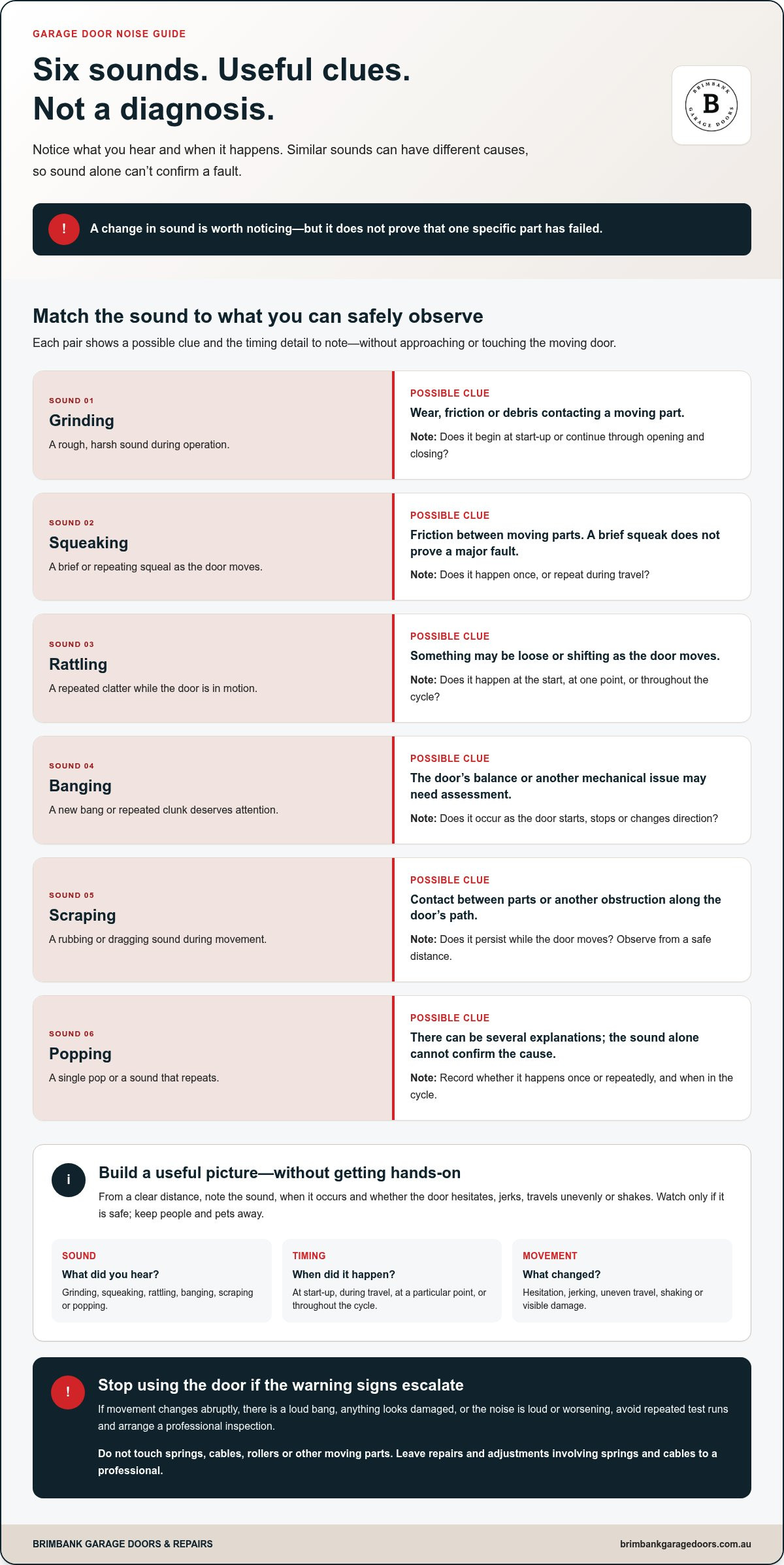
The sound can help you describe what’s happening, but it can’t identify the exact fault by itself. Grinding at startup may have a different explanation from scraping that continues as the door travels. Use the clues below to note what you hear and when, not as a do-it-yourself diagnosis. If “my garage door is very loud” describes a sudden change, pay particular attention to banging, repeated clunks or uneven movement.
| Sound | Possible clue | When to notice it |
|---|---|---|
| Grinding | Could relate to wear, friction or debris contacting a moving part. | Does it begin at startup or continue through opening and closing? |
| Squeaking | May come from friction between moving parts. A brief squeak doesn’t prove there’s a major fault. | Note whether it happens once or repeats during travel. |
| Rattling | Could indicate something loose or shifting as the door moves. | Listen for rattling at the start, at a particular point or throughout the cycle. |
| Banging | A new bang may need prompt attention. The door’s balance or another mechanical issue needs assessment. | Note whether it occurs as the door starts, stops or changes direction. |
| Scraping | May suggest contact between parts or another obstruction along the door’s path. | Check whether it persists during movement, without approaching the door. |
| Popping | Can have several explanations, so the sound alone can’t confirm the cause. | Record whether it happens once or repeatedly, and during which part of the cycle. |
Grinding, scraping or squeaking during movement
A brief squeak and persistent grinding aren’t the same clue. A squeak may be intermittent, while grinding or scraping that follows the door’s movement deserves attention. Friction, wear or contact between moving parts are possibilities, not confirmed causes. Don’t apply lubricant or adjust anything based only on a sound. Follow the door manufacturer’s maintenance guidance and leave work on moving or loaded components to a professional.
Banging, popping or rattling from the door
Loose or shifting components may contribute to rattling, but a bang or pop can have other explanations. A new bang, repeated clunk or door that moves unevenly raises concern, particularly if it happens during the same part of each cycle. Don’t try to tighten hardware, test springs or cables, or alter the tracks. Those observations are useful to share with a technician.
Repeated grinding, banging or scraping warrants attention, especially if the door’s movement changes. From a safe distance, note whether the sound occurs on opening, closing, at startup or throughout the cycle. If it’s loud or worsening, avoid repeated test runs and arrange an inspection. A technician can assess the door and opener together rather than relying on sound alone. For a persistent noise, garage door repairs can help identify what needs attention.
Can You Fix a Loud Garage Door Yourself? Know the Safety Limits
A new noise can make a quick adjustment seem like the obvious fix. But a loud door isn’t always caused by something simple, and working on the wrong part can turn a small concern into a dangerous situation. Keep your checks observational. If “my garage door is very loud”, you can gather useful clues without dismantling the door or testing its mechanisms.
What homeowners can check without dismantling anything
Stand clear of the door’s path and watch its movement during a normal cycle only if it appears safe to operate. Note whether it travels unevenly, hesitates or stops, and look for an obvious obstruction near the opening. If an object is clearly in the way and the door is stationary, you may remove it from a safe position. Don’t reach into the mechanism or beneath the door to do so.
Notice whether the noise differs between opening and closing, but don’t keep cycling a door that’s behaving unusually just to compare sounds. Keep hands and tools away from rollers, hinges, tracks, cables and moving sections. Even a visible part can move unexpectedly when the door operates.
Leave spring, cable, track and balance work to a trained technician. Springs and cables can hold dangerous tension. Adjusting, removing or repairing them can cause severe injury. Don’t loosen hardware, pull on cables, test a spring or attempt to rebalance the door. These aren’t ordinary quick fixes, even if the source of the noise looks close at hand.
When to stop operating the door
Stop using the door if it looks crooked, drops, jams, moves unpredictably or makes a sudden loud bang. Visible cable damage or a suspected broken spring also calls for professional attention. Don’t stand under a door that appears unstable, and keep children and pets well clear of it.
A stuck door can be particularly tempting to force, especially if you need to get a car out. Resist that urge. Don’t push or pull it, try to lift it manually or operate a release mechanism without safe instructions for your door. A jammed or unbalanced door may shift without warning.
There’s a clear line between observing a problem and trying to repair it. You can record what the door does, identify an obstruction from a safe position and share those details when arranging help. Leave work on loaded or moving components to a technician trained to inspect the door safely. This protects you and your household while giving the technician a useful starting point for diagnosing the noise.
What to Do When Your Garage Door Makes a Loud Noise
A clear sequence can help you respond without guessing or going near moving parts. If the door’s behaviour seems unsafe, skip the observation steps and stop operating it. Otherwise, use these steps to gather useful details and decide whether it needs inspection.
- Pause. Don’t rush to operate the door again. If it has jammed, moved unevenly, dropped or made a sudden bang, keep clear and leave it stopped.
- Observe from a safe distance. Look for uneven travel, hesitation or an obvious obstruction. Don’t touch the door or reach towards its tracks, cables, rollers or springs.
- Record the sound. Note whether it’s grinding, squeaking, rattling or banging, and whether it happens at startup, on opening, on closing or throughout movement.
- Assess visible movement. If the door appears safe to operate, note whether it moves evenly. Don’t run it repeatedly just to reproduce a concerning noise.
- Arrange help if needed. A persistent or worsening sound, visible damage or changed movement is a good reason to organise a professional inspection.
Record useful clues before requesting service
Keep your notes simple: describe the sound, when it occurs and whether the door’s movement has changed. Mention visible damage or an obstruction only if you can see it without approaching or touching the mechanism. These details give a technician a clearer starting point. Avoid repeatedly operating the door to record the noise or make it happen again, especially if it has started moving unpredictably.
Choose the right next step for the symptoms
If the door still moves evenly but has developed a persistent noise, an inspection can help identify wear or another issue. Maintenance can help address developing problems, though it can’t promise every noise will be prevented. Routine inspection appointments are offered within 24-48 hours. Same-day service may be available for emergency repairs. Don’t keep operating a door that appears unsafe while waiting for help.
If you suspect a spring fault, don’t test or adjust it. A spring concern needs professional assessment. The garage door spring replacement guide explains more about this work. For broader upkeep, use the garage door maintenance checklist to understand what regular maintenance can cover.
Brimbank Garage Doors & Repairs provides residential garage door repairs and maintenance across Melbourne’s western and north-western suburbs. The business has over 10 years of experience, is fully insured and has 130 Google reviews with a 5-star rating. Support is available 24 hours a day, 7 days a week. If your noisy door needs professional attention, arrange garage door repair support.
Noisy Garage Door Repairs in Melbourne’s West: Get Local Help
A new or worsening garage door noise can be unsettling, especially if you’re unsure whether the door is safe to use. If “my garage door is very loud” is the concern, a professional assessment can replace guesswork with a clearer view of what needs attention. Brimbank Garage Doors & Repairs provides residential garage door service and repairs across Melbourne’s western and north-western suburbs.
What a professional garage door assessment can establish
A technician can inspect how the door moves and assess whether repair or service is appropriate. Similar sounds can come from different parts, so the door and opener need to be considered together. An assessment can help establish whether the issue relates to the door, motor, spring, cable or another component. The cause and required work depend on the door’s condition.
Garage Door Repairs can address a fault or damaged component, while Garage Door Service can assess noisy operation and maintenance needs. If Garage Door Springs or Garage Door Cables appear to be involved, leave the work to a professional. Don’t try to confirm the fault by adjusting or handling parts yourself.
Arrange help for a noisy garage door
When arranging an inspection, describe the sound, when it occurred and whether the door moved evenly. If you noticed visible damage, explain what you saw without touching the mechanism. These details help guide the assessment. A technician can inspect the door directly and explain the next step based on its condition.
Routine inspection appointments are offered within 24-48 hours. Same-day service may be available for emergency repairs. Support is available 24 hours a day, 7 days a week. If the door is crooked, jammed, dropping or making a sudden loud bang, stop operating it and keep clear while arranging professional help.
Brimbank Garage Doors & Repairs has over 10 years of experience and is fully insured. The business has 130 Google reviews with a 5-star rating. For homeowners in Melbourne’s western and north-western suburbs, a local assessment can help determine whether the noise calls for repair, service or further investigation.
For a noisy door that needs professional attention, call 0422 769 848 or arrange garage door service.
Take the Next Step with Confidence
A noisy garage door can be easy to put off, particularly if it still opens and closes. But waiting without knowing what’s behind the sound can leave you second-guessing each time you use it. If “my garage door is very loud” is still on your mind, decide what to do based on the door’s behaviour, not on the hope that the noise will disappear.
If the door seems unsafe, leave it alone and keep people clear. If it continues to operate but the noise persists, a professional assessment can establish what attention is appropriate. You don’t need to identify the fault yourself. Have the door checked, then decide how to proceed with a clearer understanding of its condition.
Brimbank Garage Doors & Repairs can help with garage door service and repairs across Melbourne’s western and north-western suburbs. Arrange garage door service or call 0422 769 848 to take the next step.
Frequently Asked Questions
Is a loud garage door dangerous?
A loud door isn’t automatically dangerous, because sound alone can’t establish what’s wrong. Take it seriously if a bang is sudden, the door travels unevenly, damage is visible, or a spring or cable may be involved. Keep clear and don’t touch tensioned parts. If the door looks unstable, stop using it rather than trying another cycle, and arrange a professional assessment to determine whether it can be operated safely.
Why is my garage door so loud when opening but quieter when closing?
The direction of travel can change how the door’s parts move and bear load, so the difference is a useful clue, not a diagnosis. Note whether the sound happens as movement begins or at a particular point, and whether the door’s speed or path changes at the same time. If it jams, looks crooked or makes a sudden loud noise, don’t keep cycling it to compare.
Can cold weather make a garage door louder?
Temperature can affect how some materials and mechanisms behave, so a door may sound different as conditions change. Still, don’t assume cold weather explains a new or worsening noise. Consider whether the door’s movement has changed, whether you can see damage and whether the sound began after another change. Persistent grinding or banging, or uneven travel, should be assessed rather than dismissed as a seasonal effect.
Should I lubricate a noisy garage door?
Lubrication may be suitable for some components, but the right product and application points depend on the door and its manufacturer’s instructions. Don’t spray every moving part or use lubricant as a fix for grinding, scraping or balance problems. Check the manual for maintenance guidance and leave mechanical adjustments to a technician. If you can’t identify the correct product or application point, don’t experiment.
Can I keep using a garage door that is making a grinding noise?
Ongoing grinding can indicate contact or wear, but the sound alone can’t tell you the cause. If the door starts moving unevenly, jams, looks damaged or gets louder, stop operating it and seek professional advice. Don’t run repeated test cycles to see whether the noise clears. Keep your hands out of the tracks and mechanism, even if you can see where the sound seems to come from.
When should I call a garage door technician about noise?
Arrange an assessment if the noise is new, persistent or worsening, or if movement becomes jerky, uneven or unreliable. Visible damage, a suspected spring or cable problem, or a door that won’t move safely needs professional attention. Brimbank Garage Doors & Repairs serves Melbourne’s western and north-western suburbs. Routine inspections are offered within 24-48 hours.