
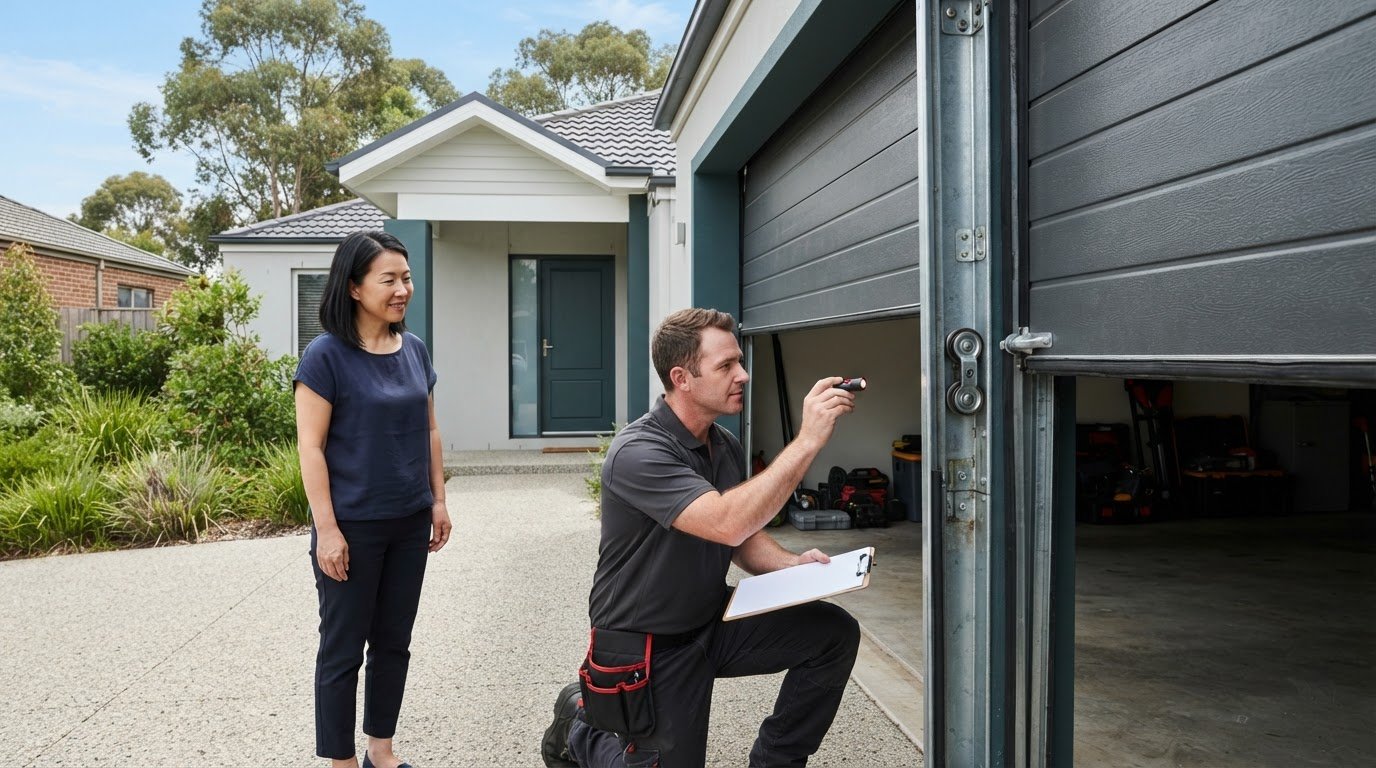
Could a garage door that looks fine still be showing early signs of wear? A peace of mind garage door inspection can help you spot visible warning signs and understand which parts are unsafe to handle yourself. Routine wear and a repair issue can look similar, and springs and other loaded components can be dangerous to adjust.
This practical checklist covers what you can safely observe, what a professional assessment may clarify and what to do if you notice a concern. Look for changes in movement, sound or appearance, and leave checks involving spring tension or safety mechanisms to a professional.
We’ll walk through simple homeowner checks, explain when maintenance may be appropriate and outline signs that could point to a repair. If something doesn’t look or sound right, stop using the door if you’re concerned about its safe operation and contact a local garage door professional for advice.
Key Takeaways
- A peace of mind garage door inspection can help clarify whether a concern may need maintenance or repair.
- Note changes in how your door moves or sounds, and share those observations with a professional.
- Keep homeowner checks to safe visual observations. Don’t adjust or dismantle mechanical components.
- Ask what the professional assessment includes and how any recommended work relates to the issue found.
- If you’re in Melbourne’s west or northern suburbs, a local garage door repair or maintenance team can be a practical next contact.
What does a peace of mind garage door inspection help you check?
A garage door can look fine from the driveway while showing signs of wear in its movement, sound or visible condition. A peace of mind garage door inspection is a structured assessment to identify concerns and help you understand what may need attention. It isn’t a promise that faults can’t happen or that the door will operate without problems in future.
This article focuses on residential garage doors, including roller doors. If you’re unsure what kind of door you have, this overview of garage door types offers useful general context. The scope of a professional assessment can vary, so ask what will be checked before arranging a visit. Brimbank Garage Doors & Repairs provides residential maintenance and repair services. Confirm whether an assessment is included in the visit you’re considering rather than assuming there’s a separate inspection package or a standard set of checks.
What does “peace of mind” mean for a garage door?
Reassurance comes from a clearer picture of the door’s visible condition and knowing which concerns may need follow-up. An assessment can help a professional explain whether an issue appears to call for maintenance or repair, and what the next step may be. It can’t guarantee fault-free operation, a particular lifespan or complete safety. Treat it as informed guidance, not a promise that nothing will go wrong.
When should a homeowner consider an inspection?
Pay attention to changes. A door that starts making an unusual noise, moves jerkily, shows visible damage or no longer operates as it normally does may need professional advice. An assessment after a noticeable change can help clarify the issue before the door stops working altogether.
Note what you’ve observed, such as when the noise occurs or whether movement seems uneven. Don’t repeatedly operate a door that appears unsafe or behaves unpredictably just to see if the problem happens again. Stop and seek professional advice instead. A visual check can help you describe the symptoms, but it can’t establish the condition of every mechanical component.
What should a professional garage door inspection look at?
A professional assessment can bring together clues about how the door moves, what can be seen on its surface and tracks, and any unusual sounds during operation. These observations can help a technician investigate a concern, but they aren’t a diagnosis on their own. A rattle, for example, may have more than one cause, so the source needs to be assessed rather than guessed at.
There’s no confirmed standard inspection scope for every visit from Brimbank Garage Doors & Repairs. Before arranging an assessment, ask what the visit includes and whether it’s provided as part of maintenance or repair work. For general reference, the Door & Access Systems Manufacturers Association offers a professional garage door inspection checklist covering areas such as the door, hardware, operator and safety devices. It’s a useful guide, not a promise that every item is included in a local service.
A professional inspection can assess the door’s visible condition, movement and relevant operating components to help identify concerns and guide appropriate follow-up.
Visible door, tracks and operating movement
From a safe position, look for dents, visible obstructions or signs that the door or tracks appear out of line. If the door’s travel has become less smooth, or it hesitates or moves unevenly, note when it happens. A technician may assess its movement and visible track condition to investigate what’s changed. Don’t try to realign tracks, remove parts or dismantle the door. Those steps can create further risk.
Springs, cables and other high-tension components
Springs and lifting cables help support and move many garage door systems, but they can be under high tension. If you can see fraying, a gap in a spring or other obvious damage, keep your distance and mention it when seeking advice. Don’t touch, adjust or attempt to replace springs or cables. A professional can assess the concern and explain whether maintenance or repair follow-up is appropriate.
For a peace of mind garage door inspection, share specific observations rather than trying to identify the faulty part yourself. A change in sound or movement is useful information, but it doesn’t confirm which component, if any, needs work. If you’re in Melbourne’s west or northern suburbs, ask Brimbank Garage Doors & Repairs what assessment is available alongside its residential garage door maintenance and repair services.
DIY garage door checks or professional inspection: which makes sense?
A homeowner check can help you notice a change, but it can’t show you everything happening inside a garage door system. Look for visible concerns and note what has changed. Leave diagnosis, adjustments and repairs to a professional, especially if springs or lifting cables may be involved.
| Safe homeowner observations | Professional assessment |
|---|---|
| Look for visible damage, objects obstructing the doorway and changes in how the door moves or sounds. Observe from a safe position, keeping hands clear of moving parts. | A technician can investigate persistent operating problems and assess relevant components to help identify whether maintenance or repair may be appropriate. |
| Note when a noise, hesitation or uneven movement occurs. Don’t dismantle the door or try to correct a part that appears out of line. | The visit’s exact scope can vary. Ask what will be assessed and what follow-up is recommended before work proceeds. |
| If the door seems unstable or behaves unusually, stop using it and seek professional advice. | Leave assessment of damaged springs, lifting cables and other mechanical concerns to a professional. |
What can you safely check yourself?
Keep it visual. From a safe position, look for damage to the door, anything blocking its path and changes from its usual operation. If you notice a new sound or movement, make a note of what happened rather than repeatedly operating the door to recreate it. A basic check can help you explain the symptoms, but it can’t confirm their cause.
When is a technician the better choice?
Contact a professional if you see possible spring or cable damage, or if the door has ongoing trouble opening or closing. Springs and cables can be under high tension, so they’re not suitable DIY jobs for untrained homeowners. Don’t touch, adjust or try to replace them. Avoid testing the door’s balance, forcing components or bypassing safety features too.
A professional assessment can help distinguish a maintenance need from a repair issue. That’s the value of a peace of mind garage door inspection: clearer next steps, not a guarantee that a fault can’t occur. Ask what the assessment covers and whether any recommended work is separate from it. If you’re in Melbourne’s west or northern suburbs, you can Talk to a local garage door specialist about residential garage door maintenance or repairs.
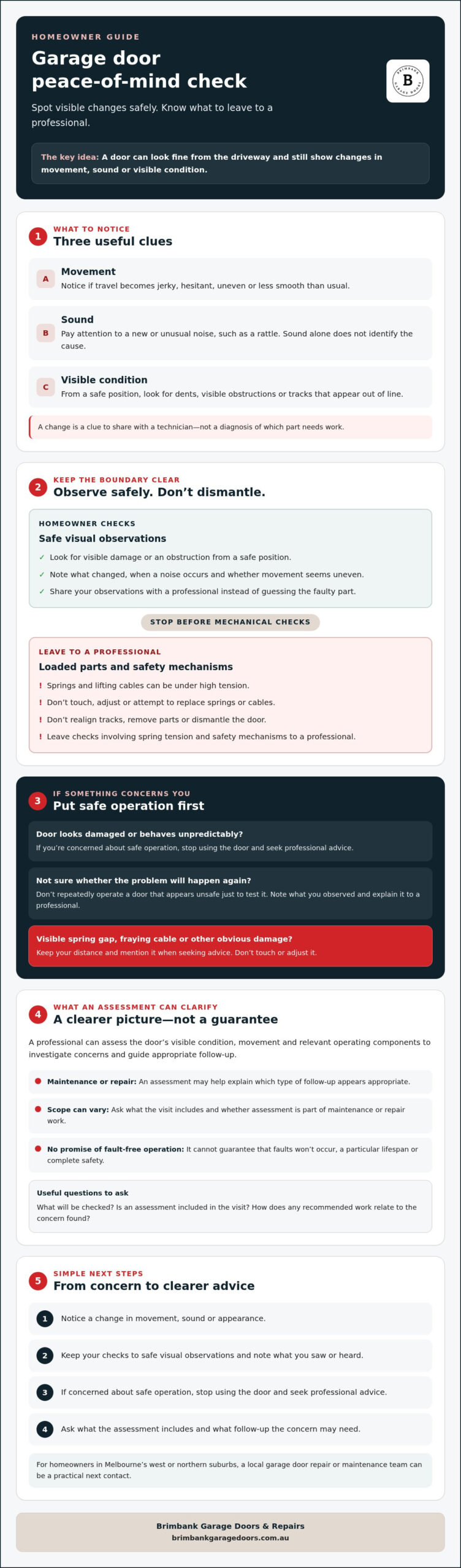
Garage door inspection: what to check and do next
A calm, visual check can help you describe what’s happening before you seek help. Keep it simple: don’t remove covers, touch moving parts or try to adjust anything. These steps are for observation, not diagnosis.
A simple visual check before arranging help
- Check the doorway. From a safe position, look for objects or debris in the door’s path. Don’t reach beneath the door or near its moving parts.
- Look over the visible surfaces. Note dents, damage or anything that appears out of place. Keep clear of springs and cables, and don’t touch them.
- Notice changes in operation. If the door appears safe to use, observe its normal operation from a safe distance. Don’t repeatedly run it to test a suspected issue.
- Listen and watch. Record any changed noise, uneven travel or hesitation. Note whether the symptom occurs every time or only occasionally.
- Stop if something seems unsafe. If the door looks unstable or behaves unusually, don’t operate it. Seek professional advice instead.
A garage door maintenance checklist can help you organise routine observations, but it can’t replace an assessment of a concern. Keep your notes factual: describe what you saw or heard rather than guessing which part is faulty.
How to prepare for a professional assessment
When arranging help, explain what has changed and when you first noticed it. For example, mention if the door hesitates near the floor, travels unevenly or makes a new sound during movement. Say whether it happens consistently, and describe any visible damage. This gives the professional useful context without you needing to attempt a repair.
If you’re looking into roller door repairs in Melbourne, have the same details ready and ask what the assessment includes, along with whether any recommended follow-up is maintenance or repair work. The exact scope of a visit can vary, so confirm it rather than assuming a standard inspection process.
Clear notes make a peace of mind garage door inspection more useful by connecting your observations to practical next steps. For residential garage door maintenance or repairs in Melbourne’s western and northern suburbs, talk to a local garage door specialist.
Choosing local help for a garage door inspection in Melbourne’s west
Choosing a local provider starts with clarity about the visit, not assumptions about what an “inspection” includes. Brimbank Garage Doors & Repairs provides residential garage door maintenance and repairs across Melbourne’s western and northern suburbs. Before arranging an assessment, ask how the visit works and what you can expect to learn from it.
Questions to ask before arranging an assessment
A few straightforward questions can help you understand the scope and avoid surprises:
- What does the visit include? Confirm which parts of the door and its operation will be assessed.
- Is a separate inspection service offered? Don’t assume assessment is available as a standalone visit. Ask whether it’s provided as part of maintenance or repair work.
- How will the findings be explained? Ask whether the technician will talk you through the concern and possible next steps in plain language.
- Will recommended repairs be discussed before work starts? Make sure you understand what work is proposed and why before deciding how to proceed.
If you’ve noticed a possible spring issue, you can also ask about garage door spring replacement in the western suburbs. Don’t touch or attempt to adjust a spring yourself. Describe what you’ve seen and let a professional assess it.
What a useful inspection outcome should leave you knowing
A helpful assessment should give you a clearer account of visible concerns and any components that need professional attention. It should also explain whether maintenance, repair or further assessment is recommended, and how the proposed next step relates to the issue identified.
Maintenance and repair aren’t interchangeable: maintenance addresses upkeep, while repair work responds to a specific fault or damage. Ask for that distinction to be explained, along with any proposed work, before you make a decision. The purpose of a peace of mind garage door inspection is to support an informed next step, not to promise that the door will never develop a fault.
If you’re in Melbourne’s west or northern suburbs and have a concern about your residential garage door, Contact Brimbank Garage Doors & Repairs to discuss the issue and ask what assessment or follow-up may be appropriate.
Take the next step towards a better-informed decision
A peace of mind garage door inspection is about understanding what you can see, recognising when a concern needs professional attention and getting a clear explanation of possible next steps. Note changes in sound, movement or visible condition, but leave springs, cables and mechanical adjustments to a professional.
Before arranging a visit, ask what the assessment includes and whether recommendations relate to maintenance, repair or further assessment. That clarity helps you decide what to do without expecting a check to guarantee fault-free operation.
Brimbank Garage Doors & Repairs provides residential garage door maintenance and repairs across Melbourne’s western and northern suburbs, along with garage roller door supply and replacement springs. If you’ve noticed a change or want to discuss a concern, Talk to Brimbank Garage Doors & Repairs about your garage door.
A few clear observations and an honest professional conversation can help you choose a sensible next step for your home.
Frequently Asked Questions
What does a garage door inspection include?
The scope depends on the visit, so ask the provider what will be assessed before booking. A professional may consider the door’s visible condition, movement and operating components, but don’t assume every inspection includes the same checks. Brimbank Garage Doors & Repairs provides residential garage door maintenance and repairs. Confirm directly whether an assessment is offered separately or as part of those services.
How often should I have my garage door inspected?
An annual service is commonly recommended by the Australian Garage Door Association and many manufacturers. This can provide an opportunity to identify wear and discuss maintenance before a small concern develops into an operating problem. Follow the guidance for your particular door and seek professional advice sooner if you notice a change in its movement, sound or visible condition. Ask what the service includes when arranging it.
Can I inspect my garage door myself?
You can make basic visual observations, such as looking for damage, obstructions and changes in the door’s movement or sound. Keep a safe distance and don’t touch, adjust or dismantle springs, cables or other moving components. A homeowner check can help you describe a concern, but it can’t assess every mechanical issue or confirm a diagnosis. If the door appears unstable or behaves unusually, stop using it and seek professional advice.
Is a professional garage door inspection worth it if the door still works?
It may be useful if you’ve noticed a change, even if the door still opens and closes. Unusual sounds, hesitation or uneven movement can be reasons to ask for an assessment. A peace of mind garage door inspection can help clarify whether a concern needs maintenance, repair or further attention. It can’t guarantee that a fault won’t occur, but a professional assessment can help you make a more informed decision.
What happens if an inspection finds a damaged garage door spring?
If a spring appears damaged, don’t touch, adjust or try to replace it. Springs can be under high tension, so leave assessment and repair to a professional. Ask them to explain what they found, what work they recommend and whether it’s a repair or replacement. Brimbank Garage Doors & Repairs provides residential garage door repairs and replacement springs across Melbourne’s western and northern suburbs. Avoid operating a door that seems unsafe.
How much does a garage door inspection cost?
The cost depends on what the visit includes and whether it’s an assessment, maintenance service or repair visit. Brimbank Garage Doors & Repairs’ pricing and inspection arrangements aren’t specified here, so contact the business for current details rather than relying on general industry estimates. Before booking, ask whether assessment is offered separately, what it covers and whether any recommended repair work would be discussed separately before proceeding.
Should I keep using my garage door if it makes a new noise?
Don’t keep operating the door repeatedly to investigate a new noise, especially if it also hesitates, moves unevenly or appears unstable. Stop using it if you’re concerned about safe operation, and seek professional advice. Note when the sound occurs and whether it happens consistently, then share those details with the technician. A noise is a symptom, not a diagnosis, so don’t try to adjust or dismantle components yourself.