
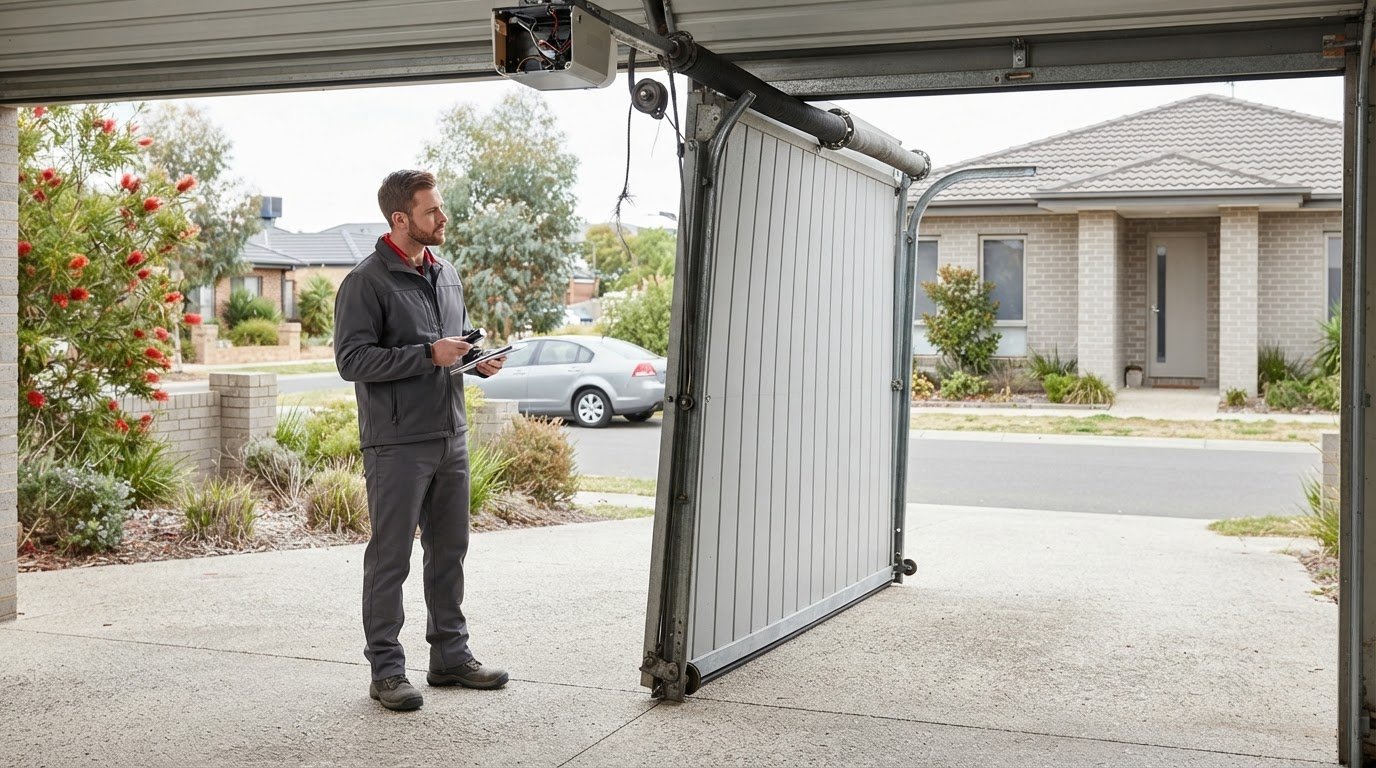
What if your garage door won’t open because of a failed spring rather than the opener? When your car or household items are stuck inside, it’s natural to want a quick answer about the cost to fix a garage door that won’t open. But the symptom alone doesn’t reveal the repair. The fault, the door’s condition and access to the affected part can all influence the work required.
It can be difficult to judge a repair estimate when you don’t know whether the problem is electrical, mechanical or related to the door’s balance. Springs and cables can also be dangerous to handle, so don’t attempt a repair if you’re unsure.
This guide explains which symptoms and components may affect a repair, what details to share with a local technician, and how to compare repair with replacement. An inspection is a practical first step because a specialist can identify the fault before you agree to work. For homeowners in Melbourne’s western and northern suburbs, Brimbank Garage Doors & Repairs works on residential doors, including roller doors, and supplies replacement springs. Use the guidance below to prepare for a safer, clearer decision.
Key Takeaways
- The cost to fix a garage door that won’t open depends on the fault and work required, so the symptom alone may not tell the whole story.
- Note what happens when you try the door and share those details with the technician to help guide an accurate assessment.
- Stop and seek professional attention if the door is crooked, unusually heavy, damaged or making sharp noises.
- Before approving work, ask what’s been identified, which parts need attention and how repair compares with replacement for your door’s condition.
- Brimbank Garage Doors & Repairs provides residential garage door repairs across Melbourne’s western and northern suburbs.
Why a Garage Door That Won’t Open Can Have Different Repair Costs
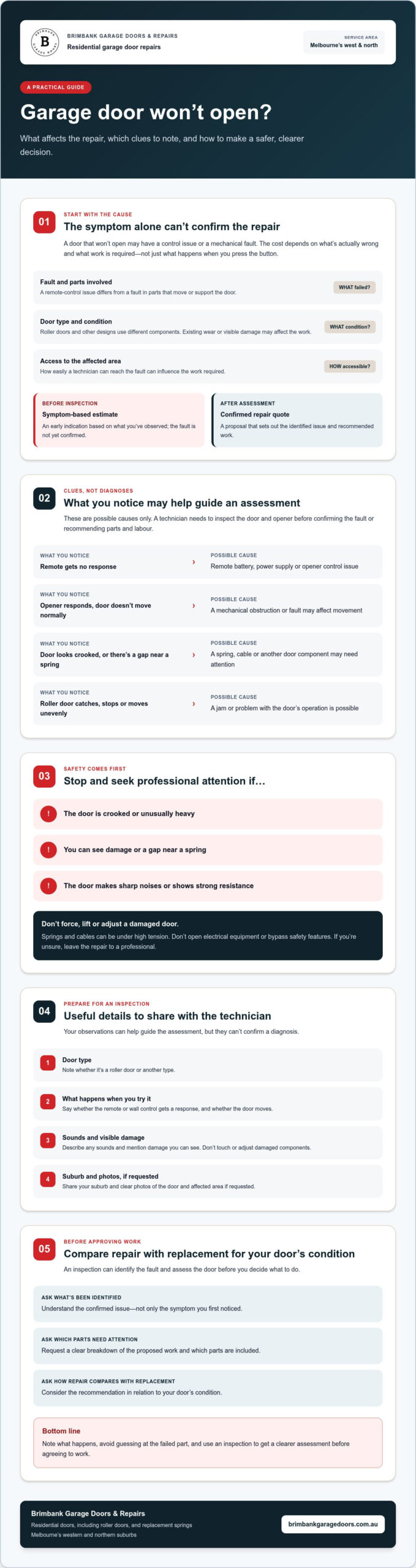
A garage door that won’t open can trap your car or belongings and leave you wondering whether the garage is secure. The same symptom can have different causes: the door may not respond because of a control issue, or a mechanical fault may be stopping it from moving. The cost to fix a garage door that won’t open depends on what’s actually wrong, not just what happens when you press the button.
Door design is one factor. Roller doors and other types of garage doors use different components and arrangements. Existing wear, visible damage and how easily a technician can access the affected area can also influence the work required. An inspection can help identify the fault and assess the door’s condition before you decide whether to approve a repair.
Symptom-based estimate: An early indication based on what you’ve observed, before the fault has been confirmed.
Confirmed repair quote: A proposal provided after assessment that sets out the identified issue and recommended work.
What does the cost to fix a garage door that won’t open depend on?
The failed component matters. A remote-control issue is different from a mechanical failure. The first may involve checking the control or opener response, while the second may require attention to parts that move or support the door. Door type, access to the fault and wear elsewhere in the system can also affect the recommended repair. Avoid assuming a part has failed based on the symptom alone. Ask for a breakdown explaining what’s been identified, what work is proposed and which parts are included.
Which details help a Melbourne western suburbs technician assess the problem?
Your observations can help a technician understand the issue before an inspection, but they can’t confirm a diagnosis. Note whether you have a roller door or another door type, what sounds you hear, and whether the opener responds to the remote or wall control. Mention any visible damage. When arranging an inspection, share your suburb and clear photos of the door and affected area if requested. Don’t touch or adjust damaged components. These details provide a useful starting point for assessing the fault safely.
Common Reasons a Garage Door Won’t Open, and the Repairs They May Need
A door that stays shut can point to anything from a flat remote battery to a problem with the moving parts. What you observe can offer clues, but a symptom isn’t a diagnosis. A technician needs to inspect the door and opener before confirming the cause or recommending parts and labour. That assessment makes an estimate for the cost to fix a garage door that won’t open more useful.
| What you notice | Possible cause, not a diagnosis |
|---|---|
| The remote gets no response | Remote battery, power supply or opener control issue |
| The opener responds, but the door doesn’t move normally | A mechanical obstruction or fault may be affecting movement |
| The door looks crooked, or you can see a gap near a spring | A spring, cable or other door component may need attention |
| A roller door stops, catches or moves unevenly | A jam or problem with the door’s operation is possible |
Does the opener respond, or is the door completely unresponsive?
Start with safe observations. Check whether the remote battery may need replacing, whether the opener appears to have power, and whether it responds to the controls. If the remote gets no response, that doesn’t prove the motor has failed. A technician can test the system and determine whether the issue involves a control, power supply or another part of the mechanism. Don’t open electrical equipment or bypass safety features. For general industry information, the International Door Association is a useful reference for consumers exploring professional door services.
Could a broken spring, cable or jammed roller door be responsible?
A visible gap in a spring, a crooked door or strong resistance can signal a serious mechanical fault. Don’t try to lift, force or adjust the door. Springs and cables can be under high tension, so handling them requires professional care. A roller door that catches or stops may also need an inspection to identify what is preventing it from moving. If a broken spring is suspected, read this guide to garage door spring replacement.
Note what the door does and arrange an inspection rather than guessing which part needs replacing. If you’re in Melbourne’s western or northern suburbs, you can learn more about residential garage door repairs from Brimbank Garage Doors & Repairs.
Repair or Replace? Compare the Options Before Approving Work
A door that won’t open doesn’t automatically need replacing. Consider more than the fault itself: is the door safe, how much wear or damage is present, do problems keep returning, and which parts does the technician say need attention? An inspection can help clarify these factors before you agree to work.
When might repairing the existing garage door make sense?
If the door is otherwise in sound condition and the problem is limited to a specific component, a targeted repair may be worth considering. Ask the technician to explain exactly what the repair covers, which parts will be replaced and whether they found related wear that could affect operation. No repair can rule out future faults, so ask what to monitor and what remains uncertain. For general Melbourne pricing context, see the garage door repair cost guide.
When should a technician discuss replacement instead?
Extensive damage, recurring problems or wear across several parts may warrant comparing repair with a new door. Ask how the door’s overall condition affects the recommendation and whether proposed replacement parts are suitable for its existing system. If you’re weighing up a new roller door, the Melbourne garage roller door buying guide can help you consider the decision.
Before approving either option, ask for a clear breakdown of:
- The confirmed fault and the work proposed.
- Which parts are being replaced and whether any related wear was found.
- What’s included in the quote and what could still change after further assessment.
- Why repair or replacement is recommended for the door’s condition.
Safety should come first. Don’t force a door that’s damaged or operating unpredictably while you decide. The U.S. Consumer Product Safety Commission describes a mandatory federal safety standard for residential garage door operators in the United States. This is not Australian regulatory guidance, but it reinforces why safety features should be considered when assessing an operator.
For a considered recommendation, ask about residential garage door repairs from a local specialist. Understanding the door’s condition, proposed parts and scope of work makes it easier to compare options instead of relying on the cost to fix a garage door that won’t open alone.
What to Check Safely and What to Ask Before Booking a Repair
A few careful observations can help a repairer understand what’s happening, but they won’t confirm the fault. Limit your checks to the controls and what you can see from a safe distance. Don’t force the door or try to free a jam yourself.
What can you check without taking risks?
Use this checklist before arranging an inspection:
- Check the opener’s power. Look for an obvious power issue and see whether the opener responds to its normal controls.
- Try the controls as usual. Note whether the remote or wall control responds, and whether the door moves, stops or makes an unusual sound. Follow the manufacturer’s instructions for normal operation.
- Look for visible obstructions. From outside the door’s moving path, check for items blocking its movement. Don’t reach into the tracks or touch rollers, cables, springs or other moving parts.
- Stop if something looks or sounds wrong. If the door is crooked, unusually heavy, visibly damaged or making sharp noises, don’t operate or force it. Arrange professional help.
Don’t remove covers, bypass safety features or attempt spring and cable repairs. These parts can be under tension, and a visual check is not a safe substitute for a technician’s assessment.
How do you compare garage door repair quotes?
Ask each repairer to explain the diagnosis and proposed work in plain language. A useful quote should clarify which parts are included, what the labour covers and whether the recommendation is based on an inspection or an initial description of the problem. Those details matter more than a headline estimate when weighing up the cost to fix a garage door that won’t open.
Before approving work, ask:
- What fault have you confirmed, and what checks led to that conclusion?
- Which parts will be repaired or replaced, and are they suitable for this door?
- What work and labour are included in the quoted scope?
- Could further work be needed, and will you seek my approval before proceeding?
Compare quotes by diagnosis, included parts, scope of work and clarity about any further approval, not just the initial figure. If the cause is still uncertain, ask what the technician needs to inspect before confirming the recommendation. Clear answers make it easier to decide without taking risks or agreeing to work you don’t understand.
For residential garage door repairs in Melbourne’s western and northern suburbs, arrange a garage door repair assessment with Brimbank Garage Doors & Repairs.
Arrange a Residential Garage Door Repair in Melbourne’s West
Before deciding between repair and replacement, have the fault identified. A door that won’t open may have a problem with one component or need a broader assessment of its condition. Guessing can lead to the wrong repair, while forcing a stuck door may cause further damage or create a safety risk.
Brimbank Garage Doors & Repairs handles residential garage door repairs across Melbourne’s western and northern suburbs, with a focus on roller doors and replacement springs. Ask about the service details when arranging a repair. Confirm availability and timing directly rather than assuming them.
What information should you have ready when requesting a repair?
A clear description helps the repairer understand what to assess. Have these details ready:
- Your suburb and door type: Note whether it’s a roller door or another style.
- What the opener does: Say whether it responds to the remote or wall control and whether the door moves at all.
- The door’s position: Explain whether it’s stuck open, closed or partway.
- What you’ve noticed: Describe unusual sounds, visible damage and when the problem began, if you know.
Share clear photos if requested, but don’t move the door or touch damaged parts to get a better view. Your observations are useful background, not a confirmed diagnosis. An inspection can help establish the cause and whether a repair or replacement should be considered.
How can professional repair help protect the door and household?
Forcing a door that’s jammed, crooked or unusually heavy can put extra strain on its components. A professional assessment focuses on identifying what’s preventing normal movement before recommending work. If parts need attention, suitable replacements and reliable repairs can help the door operate smoothly, but the right approach depends on the door’s condition and the fault.
Ask what the inspection found, what work is proposed and whether any additional work would need your approval. That gives you a clearer basis for comparing options and understanding the cost to fix a garage door that won’t open, without attempting unsafe repairs yourself.
If you need residential garage door repair in Melbourne’s west or north, contact Brimbank Garage Doors & Repairs to discuss the door’s symptoms and request an assessment.
Take the Next Step Towards a Working Garage Door
The cost to fix a garage door that won’t open depends on the fault, the door’s condition and the work required, so a symptom alone can’t confirm the repair. A professional assessment helps identify the cause before you weigh up repair or replacement. A clear quote lets you understand the proposed work and parts before approving it.
If your door is stuck, avoid forcing it, especially if it looks crooked, damaged or unusually heavy. Note what the opener does and what you’ve observed, then share those details when requesting an assessment.
Brimbank Garage Doors & Repairs provides residential garage door repairs and maintenance across Melbourne’s western and northern suburbs, with direct supply and fitting of garage roller doors and replacement springs. Arrange a residential garage door repair assessment to discuss your door’s symptoms and confirm the next steps. With the fault properly assessed, you can make a clearer, safer decision about the repair.
Frequently Asked Questions
How much does it cost to fix a garage door that won’t open?
The cost depends on the confirmed fault, the door’s condition and the parts and labour required. A remote-control issue may call for different work from a mechanical problem involving the door itself. A technician’s inspection is the practical way to establish the cause and provide a relevant quote. Ask for a breakdown of the diagnosis, proposed work and parts, and confirm whether extra work needs your approval.
What is the most common reason a garage door won’t open?
A broken or worn spring is a common mechanical reason a garage door may not open, but the symptom alone doesn’t confirm that’s the problem. The opener, power supply, controls, cables or door movement may also need checking. Look from a safe distance for visible damage or a crooked door, and note whether the opener responds. Don’t touch springs or cables. A technician should confirm the fault before recommending a repair.
Can I open my garage door manually if the power is out?
You may be able to use the opener’s manual release during a power outage, but only if the door appears intact and you can follow the manufacturer’s instructions safely. Don’t try this if the door is crooked, unusually heavy, damaged or suspected of having a broken spring. Releasing the opener can leave the door unsupported. If you’re unsure, keep clear and ask a garage door technician for advice rather than forcing it.
Is it safe to use a garage door with a broken spring?
No. Don’t operate or try to lift a door if you suspect a broken spring. Springs help support the door’s weight, and a failure can make the door heavy or unstable. Avoid touching the spring, cables or opener release, and keep people clear of the door. Arrange an assessment by a garage door technician so the fault can be confirmed and the appropriate repair discussed before the door is used again.
What should I do if my garage door is stuck halfway open?
Stop operating the door and keep people, pets and vehicles clear of its path. Don’t push, pull or try to balance it, as the door may move unexpectedly if a component has failed. From a safe distance, note whether it looks crooked, damaged or unusually noisy. Share those observations when arranging a repair assessment, and confirm service availability directly with a local technician in Melbourne’s western suburbs.
Should I repair or replace a garage door that won’t open?
Repair may be suitable when a technician finds a specific fault and the rest of the door is in sound condition. Replacement may be worth discussing if there’s extensive damage, wear across several parts or recurring problems. Ask what the inspection found, which parts are needed, and why repair or replacement is recommended. The decision should reflect the door’s safety and overall condition, not just the fact that it won’t open.
How do I compare garage door repair quotes in Melbourne?
Compare what each quote says will be done, not just the headline estimate. Ask for the confirmed diagnosis, proposed repair, parts and labour included, and any uncertainties that could affect the scope. Check whether the technician will seek your approval before doing additional work. Share your suburb, door type and symptoms so local repairers can understand the situation. Brimbank Garage Doors & Repairs handles residential repairs across Melbourne’s western and northern suburbs.