
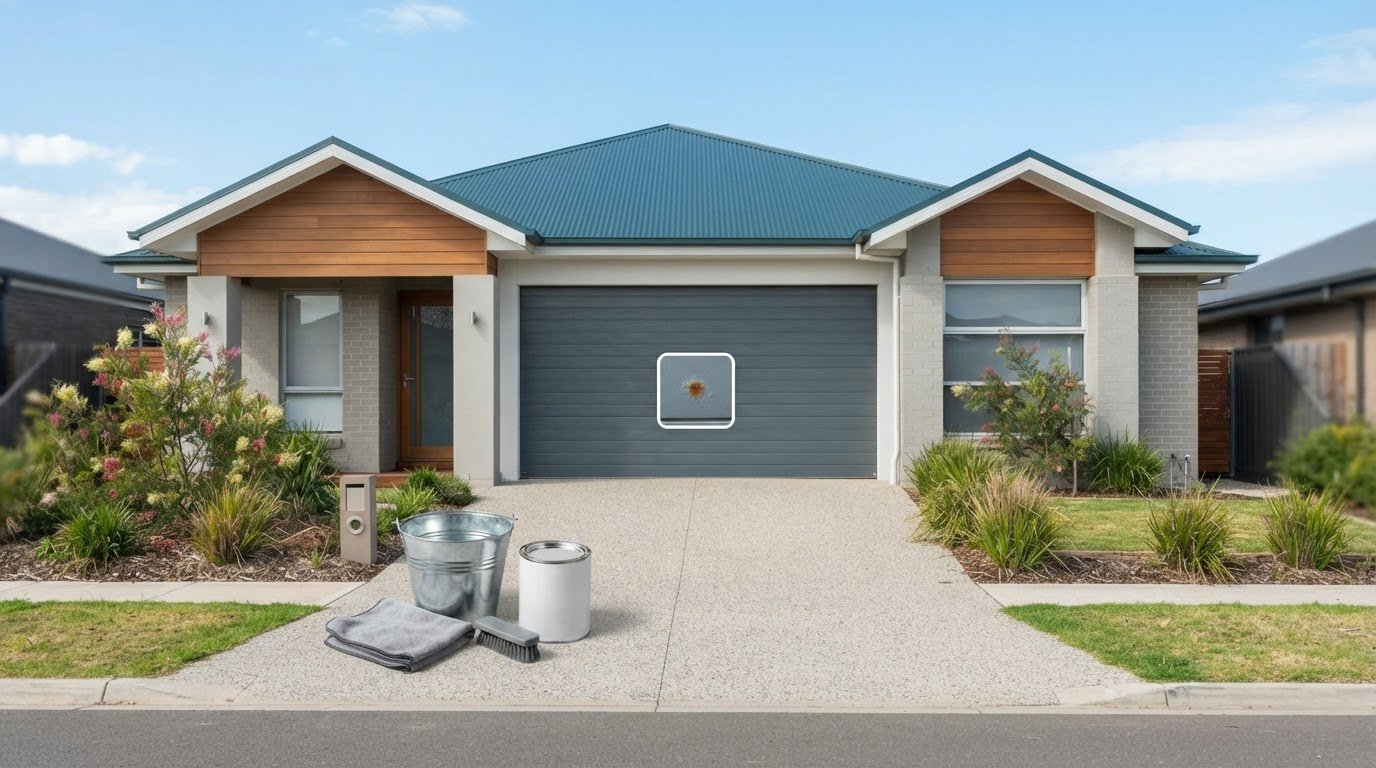
Could a quick scrub or coat of paint make a small rust patch harder to deal with? Learning how to prevent garage door rust starts with a simple routine, but the wrong cleaner, abrasive or touch-up product can damage a door’s finish or protective coating. In Melbourne’s west, damp conditions make it sensible to check for rust before it spreads.
It’s understandable to worry that a tiny mark may grow or affect how the door moves. You don’t need to dismantle anything to check. Look for bubbling paint, exposed metal, spreading discolouration or changes in operation, and leave springs, cables and other tensioned parts alone.
This guide explains how to spot early surface rust, clean and protect your door according to its material and finish, and avoid fixes that may hide rather than address corrosion. You’ll also learn when a residential garage door professional should assess the damage. If rust appears to affect the door’s condition or operation, Brimbank Garage Doors & Repairs provides residential repairs and maintenance across Melbourne’s western suburbs. A repeatable clean, inspect and protect routine helps you act early and know when to get experienced eyes on the problem.
Key Takeaways
- Learn how to prevent garage door rust with a straightforward care routine suited to your door’s material and finish.
- Spot visible changes such as bubbling or flaking early, while recognising that a visual check can’t confirm hidden corrosion.
- Choose cleaning and protective products carefully. The wrong treatment may harm the door’s finish or conceal a deeper issue.
- Know when recurring rust, panel damage or changes in door movement call for a professional assessment.
- Understand how residential garage door maintenance and repairs can help homeowners in Melbourne’s west address corrosion concerns.
How garage door rust starts and why early prevention matters
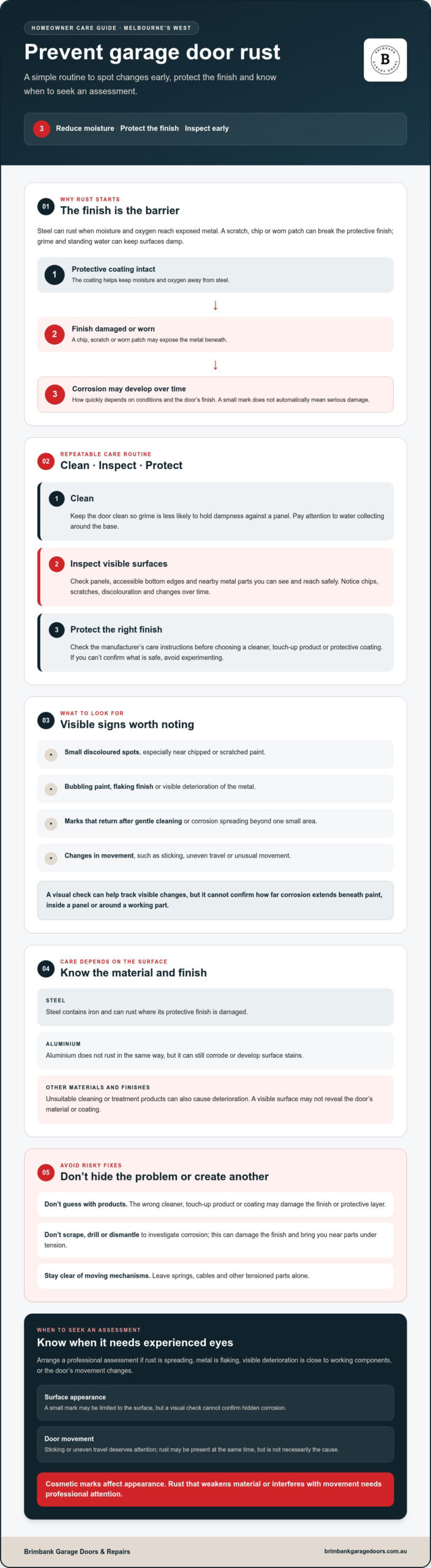
Rust forms when iron-containing metal reacts with moisture and oxygen, producing iron oxide. Steel garage doors can be vulnerable where their protective finish is damaged. An intact coating helps keep moisture and oxygen away from the steel. A scratch, chip or worn patch can expose the metal beneath. Corrosion may develop over time, but how quickly it does depends on conditions and the door’s finish.
Knowing what rust is helps explain why prevention focuses on keeping that barrier in good condition. Dampness that lingers, grime that traps moisture against a panel and water that collects around the door can all encourage corrosion. A small mark doesn’t automatically mean serious damage, but it’s a reason to check the finish and monitor the area.
What causes rust on a steel garage door?
Moisture and oxygen can reach exposed steel through damaged paint, worn coatings or untreated scratches. Rust doesn’t appear immediately in every case, and not every surface mark will progress. Salt exposure can accelerate corrosion, so doors exposed to coastal air or other sources of salt may need closer attention. Conditions vary across Melbourne’s western and northern suburbs, so don’t assume every home faces the same exposure.
Grime can hold dampness against a panel, while standing water around the base may keep nearby surfaces wet for longer. Keeping the door clean and checking for chips or scratches helps you notice changes before they’re overlooked.
Which garage door materials need different care?
Steel can rust because it contains iron. Aluminium doesn’t rust in the same way, but it can still corrode or develop surface stains. Other materials and finishes can also deteriorate if cleaned or treated with unsuitable products. Don’t assume the visible surface tells you exactly what the door is made from or which coating protects it.
Before choosing a cleaner, touch-up product or protective coating, check the manufacturer’s care instructions for your door’s material and finish. A product suited to one surface may damage another. If you can’t confirm what’s safe, avoid experimenting and seek advice specific to the door.
Reduce moisture, protect the finish and inspect early. These are the three essentials of rust prevention. That routine is the foundation of how to prevent garage door rust, helping you catch changes without guessing at the door’s material or applying an unsuitable fix.
How to tell surface rust from garage door damage that needs attention
A small orange-brown spot on a panel may be limited to the surface, particularly if the surrounding finish looks intact. Bubbling paint, flaking finish or a mark that returns after cleaning can suggest the protective layer has been compromised. These signs are worth monitoring, but they don’t prove that the whole door is badly corroded or needs replacing.
Cosmetic surface marks affect appearance. Rust that weakens material or interferes with movement needs professional attention. A photo or visual check can help you track visible changes, but it can’t show how far corrosion extends beneath paint, inside a panel or around a working part. Avoid scraping, drilling or dismantling anything to investigate. That can damage the finish and bring you near components that move under tension.
Which rust warning signs should homeowners look for?
Check only surfaces you can see and reach safely, including the door panels, accessible bottom edges and nearby metal parts. Keep clear of moving mechanisms. Look for:
- Small discoloured spots, especially where paint is chipped or scratched.
- Bubbling paint, a flaking finish or visible deterioration of the metal.
- Marks that return after gentle cleaning, or corrosion spreading beyond one small area.
- Changes in how the door moves, such as sticking, uneven travel or unusual movement.
Keep movement changes separate from what you see on the surface. Rust may be present at the same time, but it isn’t necessarily the cause of binding or uneven travel. The Door & Access Systems Manufacturers Association’s garage door inspection checklist includes checks for rust and corrosion, including on hardware and springs. Use it as a prompt to observe, not as a reason to handle or adjust those parts yourself.
When should a garage door professional inspect corrosion?
Arrange a professional assessment if rust is spreading, metal is flaking, or visible deterioration is close to working components. A technician can assess the door beyond what a surface check reveals and help determine whether it needs repair or further consideration.
If the door binds, drops or moves unpredictably, stop using it and seek professional guidance. Don’t try to adjust springs, cables or tracks. These components can pose a serious safety risk. For homeowners in Melbourne’s west, residential garage door repairs and maintenance can help assess corrosion when it appears to affect the door’s condition or operation.
How to prevent garage door rust with safe, regular care
A short, gentle care routine helps remove dirt and lingering moisture without putting the door’s finish at risk. Before cleaning, identify the door material if you can and check the manufacturer’s care instructions. Products and methods that suit one finish may damage another.
- Check the finish. Look over accessible panels and edges for scratches, chips, lifting paint or rust-coloured marks. Don’t probe or scrape a damaged spot.
- Remove loose dirt. Use a soft cloth to lift dust and debris. Pay attention to grime that could hold moisture against the surface.
- Clean gently. Use only a cleaner approved for your door’s material and finish, following the manufacturer’s directions. Rinse away residue if the instructions call for it.
- Dry accessible surfaces. Wipe away remaining water with a clean, soft cloth. Avoid letting water sit against the door or collect around its base.
How should you clean a garage door without damaging its finish?
Test an approved cleaner on a small, inconspicuous area first. Avoid abrasive pads, harsh chemicals and pressure settings that could mark paint or damage a protective coating. Don’t climb on the door to reach higher areas, and keep clear of moving parts. Advice on preventing metal corrosion offers useful general context, but don’t apply oils or other treatments to the door unless its manufacturer confirms they’re suitable for that specific surface.
After rinsing, check for water caught along reachable edges or left against the door. Keeping the surrounding area clear of debris can also stop damp material resting against the surface.
How often should you check for rust?
There’s no single inspection schedule that suits every door. Make a visual check part of routine garage door care, and check again after prolonged wet weather or when you notice persistent dampness or debris around the garage. A quick look is enough. You don’t need to dismantle anything.
If you spot a mark, take a photo or note its location so you can compare it later. If it spreads, returns after cleaning or the finish starts to lift, seek advice rather than covering it with an unverified product. For a broader care routine, see Garage Door Maintenance Melbourne: The 2026 Homeowner’s Checklist. Regular, gentle attention is a practical way to approach how to prevent garage door rust while protecting the finish.
Which rust-prevention products and quick fixes should you avoid?
A product that works on one garage door may damage another. The material, existing finish and manufacturer’s instructions all matter, so don’t choose a rust treatment or coating based on its label alone. Use this comparison as a starting point, not a substitute for door-specific guidance.
| Option | Safer approach |
|---|---|
| Manufacturer-approved care | Use a cleaner or touch-up product only if it’s approved for your door’s material and finish. Follow the instructions, including any preparation and drying steps. |
| Uncertain products | Pause if you can’t confirm a cleaner, rust converter, primer, paint or household remedy is suitable. Avoid abrasive tools and improvised chemical mixtures. |
| Work for a professional | Seek an assessment if metal is flaking, deeply pitted or deteriorating, or corrosion is near working parts. Don’t dismantle or adjust door components. |
Can you paint over rust on a garage door?
Painting over active rust may conceal the mark without resolving the corrosion underneath. Proper preparation and a compatible coating depend on the door’s material and manufacturer guidance. Don’t assume paint alone will stop corrosion or restore damaged metal. If the surface is deeply pitted, flaking or visibly deteriorated, get professional advice before attempting a repair.
For replacement doors, material and finish choices also affect ongoing care. The article Professional Garage Door Installation in Melbourne’s West: 2026 Homeowner’s Guide may help you consider those questions, but check the exact specifications and care guidance for any door you’re considering.
Are household oils and abrasive cleaners safe for garage doors?
Keep panel care separate from lubrication. Don’t apply lubricant to door panels unless the manufacturer specifically directs it, and don’t assume a household oil is suitable for moving components. Follow the door’s instructions for those parts. Abrasive pads, harsh chemicals and unverified rust-removal products can strip paint or protective finishes, exposing vulnerable areas rather than protecting them.
If you’re unsure what treatment suits your door, it’s safer to pause than risk making the damage harder to assess. For corrosion that may affect the door’s condition or operation, arrange a residential garage door repair assessment with Brimbank Garage Doors & Repairs. Matching the approach to the door is a practical part of how to prevent garage door rust.
When rust calls for garage door repair in Melbourne’s west
Routine care can help you notice changes, but recurring rust, damaged panels or deterioration near working parts deserve a closer look. A mark that returns after cleaning, paint that continues to lift or metal that appears to be flaking may need more than surface cleaning. That doesn’t automatically mean the whole door needs replacing. A professional inspection can help distinguish a cleaning or finish concern from damage that may call for repair or further consideration.
Changes in movement matter too. Rust may be visible at the same time, but it isn’t necessarily the cause of a door sticking or travelling unevenly. Avoid trying to diagnose a mechanical fault by taking parts apart. A safe assessment checks the visible condition and the way the door operates without putting you near components under tension.
What should you do if rust is affecting door movement?
If the door binds severely, moves unpredictably, drops or appears structurally compromised, stop using it. Keep people clear and don’t force, lift or dismantle the door. These actions could make an unsafe situation worse. When seeking professional guidance, describe where the rust appears, whether it’s spreading, and what change you’ve noticed in the door’s movement. Don’t adjust springs, cables or tracks yourself.
What can a local garage door repairer assess?
A professional can inspect visible corrosion, the door’s condition and relevant operating components. This helps clarify whether the concern appears limited to cleaning or finish care, needs repair, or warrants discussing replacement. The right option depends on the door’s actual condition, not just the size of the visible rust mark.
Brimbank Garage Doors & Repairs provides residential garage door repair and maintenance across Melbourne’s western and northern suburbs. If you have a roller door, Roller Door Repairs Melbourne: The 2026 Homeowner’s Guide to Reliable Service offers further context on repair options. Brimbank’s team can also assess a rust-related concern where corrosion appears to affect a residential door’s condition or operation.
You now have a practical foundation for how to prevent garage door rust, spot changes and avoid risky fixes. If you’re unsure whether a recurring mark needs attention, contact Brimbank Garage Doors & Repairs about a rust concern to discuss a residential inspection. A clear assessment can help you decide on a sensible next step.
Keep your garage door protected with simple, steady care
Rust prevention doesn’t need to be complicated. Check the finish for changes, clean gently with products approved for your door’s material, and dry surfaces where water may linger. These habits make how to prevent garage door rust easier to manage and help you spot recurring marks or damage before deciding what to do next.
Be cautious with quick fixes. Paint can hide active rust, and an unsuitable cleaner, coating or treatment may damage the finish. If corrosion is spreading, metal is flaking, panels appear damaged or the door’s movement changes, don’t dismantle or adjust components. Arrange a professional assessment instead.
Brimbank Garage Doors & Repairs provides residential garage door repairs and maintenance across Melbourne’s western and northern suburbs. If you’re unsure whether a rust mark needs professional attention, contact Brimbank Garage Doors & Repairs about a rust-related door concern. With careful checks and the right advice when needed, you can take a sensible next step with more confidence.
Frequently Asked Questions
How do I stop my garage door from rusting?
To reduce rust risk, keep the door clean and dry, protect its finish and check accessible surfaces for damage. Use a soft cloth and only a cleaner approved for the door’s material and finish. Rinse away residue if the manufacturer’s instructions recommend it, and don’t leave water sitting against the door. This simple routine is a practical way to approach how to prevent garage door rust without risking damage from unsuitable products.
Can I paint over rust on a garage door?
Don’t assume paint alone will stop rust. Painting over active corrosion can hide the mark without addressing damage underneath, and preparation and coating suitability depend on the door’s material and existing finish. Check the manufacturer’s touch-up guidance before applying anything. If metal is flaking, deeply pitted or deteriorating, seek a professional assessment rather than trying to cover it. A visible rust mark doesn’t automatically mean the whole door needs replacing.
Does washing a garage door help prevent rust?
Washing can help remove dirt and grime that may hold moisture against a door, but it won’t repair a damaged finish or guarantee rust prevention. Follow the manufacturer’s cleaning instructions, use a soft cloth and a suitable cleaner, and rinse away residue if directed. Dry accessible surfaces afterwards, and avoid leaving water pooled around the door or sitting against its panels. Don’t use a pressure setting that could damage the finish.
What is the best cleaner for a steel garage door?
There’s no single cleaner that’s right for every steel garage door. Check the manufacturer’s instructions for the specific paint or protective finish, and choose only a cleaner approved for it. Test the cleaner on an inconspicuous area first, then use a soft cloth. Avoid abrasive pads and harsh chemicals, which may damage the finish and expose vulnerable metal. If you can’t confirm a product is suitable, don’t apply it until you’ve checked.
Can rust make a garage door unsafe to use?
It can be a concern if corrosion has weakened the door or is affecting its operation, but a small surface mark alone doesn’t prove the door is unsafe. Watch for flaking metal, damaged panels or movement that binds, drops or becomes unpredictable. If the door behaves unusually, stop using it, keep people clear and seek professional guidance. Don’t force, dismantle or try to adjust springs, cables or tracks.
How often should I check my garage door for rust?
Make a visual check part of routine garage door care, rather than relying on one schedule for every home. Look over accessible panels and edges, and check again after prolonged wet weather or when you notice persistent dampness or debris around the garage. If you find a mark, photograph it or note its location so you can compare it later. Seek advice if rust spreads, returns or the finish starts lifting.
When should I call a garage door repairer about rust in Melbourne’s west?
Arrange a professional assessment if rust keeps returning, spreads, damages a panel or appears near working components. Stop using the door and seek guidance if it binds severely, drops or moves unpredictably. Brimbank Garage Doors & Repairs provides residential garage door repairs and maintenance across Melbourne’s western and northern suburbs. An assessment can help clarify whether the issue needs attention and whether repair or replacement considerations are appropriate.