
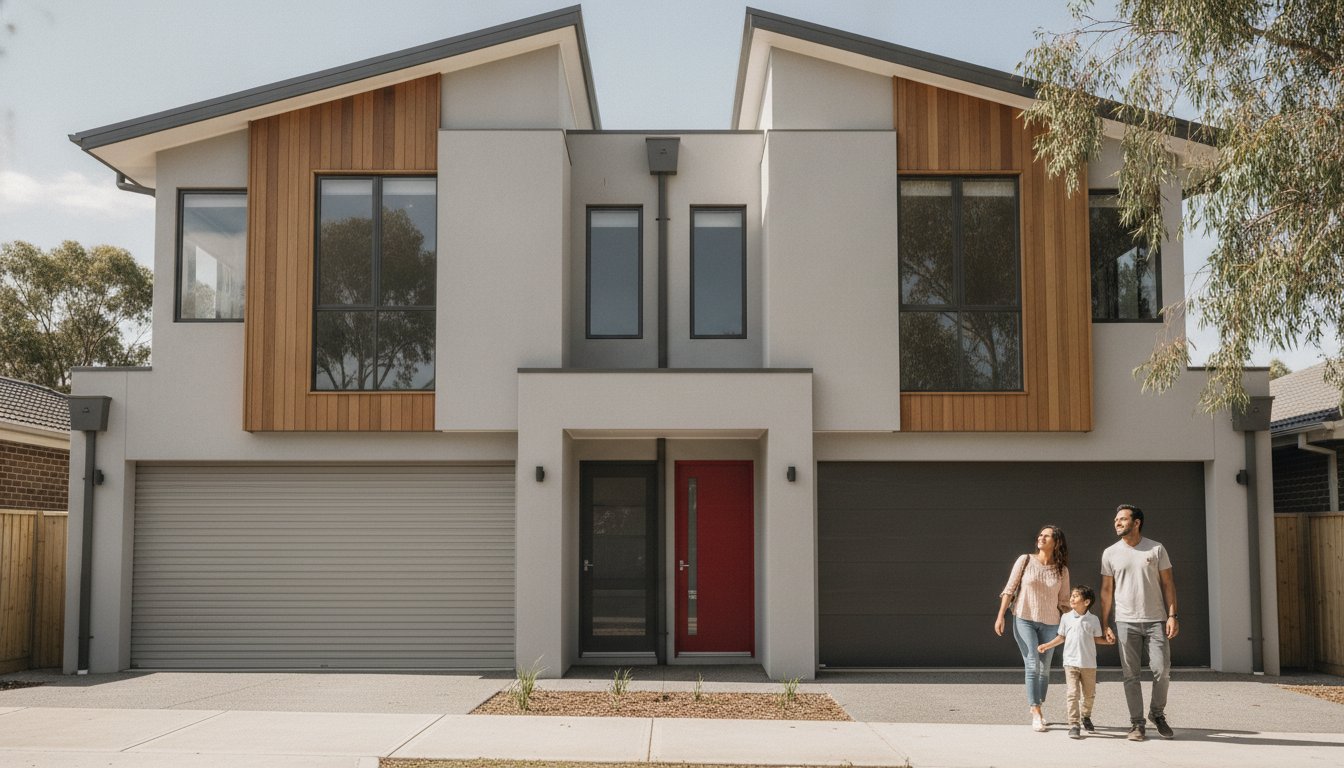

Did you know that your garage door can account for as much as 60% of your home’s facade? It is often the first thing neighbours and visitors notice, yet many Melbourne homeowners feel stuck with a door that doesn’t quite hit the mark. We understand the frustration of trying to fit a modern SUV into an older garage with limited ceiling space, or the worry of choosing a material that might not handle our unpredictable Victorian weather. It’s a significant investment, and you want to ensure the cost translates into genuine long-term value and security for your family.
In this guide, we’ll explore the most common types of roller doors in Australia to help you make an informed decision. You’ll learn exactly how much headroom is required for different styles and how to identify a design that complements your home’s unique character. From space-saving solutions for tight spots to durable options built for local conditions, we’ll provide the clear, practical advice you need to improve your home’s kerb appeal and peace of mind.
Key Takeaways
- Identify the structural differences between a classic ribbed steel curtain and modern sectional panels to determine the best fit for your garage opening.
- Discover why measuring your headroom is the most critical factor when comparing various types of roller doors for older Melbourne homes.
- Learn how to choose a door that handles the local climate, including wind-rated features for properties on the exposed western plains.
- Find out how to match your garage door style to your suburb’s specific look, whether you are in a classic Keilor home or a modern Sunbury build.
- Understand why professional installation is essential for preserving your warranty and ensuring the heavy-duty springs remain in safe working order.
Understanding the Main Types of Garage Doors in Australia
Choosing the right garage door starts with understanding the mechanical footprint of your home. In Australia, we tend to use the term “roller door” as a catch-all, but the reality is more nuanced. The specific design you choose dictates everything from your daily convenience to how often you will need to book in for professional maintenance. It is a decision that balances the architectural style of your property with the physical limitations of your garage structure.
The Classic Steel Roller Door
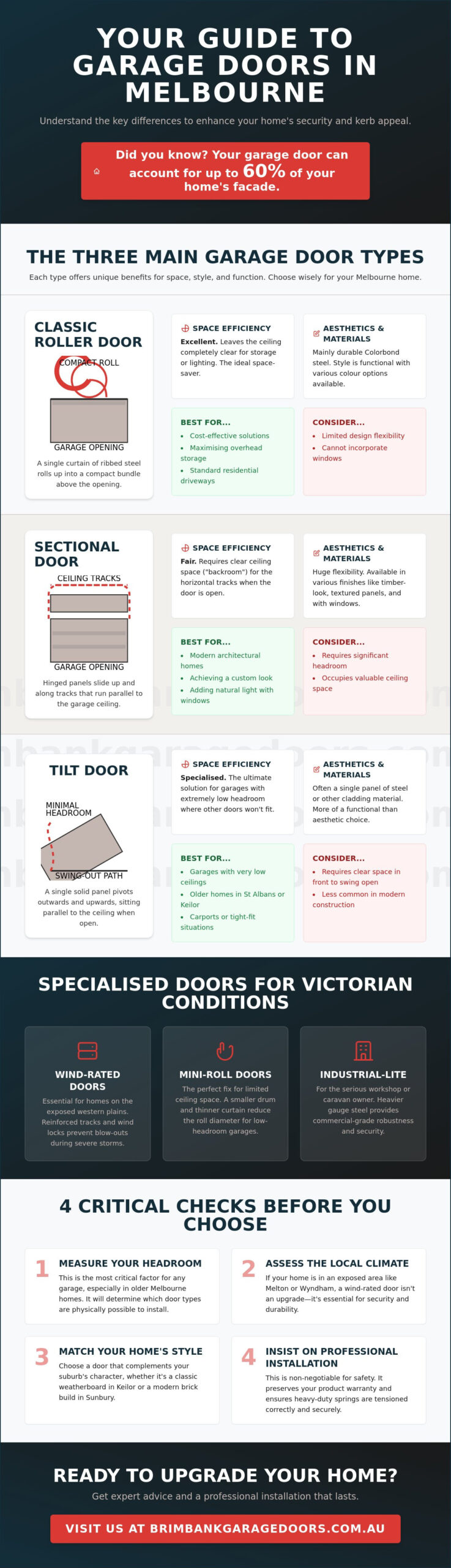
The quintessential Australian roller door consists of a single curtain of ribbed steel. This curtain wraps around a drum located directly above the garage opening. It is a highly efficient design, often referred to as a roller shutter in broader architectural contexts. For homeowners in Melbourne’s western suburbs, this is usually the most cost-effective and space-saving option. Because the door rolls into a compact bundle, it leaves your ceiling completely clear for storage or lighting. It is the perfect workhorse for standard residential driveways where durability is the top priority.
Sectional and Panel Lift Variations
Sectional doors consist of four or five horizontal panels hinged together. When opened, these panels slide along tracks that sit parallel to your garage ceiling. This design offers immense flexibility in terms of style, allowing for windows, textured finishes, and even timber-look aesthetics that a traditional steel roll cannot achieve. You must account for the tracks, though. They require clear space along the “backroom” of your garage, which might be a challenge if you have overhead racks or low-hanging beams.
In older pockets of Melbourne, like St Albans or Keilor, you might still encounter the tilt door. These operate as a single solid panel that pivots out and up. While they are less common in modern builds, they remain a vital solution for garages with extremely low headroom where other types of roller doors simply won’t fit. They provide a functional alternative when every millimetre of vertical space counts.
Your choice of door also sets your long-term maintenance path. A standard roller door relies heavily on a large internal spring within the drum, while sectional doors use a complex system of multiple hinges, rollers, and cables. Each system has unique wear points. Understanding these differences ensures you aren’t caught off guard by a fatigued spring down the track. Selecting from different types of roller doors is the first step in securing your home’s entry point for the next twenty years.
Exploring Specific Types of Roller Doors and Their Features
While the basic concept of a steel curtain is consistent, there are several specialised types of roller doors designed to solve specific architectural and environmental challenges. In Melbourne’s western suburbs, where new estates meet older established homes, choosing a door that matches your exact site conditions is vital. It isn’t just about the look; it’s about how the door performs under pressure.
The standard residential roller door is the backbone of local garages. It provides a reliable balance of security and ease of use. These are typically made from high-tensile steel and are designed to handle thousands of cycles over decades. However, for homes on the exposed western plains, wind-rated doors are a necessity rather than an upgrade. These feature reinforced tracks and wind locks that prevent the curtain from blowing out of its guides during a severe storm. If your property faces open paddocks in areas like Melton or Wyndham, this is the security feature you cannot afford to skip.
Many homeowners believe they cannot have a roller door if they have limited ceiling space. This is where Mini-Roll or compact designs come in. They use a smaller drum and a thinner curtain material to reduce the roll diameter. This allows for installation in garages with significantly less headroom than a standard door requires. For those who use their garage as a serious workshop or to house a caravan, industrial-lite doors offer a heavier gauge of steel. They provide the robustness of a commercial door without the bulky aesthetic of a factory shutter. If you require more extensive support for larger business premises, you can discover A1 Precision Solutions for turnkey commercial and industrial facility services across Australia.
Materials and Finishes: More Than Just Colour
Colorbond steel remains the gold standard in Australia for its durability against UV rays and salt air. You can choose between a classic smooth finish or a woodgrain texture that mimics the look of timber. The rib profile also matters. Deeper, square ribs generally provide more structural rigidity and can help dampen the noise as the door operates. If you’re upgrading an older unit, choosing the right garage roller doors supply ensures your new installation fits perfectly within your existing structure and matches your home’s aesthetic.
Manual vs. Automatic Roller Door Operations
Manual operation is still a viable choice for garden sheds or detached workshops where power isn’t available. However, automation has become the standard for the modern home. Modern motorised openers include vital safety features like infrared sensors and auto-reverse functions. These systems stop the door immediately if they detect an obstruction, such as a child or a pet. This is a non-negotiable for family safety and adds a layer of convenience that manual doors simply cannot match. To understand the full process and safety standards involved, our detailed guide on garage roller door supply and install covers everything from AS/NZS compliance requirements to choosing a qualified local technician.
Space and Headroom: How to Choose the Right Fit
Before you fall in love with a specific colour or finish, you must look at the structural bones of your garage. The physical dimensions of your space are the ultimate deciding factor when choosing between different types of roller doors. We often see homeowners get excited about a design only to find their garage simply cannot accommodate the hardware. Understanding three key measurements; headroom, side room, and backroom; will save you time and potential installation headaches.
These structural considerations are common in many home improvement projects, including basement finishing where ceiling height is a major factor; for those planning extensive internal work, BCR Basements provides a useful cost calculator to help budget for significant remodelling.
Headroom is the vertical space between the top of the garage door opening and the lowest point of the ceiling or any overhead obstructions. It is the number one dealbreaker in our industry. While a standard roller door needs space for the curtain to roll into a bundle, a sectional door needs space for tracks to curve toward the ceiling. If your garage was built in an era with low rafters, your options might be limited to specific compact models or a pivot-style tilt door.
The Headroom Checklist for Melbourne Garages
To ensure a smooth installation, keep these general rules of thumb in mind:
- Standard Roller Doors: These typically require between 300mm and 450mm of headroom. This allows the drum to sit comfortably above the lintel without scraping the ceiling.
- Sectional Doors: These usually need 250mm to 350mm. However, low-headroom kits can sometimes reduce this requirement to as little as 150mm by using specialised double-track systems.
- Common Mistakes: Many people measure from the floor to the ceiling. You must measure from the top of the opening to the ceiling. Don’t forget to check for low-hanging light fixtures or structural beams that might sit in the way.
Side Room and Driveway Clearance
Side room refers to the space on the left and right of the opening. You need enough “meat” on the walls to bolt the tracks and brackets securely. Most types of roller doors require at least 100mm to 150mm on each side. If your garage is tucked into a tight corner, we may need to look at custom brackets or a specific “mini” track configuration.
Your driveway length also plays a role. A roller door moves vertically within its own plane. This makes it the superior choice for short driveways where you need to park your car right up against the door. In contrast, older tilt doors have a specific “arc of travel.” They swing outward before they go up. If you park too close, the door will hit your bumper. Choosing a modern roller or sectional door eliminates this risk entirely, allowing you to maximise every centimetre of your property. If your existing door is causing repeated problems, it may be time to consider a full garage door replacement in Melbourne rather than continuing to invest in ongoing repairs.
Selecting the Right Door Style for Melbourne’s Western Suburbs
Your garage door is more than just a functional entry point. It is a major design element that can account for up to 60% of your home’s street frontage. In Melbourne’s West, our suburbs feature a diverse mix of architectural styles, from the solid brick veneer homes of the 1970s in St Albans to the cutting-edge rendered facades in new Sunbury estates. Choosing between different types of roller doors requires an eye for architectural harmony to ensure your investment actually boosts your property’s resale value.
Architectural Compatibility
For the classic brick veneer homes common in Keilor and St Albans, a traditional ribbed roller door remains a perfect fit. It respects the original lines of the house while providing a clean, refreshed look. However, if you’re living in a contemporary home with a rendered finish, you might find that slimline sectional panels offer a more sophisticated silhouette. These panels provide a flat, minimalist aesthetic that complements modern building materials.
The “Hamptons” style is also seeing a surge in popularity across Melbourne. If you’re aiming for this coastal-inspired look, you should typically skip the standard roller and opt for a sectional panel door with cross-bracing details. Colour choice is equally vital. Dark, moody hues like Monument or Night Sky are current favourites for modern facades, as they provide a sharp contrast against lighter render or timber accents. A well-chosen colour doesn’t just look good; it makes your home stand out in a competitive real estate market. When you’re ready to buy a garage roller door in Melbourne, understanding how colour, material, and style interact with your home’s facade is essential to making a confident, lasting investment.
Durability in the Melbourne Climate
Living in the West means dealing with the intense afternoon sun. Darker door colours look fantastic, but they absorb a significant amount of heat. We recommend choosing high-quality finishes that are specifically designed to resist UV fading and thermal expansion. This ensures your door doesn’t warp or lose its lustre after just a few Victorian summers.
The open plains of our region also bring plenty of dust and debris. High-quality bottom weather seals are essential for every installation. They act as a barrier against leaves, dirt, and even pests, keeping your garage interior much cleaner. For those living in coastal-adjacent suburbs like Altona or Point Cook, the proximity to salt air means you must choose high-grade coated steel to prevent premature corrosion. If you’re ready to transform your home’s facade, our team can help you choose and manage your garage door installation to ensure a perfect architectural match that lasts for decades.
Ultimately, the right types of roller doors for your property will balance these aesthetic goals with the practical need for weather resistance. Whether you need a heavy-duty solution for a windy block or a stylish upgrade for a suburban street, the goal is a door that feels like a natural extension of your home.
Why Professional Installation and Maintenance Matter for Every Type
Whether you have chosen a classic steel roll or a modern sectional panel, your garage door is a complex piece of machinery. It relies on a delicate balance of weight and tension to operate safely every single day. While we have explored the various types of roller doors available, the longevity of any model depends entirely on the quality of its initial setup and ongoing care. A door that isn’t perfectly level or correctly tensioned will wear out its motor and hardware years before it should.
Attempting a DIY installation on modern garage systems is a risk that rarely pays off. Most manufacturers specify that their warranties are only valid if the door is installed by a qualified technician. Beyond the paperwork, there is the matter of family safety. Professional installers ensure that electronic safety sensors are aligned and that the auto-reverse function is calibrated to the exact weight of your specific door. This precision prevents accidents and ensures your home remains secure against intruders. When repeated repairs are no longer cost-effective, understanding your options for garage door replacement in Melbourne can help you make a confident, informed decision before a minor fault becomes a serious safety hazard.
The Heart of the Door: Springs and Tension
The springs are the most critical component of your garage door, as they do the actual heavy lifting. Standard roller doors utilise internal drum springs tucked away inside the roll, whereas sectional doors typically use torsion springs mounted on a bar above the opening. These components are designed for a specific number of cycles, and eventually, they will lose their “bounce” or snap entirely. Garage door springs are under extreme tension and should only be handled by professionals. If your door feels heavy to lift manually or makes a straining sound when the motor runs, it is a clear sign that the tension needs urgent adjustment.
Long-Term Maintenance for Longevity
Different types of roller doors require unique maintenance schedules. A sectional door has dozens of moving hinges and rollers that need regular lubrication to stay quiet and smooth. In contrast, a traditional roller door is simpler but requires the tracks to be kept meticulously clear of grit and debris. We recommend homeowners follow a basic seasonal checklist:
- Clear the tracks of spider webs, dust, and garden debris.
- Check for any frayed cables or loose bolts along the tracks.
- Wipe down the curtain with a damp cloth to prevent salt and dirt build-up.
Even with good home care, you should book a professional service every 12 to 18 months. A technician can identify small issues, like a slightly frayed cable or a misaligned track, before they turn into an expensive emergency. Choosing a local specialist in the Western Suburbs means you get faster support and a technician who understands the local environmental challenges. You can contact Brimbank Garage Doors & Repairs for a local safety check to ensure your system remains in peak condition for years to come.
Secure Your Home’s Future with the Right Choice
Choosing between the various types of roller doors doesn’t have to be a guessing game. It’s about finding that sweet spot where your garage’s physical dimensions, like headroom and side room, meet your home’s architectural style. Whether you’re refreshing a classic brick veneer in St Albans or finishing a modern build in Sunbury, the right door improves both safety and kerb appeal. Remember that even the best-looking door relies on high-tension springs and precise tracks to function reliably for the long haul.
As a local Melbourne West specialist, Matt provides a reliable residential service that prioritises your family’s peace of mind. From expert spring replacement and repairs to complete new installations, we handle the technical details with quiet confidence. We take genuine pride in our work and understand the specific environmental challenges of our local community. Don’t leave your home security to chance when expert help is just a phone call away.
Get a Professional Measure and Quote for Your New Roller Door
Frequently Asked Questions
What is the most common type of garage door in Australia?
The continuous sheet steel roller door is the most common type of garage door found across Australia. It has earned this status because it is incredibly reliable, easy to maintain, and cost-effective for the average suburban home. Most of the ribbed steel curtains you see in Melbourne’s West are built to handle our local weather conditions while providing a simple, secure entry point that lasts for decades.
Can I replace a tilt door with a roller door?
You can certainly replace an old tilt door with a roller door in most cases, but headroom is the deciding factor. Tilt doors were often used in garages with very low ceilings where a roll wouldn’t fit. If your garage has at least 300mm of vertical space above the opening, upgrading to a roller door will give you more driveway space and smoother operation without the awkward outward swing.
What is the difference between a roller door and a sectional door?
The main difference lies in how the door opens; a roller door coils into a drum above the opening, while a sectional door slides in panels along tracks against the ceiling. Sectional doors offer more aesthetic variety and can be wider, but they take up significant ceiling space. Roller doors are the better choice if you want to keep your garage rafters free for overhead storage or lighting.
How much headroom do I need for a standard garage roller door?
For a standard residential installation, you will generally need between 300mm and 450mm of headroom. This space is necessary for the curtain to roll up into a bundle without rubbing against the ceiling or rafters. If your garage has less than 300mm of clearance, we often look at specialised compact models or low-headroom sectional kits to ensure a safe and functional fit that doesn’t compromise on opening height.
Are sectional garage doors more secure than roller doors?
Sectional doors are often regarded as slightly more secure because their panels are thicker and the tracks offer multiple points of resistance. That said, modern types of roller doors are still exceptionally difficult to breach when installed correctly by a professional. When fitted with a quality automatic opener, both styles provide a strong, motorised lock that keeps your family and vehicles safe from intruders and local weather.
How do I know what size roller door I need?
You find your required size by measuring the “daylight” opening, which is the internal width and height of the garage entrance. Standard single openings in Australia are typically 2100mm high and 2400mm wide, but variations are very common. It is vital to measure the side room and headroom at the same time, as the door curtain must be slightly wider than the opening to sit securely within the tracks.
Which type of garage door is the most affordable?
The traditional steel roller door is the most affordable choice for most Melbourne homeowners. Because the design is simpler and uses fewer moving parts than sectional or tilt systems, the manufacturing and installation costs remain lower. It provides excellent value for money, offering a high level of security and durability without the premium price tag often associated with custom panel designs or heavy timber-look finishes.
Do all types of garage doors need regular servicing?
Every garage door requires a professional service at least every 12 to 18 months to maintain its warranty and safety standards. Regardless of the specific types of roller doors or sectional panels you use, the springs will eventually lose tension and the moving parts will require specialised lubrication. Regular maintenance by a local expert prevents small mechanical hitches from turning into dangerous and expensive spring failures down the track.